
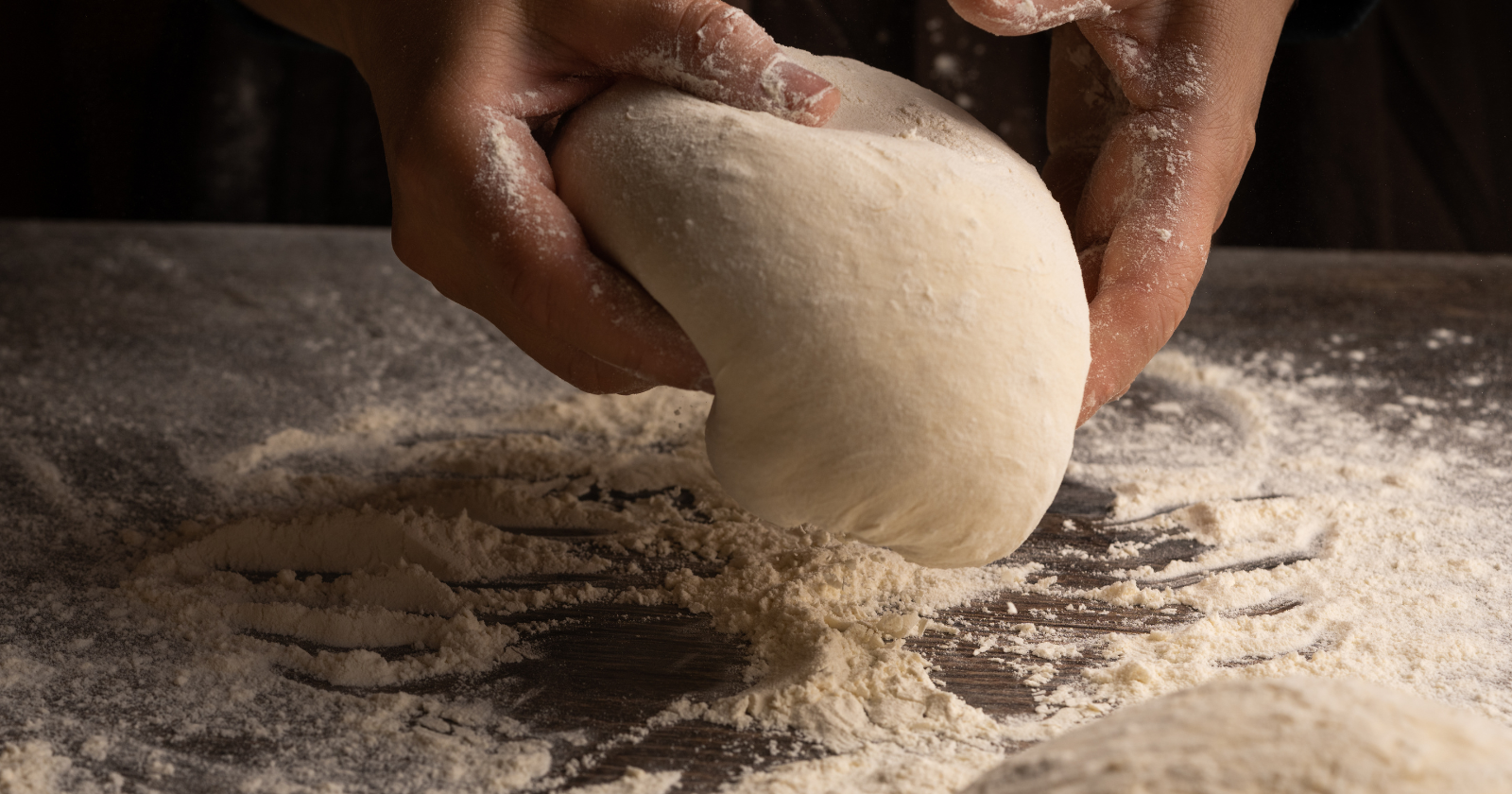
Someone in central Turkey, approximately 8,600 years ago, kneaded a small lump of dough, pressed their finger into the top of it, set it down next to a mud-brick oven, and then, for reasons that will never be recovered, walked away and never came back to bake it. The dough sat there. The fire in the oven beside it went out, or moved elsewhere, and the small piece of unbaked bread fermented quietly in the corner of the room for the next several days, or weeks, or however long it took before the building was abandoned, collapsed, and eventually covered by a thin layer of clay that sealed off the air and kept the organic material from decomposing. The archaeologists working at the Neolithic site of Çatalhöyük in southern Turkey’s Konya province recovered the lump during ongoing excavations in the area designated “Mekan 66” — Space 66 in English — and sent the unidentified spongy residue to laboratories at Necmettin Erbakan University for analysis. The result, announced in March 2024 and reported worldwide as the oldest known piece of fermented bread, has since become one of the more striking small-object finds in recent Neolithic archaeology.
According to CNN’s coverage of the discovery, the bread was found around a largely destroyed oven structure in Space 66, an area of adjoining mud-brick houses connected by roof entrances rather than ground-level doorways, characteristic of Çatalhöyük’s distinctive architecture. The archaeologists also recovered wheat, barley, and pea seeds in the immediate vicinity, indicating that the space had been used for food preparation. The palm-sized spongy residue was initially unidentified — the kind of object that excavation teams document carefully but cannot interpret until laboratory analysis is complete. The sample was sent to Necmettin Erbakan University’s Science and Technology Research and Application Center (BITAM) in Konya, where chemical analysis identified plant residues, indicators of fermentation, and the basic biochemical signatures of dough made from cereal flour mixed with water and allowed to ferment without being subsequently baked.
What the analysis actually showed
Per Daily Sabah’s coverage of the BITAM analysis, the lead archaeologist on the project, Dr. Ali Umut Türkcan of Necmettin Erbakan University, described the find directly: “It’s a miniature version of a loaf of bread. It hasn’t been baked in the oven but has fermented, preserving the starches. Such an example hasn’t existed until now.” Radiocarbon dating performed at the TÜBİTAK Marmara Research Center placed the sample at approximately 6600 BCE — roughly 8,600 years before the present, comfortably within the period during which Çatalhöyük was at its peak as one of the largest urban centres in the Neolithic world. The site’s population at that period is estimated at 3,500 to 8,000 inhabitants, living in densely packed mud-brick houses accessed from the roof, in what archaeologists generally consider one of the earliest experiments in urban living anywhere on Earth.
The fermentation finding is the part of the result that has attracted the most attention. Unbaked dough that has been allowed to ferment via wild yeasts in the surrounding air is essentially the precursor to all modern leavened bread — sourdough cultures and commercial baker’s yeast both work through the same underlying biological process. The Çatalhöyük sample is, by the BITAM team’s analysis, an example of this process captured at a specific archaeological moment: someone mixed flour and water, kneaded the dough, set it down near an oven, pressed a finger into the top of it, and then never came back to bake it. The dough fermented in place, was sealed by the building’s eventual collapse and clay covering, and survived underground for nearly 9,000 years.
What “oldest” actually means here
The framing of the Çatalhöyük bread as the “oldest” of its kind requires some careful handling, because the claim depends substantially on what qualifies as “bread” and what qualifies as “fermentation.” As reported by ZME Science’s coverage of the discovery, the previous earliest-known leavened bread came from ancient Egyptian contexts dating to approximately 2600 BCE — making the Çatalhöyük sample roughly 4,000 years older than the previous record-holder for specifically fermented, dough-based bread. That gap is substantial, and the claim of “oldest fermented bread” within this specific definition appears robust.
However, baked unleavened bread is known to predate the Çatalhöyük sample by approximately 5,800 years. Excavations at the Shubayqa 1 site in northeastern Jordan recovered charred breadcrumb remains in 2018 that have been radiocarbon-dated to approximately 14,400 years ago — pre-agricultural, made by Natufian hunter-gatherers from wild grains. The Shubayqa bread is older than Çatalhöyük’s by approximately 5,800 years but was unleavened. There is also evidence of yeast-based alcoholic fermentation at Natufian sites in the Levant going back approximately 13,000 years, which suggests that human use of yeast for fermenting carbohydrate substrates predates Çatalhöyük substantially, even if the specific application to bread came later. The Çatalhöyük find is best described as the oldest known example of dough specifically prepared for bread that was fermented before baking — a narrower but still significant claim.
What the contestation says
The 2024 announcement also generated some scholarly pushback. As documented by a November 2025 critical analysis in Hyperallergic, several archaeologists have raised concerns about the strength of the original BITAM analysis, the lack of a full peer-reviewed publication accompanying the press announcement, and the precision with which the spongy residue can be confidently identified as bread rather than as some other kind of fermented food product. The full technical paper detailing the chemical analysis appears to remain pending as of mid-2026, which leaves the central claim resting on the press materials and conference presentations issued by the Necmettin Erbakan University team rather than on a full archaeological-science publication.
What is not contested is that something organic, dough-like, and approximately 8,600 years old was recovered from the corner of Space 66 at Çatalhöyük. What remains in active scholarly discussion is the precise interpretation of that something — whether it was fully a piece of bread in the sense that modern terminology uses the word, whether the fermentation indicators are conclusive, and whether the “oldest” framing holds up against the broader literature on Neolithic food preparation. The methodological questions are real and worth taking seriously, but they do not eliminate the underlying interest of the find. The image, in any case, is a small one: a palm-sized lump of dough, finger-pressed by someone in central Anatolia in approximately 6600 BCE, left next to an oven that never got around to baking it, and recovered in 2024 by archaeologists who have been working at the same site for the better part of three decades and were still, this many years in, finding new things in its corners.
