
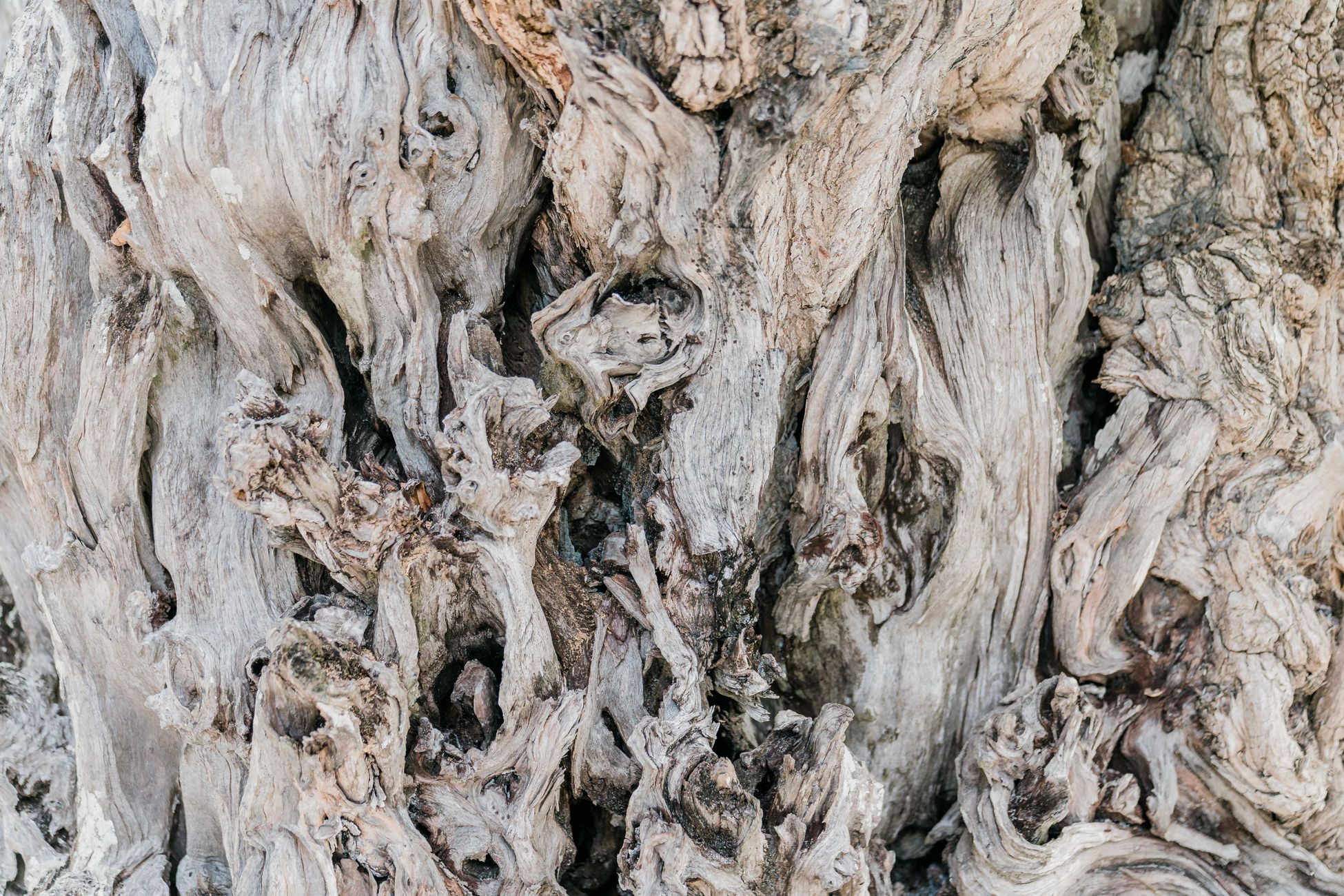
Methuselah, a Great Basin bristlecone pine clinging to a limestone slope above 10,000 feet in California’s White Mountains, was confirmed at roughly 4,855 years old as of 2025, making it the oldest known non-clonal living organism on Earth. The US Forest Service refuses to disclose its exact location inside the Inyo National Forest’s Ancient Bristlecone Pine Forest, and rangers will not point it out to visitors who ask. Somewhere along the 4.5-mile Methuselah Trail, you walk past it without knowing.
The tree was cored and dated by dendrochronologist Edmund Schulman of the University of Arizona’s Laboratory of Tree-Ring Research. His count of the growth rings put its germination at around 2833 BCE — older than the Great Pyramid of Giza, older than Stonehenge’s sarsen circle, older than the wheel reaching most of Eurasia.
It was already a mature tree when Egyptians began mummifying their dead.
A tree that grows slower than almost anything alive
Bristlecones do not grow the way most conifers do. At Methuselah’s elevation, the growing season is brief. The air is thin, the soil is dolomite — a pale, alkaline limestone that most plants refuse to touch — and the wind sandblasts the trunks for most of the year.
A bristlecone might add very little wood in a good year. In a bad year, nothing.
The result is wood extraordinarily dense and resinous. The resin content is extraordinary, the cell walls are tightly packed, and the tree’s vascular system can keep functioning even when most of the trunk has died back to a thin ribbon of living bark. Walk up to a bristlecone and you will often find a twisting, polished spar of dead wood with a single narrow strip of green needles still pulling water up one side.
That sectional dieback is part of the survival strategy. When a branch dies, the tree simply stops sending water to that quadrant and concentrates its resources on the surviving tissue. A bristlecone can lose most of its living mass and keep going for centuries more.
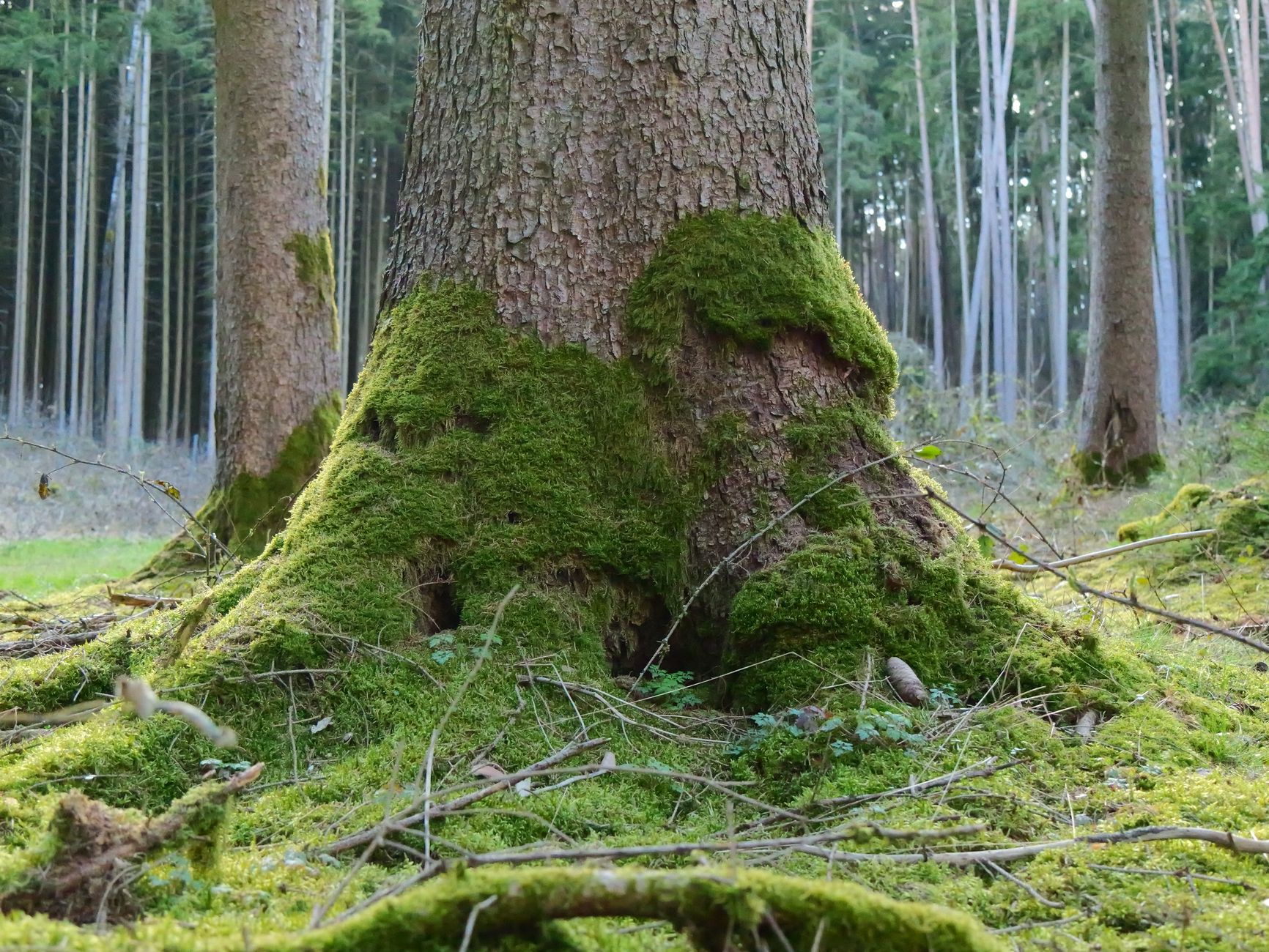
Why nobody will tell you which one it is
The secrecy is not bureaucratic theatre. It is a direct response to what happened to a tree called Prometheus.
Prometheus grew on Wheeler Peak in eastern Nevada. A graduate student named Donald Currey was studying bristlecone ring records. His coring tool got stuck in the trunk. With permission from the US Forest Service, the tree was cut down so the sample could be retrieved.
When the rings were counted, Prometheus turned out to be older than any tree known at the time. It had been killed for a study.
The Forest Service learned the lesson. Methuselah’s coordinates were classified, and they remain classified. Photographs that might identify the tree by its silhouette are withheld. Even most rangers who patrol the grove are not told which one it is.
A second bristlecone, unnamed publicly, was reported by researcher Tom Harlan as having a ring count above 5,000 years. Harlan died before publishing the verification, and the find has never been independently confirmed. Methuselah remains the oldest tree the scientific community can actually point to — or, more accurately, decline to point to.
What the rings remember
Each ring in Methuselah’s trunk corresponds to a calendar year, and the widths and densities encode the climate of that year. Wet years leave wide rings. Cold summers leave narrow, late-forming bands. Volcanic eruptions on the other side of the planet show up as frost-damaged cells, because the global stratospheric haze cooled the White Mountains by a degree or two.
Tree-ring labs have used bristlecone chronologies to reconstruct climate going back thousands of years by overlapping the rings of living trees with those of long-dead specimens preserved in the same dry, cold environment. The wood does not rot up there. It oxidizes and erodes, slowly, like stone.
The bristlecone record has proven valuable for calibrating radiocarbon dating. When physicists realized that atmospheric carbon-14 levels had fluctuated through history, the bristlecones provided a calibration curve — a known-age sample for every year going back millennia.
Reading a genome older than the pyramids
In 2026, a team coordinated by the University of California, Davis sequenced the Great Basin bristlecone pine genome for the first time. The work, announced through EurekAlert, was aimed at understanding what genetic machinery allows an individual organism to keep living and dividing cells for five millennia.
The genome turned out to be enormous. Bristlecones carry roughly ten times more DNA than humans do, padded with repetitive sequences and ancient transposable elements. Buried in that bulk are the genes the team most wanted to look at — those governing DNA repair, telomere maintenance, and resistance to oxidative damage.
Most multicellular organisms accumulate mutations over time. Cancers, organ failure, and senescence follow. Bristlecones appear to accumulate them at an extraordinarily slow rate, partly because their meristem cells — the dividing cells at the tips of branches and roots — divide only briefly each year.
Researchers analyzing the sequence have begun comparing it to shorter-lived pines to identify which gene families are amplified or modified in the long-lived species.
The forest you walk through
The Ancient Bristlecone Pine Forest sits east of Bishop, California, reached by a road that climbs through pinyon and sage until the air goes thin. The Schulman Grove visitor center, named for the dendrochronologist who first dated Methuselah, opens in summer once the snow clears.
From there, the Methuselah Trail loops 4.5 miles through some of the oldest individual living things on Earth. Trees here that look modest — twenty feet tall, with corkscrew trunks and patches of red-orange bark — are routinely two or three thousand years old. The grove holds dozens of trees older than the Roman Empire.
Visitors who walk the trail are explicitly asked not to touch the trees. The bark is fragile, the exposed dead wood is brittle, and a determined vandal with a knife could destroy in seconds what took fifty centuries to grow.
Signs along the path note only that Methuselah is somewhere in the loop. They do not specify which switchback, which slope, which gnarled survivor among the hundreds in view.
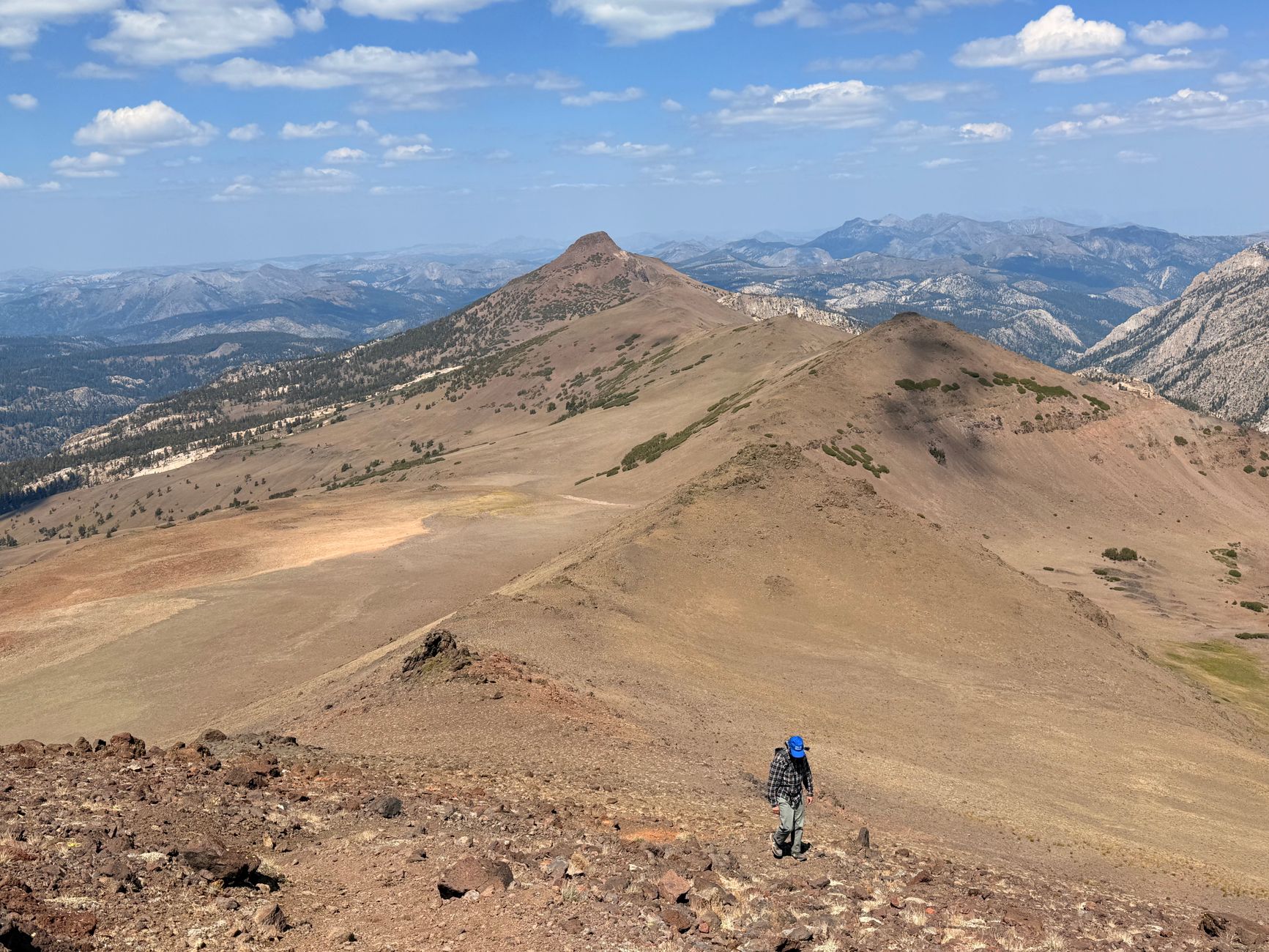
Why this particular slope
The extreme age is not an accident of one lucky tree. It is a function of the place.
Bristlecones grow in many western mountain ranges, but the oldest ones — Methuselah, Prometheus, the unnamed Harlan tree — all come from the highest, driest, most punishing sites. The dolomite soil reflects sunlight, stays cool, and discourages competition from grasses and other conifers. Lightning rarely strikes individual trees at this elevation because of the dispersed canopy. Fires almost never reach the upper grove because there is not enough fuel between trees to carry them.
A bristlecone in better soil, lower down, with more rain and more neighbors, will grow faster, get larger, and die younger. The trees at 10,000 feet are stunted, twisted, and effectively immortal.
Stress is what keeps them alive.
What 4,855 years actually means
When the seed that became Methuselah landed in a crack of dolomite, the Sumerians had not yet invented cuneiform writing. Bronze metallurgy was still spreading. The wheel had reached parts of Europe but not the Americas. No human language spoken today existed in any recognizable form.
The tree was already 700 years old when Khufu’s pyramid was built. It was already 1,800 years old when Tutankhamun was buried. It was 2,800 years old at the founding of Rome. It was 4,400 years old when Columbus reached the Caribbean.
Every empire you can name from a high school textbook rose and fell while this single organism kept laying down its thin ring each summer.
A secret kept in plain sight
The reason the Forest Service guards the coordinates so carefully is that the tree itself offers no defense. A bristlecone cannot run from a chainsaw or a knife or a souvenir hunter wanting a chip of the world’s oldest wood. It has survived almost five thousand winters at altitude precisely because nothing has touched it.
The genome sequencing announced in 2026 may eventually tell biologists exactly which molecular machinery has kept Methuselah dividing cells since the Bronze Age. Until then, the tree continues doing what it has always done — adding a sliver of wood each July, dropping a few cones, holding its grip on a windswept slope where almost nothing else will grow.
Somewhere on the Methuselah Trail, in plain view of every hiker who passes, the oldest known living individual on Earth stands without a label. That is the point. The Forest Service decided decades ago that anonymity was the only protection left, and forty-six centuries of survival have, so far, agreed.
