
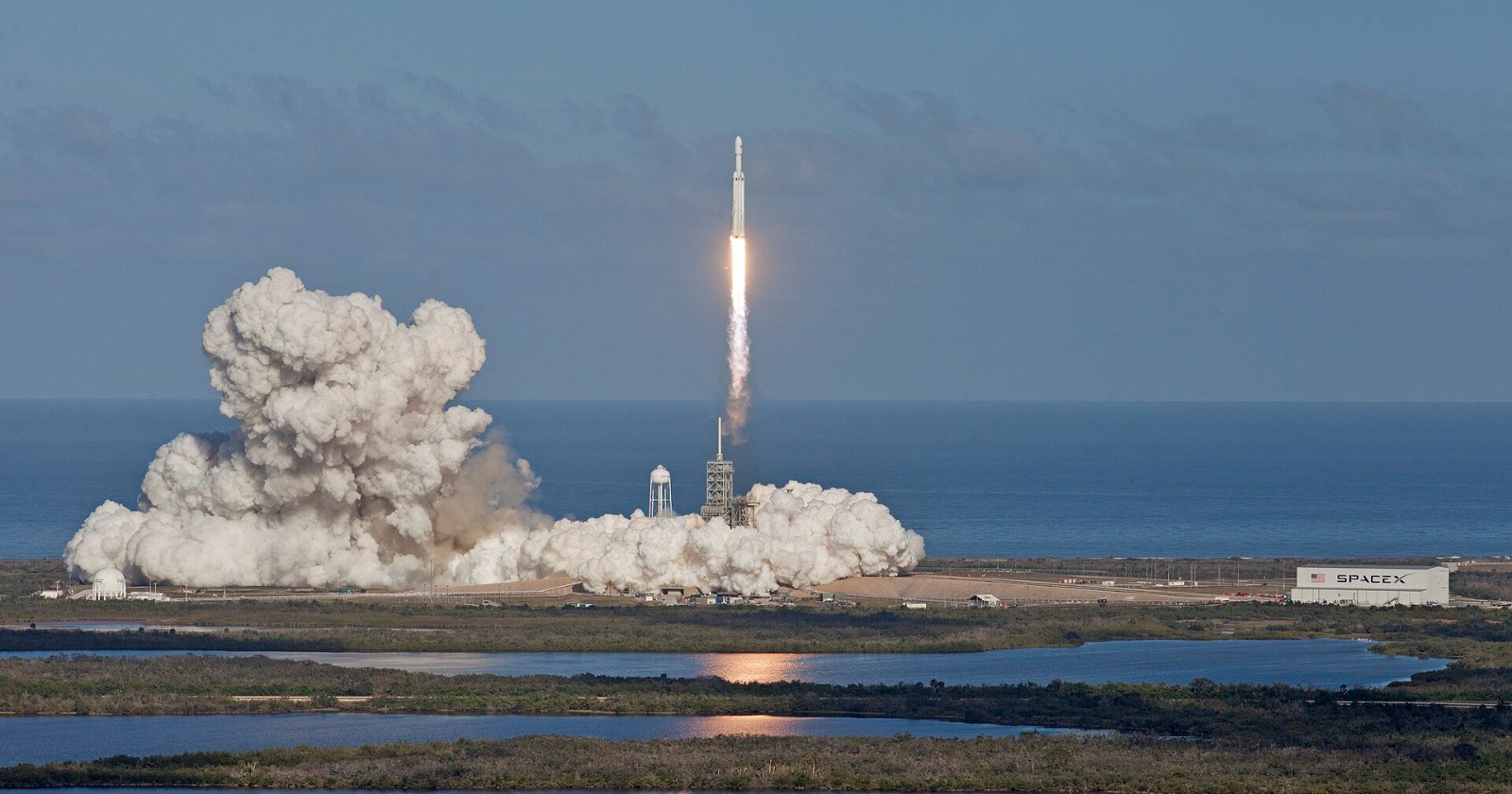
SpaceX raised about $75 billion in its stock market debut, the largest initial public offering on record, after pricing 555,555,555 shares of Class A common stock at $135.00 each. The company priced the offering on June 11 and began trading the next day on the Nasdaq under the ticker SPCX. The gross figure, $74,999,999,925, is roughly three times the proceeds Saudi Aramco raised in its 2019 listing, the previous record holder.
The shares closed their first session up about 19% at $160.95, lifting SpaceX’s market value to roughly $2.1 trillion by the close, after briefly running higher during the session. The offering price alone had implied a valuation of about $1.77 trillion, already enough to rank the rocket maker among the most valuable public companies in the world on its first day.
Where the money is supposed to go
For the space industry, the more durable story is not the one-day price move but the use of proceeds. In its prospectus, SpaceX says it will spend the net amount, about $74.4 billion after underwriting fees and expenses, to “fund our growth strategy.” The named priorities are expansion of its AI compute infrastructure, enhancements to its launch infrastructure and launch vehicles, increases in the scale and capacity of its satellite constellations, and general corporate purposes.
The ordering is telling: a launch company listed AI compute first. SpaceX has been describing satellites that carry processing power in orbit, and the filing frames that work alongside the rockets and the Starlink network rather than behind them. The capital injection is large enough to matter on a balance sheet, not just in a press release, which is a different kind of funding than the private rounds that built the company over 24 years.
A public company that Musk still controls
Going public also changes what outsiders can see. A company that operated privately can now be read every quarter: launch economics, Starlink finances, and Starship spending all become disclosable in a way they were not before. That transparency is arguably the bigger shift for competitors and customers than the cash itself.
Control, though, stays where it was. SpaceX told investors that founder Elon Musk will hold about 82.4% of the voting power through a separate class of stock, making it a “controlled company” under Nasdaq rules. That designation lets SpaceX skip some of the corporate governance requirements that normally protect public shareholders, and the company said it intends to use those exemptions. It also said it does not expect to pay dividends for the foreseeable future.
What the debut does and does not prove
A record IPO is a financing event, not a verdict on the technology. The valuation rests heavily on projections for Starship and Starlink that have not yet been fully realized, and a strong first day says little about where the stock settles once the lock-up periods that bar insiders from selling expire and quarterly results arrive. Buyers on day one were pricing a future, not a track record.
The company is also not yet profitable. Its prospectus reported a net loss of $4.3 billion in the first quarter of 2026, much of it driven by spending on its new artificial intelligence operations. Morningstar’s analysts valued SpaceX at roughly $780 billion, well below where the market priced it, using a discounted cash flow model that estimates worth from projected earnings, and they flagged “very high” uncertainty about the business and its dependence on Musk himself.
The headline numbers also deserve their qualifiers. The $75 billion is gross; the company keeps about $74.4 billion, or up to roughly $85.7 billion if underwriters exercise an option to sell additional shares. Market capitalization figures move minute to minute and briefly ran higher than the closing value during the session. And “largest on record” is measured by money raised, a ranking that shifts depending on whether such over-allotment shares are counted.
What is not in dispute is the scale of the raise and the destinations the company named for it. For a sector where access to capital has long separated the survivors from the rest, a launch and satellite operator just put the biggest pool of IPO cash in history toward more rockets, more satellites, and more compute.
