
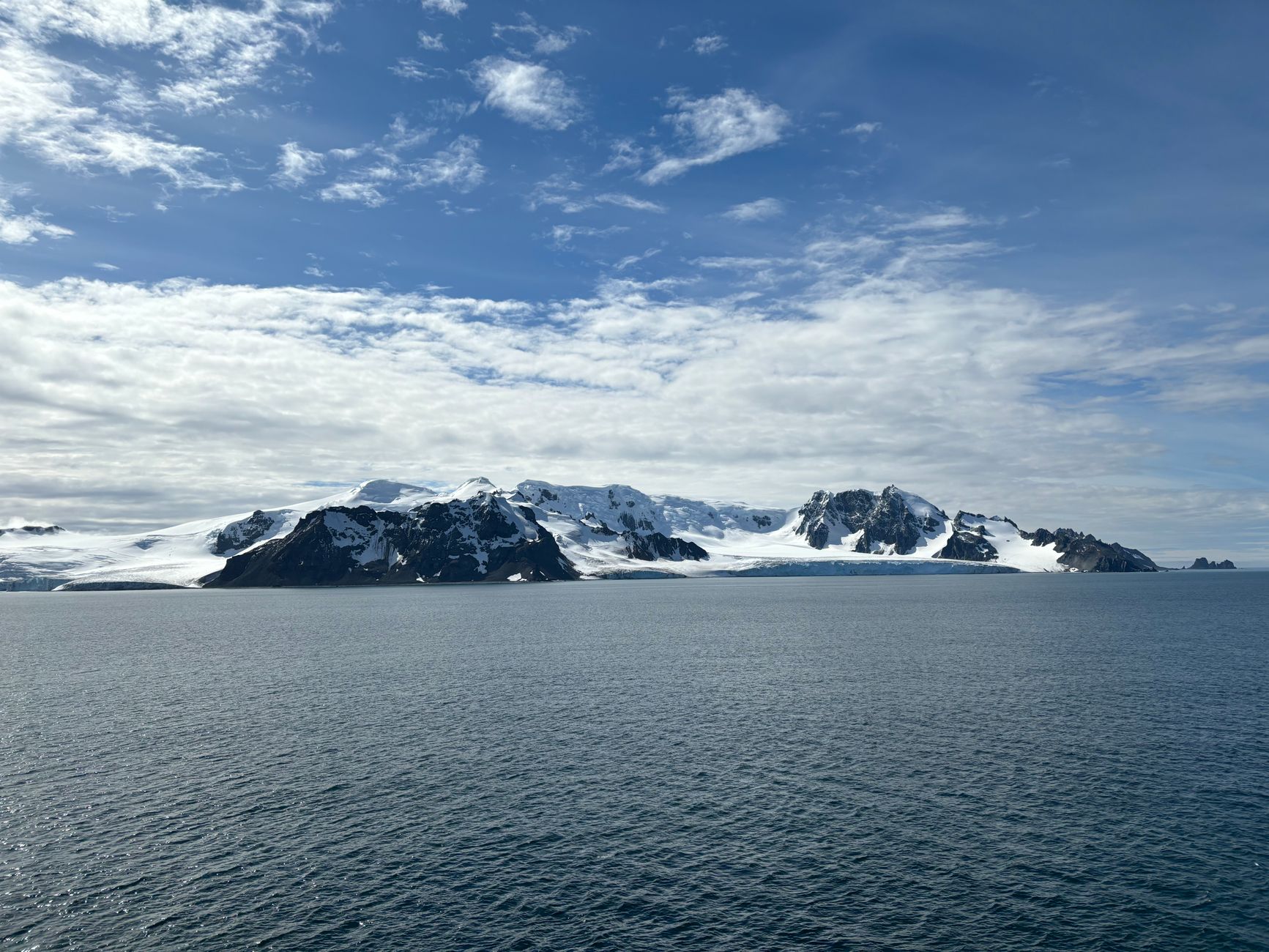
On 5 February 2012, a Russian drill team at Vostok Station punched through the last metres of ice and tapped into a body of water that had been sealed beneath the ice for millions of years. The lake beneath them, Lake Vostok, is roughly the size of Lake Ontario — a vast subglacial lake more than 800 metres deep in places. When the drill bit broke through, the pressure was so violent that lake water shot up the borehole like a geyser and froze in place before anyone could lower an instrument to greet it.
That frozen plug, sampled the following year, contained DNA fragments from organisms that had been evolving in absolute darkness since before our species existed.
A lake older than the human lineage
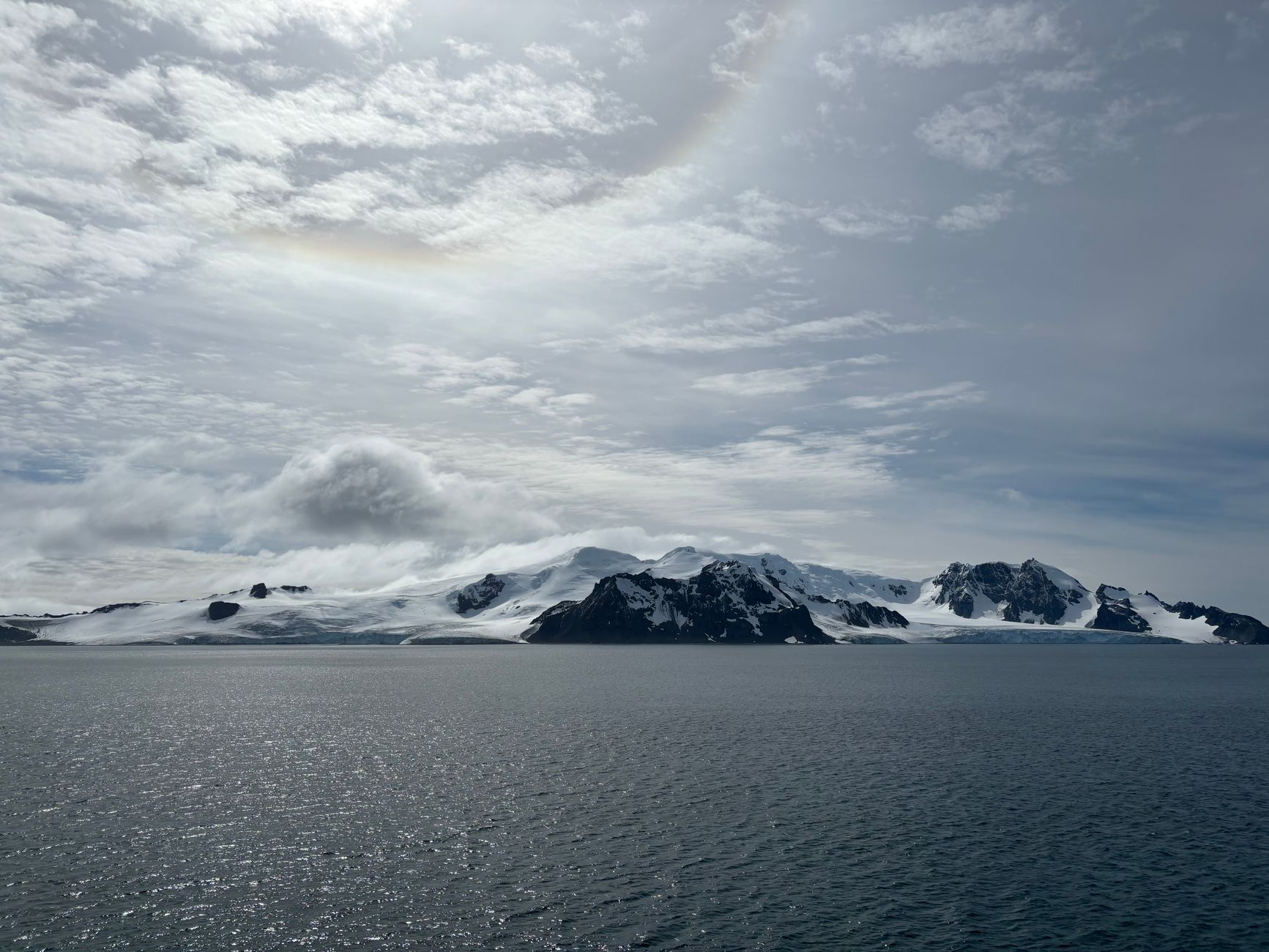
Lake Vostok sits beneath the East Antarctic Ice Sheet at roughly 78 degrees south, almost exactly under the geomagnetic south pole. The surface station above it, founded in 1957, is the same place that recorded the coldest natural temperature ever measured on Earth: minus 89.2 degrees Celsius in July 1983.
The lake itself, though, is liquid. Heat from the Earth’s interior, combined with the immense pressure of the ice above, keeps the water in a slim, dark, freshwater layer between bedrock and glacier. Estimates of its isolation vary, but the last contact with the atmosphere occurred around 15 million years ago, when Antarctica’s ice sheet thickened into the form it holds today.
To put that in perspective: when Vostok was last open to the sky, the ancestors of modern humans had not yet diverged from the ancestors of chimpanzees.
The hunt for a buried sea
The lake was suspected for decades before it was confirmed. Soviet pilots flying over the region in the 1960s noticed a strangely flat patch of ice — flat in the way only a floating ice ceiling over still water can be. In 1996, British and Russian scientists combined radar and satellite altimetry data to map its outline. The result was startling: a lake roughly 12,500 square kilometres in area, hidden under thousands of metres of glacier.
It was the largest of more than 400 subglacial lakes now known to exist beneath Antarctica, and the only one big enough to have its own internal currents and tides.
An international panel convened at the American Geophysical Union began publicly debating, as early as 2002, how to sample the water without contaminating it. The question was not academic. Any microbes living in Vostok would have spent millions of generations adapting to a place with no light, no fresh nutrients from above, and extreme water pressures.
Drilling toward the impossible
The Russian Antarctic Expedition began its drilling effort at Vostok Station in 1989, long before anyone knew what they were drilling toward. The borehole moved slowly — a few hundred metres a season — because the ice itself preserves a climate record reaching back more than 400,000 years.
Those ice cores trapped bubbles of ancient air from four glacial cycles, becoming one of the most cited paleoclimate archives in science.
By 1998 the drill had reached 3,623 metres and stopped, by international agreement, while the question of contamination was worked out. The drilling fluid being used — a mix of kerosene and freon to keep the borehole from collapsing under pressure — sat in a column more than three kilometres tall above the lake. Anyone breaking through risked dumping tens of tonnes of industrial fluid into a pristine ecosystem.
The Russian solution was clever, if controversial. They would drill until pressure sensors registered the lake just below, then withdraw the bit. The lake’s own pressure, slightly higher than the borehole column, would force water up several hundred metres. There it would freeze naturally, plugging the hole with fresh lake ice that could be drilled out and sampled the following year.
It worked. On 5 February 2012, at a depth of 3,769.3 metres, the drill broke into the lake. Water rushed up the borehole as predicted and froze.
What came up in the ice
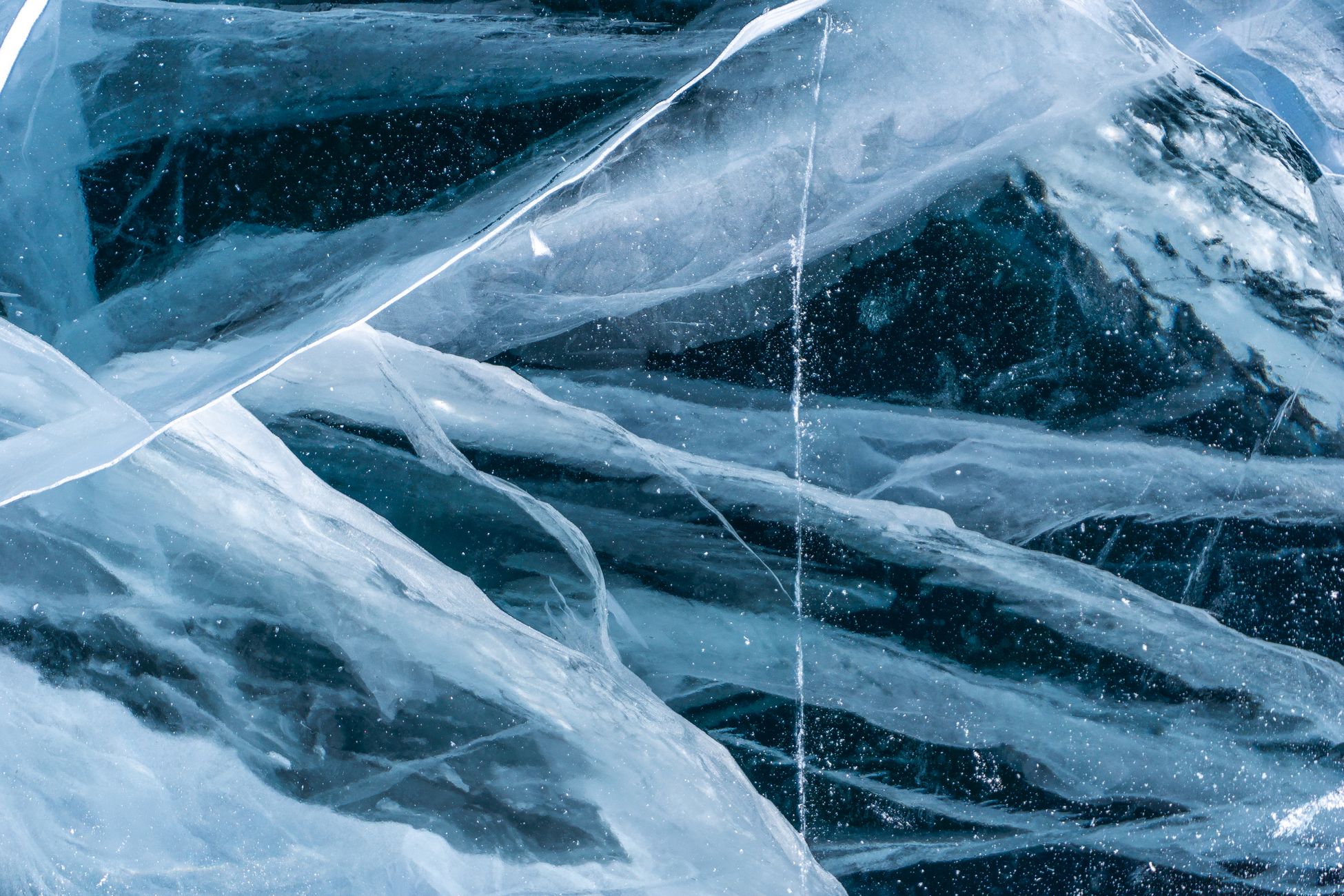
When the refrozen plug was recovered in 2013, DNA sequencing revealed more than 3,500 unique gene sequences, the majority bacterial, but including fungi and traces consistent with multicellular eukaryotes. Some matched microbes known from deep-sea hydrothermal systems. Others matched nothing in any database.
Russian researchers working from a separate sample identified a bacterium they catalogued as w123-10, which had no close relatives among the sequences they checked it against.
The findings were contested — contamination from drilling fluid was, and remains, a real concern — but the broader pattern matched what researchers expected. Subglacial Lake Whillans, sampled cleanly by an American team in 2013 using hot-water drilling, came back full of living microbes that metabolised iron and sulphur compounds from ground-up bedrock.
Life, in other words, had found a way to make a living in total darkness, drawing energy from rocks instead of sunlight.
Why this matters off Earth
The reason Vostok draws planetary scientists as much as it draws glaciologists is that it is the closest analogue Earth offers to two of the most promising places in the solar system to look for life: Jupiter’s moon Europa and Saturn’s moon Enceladus. Both worlds hide global oceans beneath thick ice shells. Both are dark, cold, and chemically active at the rock-water boundary.
A microbe that can survive 15 million years of darkness in Vostok is a working proof that biology does not require sunlight, or fresh organic matter from above, to persist. Recent work on protein fragments from newly discovered extremophiles has shown that the molecular signatures of such life can survive in forms that future missions might be able to detect even after the cells themselves are long dead.
NASA’s Europa Clipper, launched in October 2024, is built around exactly this question.
A continent of hidden water
Vostok was the first, but it is no longer alone. Radar surveys over the past two decades have mapped a vast network of subglacial rivers and lakes connecting much of the East Antarctic interior, including channels that drain and refill on roughly decadal cycles. A 2025 mapping effort revealed a colossal buried geological structure in the same region, hinting that the bedrock beneath the ice is far more dynamic than the frozen surface suggests.
That bedrock holds other secrets too. The Gamburtsev Subglacial Mountains, an Alpine-scale range buried beneath kilometres of East Antarctic ice, were detected by seismic surveys in 1958 and have never been seen directly by human eyes.
And the ice above all of it is no longer as permanent as it once seemed. Recent satellite data suggests Antarctic ice shelves are melting from below faster than models predicted, which raises the long-term possibility that lakes like Vostok could one day reconnect with the surface world — for the first time since the Miocene.
What darkness preserves
For now, the lake remains sealed. The Russian borehole has been resampled since the 2012 breakthrough, and each pass has produced a slightly cleaner picture of what lives down there. Plans for a clean robotic probe — one that could be lowered through a sterile hot-water borehole, swim freely, and image the lake floor — have been discussed for two decades. None has yet flown.
The water itself, if you could hold a glass of it, would look ordinary. Fresh, slightly oxygenated by ice melting at the ceiling, well below freezing and kept liquid only by pressure. It would taste of nothing in particular.
What it contains, though, is a record of evolution running in a closed room for longer than the Mediterranean Sea has existed. A lineage of organisms that never saw the sun set on the dinosaurs because they were already underground when the dinosaurs were still around. A small dark ocean that survived the rise of the Himalayas, the drying of the Sahara, and the entire human story, and was only opened, briefly, by a drill bit from a station built on top of it by accident.
