
Australia’s Independent Commission Against Corruption can drag a witness into a hearing room in Sydney, place them under oath, and demand answers to questions that no American prosecutor could compel without immunity, a grand jury, or a court fight that might last years. The witness cannot refuse on the grounds that the answer might incriminate them. They can be jailed for contempt if they stay silent. And the transcript of what they say, under that compulsion, generally cannot be used to convict them in a later criminal trial — because the bargain ICAC strikes is that truth comes first, prosecution comes second, and the two are deliberately kept apart.
That arrangement has no direct equivalent in American law.
What ICAC actually does in a hearing room
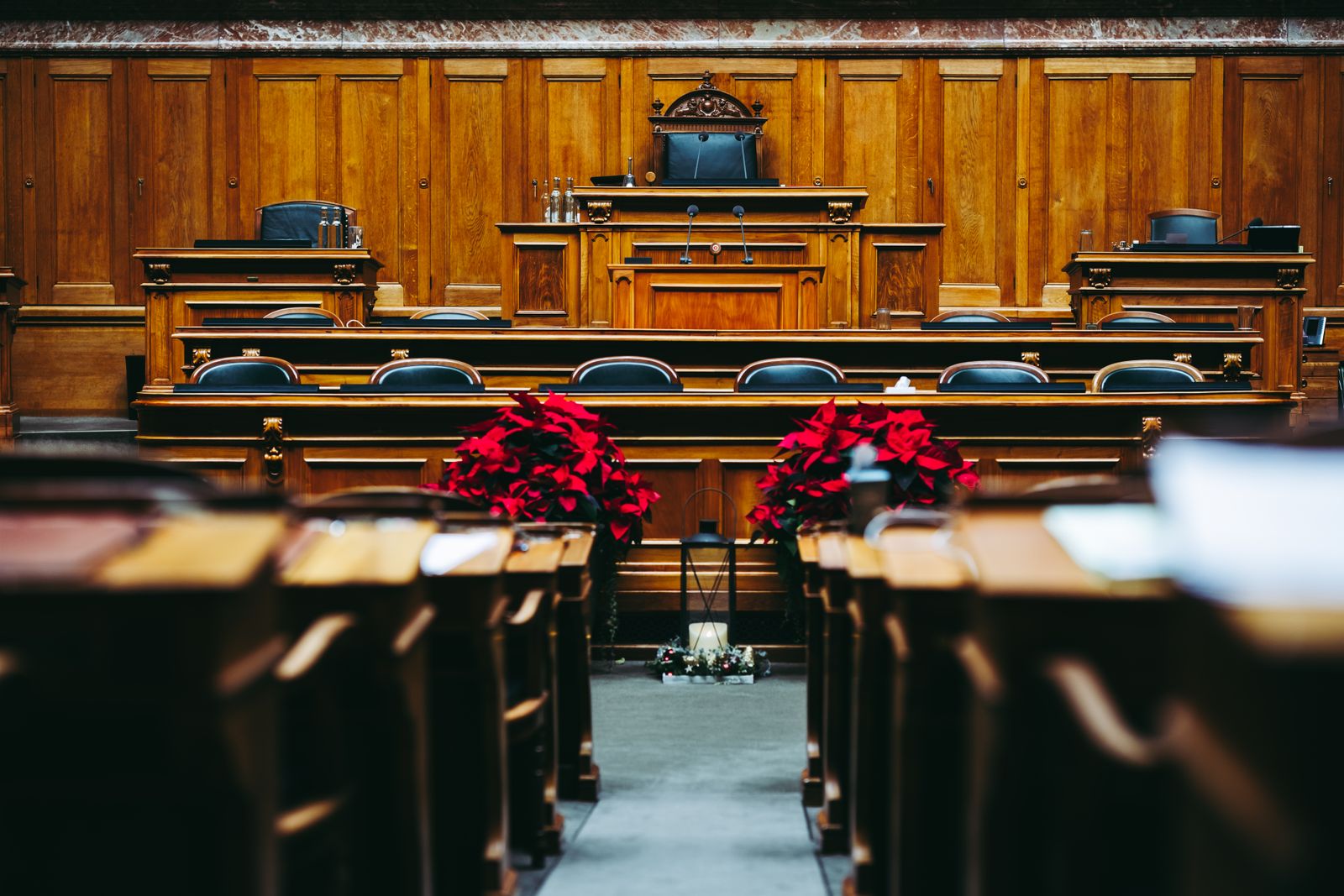
ICAC was created by the New South Wales parliament in 1988, in the wake of a state government that had collapsed under the weight of police and ministerial scandals. The commission’s enabling statute gives it the authority to summon any person, demand documents, and conduct public examinations under oath. Refusing to attend is an offence. Refusing to answer is an offence. Lying is an offence.
The Tinkler hearings as illustration
Nathan Tinkler, a former Hunter Valley mine electrician who became one of Australia’s youngest billionaires before later declaring bankruptcy, appeared before ICAC during hearings into political donations connected to coal interests in New South Wales. He answered questions about donations, corporate structures, and meetings that an American billionaire facing a similar federal probe could have simply declined to discuss by invoking the Fifth Amendment.
ICAC made no corruption finding against Tinkler. He has never been convicted of any crime. He has denied wrongdoing throughout. The point is not what the commission concluded about him — the point is the mechanism. He was in the chair, sworn in, and answering, because the statute said he had to be.
An American counterpart would have had options. A subpoena to testify before a congressional committee can be fought, narrowed, or simply ignored at the political cost of a contempt referral. A federal grand jury subpoena is harder to resist, but the Fifth Amendment travels with the witness into the room. Civil investigative demands from agencies like the SEC compel documents and depositions, but a witness can still refuse to answer specific questions on self-incrimination grounds.
The Fifth Amendment problem
The structural difference comes down to a single constitutional clause. The Fifth Amendment to the US Constitution says no person “shall be compelled in any criminal case to be a witness against himself.” Courts have read that clause to apply not only to criminal trials but to any setting where the answers could later be used in a criminal prosecution — a congressional hearing, a grand jury, a regulatory deposition, an SEC interview. Anywhere a federal or state authority might later turn an admission into a charge, the privilege follows.
The privilege against self-incrimination — the bedrock of any American courtroom — is explicitly removed inside an ICAC hearing. A witness must answer. In exchange, the answers themselves cannot generally be used against the witness in subsequent criminal proceedings. Derivative evidence can be, in some circumstances. The transcript itself, mostly, cannot. This is sometimes called use immunity. American federal prosecutors have a version of it, but they have to grant it deliberately, case by case, usually through a court order, and usually only after weighing whether the testimony is worth burning the prosecution. ICAC has it built into the statute as a default operating mode.
Australia has no equivalent constitutional protection to the Fifth Amendment. The common law privilege against self-incrimination exists, but parliament can override it by statute, and in the ICAC Act, parliament did. The trade-off — answers compelled, but those answers walled off from criminal prosecution — is the design choice that lets the commission function. That single constitutional gap is why every American attempt to build something ICAC-shaped runs aground before it gets off the drafting table.
How American investigators actually try to compel testimony
The contrast is visible in real time across the United States. In October 2023, the Securities and Exchange Commission asked a federal court to compel Elon Musk to sit for testimony in its investigation of his Twitter acquisition. The SEC could not simply order him to appear. It had to file a court application, argue its case, and wait — and the case had already been opened in 2022, meaning the agency burned more than a year of investigative time on a single witness’s appearance before any substantive questioning could occur. An ICAC commissioner would have set a hearing date and issued a summons in days.
State-level investigators face even thinner authority. The Senate Special Committee on Investigations in Georgia fought with Fulton County District Attorney Fani Willis over a subpoena before reaching a negotiated agreement for her under-oath testimony. The scope of the questions was itself a negotiation. An ICAC commissioner sets the scope of questions in the room, in real time, on the record.
State attorneys general who have tried to expand their own civil compulsion powers have run into hard pushback. In Washington, a request for broader authority to demand documents and testimony without judicial sign-off was described as extreme by prosecutors. The proposal would let the attorney general issue civil investigative demands across discrimination, labor, and constitutional matters without first convincing a judge there was cause.
That is, roughly, a sliver of what ICAC has had as default authority since 1988 — and even the sliver is contested as a constitutional overreach by American standards.
Witnesses still resist. They resist on grounds of personal safety, on grounds of relevance, on grounds of unfair process. The South African parallel is instructive: when private forensic investigator Paul O’Sullivan tried to refuse questions about his life before 1990 before a South African parliamentary committee, citing assassination attempts and personal security, the committee chair told him plainly he was required to answer, making clear that witnesses could not dictate the scope of questioning. That posture — the inquiry decides the scope, not the witness — is closer to ICAC’s operating mode than to any American body.
Why the wall between hearing and prosecution matters
The use-immunity wall is not a loophole. It is the entire point. Without it, no witness would talk. With it, the commission gets the testimony — names, dates, transfers, meetings, the architecture of who knew what — and prosecutors are left to build any criminal case from independent evidence gathered separately.
That separation is why ICAC findings of corrupt conduct so rarely translate into criminal convictions. The commission can name names and publish a report. A prosecutor then has to start almost from scratch, working from documents and witnesses obtained without using the compelled testimony as a roadmap. American prosecutors, who can offer use immunity in narrower circumstances, face the same problem when they do — it is the trade you make for the testimony.
The political cost in the United States of any equivalent body has so far been too high to build one. Federal investigators rely instead on a mosaic of tools: grand jury subpoenas, civil investigative demands, congressional subpoenas, agency depositions. Each one has limits. Each one can be fought. The result is a system where witnesses can sometimes decline to answer questions from oversight committees, and the committee’s recourse is a contempt vote that may or may not be enforced.
The press, the leak, and the parallel question
The American compulsion gap shows up in journalism too. In April 2025, the Justice Department revoked Biden-era protections for reporters in leak investigations, restoring the department’s ability to subpoena journalists for source information. Even that authority, restored at the federal executive level, requires a chain of internal approvals and is subject to challenge in court. ICAC can compel a journalist to identify a source in the same way it can compel anyone else, subject to whatever statutory protections parliament has built in — and the boundaries there are narrower than the First Amendment shield culture in the United States.
None of this makes the Australian model better or worse. The trade-offs are real. ICAC has been criticised in Australia for the reputational damage its public hearings cause to people who are never charged with anything. Tinkler is one example among many. The commission’s defenders argue that public hearings are precisely what give it its power — sunlight is the disinfectant, even when no one is convicted at the end.
Where the powers actually converge
American regulators do have compulsion tools that look, on the surface, similar. The SEC, the FTC, the CFPB, and state attorneys general all issue civil investigative demands. Federal grand juries compel testimony with the threat of contempt. Congress can subpoena and, in theory, hold witnesses in contempt. Parallel enforcement actions by multiple regulators against the same target can layer civil compulsion on top of criminal investigation, creating pressure that resembles the ICAC posture.
But the Fifth Amendment runs through all of it. A witness in a CID deposition can still refuse to answer specific questions. A grand jury witness can still take the Fifth. A congressional witness can still decline. The only way to break that refusal in the American system is to grant formal immunity through a court order — and prosecutors are reluctant to do that, because it means giving up the ability to use the testimony in any later criminal case against that witness.
For readers intrigued by how wealth and legal frameworks can intersect in unexpected ways, there’s a thoughtful video by Silicon Canals examining a billionaire who managed to legally erase bankruptcy—a case study that raises similar questions about what investigative powers can and cannot compel when financial interests are at stake.
ICAC grants that immunity automatically, by statute, to everyone who walks into the hearing room. That is the difference.
What this looks like from the witness chair
For someone in Tinkler’s position, the experience was procedurally simple and personally brutal. A summons arrived. A date was set. Counsel assisting the commission asked the questions. The transcript went into the public record. Days of headlines followed. No criminal charges resulted from his evidence, and none could have, on the strength of that evidence alone.
For a hypothetical American counterpart — a coal magnate facing a federal probe into political donations — the same set of facts would have produced a years-long fight over scope, a likely Fifth Amendment invocation on the sensitive questions, possible immunity negotiation, and quite possibly no public hearing at all. Grand jury proceedings are secret. SEC depositions are not public. The mechanism for getting a billionaire on the record, under oath, in front of cameras, answering questions about who got what and when, simply does not exist in the same shape.
The design choice nobody copied
ICAC is now thirty-eight years old. Other Australian states have built their own versions. The federal National Anti-Corruption Commission, established in 2023, operates on similar principles. New Zealand, Hong Kong, and Singapore have analogous bodies with varying degrees of compulsion authority. The model has spread across the British Commonwealth.
It has not spread to the United States. Proposals for a federal anti-corruption commission with compulsion powers have surfaced periodically and gone nowhere. The Fifth Amendment is the immovable object. Any body that wanted to operate on the ICAC model would have to grant use immunity to every witness by default, and American prosecutors are not willing to surrender that much prosecutorial discretion to an investigative body operating outside their control.
Witnesses in Australia have also begun pushing back. In May 2026, several individuals refused to appear before NSW parliamentary hearings after a court ruling complicated the use of compelled evidence, suggesting that even within the Australian system the boundaries of compulsion are still being tested. The statute is not a fixed thing. It moves under pressure from the courts and from the witnesses who decide the contempt risk is worth running. But the basic architecture has held for nearly four decades, and the trade at its core remains intact: a society can have public hearings that force the powerful to answer in real time, or it can have prosecutions built on those same answers, but it cannot have both.
That is the choice Australia made in 1988 and the choice the United States has declined to make ever since. An Australian billionaire and an American billionaire, faced with similar allegations, walk into very different rooms. One is sworn in and answers. The other negotiates for months over whether the room exists at all. The bankruptcy court annulled Tinkler’s debts in 2018, and the ICAC transcripts sit in the public record, searchable, permanent — the testimony of a man who, under American law, would have had the right to say nothing at all. The American system protects that right and pays for it in opacity. The Australian system pierces it and pays for it in convictions that never come. Neither country has found a way to have the transparency without surrendering the prosecution, or the prosecution without surrendering the transparency. The trade is the system. There is no version where you get both.
