
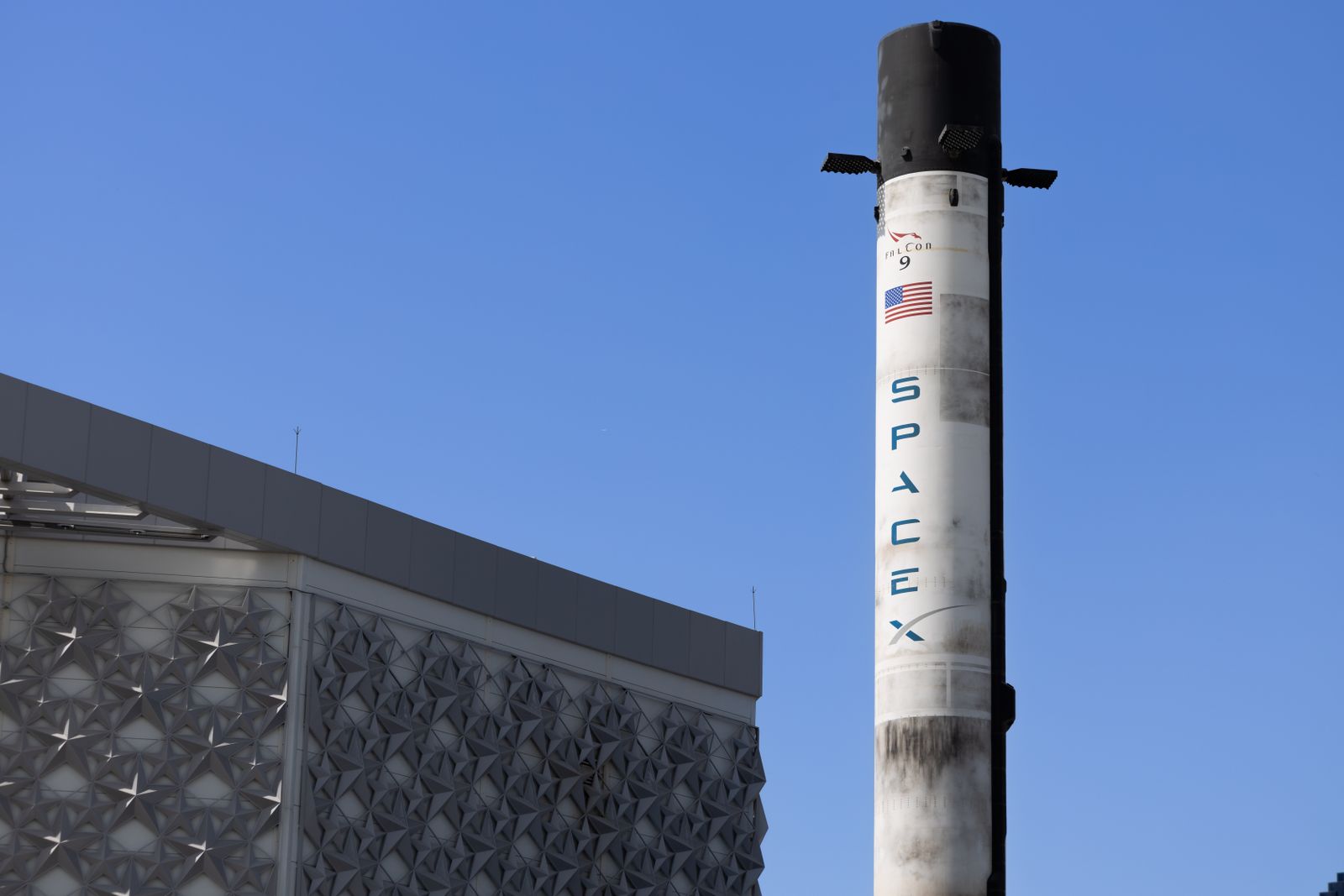
On the morning SpaceX priced the largest initial public offering in history, the prospectus a retail investor could download ran past 300 pages. The complete version did not circulate. It sat on a single server inside the Securities and Exchange Commission’s Washington headquarters, blacked out in the public copy and readable in full by perhaps a dozen people holding the right security clearances. That distance — between the document anyone can open and the one almost no one can — is the peculiar problem of taking a launch company public.
The premise of an S-1, the registration statement a private American company files before its shares can trade publicly, is that the investor buying a single share at the IPO price has access to the same material information as a hedge fund putting in a nine-figure order. For most companies that goal is achievable through diligent drafting. For a launch provider it collides with federal classification regulations that govern how cleared contractors are allowed to describe their work.
The resolution is asymmetric. Sophisticated institutional buyers often have analysts with security clearances who can attend classified briefings under non-disclosure agreements. Retail buyers cannot. The prospectus is therefore the binding document for ordinary investors, and the redactions in the prospectus are the gaps in what they can know. The SEC’s job, in part, is to make sure those gaps stay narrow enough that the offering is still fair.

What an S-1 actually contains
The S-1 introduces a private company to the public markets. Audited financials going back three years. A list of every executive officer and director, with their compensation. A risk factors section that can run 50 pages on its own. A discussion of material contracts. A breakdown of customer concentration — if any single customer represents more than 10 percent of revenue, that customer typically has to be named.
When Chime filed its S-1 in 2025, the document disclosed its history of losses and its reliance on partner banks, The Bancorp Bank and Stride Bank, to issue the debit cards its business runs on. That dependence on outside banks was among the most prominent risk factors in the prospectus. StubHub’s filing carried a similar disclosure burden, laying out 29 percent revenue growth to $1.8 billion in 2024 alongside a swing to a net loss. Nothing in either filing was classified. Every contract could be summarised in plain English without a security officer having to sign off.
Where launch providers diverge
A launch provider’s customer list looks different. A meaningful share of revenue comes from agencies whose mission profiles are not public. The National Reconnaissance Office does not publish the orbital parameters of its satellites. The Space Force’s Space Systems Command awards contracts whose payload descriptions are classified at the Secret or Top Secret level. Some payloads are compartmented further, accessible only to people with specific Sensitive Compartmented Information clearances.
An S-1 has to describe the business. The business is launching those payloads. The payloads cannot be described. So the document becomes a negotiation. Companies file confidential treatment requests, asking the agency to allow specific contract terms, customer names, or revenue figures to be redacted from the public version while the unredacted version sits in the SEC’s confidential files. The back-and-forth happens in writing, on the SEC’s own timeline, and every iteration delays the road show.
The SpaceX filing as a stress test
The mechanism became newly visible when SpaceX moved toward its public offering. CNBC reported in May 2026 that the filing sparked a broader rally in space-sector equities, with retail money piling into Rocket Lab, Planet Labs and the space-focused ETFs that hold them in anticipation of the listing. The bull market in space stocks ran on the same engine that powered the offering itself: scarcity. SpaceX had been private for more than two decades. Its financials had never been audited under SEC standards. Its contracts had never been laid out in a single public document.
Some of those contracts could not be laid out. Starshield, the company’s national-security division, holds awards from the NRO and the Space Force whose terms are classified. Al Jazeera’s coverage of the filing reported the headline numbers the prospectus finally put on the record: revenue of $18.6 billion in 2025 against a net loss of $4.9 billion. What that top line could not show in detail was its own composition. The split between commercial Starlink, NASA crew and cargo missions, and classified defense work is the line item Wall Street watched most closely, precisely because parts of it can only be described in aggregate. What the SEC cannot allow is hiding the existence of a material revenue stream. If classified work represents 30 percent of revenue, that 30 percent has to appear somewhere in the prospectus, even if the underlying contracts cannot be quoted.
How the redaction fight actually unfolds
For a launch provider, SEC staff comments tend to cluster around three areas. First, customer concentration: if one classified customer accounts for more than 10 percent of revenue, the company has to argue that naming the customer would compromise national security. Second, contract terms: the SEC wants material contracts filed as exhibits, and the company has to seek confidential treatment for the operative clauses. Third, risk factors: the prospectus has to describe what happens if a classified contract is cancelled or restructured, without describing the contract itself.
Each argument has to be coordinated with the contracting agency. The Defense Department’s security review process is its own bureaucracy, with its own timeline. A company cannot simply decide what to redact — it has to get the customer agency to confirm, in writing, that the proposed redaction is consistent with the security classification of the underlying program. That sign-off can take weeks for a single contract, and a launch provider may have dozens.
Some contract clauses are themselves classified. The unclassified clauses can be filed as exhibits. The classified clauses cannot. The filed contract becomes a Swiss cheese — pages with blacked-out sections, sometimes whole annexes replaced with notations indicating confidential treatment has been requested. The unredacted versions exist on a single SEC server, accessible only to a small number of staff with the appropriate clearances.
What this does to the IPO calendar
An ordinary tech IPO moves from confidential S-1 submission to first-day trading in roughly four to six months. A launch provider with significant classified revenue routinely takes longer. The interagency review of redactions adds time. The risk that a single contracting officer at the NRO or the Space Force needs to escalate a question can stall a comment-letter response for weeks.
For those interested in the mechanics behind major space sector IPOs, Silicon Canals put together a detailed examination of the financial structures and investor calculations that drive these kinds of public offerings—it’s a useful complement to understanding why the paperwork burden matters so much when billion-dollar bets meet regulatory disclosure requirements.
The downstream effect is that launch providers tend to go public later in their corporate lives than comparable commercial companies, when their balance sheets are stronger and they can absorb the delay. Space and biotech share a structural feature: the regulator that governs the science is not the regulator that governs the disclosure, and both have to be satisfied before a share trades.
Space Daily has reported on the secondary effect of the SpaceX listing — that an estimated 4,400 current and former employees crossed into millionaire territory on the first day of trading, with around 400 holding stakes worth more than $100 million. Every one of those paper fortunes was a function of a prospectus that had survived the redaction fight and made it to the printer.
The document that survives
What the public eventually reads is a document shaped by two competing imperatives — the SEC’s mandate to inform investors and the Defense Department’s mandate to protect sources and methods. The seams show. Revenue disclosures reference government customers in general terms without identifying specific agencies. Contracts are described only as being with defense agencies. Risk factors warn about the cancellation of programs the prospectus cannot describe.
The S-1 that emerges is simultaneously the most detailed public account of a launch company that will ever exist and, by design, an account with measured silences. That tension has consequences that extend well beyond any single offering. It reshapes who can credibly participate in a space IPO with full information, it lengthens the timeline that determines when private capital can finally exit, and it sets the precedent every subsequent launch provider — Rocket Lab’s classified work, Firefly’s national-security manifest, Blue Origin’s eventual filing — will inherit. A regulatory regime built on the premise that retail and institutional investors see the same prospectus runs, in this corner of the market, into a classification regime built on the opposite premise. The 300 pages a retail investor downloads on the morning of pricing are the visible portion of a document whose full form sits in a classified vault inside the SEC’s Washington headquarters, read by perhaps a dozen people on Earth. The gap between those two documents is where the fairness of a space IPO is ultimately decided, and where the next decade of public-market space investing will be defined.
