
On July 20, 1969, roughly 20 minutes after the lunar module Eagle settled into the dust of the Sea of Tranquility, Buzz Aldrin reached into a small pouch in his personal preference kit, pulled out a thumb-sized plastic vial of wine and a wafer of bread from Webster Presbyterian Church near Houston, and took Communion. And almost no one on Earth heard him do it.
Mission Control had asked him to stay quiet.
The chalice that fit in a glove pocket
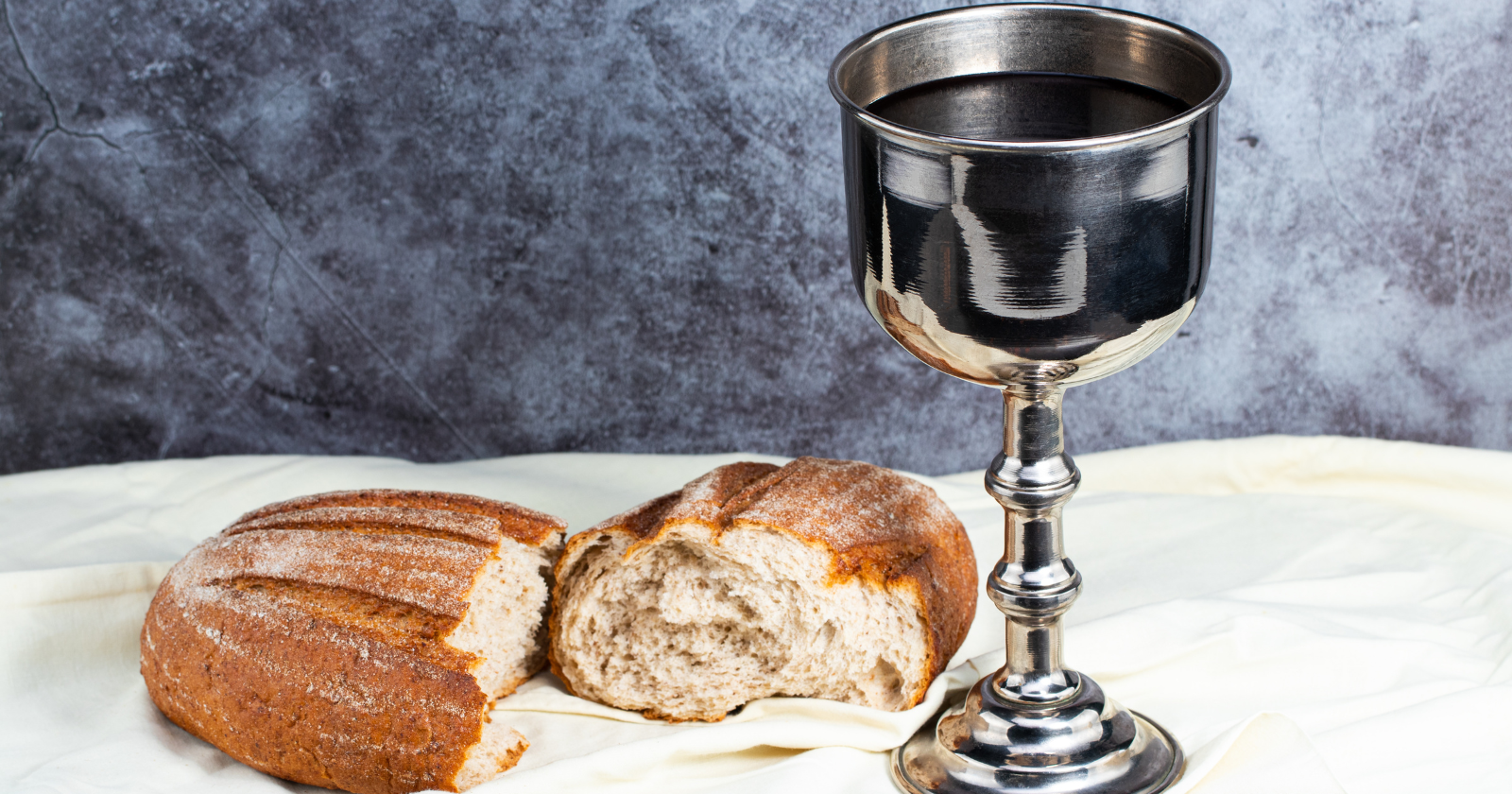
The kit was tiny. A plastic film container of wine. A wafer wrapped in cellophane. A miniature silver chalice barely larger than a thimble. A handwritten index card with a verse from the Gospel of John. Aldrin had carried all of it from a small Presbyterian congregation in Webster, Texas, the spiritual home of many of the Apollo astronauts, where he served as an elder, and he described every piece of it afterward in a first-person account for Guideposts.
Neil Armstrong watched without comment. Michael Collins was overhead in Columbia, on the far side of the radio link. The cabin was cramped, the checklist was crowded, and the two men had been awake for the better part of a day.
Why Houston went quiet
The silence on the loop was not accidental. NASA was, at that moment, defending itself against a lawsuit.
On Christmas Eve 1968, the crew of Apollo 8 — Frank Borman, Jim Lovell and Bill Anders — had read the opening verses of Genesis to a live television audience as they orbited the Moon. The broadcast drew a lawsuit from Madalyn Murray O’Hair, the founder of American Atheists, who had already successfully challenged school-sponsored Bible reading and prayer in the United States. O’Hair argued that NASA, a federal agency, had violated the Establishment Clause by allowing its employees to read scripture while on duty. She asked the courts to bar astronauts from religious observance in space.
The reading had also produced the opposite reaction at enormous volume. NASA’s mail rooms filled with letters defending the Genesis broadcast, and the agency found itself caught between a vocal legal challenge on one side and an organized letter-writing campaign on the other. By the summer of 1969 its communications staff had every reason to keep the next mission’s most religiously charged moment off the air.
The suit was pending when Apollo 11 left the pad. Deke Slayton, who ran flight crew operations, pulled Aldrin aside before launch. Slayton’s instruction was practical, and later recounted in detail: go ahead and have your Communion, but keep the comments general. Don’t put us back in court.
So when Aldrin keyed his microphone, what the world heard was a measured, ecumenical request rather than the Christopher Columbus–style planting-of-the-faith ceremony he had originally drafted. He invited listeners to pause for a few moments of silence and to contemplate the events of the past few hours and give thanks in their own way.
Then the loop went quiet. He ate the bread. He drank the wine. He read the verse from John on his own.
O’Hair’s case against NASA was dismissed by a federal court in December 1969, and the Supreme Court later declined to take it up, but its chilling effect on the agency’s communications policy long outlived it. Apollo 11’s most religiously charged moment was therefore conducted in radio silence rather than broadcast — a striking inversion of the Apollo 8 reading that had triggered the whole legal headache.
The wine that crept up the cup
The story of the lunar Communion only filtered into public awareness slowly. Aldrin himself first described it publicly in a 1970 essay for Guideposts magazine, and the details were later expanded in The Guardian’s reconstruction of the ceremony, which drew on Aldrin’s own writings and on the recollections of the Webster congregation. In Aldrin’s telling, the wine behaved strangely — in the one-sixth gravity of the Moon, it curled slowly up the inside of the cup rather than pouring. The Communion elements, he noted, were the first food and drink ever consumed on the lunar surface.
The verse on the card was John 15:5. “I am the vine, you are the branches,” it began, in Aldrin’s own handwriting, the rest of it pressed onto a three-by-five index card he had tucked into the kit on Earth. He read it silently, to himself, in a cabin no one outside could hear.
The chalice that came home
The silver chalice was returned to Webster Presbyterian Church, where it remains. Every July, on the Sunday closest to the anniversary of the landing, the congregation holds a service it calls Lunar Communion Sunday. They play a recording of Aldrin’s radio request. They use the same chalice.
The astronaut who was almost a missionary
Aldrin had originally envisioned something more theatrical. In drafts he later described, the lunar Communion was meant to be broadcast live, a moment of public witness in the tradition of explorers planting crosses on new shores. Slayton’s intervention turned it into something quieter and, in retrospect, stranger: a private sacrament conducted on a world where no sacrament had ever been performed, attended by exactly one celebrant and one silent observer, transmitted to Earth as dead air.
Aldrin himself has been ambivalent about the decision in the decades since. He has written that the Communion was deeply meaningful to him personally, his way of thanking God for the safe descent. He has also written that, looking back, he might not have chosen a Christian sacrament for a mission undertaken “in the name of all mankind.” The Catholic Register’s account of religious experiences among Apollo-era astronauts records that ambivalence at length — the recognition that the crew had been sent not just by the United States but by a planet, and that the planet contained more than one faith.
What survives
Listen to the Apollo 11 air-to-ground record from that part of the timeline and the gap is audible. Aldrin makes his general request. There is a pause. The flight director moves on. The world, leaning toward its televisions and radios, does not know that on the other end of the silence a man is eating a wafer and drinking a sip of wine that is rising slowly up the inside of a thimble-sized cup in a way no liquid had ever risen before.
It was never, strictly, a secret. The press had reported beforehand that Aldrin would carry Communion bread aboard; what NASA withheld was the live broadcast, not the fact. The core elements of the story — the bread, the wine, the chalice from Webster Presbyterian, the radio request, the silence — are confirmed across multiple independent accounts, including Aldrin’s own contemporaneous writings and the church records. The detail that catches people is almost always the wine. It did not pour. It crept.
Aldrin is 96 now. He watched the launch of Artemis II from his home in California on April 1, 2026, on television, with his daughter Jan beside him. Florida Today reported that the Aldrin Family Foundation shared two photographs of him in front of the TV screen as the Space Launch System rocket carried Reid Wiseman, Christina Koch, Victor Glover and Jeremy Hansen on a 10-day flight around the Moon — the first crewed lunar mission since 1972. He is the last surviving member of the Apollo 11 crew.
Aldrin took the sacrament before he stepped out, before Armstrong’s famous descent down the ladder, before the boot print and the flag and the phone call from Richard Nixon. The first human act on the surface of another world, after the engines shut down and the dust settled, was a man eating a wafer of bread that had ridden 240,000 miles in a plastic pouch.
The pouch survives. The chalice survives. The handwritten card survives. The recording of the silence survives. Webster Presbyterian Church will hold its Lunar Communion service again this July, with the same chalice on the same altar, replaying the same audio of a man on the Moon asking the world to give thanks in its own way while NASA — wary of a pending lawsuit — quietly closed the channel and let him eat his bread alone.
