
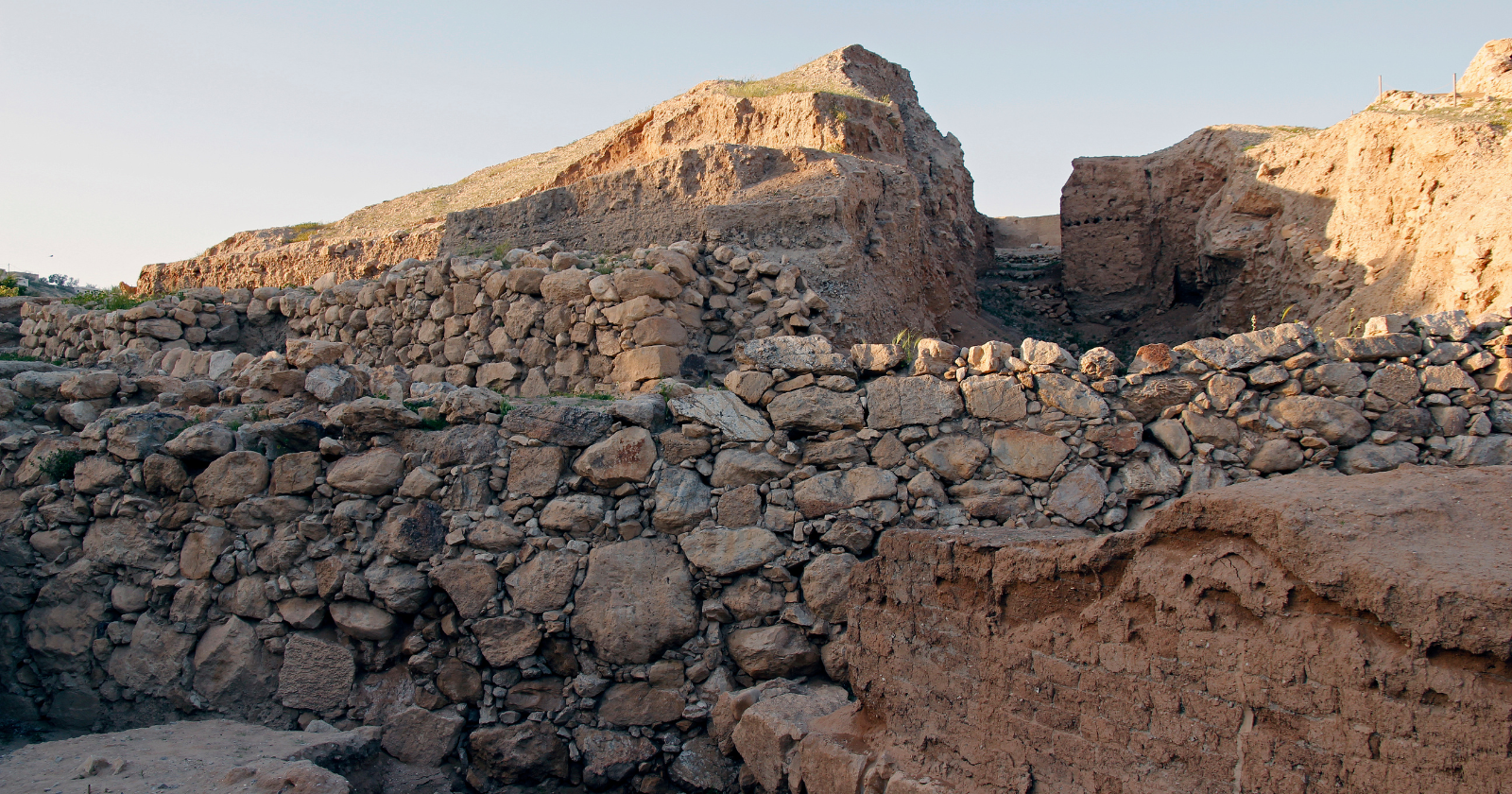
The oldest city in the world that humans have continuously lived in is not Rome, not Athens, not Damascus, not Cairo. It is a Palestinian town of approximately 25,000 people in the Jordan Valley, sitting 250 metres below sea level in the dry rift between the West Bank highlands and the eastern desert, watered for the last several thousand millennia by a single freshwater spring that emerges from the rocks at the base of the cliffs. The modern town is built around that spring. So was the previous town. So was the one before that, and the one before that. The archaeological mound at Tell es-Sultan, just north of the modern city centre, contains the layered remains of more than 20 successive settlements built one on top of another over the course of approximately 11,000 years of continuous human habitation — making Jericho, by most reasonable accounts, the oldest city on Earth in which people have lived without significant interruption since the end of the last Ice Age.
According to the World History Encyclopedia’s reference on early Jericho, drawing on the archaeological record established by Kathleen Kenyon’s excavations, the site began as a seasonal camping ground for Natufian hunter-gatherers around 10,000 BCE, during the closing centuries of the Younger Dryas — the final cold snap of the Pleistocene Ice Age, a period of approximately 1,200 years during which the world’s climate temporarily reverted to glacial conditions and permanent settlement anywhere in the Levant was essentially impossible. The Natufians camped at Jericho specifically because of the Ein as-Sultan spring, which provided reliable water in an otherwise arid environment. When the Younger Dryas ended around 9600 BCE and the climate warmed into what geologists call the Holocene — the current interglacial period in which human civilisation has subsequently developed — the Natufians at Jericho stopped leaving. By approximately 9400 BCE, the seasonal camp had grown into a permanent settlement of more than 70 circular mud-and-straw dwellings. The town has, in some form, been there ever since.
What Tell es-Sultan actually contains
The mound at Tell es-Sultan is approximately 40,000 square metres at its base and rises about 21 metres above the surrounding plain — the accumulated debris of thousands of years of mud-brick houses being built, falling down, and being rebuilt on top of their predecessors. Modern excavation has revealed a continuous sequence of habitation layers stretching from the Pre-Pottery Neolithic A period (10,000-8,800 BCE) through the Pre-Pottery Neolithic B (8,800-7,000 BCE), the Pottery Neolithic (7,000-5,200 BCE), the Chalcolithic (5,200-3,300 BCE), the Bronze Age, the Iron Age, the Persian and Hellenistic periods, the Roman and Byzantine eras, the Islamic conquest, the Crusader period, the Ottoman centuries, and into the modern era. The same spring has watered every one of these settlements. The mound is, in stratigraphic terms, an unusually rich record of long-term human occupation — there was a brief settlement hiatus of several centuries between the Pre-Pottery Neolithic A and Pre-Pottery Neolithic B periods around 7000 BCE, but the site has otherwise been continuously inhabited across the full 11,000-year span.
Among the most striking architectural features Kenyon’s team uncovered during the 1952-1958 excavations is the Tower of Jericho, a stone structure approximately 8.5 metres tall containing an internal staircase of 22 steps, built around 8,000 BCE. The tower is one of the oldest known monumental structures in the world. It predates the construction of the Egyptian pyramids by more than 5,000 years. It predates Stonehenge by approximately 5,000 years. It was built by a population of perhaps a few hundred people, using only stone tools, with no metal implements available — copper smelting in the Levant would not begin for another 3,000 years. Adjacent to the tower, Kenyon found a stone wall 3.6 metres high and 1.8 metres thick at the base, surrounding the entire Neolithic settlement. Whether the wall was defensive, ceremonial, or designed to protect the settlement from flash floods from the surrounding hills remains contested. What is not contested is that it represents some of the earliest large-scale collaborative construction work in human history.
The contested status of “oldest”
The claim that Jericho is the oldest continuously inhabited city in the world is widely repeated but not universally accepted. Several other ancient settlements have plausible competing claims, depending on how “continuously” and “city” are defined. Damascus, Syria, has been continuously inhabited since approximately 9,000 BCE according to some archaeological estimates, though the dating is less secure than Jericho’s. Byblos, Lebanon, has continuous habitation evidence going back roughly 8,800 BCE. Aleppo, Plovdiv in Bulgaria, Argos in Greece, and several Anatolian sites have all been proposed at various times. The technical difficulty is that the strict definition of “continuously inhabited” requires essentially unbroken settlement, and most of these sites have either documented periods of partial abandonment, gaps in their archaeological records, or contested dating of their earliest layers. Jericho’s claim is the strongest because the Tell es-Sultan mound contains a particularly well-documented occupation sequence — successive settlements built directly on top of each other, with only the brief PPNA-to-PPNB hiatus interrupting the continuity. Per the Jerusalem Post’s coverage of Jericho’s archaeological record, the site has yielded approximately 70 prehistoric houses and more than 20 successive settlements, providing what is generally considered the best-documented long-term occupation sequence of any site in the world.
In September 2023, UNESCO formally recognised the archaeological complex at Tell es-Sultan as a World Heritage Site under the designation “Ancient Jericho/Tell es-Sultan,” with Palestine as the State Party of nomination. As reported by NBC News’s coverage of the designation, the recognition was controversial — Israel objected to the listing on political grounds related to the West Bank’s status under international law — but the underlying archaeological case for Tell es-Sultan as one of the most important early Neolithic sites in the world was uncontested. The UNESCO listing acknowledges Jericho as one of the oldest continually inhabited cities on Earth and as the location of some of the earliest fortified settlements ever constructed by human beings.
What Jericho’s existence predates
The most striking way to grasp the antiquity of Jericho is by reference to the things that did not yet exist when its first permanent residents built their first stone houses. Writing would not be invented for approximately 5,700 more years — cuneiform script would emerge in Sumer around 3,200 BCE. The wheel would not be invented for another 5,500 years, also in Mesopotamia, around 3,500 BCE. Metallurgy would not develop in the Levant for another 4,500 years; copper smelting reached Jericho only around 5,000-4,500 BCE. The Egyptian pyramids would not be built for another 6,400 years. The Athenian Acropolis would not exist for approximately 7,500 years. The Roman Empire would not be founded for approximately 8,200 years.
Agriculture itself was just beginning at the time of Jericho’s founding. The Natufian culture that established Tell es-Sultan was among the first human groups anywhere in the world to harvest wild grains, develop sickle technology, and begin the long transition from hunting and gathering to settled farming. The full domestication of wheat and barley would come over the following thousand years, and Jericho was one of the central sites where this transition was worked out. The city’s founders were not farmers in the modern sense — they were hunter-gatherers in the process of becoming farmers, who chose a permanent location next to a reliable spring and stayed there long enough to invent agriculture as they went. They did not know that what they were doing would matter to anyone afterward. They were trying to feed themselves and stay warm at the end of the last Ice Age, and they happened to choose a spot of ground that has continued to feed people, in essentially uninterrupted succession, for the next 11,000 years.
