

In the early 1970s, a Hungarian psychologist named Mihaly Csikszentmihalyi sat in a Chicago studio watching painters work. They had been at it for hours. Lunch came and went. The painters did not notice. One artist, asked later why he had skipped meals and let his coffee go cold, could not really explain it — he had simply been inside the canvas. Csikszentmihalyi wrote down the phrase his subjects kept reaching for: it felt like being carried by a current. In his book Beyond Boredom and Anxiety, he gave the state a name. He called it flow.
Half a century later, the finding has been diluted into a productivity slogan. That dilution obscures what Csikszentmihalyi actually discovered, and why it matters now more than ever: flow is not a kind of focus you can summon. It is what happens when attention points so completely outward that the self goes quiet — and the device in your pocket is engineered to make exactly that impossible.
The argument of this piece is narrow. The neuroscience that has emerged in the last decade does not extend Csikszentmihalyi’s theory so much as confirm its strangest claim: that the vanishing of self-monitoring is not a feeling, but a measurable redistribution of brain activity. And the conditions that produce that redistribution are precisely the ones the modern attention economy is built to prevent.

The man with the rock
Csikszentmihalyi’s interest in absorbed states began long before the Chicago studios. As a child in wartime Europe, he watched adults around him struggle to find meaning after catastrophe, and noticed that the ones who coped best tended to lose themselves in something — chess, music, mountain climbing. He carried that observation into his graduate work at the University of Chicago.
One of his early subjects was a rock climber. Another was a chess master. Another was his own older brother, a mineralogist who could spend an entire afternoon studying a single stone. As Psychology Today recounted, the brother’s quiet absorption in a piece of quartz was one of the seeds of the entire theory.
The common thread across climbers, chess players, surgeons and painters was not the activity. It was the structure of attention.
What the painters told him
Csikszentmihalyi’s method was unglamorous. He handed people pagers, later replaced by digital devices, and beeped them at random moments during the day. When the pager went off, the subject filled out a short form: What are you doing? How hard is it? How skilled do you feel? How absorbed are you?
The data, gathered across thousands of subjects over decades, kept producing the same shape. Flow appeared when three conditions lined up at once: a clear goal, immediate feedback, and a challenge that sat right at the edge of the person’s skill — hard enough to demand full attention, not so hard that it tipped into panic. Below that edge, people reported boredom. Above it, anxiety. Inside the narrow band, the self went quiet.
The surgeons he interviewed said they forgot they had bodies. The composers said the music seemed to write itself. The climbers said the mountain seemed to move them rather than the other way around. None of them could enter the state on command. They could only set up the conditions and let it arrive.
Why the brain seems to cooperate
The behavioural finding sat unexplained for decades. Csikszentmihalyi could describe what subjects reported, but he could not say what was actually happening inside their skulls. The neuroscience of the last fifteen years has begun to fill that gap, and the pattern it has found maps closely onto what the painters told him.
The default mode network — a set of midline brain regions associated with self-referential thinking, mind-wandering and autobiographical rehearsal — was first characterised by Raichle and colleagues in 2001. It is the circuitry that hums when you are worrying about a conversation or imagining yourself from outside. A growing body of imaging work, reviewed in Frontiers in Psychology, finds that this network quiets down during tasks meeting Csikszentmihalyi’s flow conditions, while sensorimotor regions become tightly coupled to the work at hand.
The mechanics of how blood flow tracks neural activity, captured by techniques described in neurovascular coupling research, allow researchers to watch this redistribution happen in real time. In jazz pianists improvising, in expert climbers visualising routes, in writers composing fluently, the self-monitoring circuits dim and the task-relevant circuits dominate. The behavioural strangeness — the vanishing self — has a neural signature.
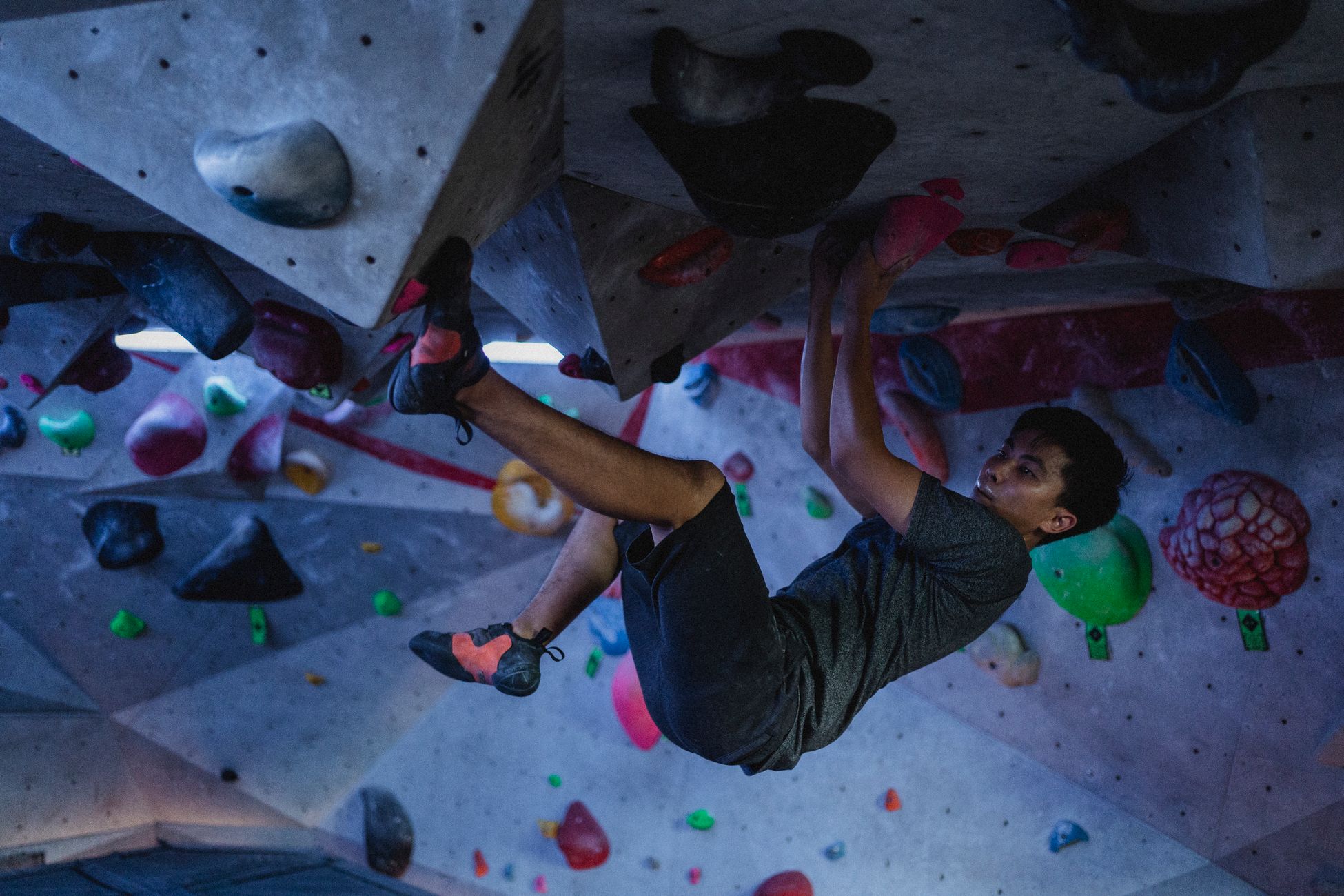
Recent work has gone further. A 2024 study from Washington University traced a mechanical link between body motion and fluid movement in the brain through a network of veins, suggesting that the physical engagement characteristic of flow states — climbing, playing, surgery — may shape neural conditions in ways that pure cognition cannot.
The conditions the phone destroys
One of the most-cited findings from Csikszentmihalyi’s pager studies was that flow is not tied to any particular kind of work. Factory workers entered it on assembly lines. Mothers entered it reading to children. Accountants entered it in spreadsheets. The activity did not matter. The structure did.
What separated people who experienced flow often from those who rarely did was not their job description. It was whether they had organised their attention so that something — anything — could demand all of it.
This is where the modern problem comes into focus. People who spent their evenings flicking between apps reported the lowest flow frequencies. People who played an instrument, gardened, climbed, cooked complex meals, or wrote in journals reported the highest. The phone, with its endless drip of low-stakes novelty, sits exactly in the wrong zone: enough stimulation to keep attention from settling, not enough challenge to absorb it. It is, in effect, an anti-flow device — engineered to keep the default mode network humming, to keep the self always slightly aware of itself.
As National Geographic reported, climbers like Steph Davis describe entering a state on big walls where fear, plans, and self-talk drop away and only the next handhold exists. Free soloists in particular — climbers without ropes — describe the state as not optional but necessary. Any intrusion of self-consciousness at 600 metres above the ground is dangerous. They are, in a sense, the last group for whom the conditions are non-negotiable.
Why it cannot be forced
The paradox at the centre of the theory is that flow rewards attention pointed away from itself. The harder a person tries to be in flow, the further it retreats. Trying to be in flow is, by definition, attention pointed at the self.
Csikszentmihalyi’s advice, repeated across his books and lectures, was indirect. Set up the conditions. Choose a task with a clear goal. Match the difficulty to your current skill. Remove interruptions. Then forget about the state and do the work.
What the painters were really doing
Looking back at the studio interviews that started everything, the detail that still stands out is how mundane the painters’ answers were. They were not chasing transcendence. They were trying to solve a problem on the canvas. The colour was wrong. The composition needed something in the lower left. The hand had to move in a particular way.
The state Csikszentmihalyi named arose as a byproduct of that ordinary attention — attention so completely committed to the object in front of them that there was no spare capacity left to think about themselves. That is the part of the finding that has resisted fifty years of dilution into self-help. Flow is not a productivity hack. It is not a brand of focus that can be summoned with the right playlist. It is what happens to a mind when something outside it becomes, briefly, more interesting than the mind itself.
Csikszentmihalyi died in 2021. The painters he interviewed in Chicago are mostly gone too. The pagers have been replaced by phones, and the phones, on the whole, have made the state harder to reach. But the structure he identified has not changed, and the neuroscience has only sharpened it. A clear goal. Immediate feedback. A task at the edge of one’s skill. And then the quiet, when the self steps out of the way and the work fills the room.
