
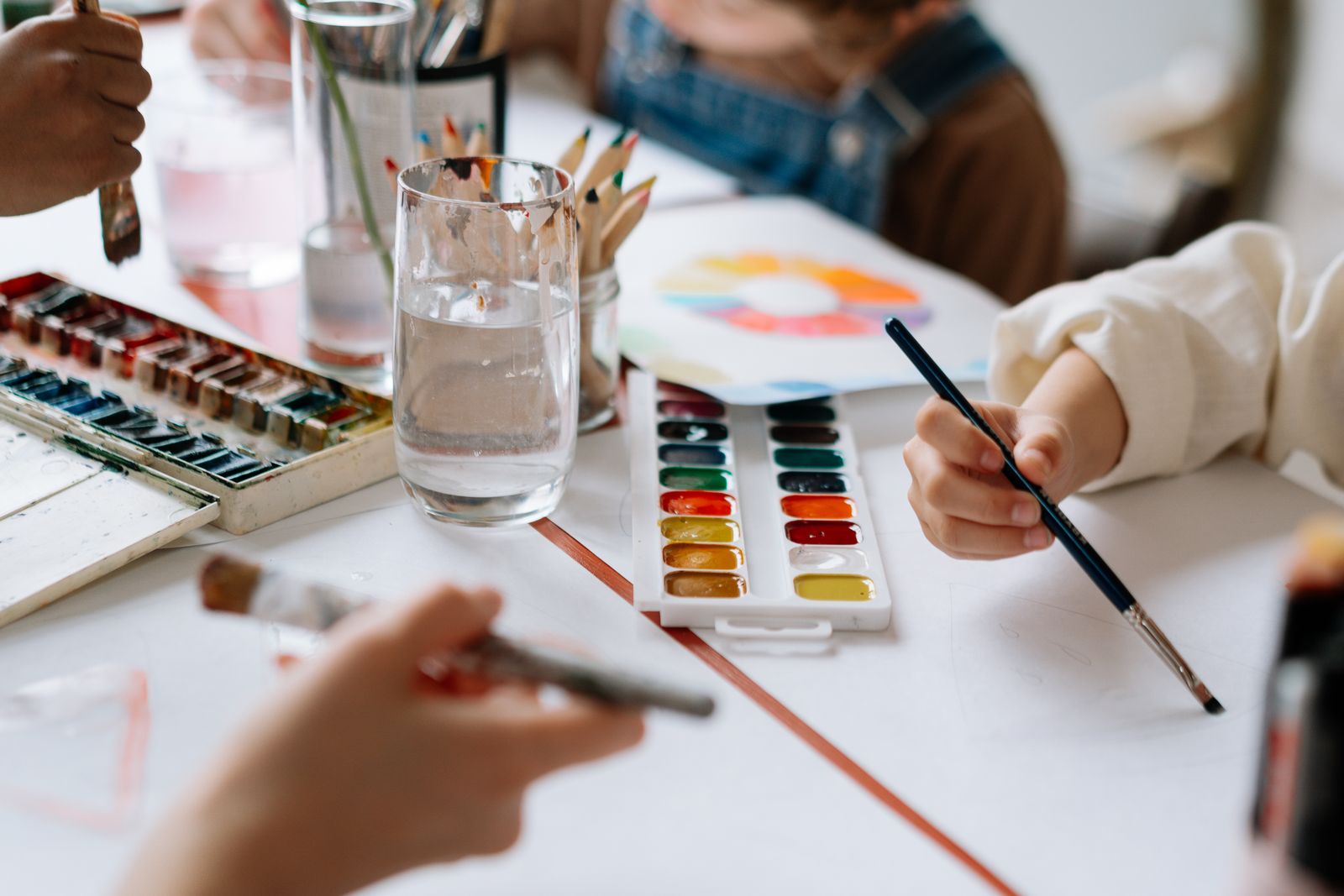
By age seven, a child can understand far more feeling words than most adults use with them in a normal day.
Not just happy, sad, mad and scared. By the early school years, the list has begun to fill with annoyed, ashamed, proud, nervous, lonely, embarrassed, jealous, disappointed, relieved, worried, guilty and bored.
The brain is not discovering those words in a dictionary. It is building them out of faces, voices, stories, corrections, family rituals, classroom talk and the small physical clues children are taught to notice inside their own bodies.
That is why a color wheel works so well at a kitchen table. Red does not prove that anger and color run along the same neural pathway. Blue does not prove that sadness has a fixed place in the visual brain. The color gives a child a handle for something that otherwise has no edges.
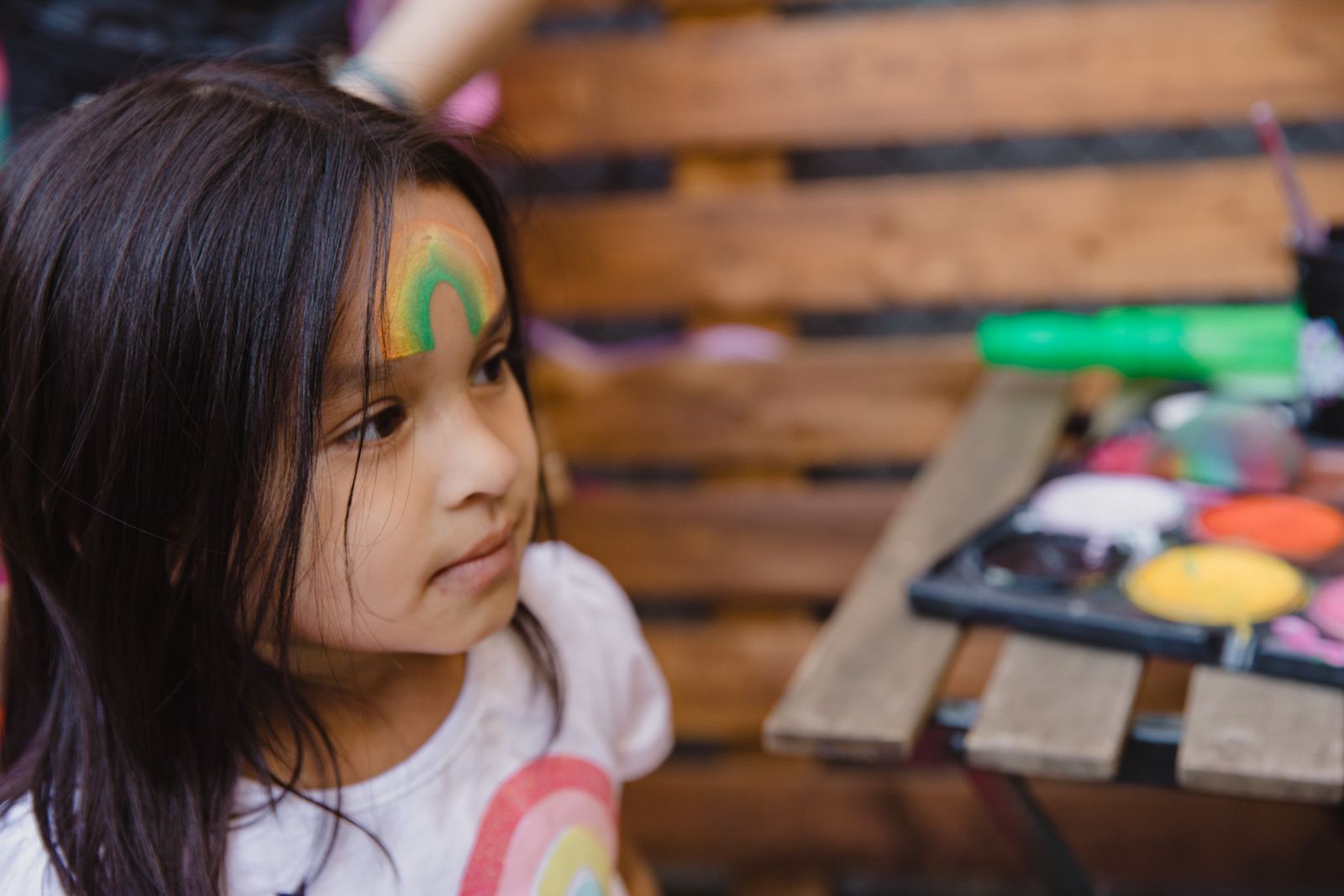
The vocabulary explosion hidden inside childhood
In a developmental survey published in Frontiers in Evolutionary Neuroscience, Simon Baron-Cohen, Ofer Golan, Sally Wheelwright, Yael Granader and Jacqueline Hill tested comprehension of 336 emotion words in children and adolescents from age four to sixteen.
The jump was steep. At least 75 percent of four- to six-year-olds understood 41 of the emotion words. Among seven- to eight-year-olds, that number rose to 88. By ages nine and ten, it reached 180.
That is the real threshold worth building the article around. The finding is not that every seven-year-old can name exactly thirty feelings on command. It is that the emotional lexicon grows quickly across early and middle childhood, doubling in the youngest bands of the study.
Some words arrive early because the body makes them obvious. Angry, scared, sad, happy and bored have faces, tones and situations that children meet again and again.
Other words take longer because they require a child to hold more than one thing in mind at once. Embarrassed means knowing how you feel and imagining how someone else sees you. Jealous means wanting what another person has. Guilty means carrying an action backward in time.
Why red anger and blue sadness still matter
Ask a six-year-old what anger looks like, and red often comes fast. Ask about sadness, and blue is waiting nearby.
Those answers are not pure biology. They are also language, culture, cartoons, warning signs, storybooks, clothes, classroom posters and adult speech. But they are not meaningless either.
Color-emotion associations appear across art, design and psychology research, although the strength of each pairing depends on culture, context and the exact task. Red can signal heat, danger, arousal or anger. Blue can suggest calm, coldness or sadness. Green can carry jealousy in one setting and safety in another.
That makes the color wheel useful only if it is treated as a scaffold, not a diagnosis. A child painting anger red is not revealing a fixed neural truth. They are borrowing the visibility of color to make an invisible state easier to hold.
The educational move is simple. Once anger has a color, it can become a word. Once it has a word, it can become a sentence. Once it becomes a sentence, an adult can respond to it before it becomes a thrown toy, a slammed door or a silence that lasts all afternoon.
The adult voice that builds the child’s map
Emotion vocabulary does not bootstrap itself. Children learn feeling words the same way they learn most powerful words: from people who keep using them in the right moments.
A caregiver saying “you look frustrated because the tower fell” is doing more than calming a child. The sentence links a sensation, an event, a cause and a word. It turns a storm in the body into a category the child can use again.
That kind of talk matters because emotion language is not just descriptive. It is regulatory. A child who can say “I am disappointed” has a different tool from a child who can only shout, hide or hit.
The same logic sits underneath many early-childhood crafts. A worry jar, a feelings thermometer, a scribble release and a color wheel all do the same quiet job. They move an internal state into the shared world, where another person can see it and answer.
For parents wondering how to help children navigate this complex emotional landscape, there is a thoughtful video by The Artful Parent that demonstrates six simple craft activities designed to help young kids process difficult feelings through creative expression.
The bonding channel underneath the words
A 2025 study from Shinshu University, summarized by ScienceDaily and published in Archives of Women’s Mental Health, followed 245 mother-child pairs from Okaya, Japan, into sixth grade.
The team found that 17.1 percent of mothers showed postpartum depressive symptoms. Mother-to-infant bonding mediated 34.6 percent of the effect of postpartum maternal depression on later child difficulties.
That does not prove that bonding alone creates a larger emotion vocabulary. The study measured later emotional and behavioral difficulties, not a child’s feeling-word count.
But it does show why the early channel matters. A baby’s first emotional world is not a poster on a classroom wall. It is another nervous system arriving, leaving, soothing, missing, returning and naming what is happening.
The study also found that boys had higher total difficulty scores than girls, especially in conduct and hyperactivity or inattention. That finding should not be inflated into a claim about boys’ brains being built for fewer feelings.
A safer reading is more practical. Children who receive more precise language for internal states get more chances to practice regulation, and children who receive less of that language may have to build the bridge later.
The catch-up curve around seven
The age-seven window appears again in twin research, but with a different shape.
A 2026 University of York study using data from the Twins Early Development Study compared 851 families and found that twins scored lower than their singleton siblings in language, cognition and social-emotional development at ages two, three and four.
By age seven, the language pattern had changed. The York team reported a reversal in verbal ability, with twins significantly outperforming their singleton siblings in language tests after that age, even while some cognitive and social-emotional gaps persisted.
Lead author Emily Wood, a postgraduate researcher in the Department of Education at the University of York, pointed to the ordinary pressure of twin life: two children of the same age competing for the same attention, toys, food and one-on-one time.
The finding does not mean twins have a special emotional-language advantage. It means early delays can bend, and language can catch up fast when the child’s environment, schooling and cognitive development start working together.
That is why seven feels less like a finish line than a hinge. The child is no longer only learning that anger is red or sadness is blue. They are learning the difference between annoyed and furious, nervous and afraid, lonely and left out.
The paint that becomes a sentence
After seven, the work changes. The child does not stop learning emotion words, but the new task becomes precision.
A younger child may say, “I am mad.” An older child may say, “I am embarrassed because everyone laughed and I did not mean to do it.” The second sentence has time inside it. It has cause, audience, memory and self-control.
Color can still help. A child may say a worry is grey, a good memory is warm, jealousy is green, embarrassment is hot pink, grief is dark blue or anger is bright enough to hurt.
The point is not that the color is scientifically exact. The point is that the feeling has become shareable.
The color wheel pinned to a kitchen wall is doing more than it looks like. It is giving a child a visible way to finish a sentence the body started first. Red, blue, green, grey, warm, dark, bright, and all the other shades that become words before they become memory.
