
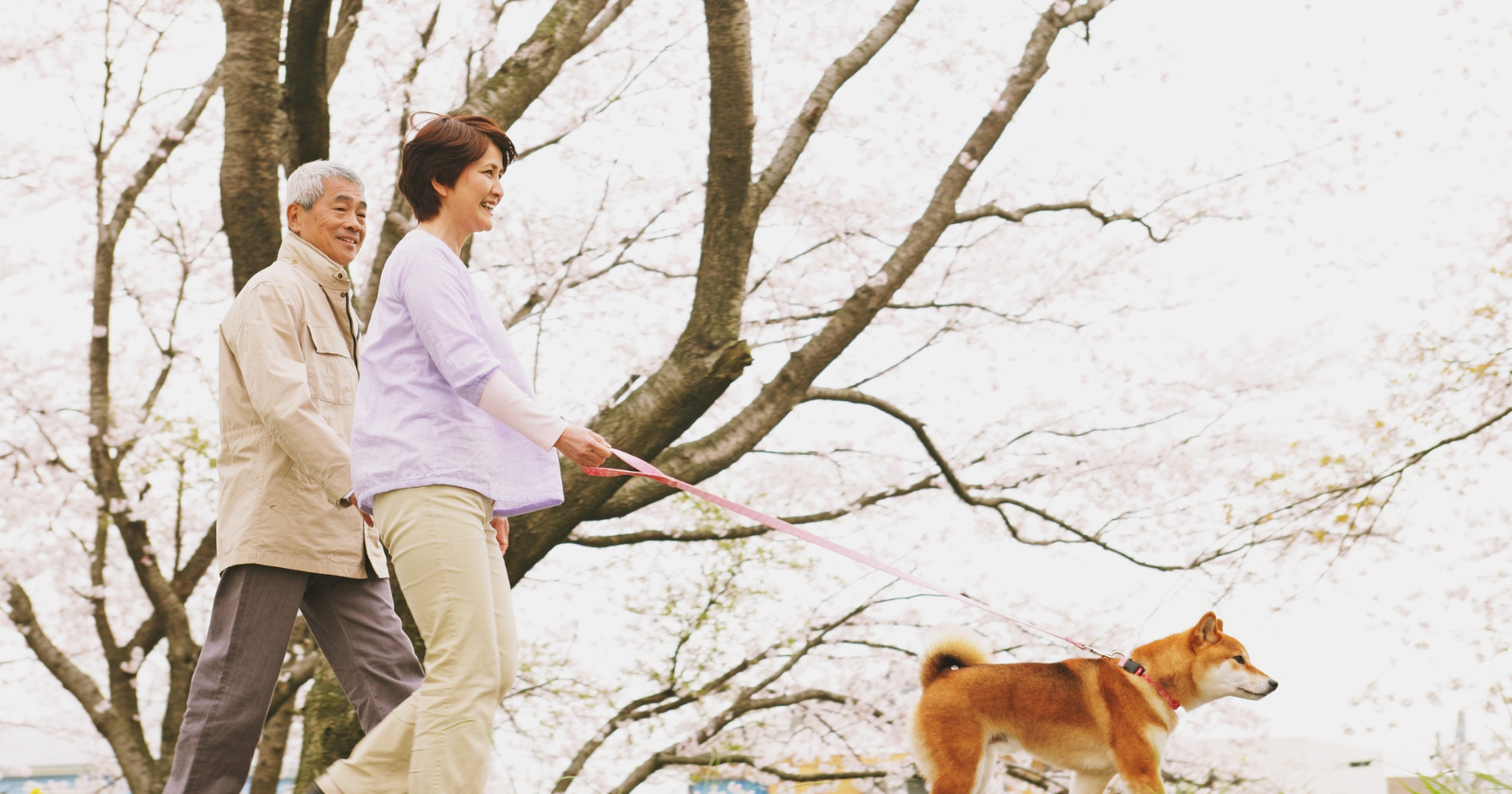
“Experiencing awe is such a simple practice, just taking a moment to look out the window or pausing to consider the technological marvels that surround us, and we now show it can have measurable effects on our emotional well-being,” said Virginia Sturm, an associate professor of in the departments of Neurology and of Psychiatry and Behavioral Sciences.
The work in question is a 2020 study from UCSF’s Memory and Aging Center and the Global Brain Health Institute. Two groups of older adults took the same walk. One group felt measurably better afterwards. What separated them was a brief instruction.
A note before going further: we are writers and editors reading a research paper, not clinicians or psychologists. What follows is reporting on one small study, not advice. The findings are observational patterns from a particular group of participants, and population-level results are not prescriptions for any individual reader.
What an awe walk actually is
The design was deliberately plain. Healthy older adults took a weekly 15-minute outdoor walk for eight weeks. The study followed 52 older adults with a median age of 75.
Participants were split at random into two groups. One was the control group, given the walks and nothing else. The other was the awe-walk group, asked at the start of the study in a short briefing to orient their attention toward the vastness and novelty of what they were passing, the kind of attention that produces awe. The walks were identical apart from that briefing.
It helps to be specific about what “awe” means here. As Dacher Keltner defines it, the UC Berkeley emotion researcher who co-authored the study, “Awe is a positive emotion triggered by awareness of something vastly larger than the self and not immediately understandable, such as nature, art, music, or being caught up in a collective act such as a ceremony, concert or political march.” For a walker, that might be a stand of old trees, a wide view, or the small detail of light on water noticed for the first time.
What the data showed
The awe group reported significant boosts in daily prosocial positive emotions such as gratitude and compassion, and less distress, over the eight weeks.
The popular framing tends to blur a useful distinction here. During the walks themselves, the awe group reported more awe. Away from the walks, the significant group differences were in those prosocial emotions and in distress.
Then there were the selfies. Participants photographed themselves on each walk, and the researchers analysed how the images changed. Over time, the awe walkers made themselves physically smaller in the frame and smiled more broadly. Sturm did not expect it. “To be honest, we had decided to do this particular analysis of participants’ selfies on a lark, I never really expected we’d be able to document awe’s ability to create an emotionally healthy small self literally on camera!” she said. It is a striking image, but an exploratory one from a single small sample, and best read as a clue rather than proof.
The limits matter just as much as the gains. The participants were healthy older adults with limited symptoms of mental distress at the outset, and the effects the researchers describe were relatively moderate. This is one study of a few dozen people, not a settled consensus about how awe works for everyone.
Why a single instruction might do this
The team’s explanation centres on attention and proportion. Sturm describes it this way: “One of the key features of awe is that it promotes what we call ‘small self,’ a healthy sense of proportion between your own self and the bigger picture of the world around you.” That is the team’s working hypothesis, not an established law of the mind, but it fits the selfie data. People who oriented toward something vast literally drew themselves smaller.
The broader awe literature points in a similar direction. Keltner notes that “experiencing awe can contribute to a host of benefits including an expanded sense of time and enhanced feelings of generosity, well-being and humility.”
What older adults, specifically, may gain
The choice of older participants was not incidental. Sturm noted that “negative emotions, particularly loneliness, have well-documented negative effects on the health of older adults, particularly those over age 75.” An intervention that nudges attention outward, toward the world and other people, speaks directly to that. The study does not claim awe walks reverse loneliness or its health toll, only that this group reported more gratitude and compassion and less daily distress.
There is at least one sign the reorientation effect may travel further than healthy ageing. A later small randomised study, published as a conference abstract by a separate research group, applied the awe-walk approach to people with dementia, who took biweekly 15-minute walks over four weeks. Compared with the control group’s deterioration, the awe-walk participants showed greater improvements in quality of life, attention, orientation, mood and social behaviour. One small replication is not a body of evidence, but it suggests the original finding was not a fluke of one healthy sample.
If loneliness or low mood is sitting close to home, a qualified counsellor or therapist is worth talking to. None of this is a substitute for that.
