
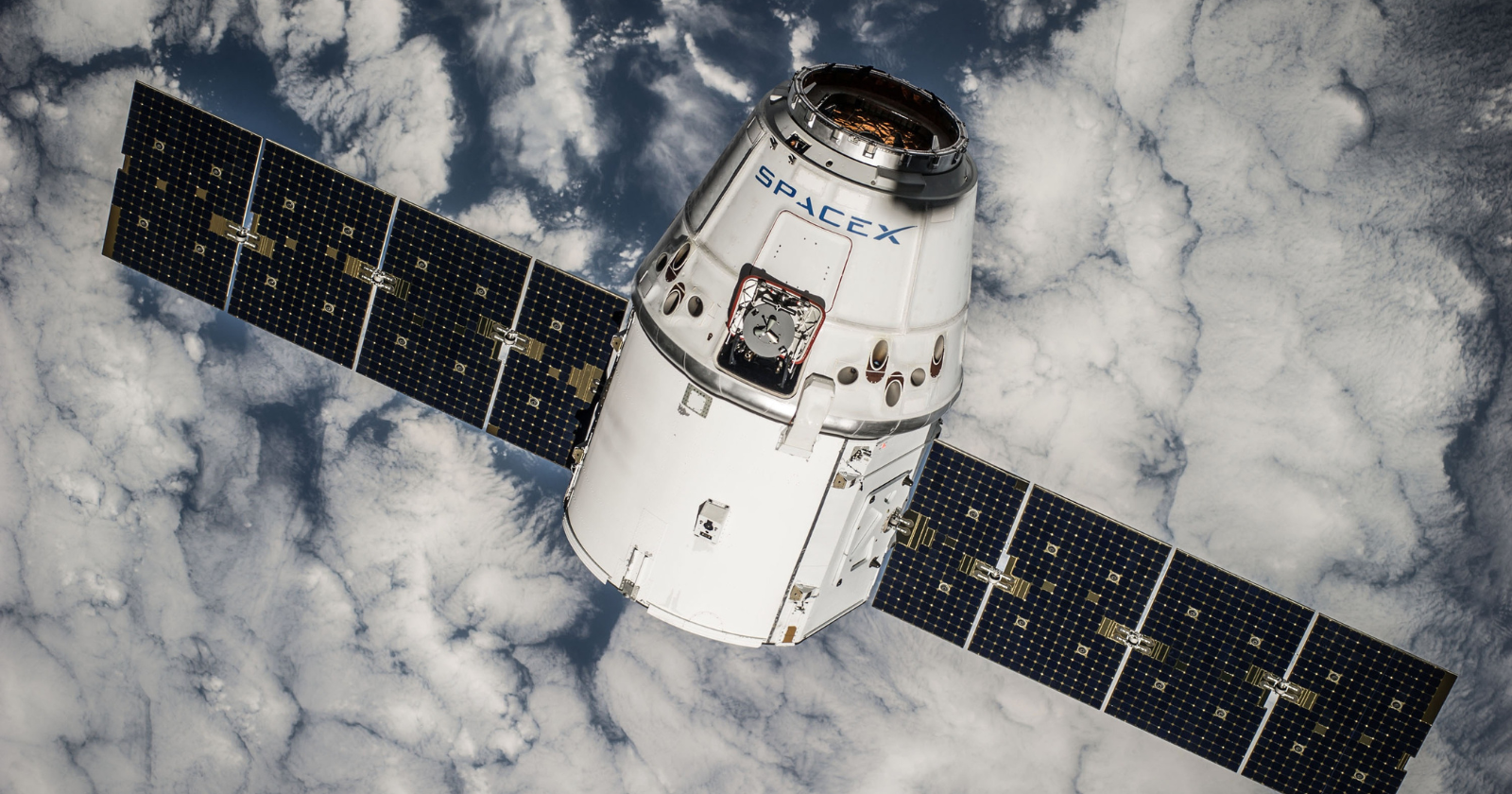
SpaceX began trading on the Nasdaq on Friday under the ticker SPCX, raising about $75 billion in what is now the largest initial public offering in stock market history. The stock was priced at $135 a share, opened at $150, rose to roughly $176 at its peak, and closed around $161, up about 19 per cent from the offering price. By the close, the company’s market value had risen above $2 trillion.
The size of the raise sets a record by a wide margin. The previous largest IPO, Saudi Aramco in 2019, raised under $30 billion. Gwynne Shotwell, the company’s president and chief operating officer, rang the bell in New York alongside chief financial officer Bret Johnsen, while Elon Musk joined remotely from Starbase in Texas. On paper, the day’s gains pushed Musk’s net worth past $1 trillion, reported as the first time any individual has reached that figure.
What the company now is
The thing being valued is no longer only a rocket and satellite business. In February 2026 SpaceX absorbed Musk’s artificial intelligence company xAI, which had itself acquired the social network X the year before, folding all of it into a single entity. The company that listed on Friday is a fusion of launch services, the Starlink satellite-internet network, and an AI division spanning compute, the Grok models, and X.
The fundamentals underneath the price are more modest than the headline number. SpaceX reported about $18.7 billion in 2025 revenue, while Starlink remains the company’s clearest commercial engine. The AI division adds a much larger growth story, but it also adds financial strain: xAI generated about $3.2 billion in 2025 revenue while losing roughly $6.4 billion from operations, and lost about $2.47 billion in the first quarter of 2026 alone. A $1.75 trillion offering valuation, and a first-day market value above $2 trillion, therefore rests heavily on expectations of future growth rather than current earnings.
Why the valuation is contested
That gap is where the disagreement sits, and it was visible on the first day. Keith Snyder, a senior analyst at CFRA Research, told CNBC he was sceptical the company is worth its listing valuation, assigned the stock a sell rating, and said the growth required to justify the price would have to be, in his words, close to comical. Robert Greifeld, a former chief of the Nasdaq, put it differently, describing SpaceX as a stock trading not on fundamentals but on aspiration.
Other analysts were positive, reading strong demand, an orderly first-day close, and heavy retail participation as signs of a successful debut. Both readings can be true at once. A debut can be a record-setting market event and still leave the underlying question of value unsettled, and on Friday it did both.
None of this is a judgement on whether the shares are a sound holding, which is not something an article can answer for any individual reader. It is a description of a disagreement that the offering did not resolve.
The signal other companies are watching
Several analysts framed the listing as the first of a series of large AI-related public offerings rather than a one-off. Both OpenAI and Anthropic, the makers of ChatGPT and the Claude models respectively, have made confidential filings with the Securities and Exchange Commission, as reported by the Associated Press and Reuters. Greifeld said he expected both to follow SpaceX to the public market this year. The reasoning offered was that a well-received SpaceX debut signals investor appetite for the category and lowers the risk for the companies waiting behind it.
That remains a prediction rather than a schedule. A filing is not a listing, and market conditions can close the window as quickly as one strong debut appears to open it.
From near-failure to record
The arc behind Friday is genuinely steep. SpaceX was close to insolvency in 2008, after its first three Falcon 1 launches failed in succession. The fourth flight reached orbit that September, a NASA cargo contract followed, and the company survived. Musk has said more than once that he gave SpaceX long odds in those early years, by some accounts less than a one-in-ten chance of working at all.
The distance between that period and a $2 trillion valuation is the part of the story that does not need embellishing.
What to watch next
The immediate question is whether the first-day price holds once the opening enthusiasm and retail rush settle, and where the stock trades after the early lock-up periods expire and more shares can be sold. The slower question is whether the AI and Starlink growth assumptions built into the valuation arrive on anything like the timeline the price implies. The listing itself is settled. The verdict on the number is not, and it will be delivered over quarters, not in a single session.
