
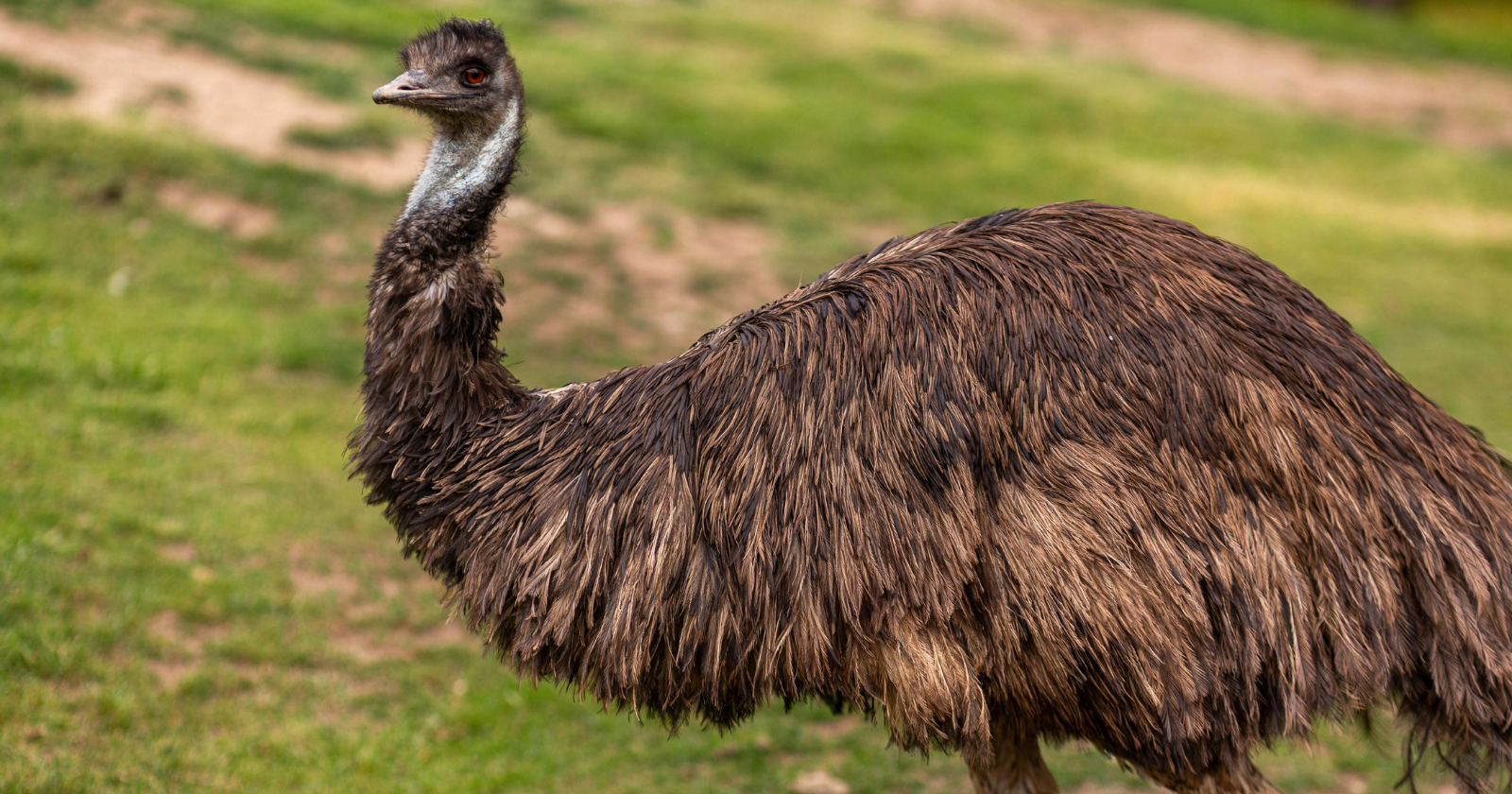
It is one of the more difficult sentences to write with a straight face in modern history: in 1932, Australia declared war on a flock of large flightless birds, and the birds won. The episode is true, well-documented, and considerably stranger in the details than in the popular summary. Major Gwynydd Purves Wynne-Aubrey Meredith of the Royal Australian Artillery arrived in the Campion district of Western Australia on 2 November 1932 with two Lewis light machine guns, 10,000 rounds of ammunition, two enlisted soldiers, and a cinematographer to film the operation for an Australian newsreel.
His instructions were straightforward: assist the local wheat farmers, mostly Great War veterans who had been settled on this marginal land under a government soldier-settlement scheme, by exterminating as many as possible of the estimated 20,000 emus that had migrated inland during the breeding season and were now systematically destroying crops, trampling fences, and exacerbating the difficulties of an already struggling community. The emus had moved in because a severe drought had driven them west in search of water and food. The wheat fields, when they arrived at them, were precisely both.
The campaign that followed has come to be known, mostly through retrospective journalism and social-media humour, as the Great Emu War of 1932. The Australian government did not officially declare war on the emus. The Royal Australian Artillery was not engaged in any military combat operation in the technical sense. According to Britannica’s reference on the Emu War, the deployment was a civilian wildlife-management operation conducted by uniformed soldiers using military equipment, at the request of farmers who had specifically asked for machine guns on the theory that what worked against advancing enemy troops in the First World War should also work against advancing emus. The Minister for Defence, Sir George Pearce — himself a veteran — approved the request partly to demonstrate that the government took the concerns of soldier-settlers seriously. Whether the operation would actually reduce the emu population was, in retrospect, not seriously considered before the deployment.
What happened on 2 November
The first engagement of the campaign took place on 2 November near Campion. According to National Geographic’s 2024 review of the Emu War, Meredith and his two men set up their Lewis machine guns at a position from which they could engage a flock of approximately 50 emus that local farmers had directed them to. The soldiers opened fire. The emus scattered immediately in all directions, running at speeds of up to 50 kilometres per hour, in unpredictable zigzag patterns, with no two birds following the same trajectory. The Lewis guns, which had been designed to engage massed enemy infantry advancing across no-man’s-land, were poorly suited to tracking individual fast-moving targets that did not behave like infantry at all. A few emus were killed. The majority escaped. The soldiers’ first engagement, in operational terms, had been a failure.
The second engagement, on 4 November, took place near a dam where the emus came to drink. Meredith laid an ambush, waiting until approximately 1,000 emus had gathered within range of the machine guns. The conditions appeared ideal: a large concentrated target at known position, soldiers in concealed firing positions, no warning to the birds of the trap that had been prepared. The gun crew opened fire. After approximately 12 emus had been killed, one of the Lewis guns jammed. The remaining emus, alerted by the sound of the firing, scattered into the surrounding scrub at full running speed. By the time the gun was operational again, there was no flock left to fire at. The second engagement, like the first, had produced a death toll that did not justify the ammunition expended.
The campaign as a whole
After six days of similar operations, Meredith’s official report indicated that approximately 50 emus had been killed using somewhere over 2,000 rounds of ammunition. The Australian press, which had taken an early interest in what it correctly identified as an unusual military operation, began running articles questioning the wisdom of the deployment. According to Atlas Obscura’s 2022 review of the Emu War, members of the Australian parliament began making jokes during sessions about awarding the emus military honours and inviting them to apply for war pensions. The Defence Minister, increasingly embarrassed by the international press attention, ordered the first phase of the operation suspended on 8 November. The soldiers returned to their barracks. The emus continued eating the wheat.
Within four days, however, public protest from the farming community had grown loud enough that the operation was resumed on 12 November. The second phase, which ran from 12 November through 10 December, proved somewhat more effective than the first, though still well below what one might expect from the deployment of professional artillerymen with machine guns against birds. According to MeatEater Conservation’s review of the historical record, by the end of the campaign on 10 December 1932, Major Meredith reported a final official kill count of 986 emus. The number was conspicuously close to “exactly ten rounds per bird,” which is, depending on perspective, either the exact ratio of ammunition expended to kills achieved, or a suspiciously round number that historians have speculated may have been adjusted upward in the official report to make the campaign appear less inefficient than it actually was.
Why the emus won
Meredith’s own assessment of the campaign, included in his official report, was unusually candid about the difficulty of the operation. He described the emus’ tactical scattering, their ability to survive multiple gunshot wounds, and the general impossibility of engaging them en masse with weapons designed for human infantry. He concluded his report with what has become the most-quoted line of the entire affair: “If we had a military division with the bullet-carrying capacity of these birds, it would face any army in the world… They can face machine guns with the invulnerability of tanks.”
The 1932 operation also revealed an unintended consequence that the historian Murray Johnson has emphasised in subsequent academic work. Every time the machine guns opened fire, the emus scattered widely through the wheat fields, with their large feet trampling and breaking dozens of mature wheat stalks per bird as they ran. By some estimates, an emu trampled approximately 100 wheat plants for every one it consumed. The machine-gun campaign, by forcing the emus to repeatedly scatter at full speed through the fields the campaign was meant to protect, may have actually increased rather than decreased the total wheat damage. The combination of poor kill rates, increased trampling damage, and growing international press attention combined to make the operation politically untenable. The government called off the campaign on 10 December. The emus continued to migrate west each breeding season for decades afterward, and remain widespread across Australia in 2026, with an estimated population of 600,000 to 700,000 birds.
What happened afterward
Subsequent farmer requests for a renewed military operation in 1934, 1943, and 1948 were all denied. The Australian government, having learned from the 1932 experience, instead implemented a bounty programme starting in 1934, under which farmers were paid for each emu they killed themselves. The bounty system proved far more effective than the machine-gun deployment had been: approximately 57,000 emus were killed in the first six months of 1934 alone. The longer-term solution was the construction of a 1,170-kilometre emu-proof fence stretching from Esperance to mid-coastal Western Australia, which was completed in stages over the following decades. The fence reduced but did not eliminate emu incursions into the wheat belt.
The emu itself remains, to this day, one of the two national animals depicted on the Australian coat of arms, the other being the kangaroo. The coat of arms was adopted in 1908, more than two decades before the events of November 1932, and was not modified in response to the Emu War despite occasional satirical suggestions in the Australian press that the emu should be replaced by some species the country had actually managed to defeat. The Great Emu War has become, in the nine decades since, one of the more popular examples in global meme culture of a serious operation that went absurdly badly. The press of the time, in Australia and internationally, treated the affair largely as comedy. The farmers who had lost their wheat crops, and the soldiers who had been deployed to defend them, took it considerably less lightly. None of that mattered, in the end, to the emus, who continued doing what they had been doing for tens of millions of years before the Royal Australian Artillery arrived in the Campion district with two Lewis machine guns and 10,000 rounds, and what they would continue doing for an indefinite future after the Artillery returned home.
