
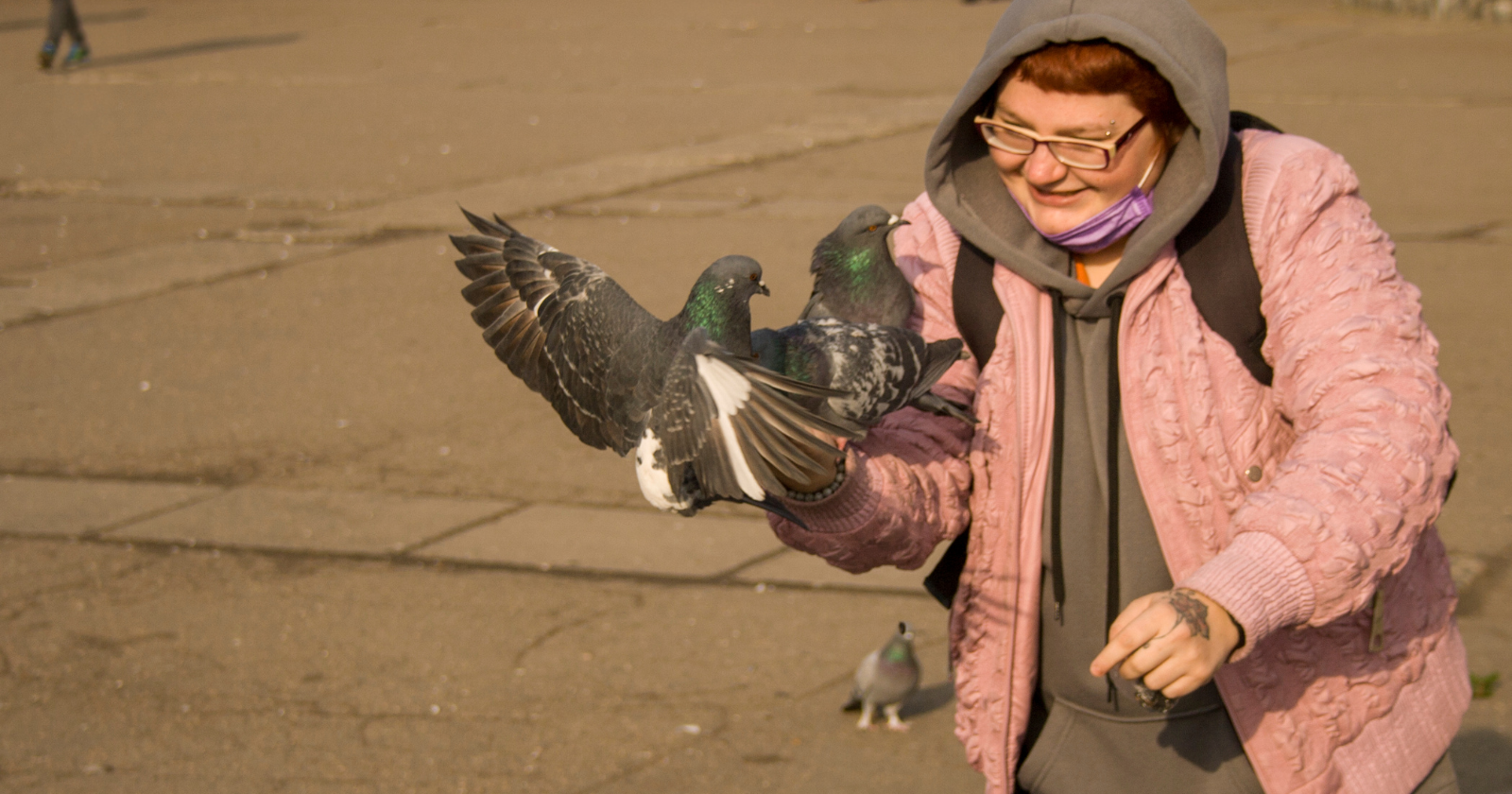
A recent paper reports that urban birds in five European countries allowed men to approach roughly a metre nearer than women before taking flight. The finding held across 37 species and did not change with the height of the person, what they wore, or how they approached. The detail that makes the study worth reading is not the distance. It is that the researchers say plainly they cannot yet explain it.
The work was published in the British Ecological Society journal People and Nature and reported by Scientific American. This is one study, not settled consensus, and the authors are unusually frank about its limits.
“I fully believe our results, that urban birds react differently based on the sex of the person approaching them, but I can’t explain them right now,” said Daniel Blumstein, a co-author and professor at the University of California, Los Angeles, in a statement released through the institutions involved.
What the study measured
The measure is something behavioural ecologists call flight initiation distance: how close a person can get before an animal flees. It is a standard, well-worn metric in the field, and it is a proxy for wariness rather than a window into a bird’s mind. The team recorded these distances for birds living in urban centres across five countries, including species that bolt the instant a human appears, such as magpies, and species that linger longer, such as pigeons. The larger gap in tolerance toward women than men was consistent across that range.
What the study establishes, then, is a correlation: the recorded sex of the approaching human tracked with how soon birds left. It does not establish what the birds were responding to, and it does not establish that they were “afraid” in any sense we would recognise from the inside. Flight is the thing measured. Fear is the word we reach for.
Why the obvious reading runs ahead of the evidence
The tempting interpretation is that birds can read something about people that people cannot read about themselves. That framing runs ahead of what the data can currently establish — but the question itself is real.
The study shows a behavioural difference correlated with one variable. It does not show what cue carries the difference, and a cue is not a hidden truth about the person being approached.
In the paper the team offers candidates rather than conclusions. Birds might be picking up chemical signals such as pheromones. They might be using body shape. They might be reading gait, the particular rhythm of how a person walks. Blumstein, characteristically, suggested the way to test the gait idea might resemble Monty Python’s Ministry of Silly Walks. The joke carries a real methodological point: separating these cues from one another is genuinely hard, and until someone does, the mechanism is open.
So the cleaner statement is narrow. Birds in these cities behaved differently depending on the sex of the person walking toward them. The reason sits in a list of untested possibilities.
The adjacent research that makes this less strange
The result is less of an outlier than it first sounds.
Work on other animals supports the broader principle. Laboratory rats have shown greater stress responses around male handlers than female ones — an effect researchers traced to scent. The direction differs, but the finding establishes that animals in controlled settings can register cues that vary with the handler’s sex. A bird in a park doing the same is not a leap. It places the new study inside a small but real body of observations that animals discriminate among humans on cues we do not consciously broadcast.
That context cuts against the single most dramatic reading and toward a duller, sturdier one. The interesting claim is not that birds fear women. It is that animals sharing our streets are sorting us by signals we are not aware of sending, and that we do not yet know which signals.
What it does not show
It does not show that the effect generalises beyond these species, these cities, or this design. It does not show a mechanism. It does not show anything about individual people, and it cannot be turned into a statement about how any particular bird will treat any particular person. Federico Morelli of the University of Turin, another co-author, put the takeaway about as carefully as it can be put: the team has identified a phenomenon without knowing its cause, and what the result really highlights is how finely birds appear to read their surroundings.
That is the part worth keeping. A common assumption is that city birds tune humans out, treating us as weather. The better reading of this study is the opposite. Something in how we move, or smell, or take up space is information to them, sorted reliably enough to show up in the numbers, and opaque enough that the people who found it are still guessing.
