
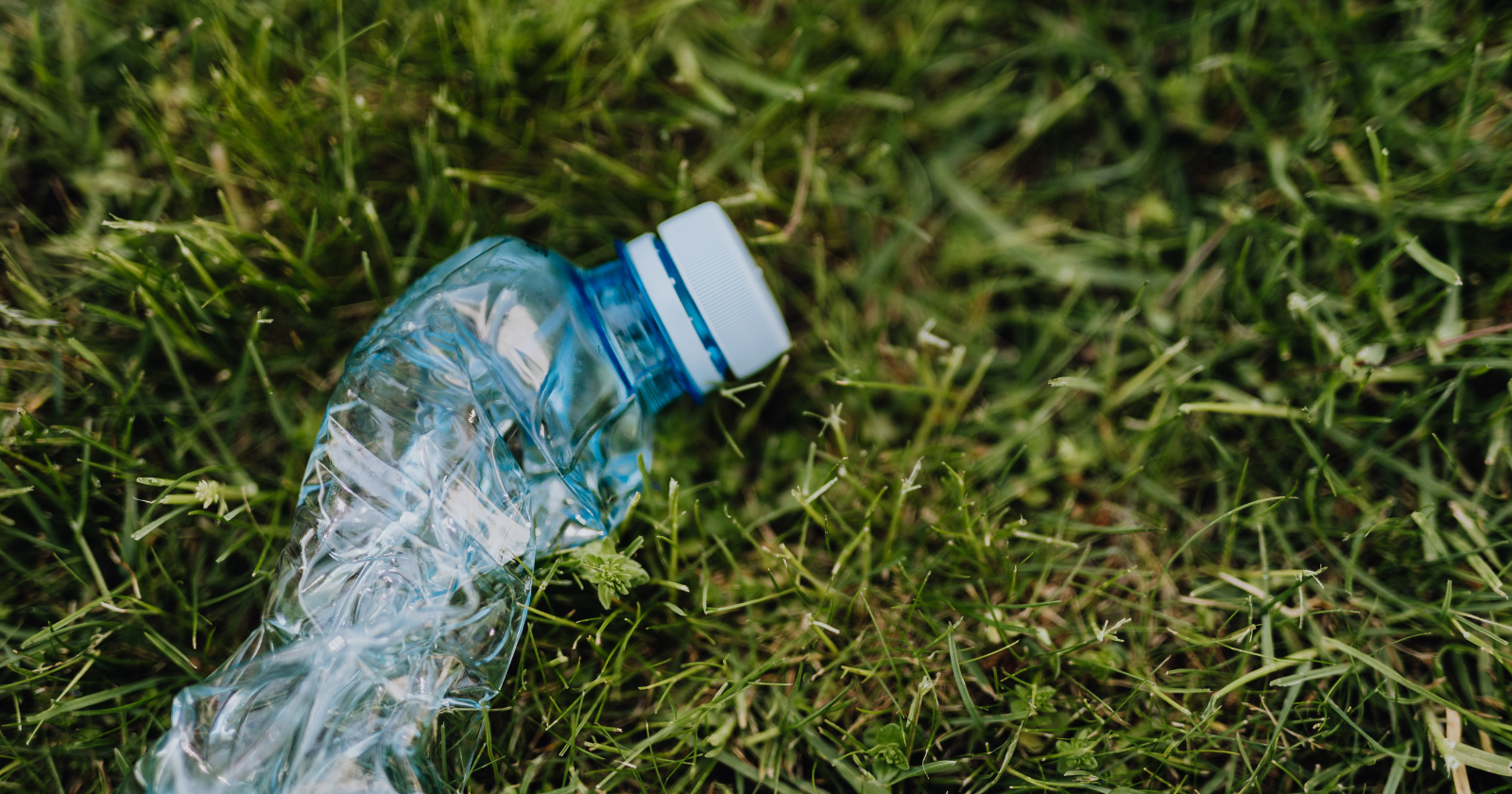
The plastic water bottle is one of the more recent inventions in the history of human packaging. The polyethylene terephthalate (PET) bottle, the standard clear plastic container that holds bottled water, soft drinks, and a wide range of other liquids, was first patented in 1973 by Nathaniel Wyeth, a mechanical engineer at DuPont. The product moved from laboratory curiosity to mass commercial use over the following decade, and by the mid-1980s PET bottles had largely displaced glass for single-use beverage containers across most of the developed world. The convenience was obvious. The bottle was light, unbreakable, transparent, and could be manufactured in any size from a few millilitres to several litres. The cost per bottle, at industrial scale, was a few cents. By 2024, global production of PET bottles had reached approximately 480 billion per year, or roughly one million bottles produced every minute somewhere in the world.
The same chemical properties that make PET so useful as a packaging material also make it extraordinarily resistant to natural decomposition. According to HowStuffWorks’ reference on the decomposition timelines of common plastics, the standard estimate for a PET water bottle is approximately 450 years to fully decompose under normal environmental conditions. The figure is itself an estimate, since PET has only existed for about 50 years and no bottle has yet been observed to fully decompose in nature. The 450-year estimate is derived from laboratory-controlled studies of degradation rates, extrapolated forward. Other sources put the upper bound at 1,000 years for full breakdown into the smallest measurable particles. Either way, the basic finding is unambiguous: essentially every PET bottle ever manufactured is still present on Earth in some form, somewhere, in some state of partial degradation.
Why plastic lasts so long
The reason plastics resist decomposition is that they are chemically unlike most other materials in the natural environment. Living organic matter — wood, leaves, animal tissue, cotton fabric — is built from molecules that microorganisms have evolved over billions of years to break down. Bacteria, fungi, and other decomposers possess enzymes that can attack the chemical bonds in cellulose, lignin, proteins, and other natural polymers, releasing the constituent atoms back into the broader biological cycle. Plastics are made of synthetic polymers whose chemical bonds did not exist on Earth before the early 20th century. No microorganism has yet evolved efficient enzymes capable of breaking these bonds, and the result is that plastic in the natural environment is essentially immune to biological decay.
What plastic does instead is fragment. Sunlight, mechanical stress, temperature cycling, and oxidation slowly break down the long polymer chains in plastic into shorter chains, and the bulk material slowly breaks into smaller and smaller physical pieces. A PET bottle exposed to sunlight on a beach will, over years and decades, become increasingly brittle, then shatter into smaller fragments under wave action, then weather into still smaller pieces, and eventually break down into microplastics — fragments smaller than five millimetres — and ultimately nanoplastics — fragments smaller than one micrometre. The bottle has not actually disappeared. It has merely been dispersed into a vast number of smaller pieces, each of which retains the basic chemical structure of the original plastic. The dispersion is one-way. The microplastics will not naturally reassemble into the original bottle.
Where the fragments end up
The dispersion of microplastics through the global environment is now sufficiently complete that fragments have been found in every major ecological compartment scientists have examined. According to National Geographic’s coverage of a 2019 Science Advances paper by Melanie Bergmann and colleagues at the Alfred Wegener Institute, snow samples collected from ice floes in the Fram Strait — the unpopulated expanse of ocean between Greenland and Norway’s Svalbard archipelago — contained approximately 14,000 microplastic particles per litre. The location was thousands of kilometres from any major source of plastic pollution. The particles had been carried there in the atmosphere, riding wind currents from cities much further south, and had fallen out of the air with precipitation.
According to a 2019 Nature Geoscience paper by Steve Allen and colleagues, summarised in Science, microplastic deposits were similarly found at a meteorological station in the French Pyrenees, 100 kilometres from the nearest city. The collection device at Bernadouze meteorological station recorded an average of approximately 365 microplastic particles per square metre per day falling from the sky during the five-month sampling period. The particles were dominated by fragments of single-use packaging — the same material as PET water bottles. Computer modelling of wind patterns suggested the fragments had been transported through the atmosphere for at least 95 kilometres before landing at the remote mountain site. Subsequent work has found similar microplastic precipitation in the Rocky Mountains, in Alpine glaciers, on Mount Everest, and on Arctic ice — meaning that essentially nowhere on the surface of the Earth is now free from plastic fallout from the atmosphere.
The Mariana Trench evidence
The dispersion extends in the other direction as well. According to a Science News review of microplastic distribution across the planet, bottom-water samples from the Mariana Trench, the deepest known location on the planet at nearly 11,000 metres below sea level, have contained up to 13.5 microplastic particles per litre, with sediment concentrations 15 to 160 times higher than the overlying water. The Mariana Trench is approximately 200 kilometres from the nearest land. Its sediments accumulate organic matter and minerals falling from the surface waters above, over thousands to millions of years. The presence of microplastics in those sediments indicates that the modern era of plastic production — only about 75 years long, in cumulative terms — has already deposited measurable amounts of synthetic polymer into one of the most remote sedimentary environments on Earth.
A 2019 study of amphipods (small shrimp-like crustaceans) collected from six deep-ocean trenches in the Pacific Rim found microplastic fragments in 72 percent of all specimens, including 100 percent of those collected from the Mariana Trench. The deepest collection point, in the Mariana Trench, was at 10,890 metres depth. Even there, in the dark, cold, high-pressure environment of the bottom of the ocean, the food web is now contaminated with the same synthetic polymers that humans use to package single-use beverages. The chain of transmission is straightforward in principle — plastic enters the ocean, fragments under UV and mechanical stress, sinks slowly through the water column, settles into deep-sea sediments, is consumed by deep-sea invertebrates, accumulates in their tissues, is passed up the food chain — but the geographic completeness of the dispersion was not anticipated by the scientists who first began studying ocean plastic pollution in the 1970s and 1980s.
What 450 years actually means
The 450-year decomposition estimate, taken at face value, has implications that are difficult to fully absorb. The first PET water bottle was patented 53 years ago, in 1973. If the estimate is correct, the bottles produced during the first decade of mass PET use — the late 1970s through the late 1980s — have, in 2026, completed approximately 10 to 12 percent of their full decomposition cycle. The bottles produced during the early 2000s have completed approximately 5 percent. The bottles produced last year have not yet meaningfully begun to decompose at all. Most of the cumulative mass of PET that has ever been manufactured is still present somewhere on Earth, mostly intact, partly fragmented, slowly working its way through the global environmental system.
Global plastic production, according to a 2017 paper by Roland Geyer and colleagues in Science Advances, has totalled approximately 8.3 billion tonnes since the start of mass plastic production in 1950 — equivalent to about one tonne of plastic for every human being currently alive. Approximately 6.3 billion tonnes of that total had become waste by 2015. Of that waste, 9 percent had been recycled, 12 percent had been incinerated, and the remaining roughly 79 percent — about 5 billion tonnes — had been discarded into landfills or directly into the natural environment, where it is now slowly breaking down on a timescale of centuries. The estimate of 450 years per water bottle, applied to the broader category of all plastic ever produced, means that essentially all of the 8.3 billion tonnes is still here, somewhere, in some state of partial decomposition. The next several centuries of human civilisation will be conducted in a global environment whose oceans, soils, atmosphere, and food webs contain rising background concentrations of synthetic polymer fragments that the species has not yet figured out how to remove and that nature has not yet evolved a way to consume.
