
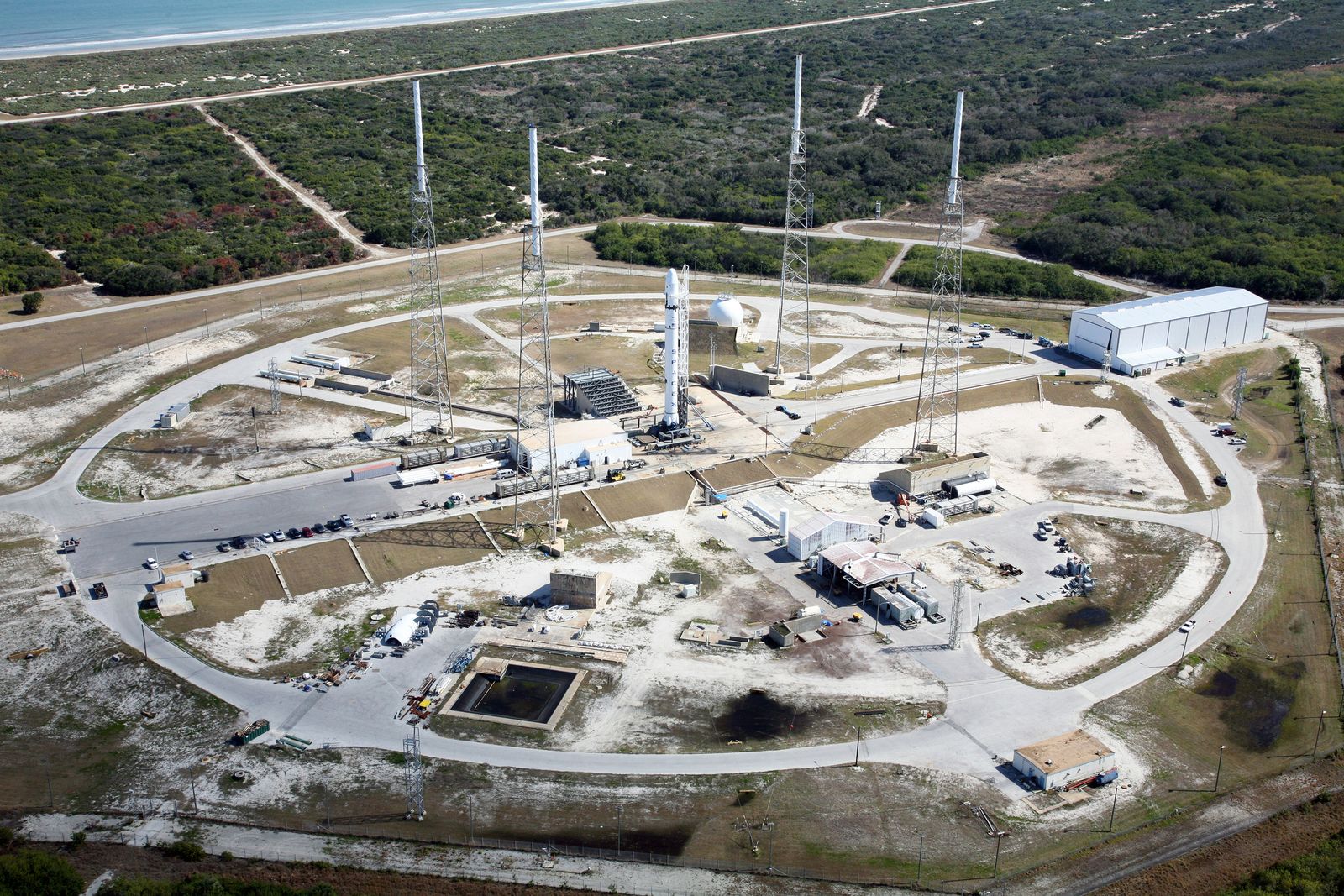
SpaceX alone flew more than 130 Falcon missions in 2024, and with Cape Canaveral, Vandenberg and Wallops booked through the decade, American launch capacity is hitting a wall. The response is taking shape offshore. With the Pentagon pushing for launch options that can’t be targeted in a conflict, defense officials and a fresh crop of startups are rebuilding the case for putting rockets to sea — a market that collapsed a decade ago and now looks viable again under entirely different economics.
Expanding satellite constellations could strain U.S. launch infrastructure and force policymakers to consider non-traditional launch sites, according to reporting by SpaceNews. Sea-based platforms are at the top of the list.
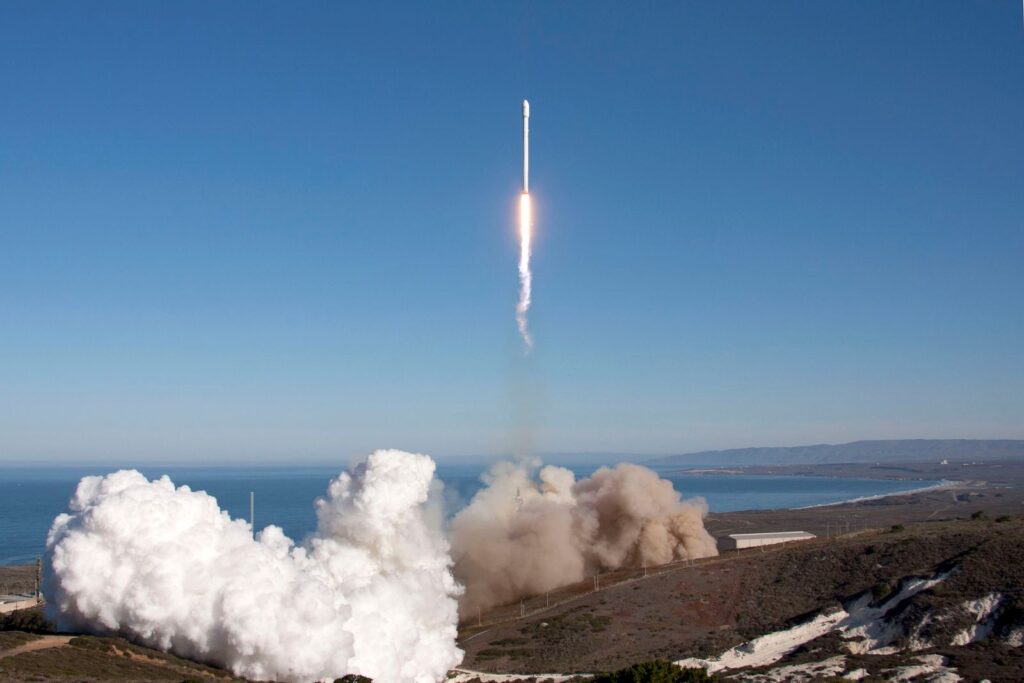
The congestion problem is structural
Three sites handle nearly all U.S. orbital launch. They were never designed for the cadence the market now demands.
Add Amazon’s Project Kuiper buildout to SpaceX’s flight rate, then layer in military payloads, NASA science missions and a queue of small-launch operators, and the calendar at the Cape is effectively full. Vandenberg faces the same pressure for polar orbits. Wallops handles a narrower slice but is already constrained.
According to Johnathon Caldwell, vice president and general manager of strategic and missile defense systems at Lockheed Martin Space, existing U.S. launch sites are facing congestion issues, and the increasing launch volumes for satellites and future weapon systems make it necessary to explore alternative options, comments he made when Lockheed Martin joined the Seagate-Firefly collaboration in May 2026.
Tom Marotta, CEO of The Spaceport Company, pointed to limited growth in launch facility capacity.
China has already built one
While the U.S. debates, China has been operating. Air University’s China Aerospace Studies Institute has documented Beijing’s Oriental Maritime Space Port in Haiyang, Shandong province, which integrates rocket manufacturing, launch operations and maritime infrastructure into one state-backed industrial hub.
The CASI analysis counted 13 sea launches carrying 75 satellites since 2019. Most have used compact solid-fueled rockets, which are easier to handle offshore. Chinese state media has signaled that platforms designed for reusable liquid-propellant rockets are next.
That sequence — solid first, liquid later, reusables eventually — is roughly the path U.S. entrants are now trying to compress.
What changed since Sea Launch collapsed
Anyone proposing offshore launch in the U.S. has to answer for Sea Launch — the U.S.-Russian-Ukrainian-Norwegian venture that ran from 1999 to 2014, completed dozens of missions, suffered a major platform explosion in 2007, and collapsed under combined economic and geopolitical pressure.
Sea Launch was built around one customer profile: heavy geostationary communications satellites that benefited from equatorial launch. That market shrank. Reusable rockets undercut the price advantage. The partnership structure fractured after Russia’s annexation of Crimea.
The market in 2026 looks nothing like that. Demand is dominated by low Earth orbit constellations, defense payloads, and government missions tied to resilience and responsiveness. Equatorial launch is a nice-to-have, not the business model. The customers want capacity, flexibility and access to trajectories that fixed ranges handle poorly.
Industry analysis offers a concrete example: instead of a dogleg maneuver from the Cape, a sea-based platform could launch from a spot in the Atlantic that flies a direct southwest trajectory between Florida and the Bahamas. Pacific platforms could give West Coast launches access to lower-inclination orbits without payload-killing flight-path maneuvers.
Seagate Space and the purpose-built platform
Founded in early 2025 by former Crowley Maritime executives Michael Anderson and Sean Fortener, Seagate Space is developing what it calls the Gateway Series — a semi-submersible offshore launch platform built specifically for uncrewed liquid-fueled orbital rockets. The company has signed collaboration agreements with Lockheed Martin and Firefly Aerospace, the latter to study sea-based operations for the Alpha vehicle.
That partnership matters because Alpha is bigger than what Seagate originally designed for. The platform is being scaled up accordingly. Initial platforms will run under 200 feet in length and support rockets in the 40- to 80-foot range. First demonstration launch is targeted for 2028.
Seagate has received Approval in Principle from the American Bureau of Shipping under new offshore spaceport guidelines. The designation is not an operating certificate — it is an early engineering and maritime-safety validation that the concept does not violate basic naval architecture principles.
Anderson said the team has run subscale tests on hydrodynamics and platform stability, which he described as the central engineering hurdle. The company has hired veterans of the earlier effort to absorb the lessons, including former Sea Launch president Jim Maser, who ran the venture from 2001 to 2006 and now sits on Seagate’s advisory board.
The Pentagon’s hand
Defense priorities are arguably the strongest force pulling sea-based launch back to life. Fixed launch sites are fixed targets. In an armed conflict, Cape Canaveral and Vandenberg are obvious aim points. A distributed fleet of mobile platforms is harder to neutralize.
The company has cited Pentagon interest in responsive launch capabilities as a driver for offshore platforms.
The Defense Innovation Unit has been seeding the concept. In 2024 it awarded The Spaceport Company a $2.5 million contract for offshore launch infrastructure development, citing the strategic value of equatorial access and the ability to avoid high-traffic airspace. The Spaceport Company has conducted six suborbital launches to date — most off the Gulf Coast for defense agencies and commercial customers including Lockheed Martin — and is contracted for at least four more this year.
Caldwell pointed to another use case: the Pentagon’s planned layered homeland missile-defense system. Testing the interceptors and sensors tied to that architecture will require range capacity the existing sites cannot supply. Lockheed Martin representatives have indicated that diversifying test range infrastructure would be beneficial.
The broader pattern
Sea-based launch fits a wider shift in how Western space programs are thinking about infrastructure resilience — the same logic driving European governments to back sovereign capabilities like Iceye’s radar satellite constellation. Concentration is a vulnerability. Distribution is a hedge.
The Sea Launch story will hang over this market for a long time, as it should. But the question facing U.S. policymakers is no longer whether sea-based launch is technically feasible — Sea Launch settled that — or whether China can do it operationally. CASI has documented that too. The question is whether American industry can solve the economics before fixed-site congestion becomes the bottleneck that determines how fast the U.S. can field new constellations and weapons.
Seagate’s 2028 demonstration target is the first real test. The Pentagon money, the Lockheed and Firefly partnerships, the ABS approval and the policy push all point the same direction. Whether any of it produces an orbital launch from American waters will depend on engineering work — fueling cryogenic rockets at sea, onshore payload integration, and licensing across FAA, Coast Guard, ABS and international maritime regimes — that has historically humbled everyone who attempted it.
