
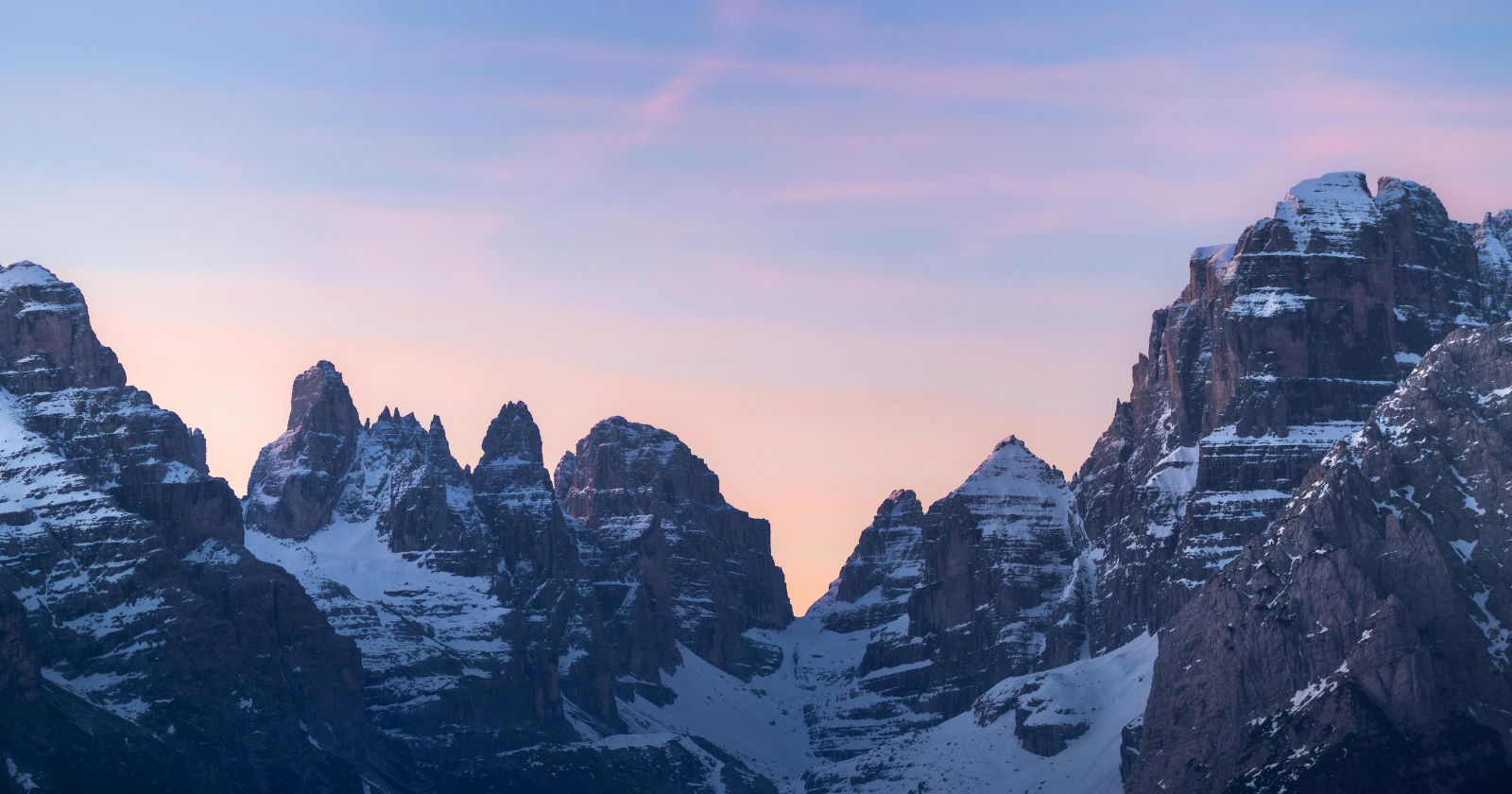
Helmut and Erika Simon, a German couple from Nuremberg, were hiking across the Tisenjoch pass on the border between Austria and Italy on the afternoon of 19 September 1991. The weather was unseasonably warm; the glacier they were crossing had retreated more than usual, exposing rocks and gravel that had been covered by ice for centuries. At an altitude of approximately 3,200 metres, they saw what appeared to be a partially-exposed human body protruding from the surface ice. Their first assumption, and the assumption of the park ranger they notified, was that they had found a missing modern mountaineer or possibly an Italian soldier missing from one of the First World War campaigns that had crossed these mountains. The Austrian police arrived later that day by helicopter to recover what was assumed to be a relatively recent death.
It took several days, and the involvement of an archaeologist from the University of Innsbruck named Konrad Spindler, for the people examining the body to realise what they were actually looking at. The dead man’s clothing, made entirely from animal skins, twisted plant fibre, and woven grass, was not from any modern century. The copper axe lying near his body was of a type that had not been manufactured for thousands of years. The bow and quiver of arrows scattered around him were equipment from a much earlier civilisation. According to Smithsonian Magazine’s review of the discovery and subsequent research, radiocarbon dating eventually placed the man’s death between 3350 and 3105 BCE — approximately 5,300 years ago — making him by far the oldest naturally preserved human body ever found in Europe, and one of the most scientifically valuable archaeological specimens of any kind ever recovered. The name “Ötzi,” after the Ötztal valley where he was found, was given to him by an Austrian journalist within the first week.
How he died
The cause of death took longer to determine than the age of the body. The initial examinations focused on his clothing, his equipment, and his general state of preservation, on the assumption that he had probably died of exposure or accident in the high mountains. It was only in 2001, when a routine X-ray of the mummy’s left shoulder revealed an embedded foreign object, that researchers realised they were looking at a murder victim. The object was a flint arrowhead, lodged in the soft tissue behind the left shoulder blade. It had been fired from below and behind him, had passed through his clothing, and had severed his left subclavian artery — one of the major blood vessels supplying the arm. The wound would have caused massive internal bleeding. He would have lost consciousness within minutes and died within an hour.
Subsequent examination of the body revealed additional details about his final hours. He had a deep cut on his right hand, partially healed, suggesting he had been in a knife fight one to two days before his death and had survived it. He had bruising on his upper back consistent with a heavy fall. He had food in his stomach that had been consumed approximately two hours before death, indicating that he had been moving relatively rapidly in the final hours of his life and was not immobilised by illness. The current consensus is that he was killed in an ambush at the high mountain pass where his body was found, by an attacker who shot him in the back from cover and then either left him to die or finished him off with a blow to the head. The flint arrowhead is still inside the body, in the museum where the mummy is displayed.
What his stomach contained
The detailed examination of Ötzi’s stomach contents, conducted in 2018 with the help of newly-developed imaging techniques that finally located the stomach (which had migrated upward during mummification), provided one of the more vivid windows into his final day. The stomach contained a mixture of fatty meat from a wild Alpine ibex, meat from red deer, einkorn wheat (an early domesticated grain), and bracken fern. The proportions and state of digestion suggested he had eaten a heavy, fatty meal approximately two hours before death — possibly to provide the calories he needed for prolonged exertion at high altitude. The bracken fern was unusual; it is mildly toxic to humans and is not normally consumed as food. Some researchers have argued that he may have been using the fern medicinally, possibly as a treatment for intestinal parasites, which subsequent analysis confirmed he had.
The broader picture of his health, derived from genetic analysis and physical examination, is that he was approximately 45 years old at death, about 160 centimetres tall, and weighed roughly 50 kilograms. He had arthritis in his knees and hips, narrowed coronary arteries that would likely have killed him within a few years from a heart attack had the arrow not preceded it, multiple cavities and gum disease, signs of stomach ulcers, evidence of a likely Lyme disease infection in his joints, and lactose intolerance. He was, in modern terms, a middle-aged man with multiple chronic health conditions who was still active enough to be moving across high mountain terrain on the day he was killed.
The tattoos
As reported in a 2015 Smithsonian summary of the comprehensive mapping of Ötzi’s body markings, the Iceman bears a total of 61 tattoos, distributed across his abdomen, lower back, lower legs, wrists, and chest. The tattoos are not decorative in the modern sense. They consist of simple parallel lines and small crosses, typically in groups of four or five, located in areas of the body that were normally covered by his clothing and would not have been visible to other people. They were created by cutting fine incisions into the skin and rubbing charcoal into the wounds, producing dark linear marks that survived the 5,300-year mummification process essentially intact.
The leading interpretation, supported by detailed analysis from a team led by Albert Zink at the Institute for Mummies in Bolzano, is that the tattoos served a medical or therapeutic purpose. The locations of the tattoos correspond closely to areas of Ötzi’s body that show signs of physical degeneration — his arthritic knees, his sore lower back, his abdomen which had stomach ulcers and intestinal parasites. Many of the locations also correspond to traditional Chinese acupuncture points, leading some researchers to propose that Ötzi’s community practised some form of acupuncture-like therapy 2,000 years before the practice is conventionally believed to have emerged in Asia. The connection to Chinese acupuncture is contested, but the basic interpretation that the tattoos were therapeutic rather than ornamental is now widely accepted in the field.
The descendants
Among the most striking findings of recent Ötzi research is that he has identifiable living genetic relatives. According to NBC News coverage of work by Walther Parson and colleagues at the Institute for Forensic Medicine in Innsbruck, researchers screened the DNA records of approximately 3,700 Austrian blood donors and identified 19 men in the Tyrol region who share a rare Y-chromosome mutation, designated G-L91, with the Iceman. The mutation is passed essentially intact from father to son and is therefore a reliable marker of male-line ancestral relationships. Each of the 19 men identified by the Innsbruck team is, in this technical sense, a descendant of Ötzi’s father’s father’s father — and through the same paternal lineage, a descendant of Ötzi himself or of his close paternal relatives. The Austrian researchers have not, on principle, contacted the 19 men individually to tell them about their unusual ancestor.
The Iceman’s complete genome was re-sequenced in 2023 with substantially improved techniques compared to the original 2012 sequencing effort. According to a Science feature on the 2023 reanalysis published in Cell Genomics, the new genome revealed that Ötzi was substantially darker-skinned than previous artist’s reconstructions had depicted, that he was going bald at the time of his death, and that 92 percent of his ancestry came from early Anatolian farmers who had migrated into Europe through what is now Turkey approximately 9,000 years ago — the highest percentage of Anatolian ancestry yet measured in any Copper Age European. The remaining 8 percent came from European hunter-gatherer populations that had been present in the region for longer. The combination produces a clearer picture of a specific human individual, alive in a specific place at a specific moment, killed by an arrow on a specific afternoon in the high Alps, and preserved by an unusual confluence of glacial conditions that made him available to modern science 5,300 years later — making him the closest thing to a direct biological witness from the European Copper Age that any researcher will ever examine.
