
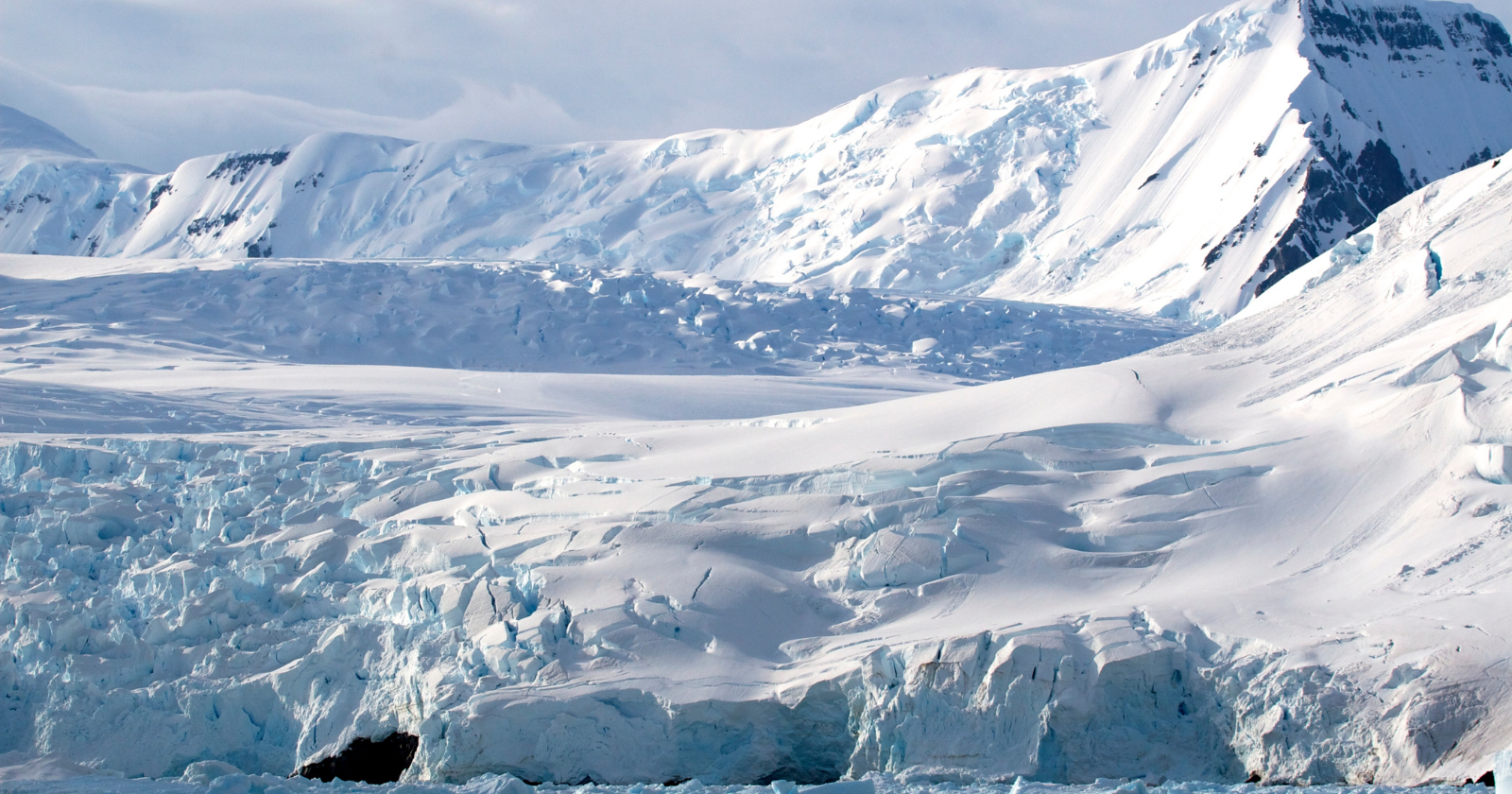
At 2:45 in the morning on 21 July 1983, the thermometer at Vostok Station on the Antarctic Plateau dropped to minus 89.2 degrees Celsius — the lowest natural surface temperature ever directly measured on Earth, cold enough that boiling water thrown into the air freezes before it can land, exhaled breath crystallises audibly into ice fog, and ordinary steel becomes brittle enough to shatter on impact
The 13 men wintering at the Soviet research station at Vostok in July 1983 had been watching the temperature fall steadily for ten days. By the standards of a typical Vostok July, the cooling was unusual but not yet extraordinary. The station sits at 3,488 metres above sea level on the East Antarctic ice sheet, more than 1,000 kilometres from the nearest coast, in a region that receives no direct sunlight for approximately four months of every year. Mean July temperatures at the station hover around minus 65 degrees Celsius. The cooling that began on 11 July took the thermometer steadily lower, in near-linear fashion, for ten days, dropping about three degrees Celsius per day. At 02:45 universal time on 21 July, the temperature reached minus 89.2 degrees Celsius — minus 128.6 degrees Fahrenheit, or 184 kelvin — and was officially logged in the station’s meteorological register.
The figure has not been beaten in more than 40 years of subsequent observation. According to Britannica’s reference on the coldest temperatures ever recorded on Earth, the Vostok measurement remains the official world record for the lowest natural air temperature ever directly measured at ground level. Satellite observations have detected lower surface temperatures since — a reading of approximately minus 98 degrees Celsius was inferred from satellite data on a ridge between Dome Argus and Dome Fuji in August 2010 — but satellite measurements of surface temperature are not directly comparable to ground-based air-temperature readings, and the World Meteorological Organization continues to recognise the 1983 Vostok measurement as the standard record.
Why it got so cold
The specific atmospheric conditions that produced the 1983 Vostok record were the subject of detailed scientific analysis decades after the event. According to a 2009 paper in the Journal of Geophysical Research by John Turner and colleagues at the British Antarctic Survey, five specific conditions had to align for the record temperature to occur. First, the temperature at the core of the midtropospheric polar vortex was at a near-record low. Second, the centre of the vortex moved unusually close to the Vostok station. Third, an almost circular wind flow pattern persisted around the station for approximately a week, preventing any warmer air masses from lower latitudes from reaching the area. Fourth, surface wind speeds were low for the location, which reduced turbulent mixing of slightly warmer air from upper layers down to the surface. Fifth, there was no cloud cover or even diamond dust — the tiny suspended ice crystals that sometimes trap heat — above the station for the entire seven-day period, allowing maximum radiative loss of heat to space.
The combination of all five conditions for the full duration is what made the record possible. Turner and colleagues calculated that, if the same combination of conditions persisted slightly longer, the surface temperature at Vostok could in principle drop to approximately minus 96 degrees Celsius. The higher elevation of Dome Argus, approximately 5 to 6 degrees Celsius colder than Vostok on average, could in principle produce even lower readings under similar atmospheric conditions. The Vostok 1983 record, in other words, is not necessarily the lowest temperature physically achievable at the Earth’s surface — it is the lowest that has yet been directly measured at a manned weather station during the relatively short period for which such records have been kept.
What minus 89 degrees does to ordinary matter
The temperature is cold enough that the everyday physical world begins to behave in unfamiliar ways. According to a 2025 reference on the physics of boiling water freezing in extreme cold, in any environment below about minus 40 degrees Celsius, a cup of boiling water thrown into the air will indeed freeze before reaching the ground. The mechanism involves a combination of effects: the hot water, when thrown, breaks into a fine spray of tiny droplets; the droplets have an enormous surface-area-to-volume ratio, allowing rapid evaporation that cools them further; the surrounding air is so cold and so dry that water vapour condenses and freezes essentially instantaneously. The result is a visually spectacular cloud of fine ice crystals that drifts down through the air. The trick has become a standard demonstration video filmed by anyone visiting the polar regions or extreme Siberian sites such as Yakutsk in winter.
Exhaled breath produces a related phenomenon at the same temperatures. Below approximately minus 50 degrees Celsius, the water vapour in human breath begins to freeze into tiny ice crystals almost immediately upon leaving the mouth, producing a visible cloud of crystalline ice fog. At still lower temperatures, the freezing happens fast enough that the ice crystals collide with one another as they form, producing a faint but audible sound — a soft tinkling or whispering noise that the Yakuts of Siberia traditionally call “the whisper of the stars” (звёзды шепчут in Russian). The phenomenon has been confirmed by acoustic measurements in extreme-cold environments and is one of the few examples of human breath producing an audible signal independent of vocalisation.
Ordinary materials change their physical properties at these temperatures as well. Carbon steel, the most common structural metal in modern infrastructure, undergoes what materials scientists call a ductile-to-brittle transition at temperatures somewhere between minus 30 and minus 50 degrees Celsius, depending on the specific alloy. Below the transition temperature, the steel loses the capacity to deform plastically under impact and instead fractures abruptly, like glass. This is the phenomenon implicated in many cold-weather industrial failures, including, by some analyses, the brittle-fracture behaviour of the steel plates in the hull of the RMS Titanic when it struck the iceberg in 1912 (though in that case the water was around 0 degrees Celsius, not the much colder temperatures at Vostok). At minus 89 degrees Celsius, virtually all carbon steels are well into their brittle regime. Diesel and jet fuel become viscous and difficult to pump. Plastics shatter rather than bending. Rubber loses elasticity. Electronics fail because their working fluids freeze or their internal components contract differentially.
What it means for the people who live with it
The 13 men who were at Vostok in July 1983 were not, strictly speaking, exposed to the record temperature directly. Vostok station is a heated indoor facility, and the only people who had to deal with the air outside were those briefly venturing out for instrument maintenance or scientific tasks. According to Live Science’s account of the 1983 measurement, even brief exposure at these temperatures is medically dangerous. Exposed human skin begins to suffer frostbite within 10 to 30 seconds at minus 89 degrees. The nasal passages and lungs of anyone breathing the air directly can suffer cold injury within minutes, as the inhaled air strips heat from delicate respiratory tissue. The Vostok overwintering teams operate under strict protocols limiting outdoor exposure during peak winter conditions, with personnel required to dress in multiple layers of specialised polar clothing and to use respirators or pre-warmed breathing tubes when outdoors for any extended period.
The Vostok station was originally established by the Soviet Union in 1957 as a research base supporting deep ice-core drilling. The choice of location was driven by geological rather than climatic considerations: the team needed to be over the thickest part of the East Antarctic ice sheet, which made Vostok ideal for paleoclimate work. The cold-temperature record was, in a sense, an accidental byproduct of choosing the worst possible place on Earth to live in order to access some of the best preserved geological records anywhere on the planet. Lake Vostok, the enormous subglacial lake discovered beneath the station’s ice in the 1990s, has become one of the more important sites in modern Antarctic science. The station continues to operate. The personnel rotate. The cold returns every winter, sometimes deepening to within a few degrees of the 1983 record, more often not. Whether the record will ever be broken at Vostok, or first broken at the higher and colder Dome Argus station that the Chinese Antarctic programme has been operating since 2009, is a question that the next several decades of polar meteorology will answer.
