
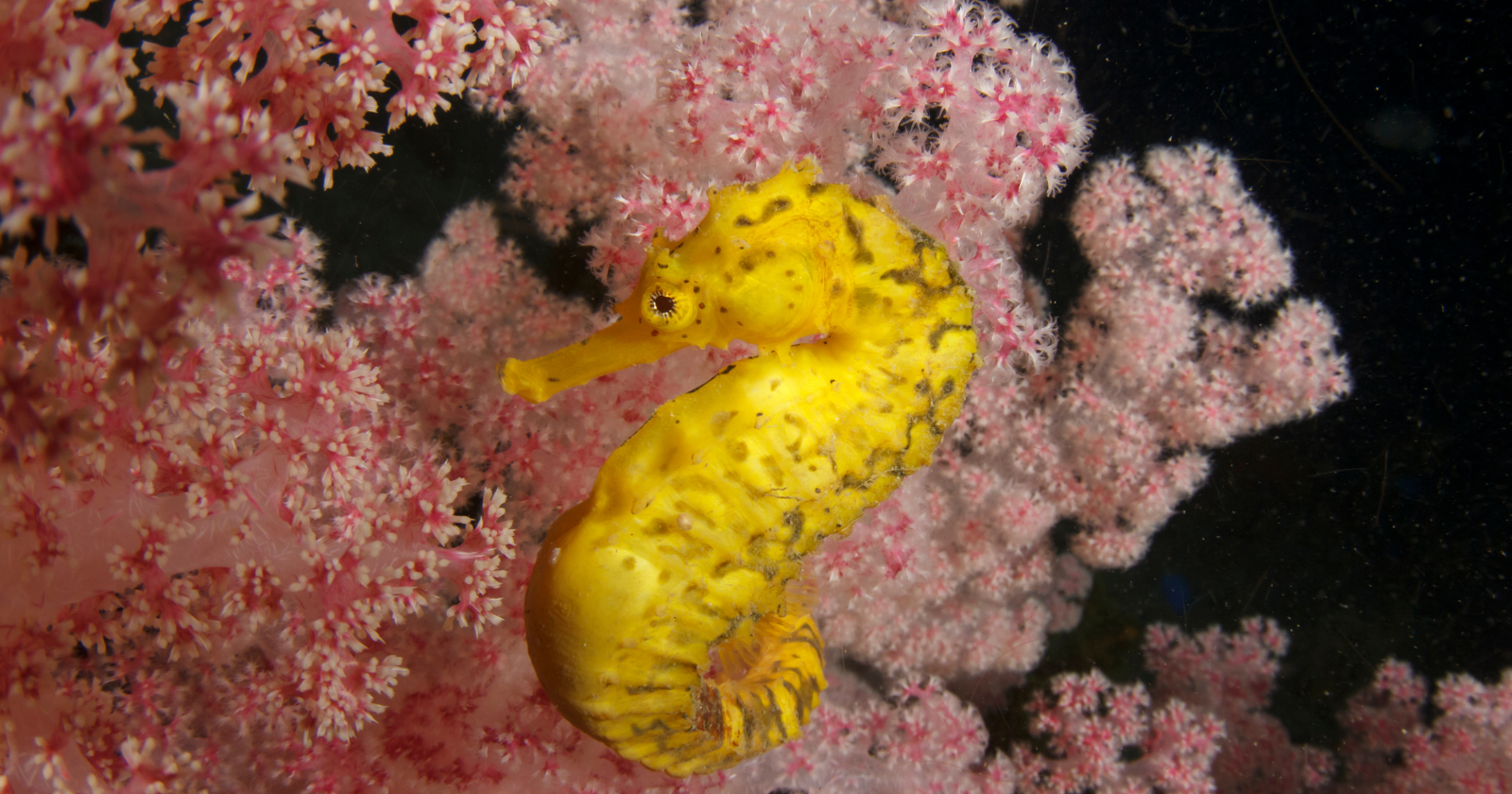
Tigertail seahorses cling to seagrass blades off Pulau Hantu, a small island in the Singapore Strait, while container ships the length of three football fields pass within a few kilometres on their way to one of the busiest ports on Earth. Researchers at the National University of Singapore have been logging these animals through a citizen-science project called SGSeahorses, asking divers and snorkellers to report sightings of seahorses and their pipefish cousins in waters that, by every reasonable measure, should be too disturbed to hold them.
The seahorses are still there. So are fluted giant clams, tucked into the reef flats around the southern islands, and the occasional dugong grazing meadows that exist in gaps between refineries. The question is what their persistence actually means. Are these the last remnants of an ecosystem about to wink out, or evidence that urban reefs, even the most punished ones, can hold a functioning marine community if a few fragments of habitat are protected hard enough? The answer matters well beyond Singapore, because every major coastal city in tropical Asia is now staring at the same problem.
A reef squeezed between shipping lanes
Singapore’s southern coast looks, from a satellite, like a chessboard of anchorages. Tankers wait their turn off Jurong. Bunker barges idle near the Sisters’ Islands. The water is brown more often than blue, stained with sediment kicked up by dredgers and the wakes of passing ships. Visibility on a good day is two metres. On a bad day, a diver cannot see their own fins.
Beneath that murk sits a string of patch reefs and seagrass beds around Pulau Hantu, Kusu, Lazarus, and the Sisters’ Islands. The corals here have lost significant portions of their historical reef area to land reclamation over recent decades, and the survivors live in turbid, low-light conditions that would kill many reef species elsewhere. Researchers describe these as some of the most stressed coral assemblages anywhere being actively studied, part of a wider field looking at coral community dynamics in urban marine ecosystems.
The species that persist tend to be the tough ones: massive boulder corals, leathery soft corals, sponges that filter the silty water without complaint. But hidden among them are the animals nobody expected to find.
Three species that shouldn’t be there
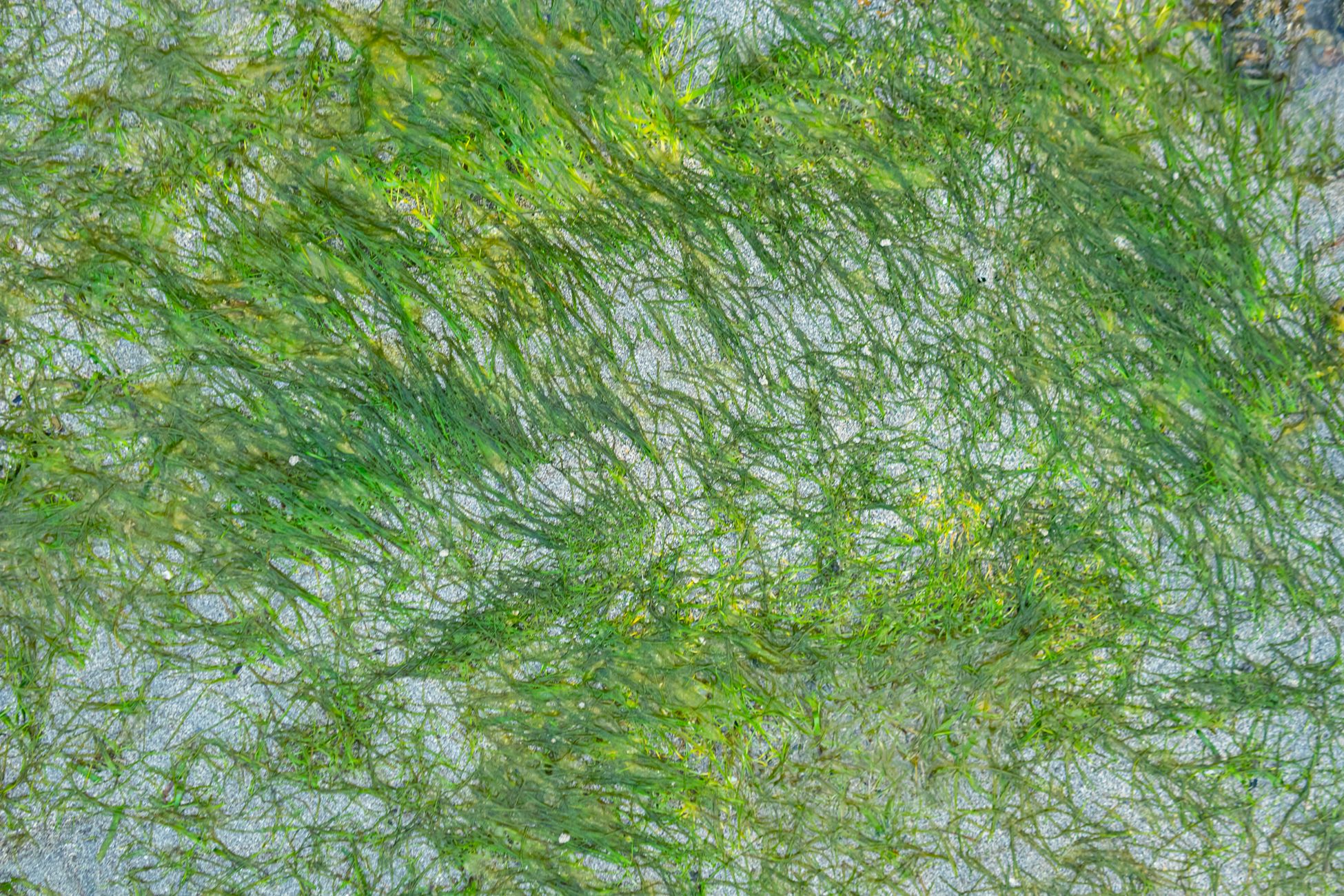
Take the seahorses first. Tigertails are famously poor swimmers, propelled by a single dorsal fin and slower than almost any other bony fish. They do not flee disturbance; they anchor, wrapping a prehensile tail around a seagrass blade and holding on for days. That behaviour is precisely why they survive in the Strait. A seahorse that does not migrate does not need to cross a shipping lane. The SGSeahorses project has logged at least three species in Singapore waters, including the estuary and three-spot seahorses, often within a few hundred metres of active anchorages. The catch is that the seagrass itself has to hold, and Singapore has lost large portions of its historical meadows to coastal development. The surviving beds at Chek Jawa and Cyrene Reef are now mapped, monitored, and in some cases physically guarded against trampling at low tide.
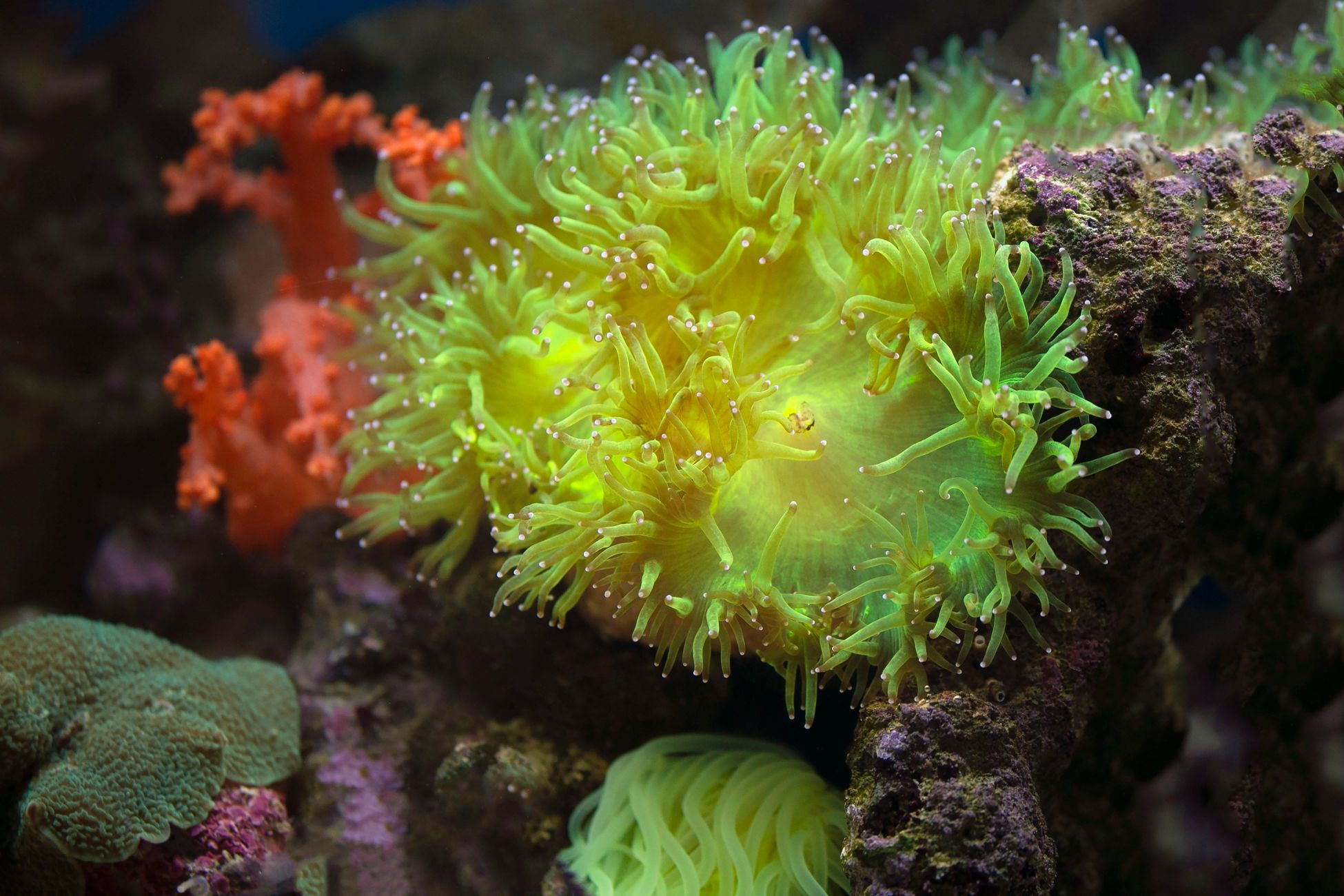
Then there are the giant clams. For decades, the fluted giant clam was considered functionally extinct here. Then surveys around the southern islands began turning up scattered individuals, their mantles flaring blue and gold against the reef rubble, and a reintroduction programme has since added cultured clams raised from larvae in tanks. Giant clams are not a small ask of a reef: the largest species can weigh more than 200 kilograms, live over a century, and depend on symbiotic algae that need light to reach them through the water column. Every clam that survives in this strait is evidence that conditions, in patches, are still workable. The biology is more remarkable than anyone realised. A 2024 study led by Yale physicist Alison Sweeney found that giant clams may be the most efficient solar energy system on the planet, channelling light through vertical columns of algae in a geometry that engineers are now studying for next-generation solar cells and biorefineries. Meanwhile, University of Colorado Boulder biologist Ruiqi Li has documented the rapid decline of the same species across the Indo-Pacific, driven by shell harvesting, the aquarium trade, and habitat loss.
And then the dugongs. Every few years, someone reports one in Singapore waters, including carcasses and live animals grazing near the northeastern islands. An adult eats around 40 kilograms of seagrass a day, almost exclusively, which means the few that pass through are operating at the very edge of what the remaining meadows can support. They are also operating in a gauntlet: dugongs surface every few minutes to breathe, and propeller strikes are the leading cause of death in heavily trafficked waters.
Three animals, three different strategies for hanging on. The seahorse stays put. The clam holds its position and runs its photosynthesis on whatever light gets through. The dugong moves in from the wider Johor Strait and Riau Archipelago, dipping into Singapore waters at the edges of its range. None of them are thriving. All of them are still here. That combination — diverse survival strategies converging on the same few protected fragments — is the actual signal in the noise.
Why traditional protection sometimes outperforms the official kind
The Singapore approach to marine protection has leaned on a small network of designated areas, principally the Sisters’ Islands Marine Park. It is a fraction of the territorial sea, but it concentrates monitoring and restoration effort in a few well-studied patches.
That model is being tested against other approaches elsewhere in the region. In American Samoa, researchers recently found that village-based traditional protections and remote sites held higher densities of giant clams than federally designated no-take zones. The result echoes a pattern seen across the Pacific: community-managed reefs often outperform top-down protection, partly because enforcement is constant and local, partly because the rules are made by the people who fish the water.
Singapore is not American Samoa. There are no traditional fishing villages with customary tenure over reef flats. But the citizen-science model, SGSeahorses included, is reaching for something adjacent: a distributed network of recreational divers, kayakers, and shore walkers logging sightings into a database that a small research team could never populate alone.
What the logbook actually argues
The numbers coming out of the southern islands are not large. A handful of seahorse sightings a year. A few hundred outplanted clams. Occasional dugongs. Set against the scale of the shipping lanes, the figures look almost decorative.
They are not. What the SGSeahorses logbook is slowly building, sighting by sighting, is a case that urban marine ecosystems can be rebuilt from much smaller fragments than conservation orthodoxy has assumed — provided those fragments are mapped, monitored, and defended by enough people to make the monitoring continuous. The Singapore reefs are not a last gasp, and they are not proof that nature heals itself if left alone. They are something more useful: a working demonstration that targeted protection of tiny patches, backed by distributed citizen observation, can hold a functioning marine community in place even under industrial pressure that would have been considered terminal a generation ago.
That matters because Jakarta, Manila, Ho Chi Minh City, and a dozen other coastal megacities are now where Singapore was thirty years ago, watching reefs disappear under reclamation and traffic. The shipping lanes are not going anywhere. The question is whether the seahorses have to.
