
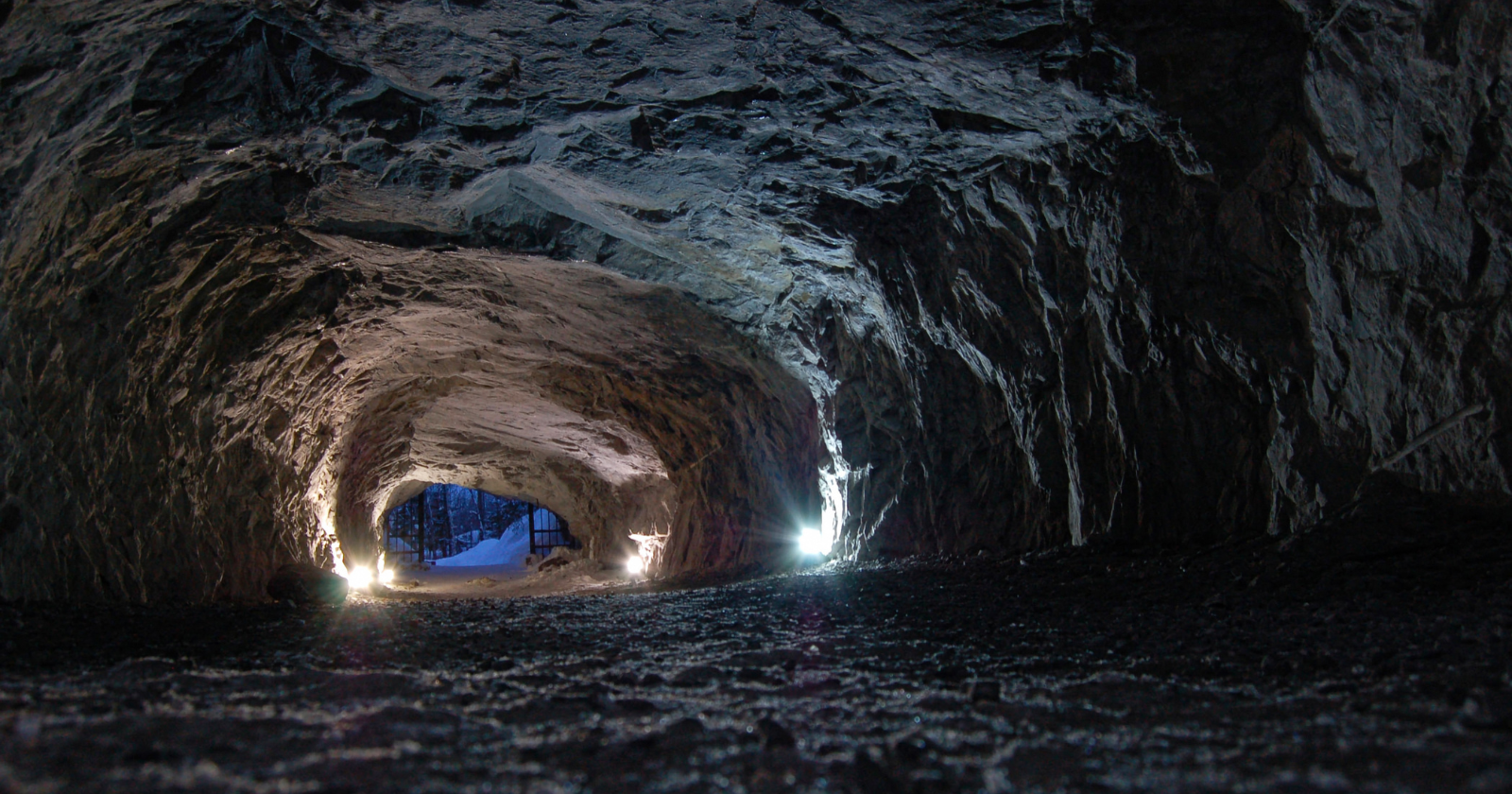
Getting to Cova 338 still requires a long walk. The cave sits in the Núria Valley in the Girona region of northeastern Spain, 2,235 metres above sea level, inside a natural park where motorized access is forbidden. The archaeologists who excavated it between 2021 and 2023 carried every piece of equipment up on foot and brought all the excavated sediment back down the same way. What they were working in is a small space: roughly 100 square metres in total, two shallow chambers, and only six square metres near the entrance actually excavated across three field seasons. From that narrow window, the material that came back out was rich enough to prompt a paper that appeared in Frontiers in Environmental Archaeology in May, arguing that this cave was one of the most intensively used prehistoric sites in the Pyrenees at altitude, and one of the earliest high-altitude contexts of mineral exploitation known in Europe.
The paper, led by Carlos Tornero of the Universitat Autònoma de Barcelona and the Institut Català de Paleoecologia Humana i Evolució Social (IPHES-CERCA), draws its central claim from a confluence of evidence: 23 overlapping fire pits, nearly 200 fragments of green mineral not native to the cave, broken pottery, butchered animal bones, personal ornaments, and traces of at least one child. Taken together, they indicate that human groups came to this specific cave, at this specific altitude, repeatedly, across a span of more than 4,000 years, from the early 5th millennium BCE to the late 1st millennium BCE.
For a long time the standard assumption in Pyrenean archaeology was that high-altitude sites above 2,000 metres were marginal: places that groups passed through seasonally, sheltered in briefly, and left without doing much. Cova 338 contradicts that. What the evidence shows is not marginal use. It is organised, recurrent, purposeful occupation of a site so remote that reaching it required significant effort every single time.
What the green mineral actually tells us
The central interpretive question is what people were doing with the green rock. Nearly 200 fragments of what the researchers describe as “most likely malachite” — a copper carbonate mineral that forms in vivid green nodules — were recovered from the cave. Malachite does not occur naturally at that site, which means every fragment was carried there from somewhere else. Many of the pieces show thermal alteration: discolouration and structural changes that indicate exposure to intense heat. Other materials in the cave show no comparable signs, which eliminates accidental burning as an explanation.
“Many of these fragments are thermally altered, while other materials in the cave are not, which clearly suggests that fire played an important role in their processing and that there was a deliberate intention behind it,” said Julia Montes-Landa, an archaeologist at the University of Granada and co-author on the study. “In other words, they weren’t burned by accident.”
The researchers interpret this as evidence of the systematic exploitation of copper-rich minerals at altitude during the Late Neolithic and the Bronze Age. The paper places Cova 338 “among the earliest known examples of this type of activity in Western Europe.” What it does not claim, and this distinction is worth observing carefully, is that copper metal was extracted at the site. Smelting — the chemical reduction of ore to release copper — requires sustained temperatures above 1,000 degrees Celsius and specific conditions; the paper uses “exploitation” and “processing” throughout, not “smelting.” What the evidence shows is that malachite was brought to the cave and subjected to fire in an organised way. Whether the full metallurgical sequence happened here or whether this was a preparation step before further processing elsewhere is an open question. The malachite identification itself remains tentative pending detailed mineralogical analysis; “most likely” is the paper’s own phrasing.
Even at this level of caution, the finding is genuinely notable. A copper-bearing mineral is being treated with deliberate fire, at 2,235 metres above sea level, at a site people returned to over many centuries. This is not incidental. It reflects a level of knowledge, planning, and resource organisation that the old model of marginal high-altitude use simply cannot accommodate.
What the fire pits say about organisation
Twenty-three combustion structures in six square metres of excavated floor is a dense concentration. Some of the pits cut into earlier ones, indicating that people rebuilt fires in the same locations across different visits separated by years or generations. That pattern is not what shelter-seeking looks like. It is what a known, remembered, purposefully used site looks like.
The researchers interpret Cova 338 as what they call a logistical site: not a base camp or a permanent settlement, but a specific location integrated into structured seasonal mobility systems. Groups appear to have made planned expeditions to the cave, well-supplied, with clear objectives, and left again. The ceramic fragments (333 pieces recovered from the six square metres) suggest that vessels were brought along or stored there. The animal bones show signs of butchery, indicating that food was being prepared. These are not the traces of people who stumbled on the cave. They are the traces of people who knew it was there and came prepared.
This raises a question that archaeology can identify but not fully answer: how does a place like this stay known across 4,000 years? The occupation is not continuous; radiocarbon dates indicate distinct phases separated by intervals when the cave appears not to have been used. Someone would need to remember where it was, and why it mattered, after absences long enough that no living person had been there. Whatever the mechanism of transmission, name, route knowledge, story, or seasonal practice, Cova 338 was being found again across generation after generation.
The child’s remains, and what else was there
From the third stratigraphic layer, the excavation produced a finger bone and a baby tooth, interpreted as belonging to at least one child of around 11 years of age. The researchers have not established whether the two elements come from the same individual, and there is no evidence yet about how or why the remains came to be there. The paper raises the possibility that the cave may have served, at least in some phases, as a burial site as well as a working one. That would not be unusual for the period; cave sites across Chalcolithic Iberia show mixed functional and funerary use. It does, however, complicate the purely economic reading of what Cova 338 was for.
Two personal ornaments were also recovered from the prehistoric layers: a pendant made from a Glycimeris marine shell, a species found on Mediterranean coasts, and a pendant made from a brown bear tooth. The shell has parallels at other Catalan prehistoric sites. The bear tooth is rarer, and the researchers flag it as possibly carrying a specific symbolic significance. Both pendants date to approximately the second millennium BCE, placing them within the Bronze Age phases of occupation. That someone carried a marine shell to a mountain cave at 2,235 metres, and that it was found there roughly 4,000 years later, is one of those details that archaeological language tends to render neutral when it is, in some ways, the opposite.
What this does and doesn’t show
The paper is built around a six-square-metre excavation at the entrance of a 100-square-metre cave. The researchers are clear that future work will need to expand the excavation, analyse pollen and plant residues, and ideally identify the source of the green mineral to confirm it is malachite and, if so, where it was coming from. The cave has been closed to the public and protected to allow that future research to proceed.
What the current evidence establishes is a pattern, not a mechanism. People came to Cova 338 across millennia with copper-bearing rock, built fires over it, and came back. The fuller sequence of what they did with the processed material, whether copper objects were made, who used them, and over what territory the knowledge of this site spread, remains to be worked out. The Chalcolithic and Bronze Age in Iberia are already understood to have been periods of significant copper exploitation in lowland sites; Cova 338 adds a high-altitude dimension to that picture that was not previously documented in the Pyrenees.
In the paper’s own summary: “Cova 338 forces us to rethink the role of high mountain environments in Pyrenean prehistoric societies. For a long time, these spaces were assumed to be marginal. What we document here is recurrent occupation, with complex activities and a clear exploitation of mineral resources.” The mountain, in short, was not a barrier. It was somewhere they went.
