
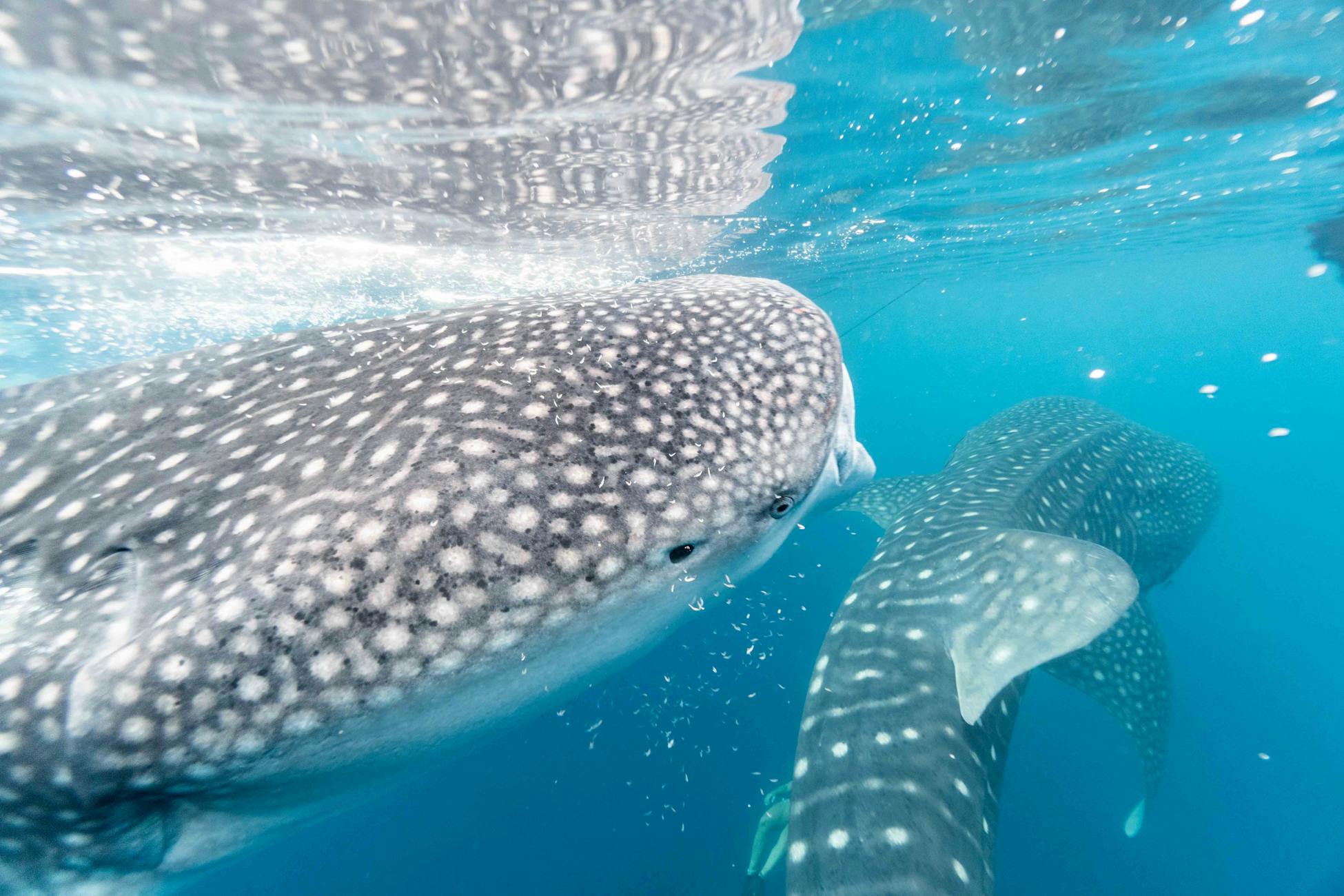
On the morning of November 20, 1820, the Nantucket whaleship Essex was floating quietly in the equatorial Pacific, about 2,000 nautical miles west of the South American coast, when an 85-foot bull sperm whale surfaced off her port bow, paused, and charged.
First mate Owen Chase, who survived to write the account that Herman Melville would later annotate by hand, described the animal striking the ship twice — the second blow head-on at full speed, splintering the bow timbers and rolling the 238-ton vessel onto her side. Within ten minutes the Essex was sinking. Twenty men climbed into three small whaleboats with whatever they could grab, and the next ninety days would become one of the strangest endurance ordeals in maritime history.
The whale, having done what no whale was supposed to do, swam away and was never seen again.
(The year often given as 1819 in retellings is the year the Essex left Nantucket; the sinking itself happened the following November in the South Pacific.)
A ship built for killing whales, killed by one
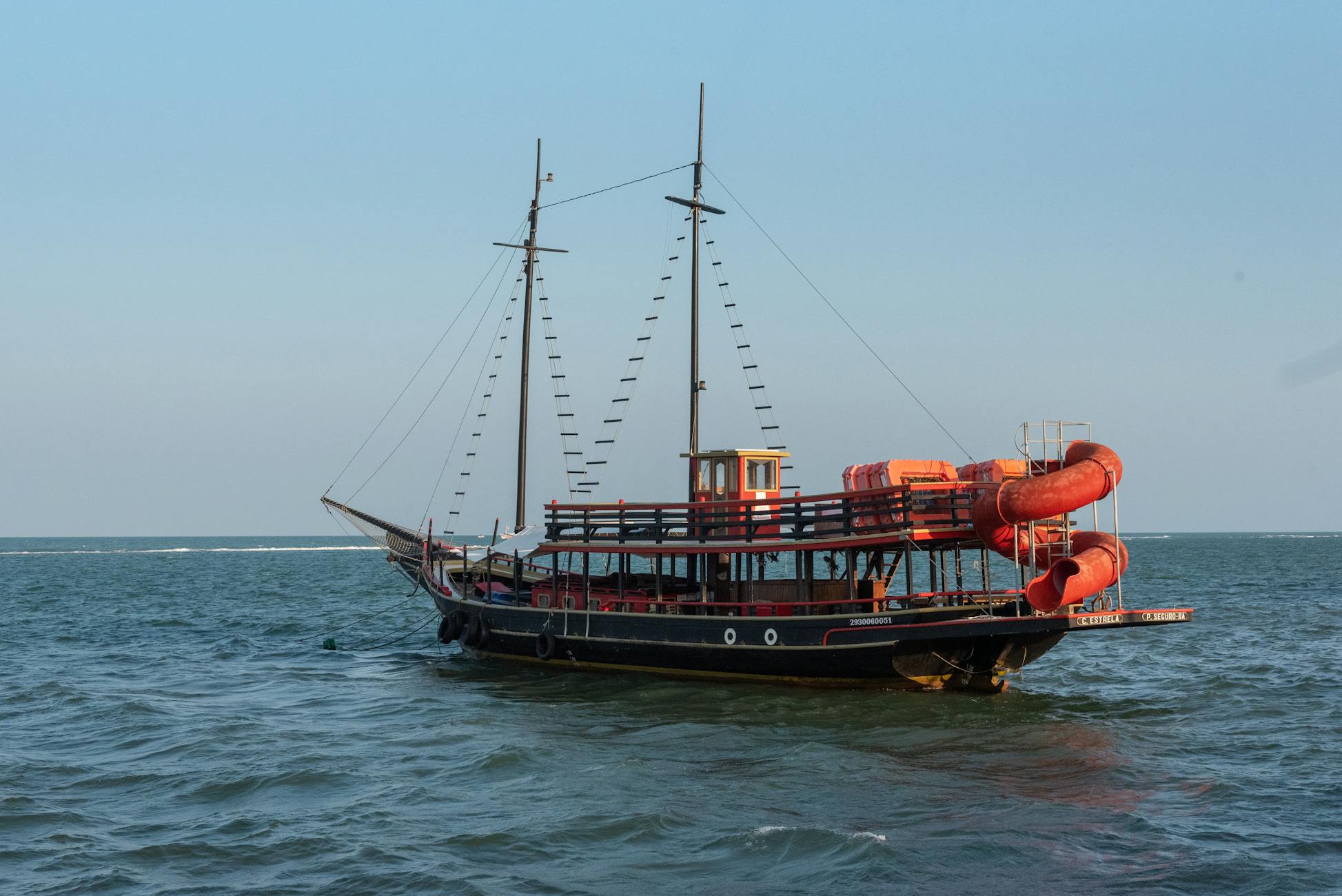
The Essex was not an unusual vessel. She was a typical Nantucket whaler — square-rigged, about 87 feet long, crewed by 21 men under Captain George Pollard Jr., and outfitted for a voyage that was expected to last two and a half years. Her hold was meant to come back filled with sperm oil, the high-grade lamp fuel that lit the parlors and street lamps of the early industrial world.
She had left Nantucket on August 12, 1819, rounded Cape Horn, and worked her way up into a remote stretch of the Pacific that whalemen called the Offshore Ground, a recently discovered hunting region thousands of miles from any inhabited coast.
On the morning of the attack, the crew had already harpooned several whales from a pod. One of the small whaleboats had been damaged and was being repaired on deck. Then Chase spotted the bull — unusually large, drifting on the surface, watching.
The choice that doomed them
With the Essex gone, Pollard, Chase, and second mate Matthew Joy gathered the survivors in three whaleboats — open craft about 25 feet long, designed for chasing whales, not crossing oceans. They had salvaged roughly 200 pounds of hardtack per boat, some fresh water in casks, two pistols, and a few navigational instruments. No shelter. No real sails to speak of. Twenty men crammed into boats meant for six.
The nearest land was the Marquesas Islands, about 1,200 miles to the west, with favorable trade winds. The Society Islands, including Tahiti, lay a bit farther southwest. Both were reachable in weeks.
Pollard wanted to head for the Marquesas. Chase and Joy talked him out of it. The officers had heard rumors — exaggerated and outdated — that the islands were inhabited by cannibals. They argued for sailing south first to catch the westerlies, then east toward South America. That route was roughly 3,000 miles longer.
Pollard, only 29 years old and on his first command, gave in. It is the decision every account returns to, and it is the kind of decision that reveals a characteristic pattern: under prolonged fear, fatigue, and uncertainty, even experienced leaders tend to default to risk-avoidant choices that feel safer but compound danger downstream.
The cannibals, as it turned out, were the wrong thing to fear.
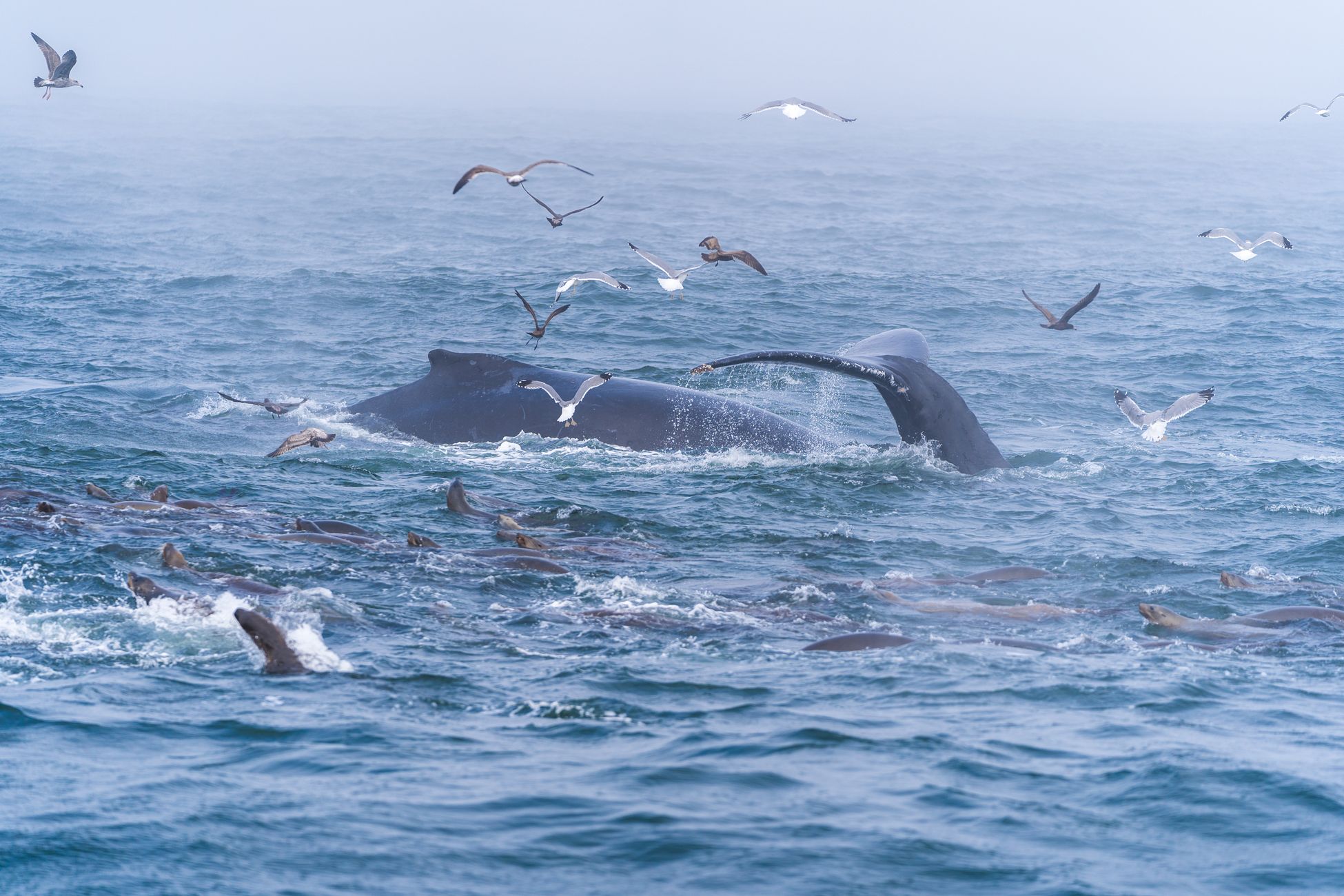
Ninety days in open boats
For the first month, the three boats stayed together, rationing hardtack to about three ounces per man per day and half a pint of brackish water. The biscuits, soaked in seawater during the sinking, were already half-spoiled and made the men frantic with thirst. Saltwater sores opened on their backs and legs. The sun burned them by day; they shivered through equatorial squalls at night.
On December 20, after a month at sea, they sighted Henderson Island, a barren coral platform near Pitcairn. They drank from a brackish spring, ate seabirds and crabs, and stripped the island nearly bare in a week. Three men — Thomas Chappel, Seth Weeks, and William Wright — chose to stay behind rather than face the open Pacific again. They were rescued months later, the only survivors who avoided what came next. The remaining seventeen pushed off on December 27.
The decisions get darker
Within weeks the boats lost sight of one another in heavy weather. Matthew Joy died first, on January 10, of dysentery and starvation. He was buried at sea.
Then men began to die one after another in Chase’s boat. The survivors, following a grim maritime custom called the custom of the sea, ate the bodies of those who had died — first the flesh, then the organs, then crushing the bones for marrow. They told themselves it was the only way the rest could live, and in strictly caloric terms they were right.
In Pollard’s boat, the situation became worse. By early February, four men were still alive and there were no more bodies. They drew lots to decide who would be killed so the others could eat. The lot fell to Owen Coffin, Pollard’s 17-year-old first cousin, whom the captain had promised to protect. Pollard reportedly offered to take the boy’s place. Coffin refused, laid his head on the gunwale, and was shot by another crewman, Charles Ramsdell, who had also drawn a lot — to be the executioner.
Pollard ate his cousin.
It is a sentence so flat and so awful that every later writer who has touched the Essex story has had to decide how to handle it. Most do what the survivors themselves did and let the bare fact stand.
Rescue, after ninety days
On February 18, 1821, the British brig Indian spotted Chase’s boat off the coast of Chile. Chase, Benjamin Lawrence, and Thomas Nickerson were aboard, skeletal and barely conscious, sucking marrow from the bones of their dead. Five days later, the Nantucket whaleship Dauphin found Pollard and Ramsdell drifting near Saint Mary’s Island. The two men were so deranged by hunger that they refused to give up the bones they were still gnawing, even after being lifted aboard.
Of the twenty men who left the Essex, eight survived: five rescued from the boats, three taken off Henderson Island.
The voyage had lasted ninety-three days in open water.
How the story reached Melville
Owen Chase published his account, Narrative of the Most Extraordinary and Distressing Shipwreck of the Whale-Ship Essex, in 1821, only months after returning home. It sold modestly and faded.
In July 1841, a 21-year-old sailor named Herman Melville, aboard the whaleship Acushnet, met a teenager named William Henry Chase in the middle of the Pacific. William was Owen Chase’s son. He lent Melville a copy of his father’s narrative. Melville read it at sea, in roughly the same latitudes where the Essex had gone down.
He later wrote in the margins of his own copy that reading the book “on the landless sea, & close to the very latitude of the shipwreck had a surprising effect upon me.” Ten years later, in 1851, he published Moby-Dick, in which the whaler Pequod is rammed and sunk by a white sperm whale named for an actual albino bull, Mocha Dick, that whalemen had reported off the coast of Chile.
Melville borrowed the sinking. He invented almost everything else.
What the survivors did with the rest of their lives
Pollard captained one more whaleship, the Two Brothers, which wrecked on a coral reef near the French Frigate Shoals in 1823. He came home to Nantucket, was quietly declared a Jonah, and spent the rest of his life as a night watchman, walking the streets with a lantern. He never went to sea again. He fasted every November 20 for the rest of his life, alone in his house, in memory of the men who had not come back.
Chase prospered as a captain, then began stockpiling food in the attic of his Nantucket home. He died in 1869, having been judged insane, with hardtack hidden in every room.
Thomas Nickerson, the cabin boy, wrote his own account around 1876. The manuscript was lost for over a century and not published until 1984.
The men who survived shared a quality that some survivors of catastrophe have come to call post-traumatic growth — the way some survivors construct meaning from events that should have destroyed them. Others showed the opposite pattern, the haunted, ritualized grief that Pollard carried for forty more years. Both responses, research on long-term survivor outcomes suggests, can live inside the same event.
And the narratives survivors build around catastrophe tend to outlast the survivors themselves — which is how a twenty-minute encounter between a ship and a whale in 1820 became, by 1851, the central American novel about obsession, and remains, two centuries later, the reason most people have ever heard of Nantucket at all.
The whale
The bull that sank the Essex was estimated by Chase at 85 feet — likely an overestimate, since the largest verified sperm whales reach about 67 feet. Whatever its true length, it was an old male, scarred, traveling alone, and it attacked deliberately. Chase wrote that the whale appeared to be acting “with tenfold fury and vengeance,” and noted that two of the harpooned whales in the pod had been calves.
Modern cetologists do not say whales take revenge. They say sperm whales are highly intelligent, socially complex, and capable of distinguishing threats — and that a bull defending a pod is one of the most dangerous animals in the ocean.
Somewhere in the South Pacific that November morning, an 85-foot whale made a decision. Twenty men spent the next ninety days making worse ones. The ocean kept eight of them. The story kept the rest.
