
The competition that matters most in planetary science right now is not about boots or banners. It is about sealed canisters of rock, and as of this year the field has narrowed in a way few would have predicted a decade ago. A fiscal 2026 spending package that cleared Congress in January effectively ended NASA’s existing Mars Sample Return architecture by declining to fund it as a retrieval mission, while creating a much smaller $110 million Mars Future Missions line for related technology development. China and Japan, meanwhile, continue working through sample-return campaigns aimed at Mars, the Martian moon Phobos, and a small asteroid that loiters near Earth’s orbit.
The practical consequence sits in Jezero Crater. NASA’s Perseverance rover has been filling sealed, cigar-sized titanium tubes with rock cores and sediment, roughly 30 samples so far, drawn from a range of environments, many of which were exposed to liquid water in the ancient past. There is now no funded, approved mission to retrieve them.
How the American programme unwound
The unwinding took years, not one vote. By 2024, an independent review board had projected the joint NASA and European Space Agency programme’s full cost at around $11 billion, several billion above earlier expectations, with the return date potentially slipping into the 2040s. NASA spent 2024 narrowing eleven community and industry studies down to two architecture options, then deferred the choice between them to mid-2026, citing engineering work, budget uncertainty and deference to the incoming administration.
The decision never had to be made. The Trump administration’s proposed 2026 NASA budget, released in May 2025, called for ending MSR, which it described as financially unstable, in favour of one day sending humans to Mars. The appropriations agreement followed that recommendation, shifting $110 million into a Mars Future Missions programme intended to preserve technology development from MSR, including entry, descent and landing systems. That is a technology line item, not a retrieval mission.
An asteroid arrival happening roughly now
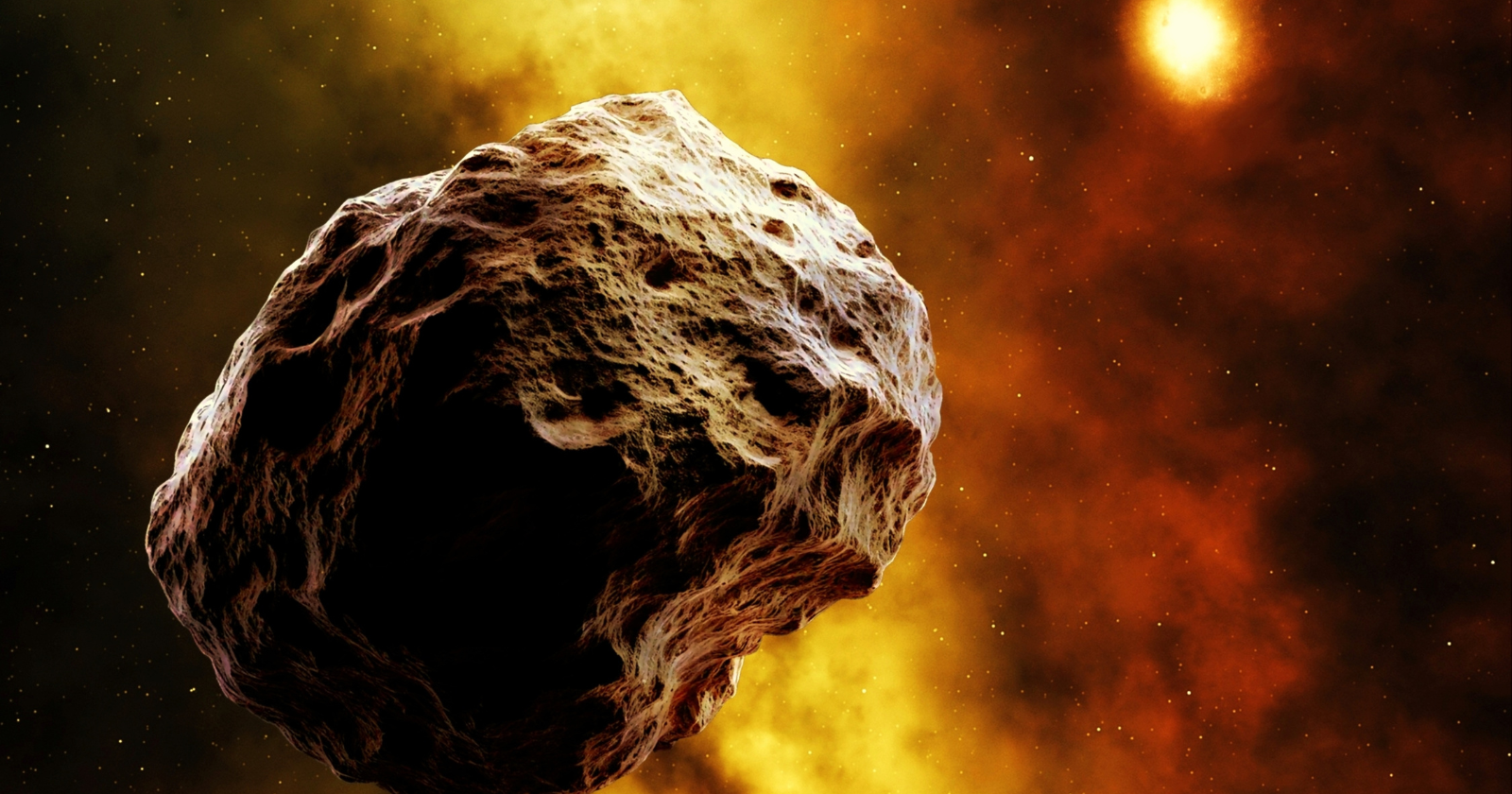
The nearest milestone in the sample-return calendar belongs to China, and it is days rather than years away. Tianwen-2 launched in May 2025 toward the 40 to 100 metre near-Earth asteroid 469219 Kamoʻoalewa, with rendezvous expected around mid-2026 and samples returned to Earth in late 2027. Independent ground tracking in early June suggested the spacecraft was closing on the asteroid and possibly preparing an arrival burn, though the China National Space Administration has been sparing with official updates, so arrival should be treated as imminent rather than confirmed. Public descriptions of the sampling goal have generally put the target around tens to hundreds of grams, with some unofficial mission timelines citing higher figures.
This would not be the first asteroid sample brought home. Japan’s Hayabusa returned material from Itokawa in 2010, Hayabusa2 returned Ryugu grains in 2020, and NASA’s OSIRIS-REx delivered its Bennu sample in 2023. What makes Kamoʻoalewa worth the trip is the open question of what it is. Earlier spectral work suggested the asteroid might be a fragment of the Moon. A paper in Nature Communications now proposes another scenario: a re-analysis of its reflectance spectrum is consistent with LL chondrite material, and dynamical tracing points to an origin in the Flora family of the main belt. The returned material should test those competing origin stories far more sharply than remote spectra alone.
Phobos and the Mars surface, on separate timelines
Japan’s entry is the Martian Moons eXploration mission, or MMX, which would be the first sample return from the Mars system. The spacecraft is undergoing full system tests ahead of a launch in Japanese fiscal year 2026, with current planning pointing to a launch around November 2026 on the H3 rocket, Mars arrival roughly a year later, and a landing on Phobos to collect about ten grams of material. Recovery of the return capsule is planned in Australia in 2031, before transfer to JAXA’s curation facilities in Sagamihara. The mission has slipped before. It was originally scheduled for September 2024 and moved to 2026 partly because of early troubles with the H3 launcher, so the date deserves the usual caution.
The Mars surface itself is now China’s to attempt first. Tianwen-3 is scheduled to launch around 2028 with the goal of returning no less than 500 grams of Martian samples, according to mission chief scientist Hou Zengqian, who outlined the plan with collaborators in Nature Astronomy; official descriptions put the return at around 2030 to 2031. The architecture involves two Long March 5 launches, one carrying a lander and ascent vehicle, the other an orbiter and return module. Planned sampling methods include surface shovelling, drilling to two metres, and drone-assisted collection away from the landing site.
A scope note matters here. A single-site collection differs from what Perseverance has assembled, which is a curated set spanning multiple ancient environments. If Tianwen-3 succeeds, China returns the first Martian samples. It does not return the Jezero collection, which remains the scientifically richer set and remains stranded.
What to watch next
Three markers over the next eighteen months will tell most of the story. First, official confirmation from CNSA that Tianwen-2 has entered station around Kamoʻoalewa, followed by site selection and the sampling attempt itself, the hardest part of any small-body mission. Second, whether MMX holds its late 2026 launch window; Mars windows open for a few weeks every 26 months, so a miss costs two years. Third, whether the Mars Future Missions funding line in the United States produces an actual retrieval concept for the Perseverance tubes, or quietly becomes a technology programme with no flight manifest.
Timelines in this field slip more often than they hold. The 2028 and 2030 to 2031 dates above are agency plans, not delivery schedules. But the direction is clear enough: the first pristine material from the Mars system is now most likely to arrive in Beijing and Sagamihara, not Houston.
