
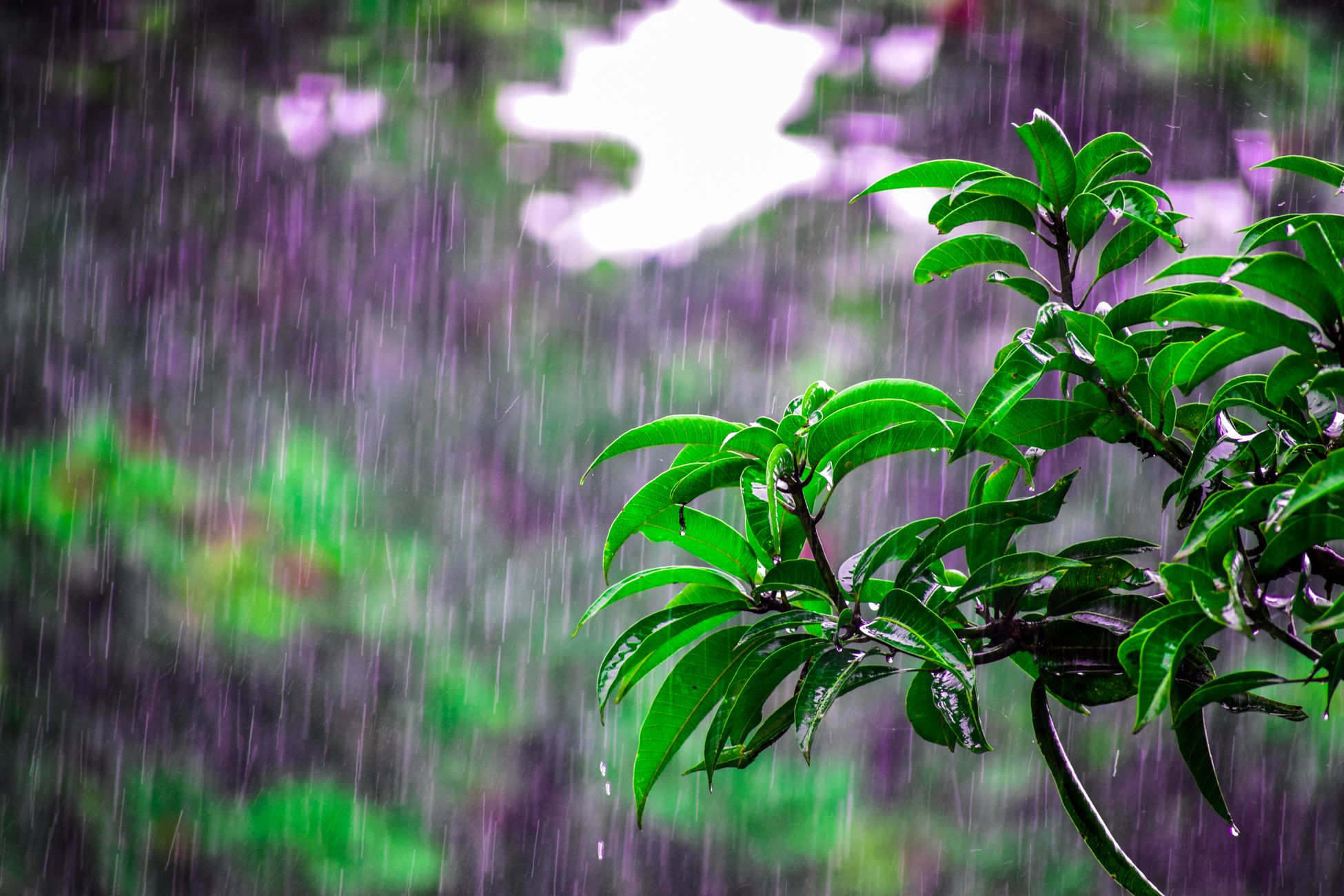
Mawsynram, a cluster of villages perched on a limestone ridge in the Indian state of Meghalaya, is often cited as one of the wettest inhabited places on Earth, competing with its neighbour Cherrapunji for the distinction. To walk through that rain, residents of the Khasi villages strap a tortoise-shaped shield called a knup over their backs, woven from bamboo splints and waterproofed with banana leaf, so both hands stay free to carry firewood, lead a child, or balance a basket of betel nut along a path turning to mud.
The knup is not a hat. It is closer to a portable roof.
It curves from the crown of the head to below the knees, broad at the shoulders and tapering to a point at the base, and from a distance a line of farmers wearing them looks like a row of dark beetles moving uphill through the mist.
The number behind the title
Mawsynram sits in the East Khasi Hills, south of the state capital Shillong. The ridge it occupies is the first solid obstacle that monsoon air, pulled north off the Bay of Bengal, hits after sliding across the flat Bangladeshi plains. The air rises, cools, and dumps its water in walls.
In strong years the rainfall totals climb extraordinarily high. Heavy downpours regularly flood Assam and Bangladesh downstream.
For comparison, London receives about 600 millimetres a year. Seattle gets around 950. Mawsynram, in a single average June, can collect more rain than either city sees in a decade.
What a knup actually looks like
The frame is split bamboo, soaked and bent into ribs that fan out from a central spine. Over the ribs the weaver lays broad banana leaves, then a top layer of pamthei, a tougher reed-like leaf, lashed down with thin cane. The result is light enough for a child to carry but rigid enough to shed water at a steep angle, the way a thatched roof does.
A finished knup is lightweight and costs a few hundred rupees in the local market, sometimes less if bartered. A well-made one lasts two or three monsoon seasons before the leaves rot through and the bamboo has to be re-skinned.
The shape matters. An umbrella forces a person to hold it overhead, occupying one arm and offering nothing against rain blown sideways by wind. The knup hangs from the shoulders, leaving both hands free, and because it extends down the back it deflects the lateral sheets of water that come off the ridge during squalls.
Why this corner of India drowns
The geography is unusually cruel. South of Mawsynram the land falls away in a near-vertical escarpment to the floodplains of Bangladesh, about 1,300 metres below. Warm, saturated air from the Bay of Bengal travels north all summer, unobstructed, until it slams into that wall.
Forced upward, the air cools. Cool air holds less moisture than warm air, so the excess condenses and falls. The effect is called orographic lift, and Mawsynram is one of the most extreme examples on the planet.
The monsoon arrives in early June and lingers through September. During those four months the village is often inside a cloud, with visibility under fifty metres for days at a stretch, and the sound of running water becomes the baseline of every conversation.
Living inside the rain
The Khasi villages have adapted in ways that go beyond the knup. Houses are built with steep tin or thatched roofs and deep overhangs. Footpaths through the forest are paved with flat stones, sometimes for kilometres, because dirt simply washes away. Schools install soundproof tin sheets on the roof so teachers can be heard over the drumming.
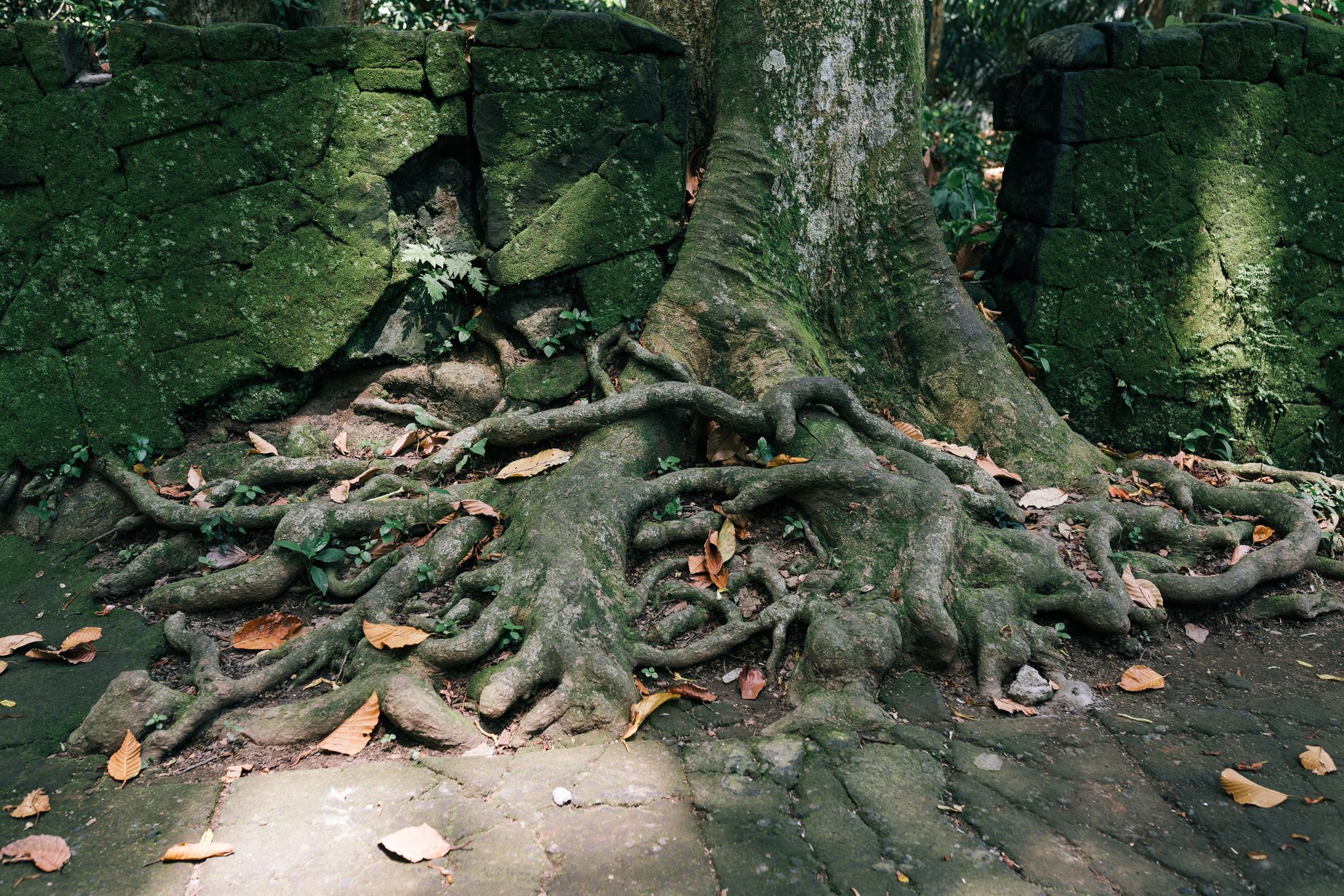
The most famous adaptation is the living root bridge. For generations, Khasi and Jaintia villagers have trained the aerial roots of the Ficus elastica rubber fig across rivers, weaving them around bamboo scaffolds until the roots fuse into a load-bearing span. Some of the bridges in the Cherrapunji area are believed to be centuries old, and unlike wood or steel they grow stronger with each monsoon because the living roots keep thickening.
The bridges exist because conventional materials do not survive here. Bamboo rots in a season. Wood softens. Iron rusts almost visibly. Only something alive, and able to repair itself, keeps working.
This kind of practical, place-specific engineering is precisely what researchers have begun documenting under the banner of traditional ecological knowledge, the accumulated solutions a community develops by living in one landscape long enough for the landscape to teach it.
The water that does not stay
One of the cruel ironies of Mawsynram is that despite the rainfall, the village has historically struggled with water shortages outside the monsoon. The limestone ridge is porous. Water hits the surface, drains through fissures into underground rivers, and emerges far below in the plains. By March, taps in some Khasi villages run dry and women walk down to springs at the foot of the ridge to fill jerry cans.
This pattern, of being soaked half the year and parched the other half, shapes everything from agriculture to architecture. The Khasi grow potatoes, oranges, and broom grass on the slopes, crops chosen partly because they tolerate both extremes. Rice paddies are confined to the valleys.
What rain does to a body and a mind
Living under cloud cover for four months at a stretch is not psychologically neutral. Prolonged low-light, high-humidity conditions have been linked to seasonal mood disturbance, sleep disruption, and increased respiratory illness from mould and damp.
Children growing up in the wettest villages report a kind of acoustic memory: the sound of rain on tin is so constant during the monsoon that its absence in October feels disorienting, almost loud. Foreign visitors describe the same effect in reverse, struggling to sleep through their first nights in a Khasi guesthouse because of the noise.
The local view is more pragmatic. Rain is weather, and weather is to be dressed for. A life spent in the wettest place on earth teaches a certain economy of movement. People time errands to the gaps between cloudbursts, learn which paths drain fastest, know which leaves to grab if caught without a knup.
The contest with Cherrapunji
For decades, the title of wettest place on Earth belonged officially to Cherrapunji, a town about 15 kilometres east of Mawsynram on the same escarpment. Cherrapunji still holds the record for the most rainfall in a single calendar year and in a single month, both measured by British colonial observers in the 1860s.
Mawsynram’s claim rests on a higher long-term annual average. The two villages trade the crown season by season. Locals treat the rivalry as a kind of running joke, the way Seattle and Portland argue about coffee.
Climate change is now scrambling both records. Monsoon rainfall over the northeastern hills has grown more erratic, with longer dry spells punctuated by more violent single-day deluges. The downstream flooding risk in Assam and Bangladesh is rising in step.
Why the knup endures
Cheap plastic raincoats have been available in Shillong markets for forty years. Umbrellas are everywhere. And yet the knup persists, not as folk costume but as working gear, because it solves a problem the alternatives do not.
A farmer carrying a sack of areca nut up a slick stone path cannot hold an umbrella. A woman herding goats through a sideways squall cannot keep a plastic poncho closed at the throat without dropping the stick. The knup, woven by an aunt or a neighbour, fits the body and the work in a way mass-produced rain gear does not.
Researchers documenting indigenous design and farming systems often note this pattern. Tools that look archaic to outsiders survive because they are tuned to a specific landscape and a specific task, and replacing them with a generic substitute means losing function, not gaining it.
The sound of a wet ridge
By late September the monsoon begins to thin. The clouds lift off the ridge for hours at a time, revealing the green pleats of the escarpment falling south toward Bangladesh, the silver thread of the Surma river far below, the smoke of cooking fires rising from villages that had been invisible for months.
Knups come off the porch hooks and are inspected for the next year. The torn ones go on the fire. The good ones get a new layer of leaf.
And somewhere on a path between two villages, a child carries an older sibling on her back beneath a single knup, both of them hidden under the dark curve of bamboo, walking through the last warm rain of the season with their hands full of oranges.
