
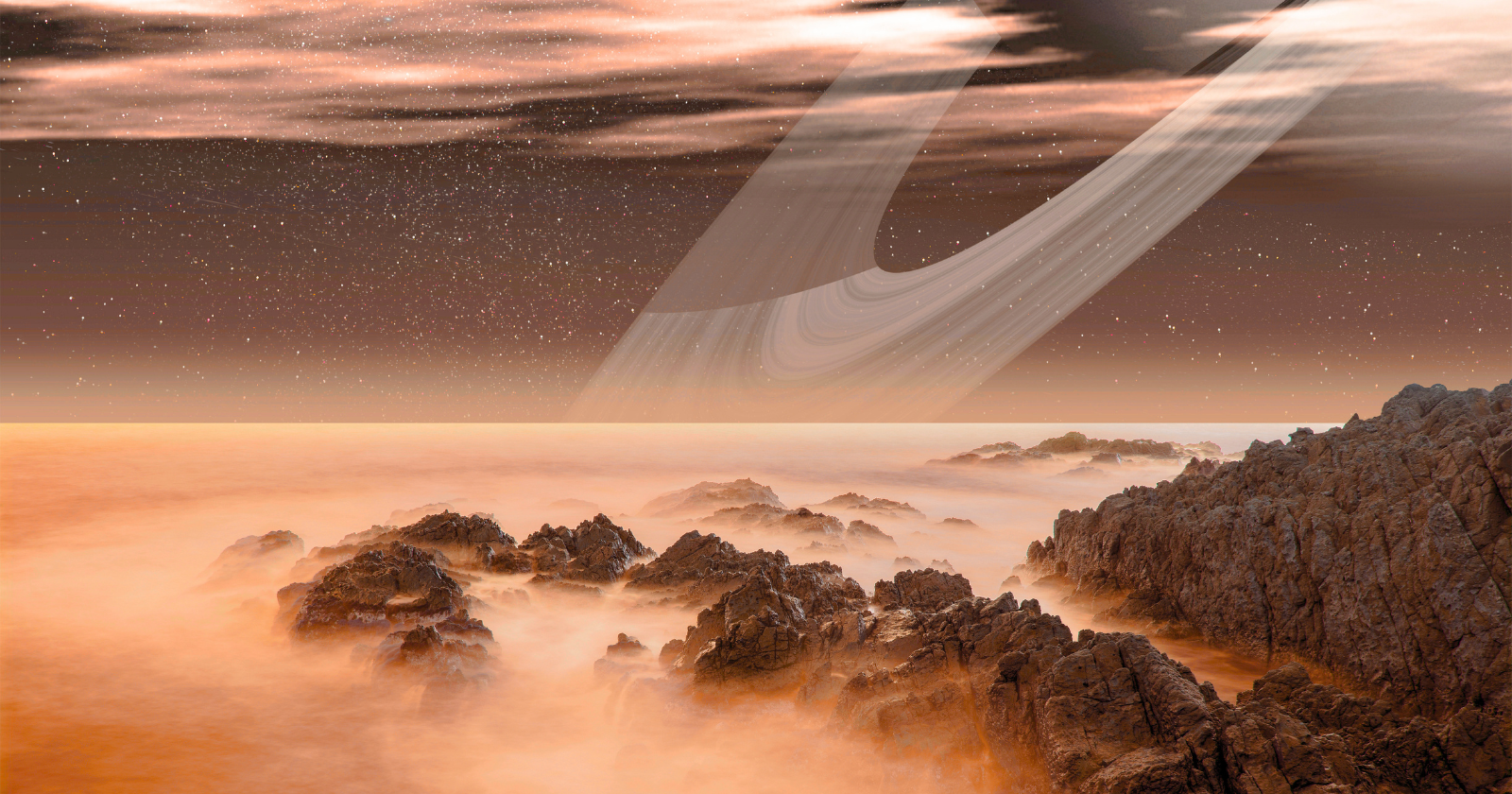
At 4:34 a.m. Pacific Standard Time on January 14, 2005, ESA’s Huygens probe came down on Titan, Saturn’s largest moon, after a 147-minute parachute descent through orange-brown haze. It landed on a cold plain scattered with rounded ice pebbles, then kept sending data from the surface for another 72 minutes.
The probe was more than a billion kilometres from Earth. Cassini, the NASA orbiter that had carried Huygens to Saturn, was the only spacecraft close enough to catch the signal and relay it home.
When Cassini’s line of sight moved away, the data link ended. Huygens had become the first, and still the only, spacecraft to land on a world in the outer solar system, a distinction NASA still lists in its Huygens mission record.
A three-week coast into the unknown
Cassini released Huygens on December 25, 2004, spacecraft event time, after the paired spacecraft had spent more than seven years crossing the solar system. From that moment, Huygens was on its own ballistic path toward Titan.
There was no steering after release. The probe slept for most of the coast, carrying a pre-loaded sequence that would wake it before entry, heat its systems, start its transmitter and open its parachutes in order.
On January 14, 2005, Huygens entered Titan’s atmosphere behind a heat shield, moving fast enough for the shield to take the violence of entry before the parachute system began. ESA’s descent material describes the mission as a fall through Titan’s dense atmosphere to a soft, sandy riverbed, recorded by the probe’s Descent Imager/Spectral Radiometer during the 147-minute plunge.
The first parachute pulled the rear cover away. A larger main parachute slowed the probe high in the atmosphere, and a smaller stabilising parachute then took over for the rest of the descent, a sequence described in engineering accounts of how Huygens landed on Titan.
What the camera saw below the haze
For much of the fall, the view was mostly haze. Then the orange fog began to thin, and the camera resolved a landscape that looked familiar in shape but alien in chemistry.
Bright highlands were cut by dark, branching channels. Those channels ran downhill into flat darker regions that resembled basins, floodplains or old lake beds.
The geometry looked like drainage. On Titan, where surface temperatures are around minus 180 degrees Celsius, water ice is hard enough to behave like rock, and methane and ethane can move as liquids across the surface.
NASA’s reconstruction of the descent shows a world with channels, dark plains and a surface view assembled from images taken after landing by Huygens’s camera system, a scene preserved in the agency’s Huygens landing imagery.
The ground compressed under the probe
Huygens did not splash into a sea. It did not smash into bare ice. It hit a surface that yielded.
The Surface Science Package recorded the impact and the probe’s motion after touchdown. Later analysis found that Huygens made a dent, bounced or rocked, slid slightly and then settled, with the surface behaving like a crust over softer material beneath.
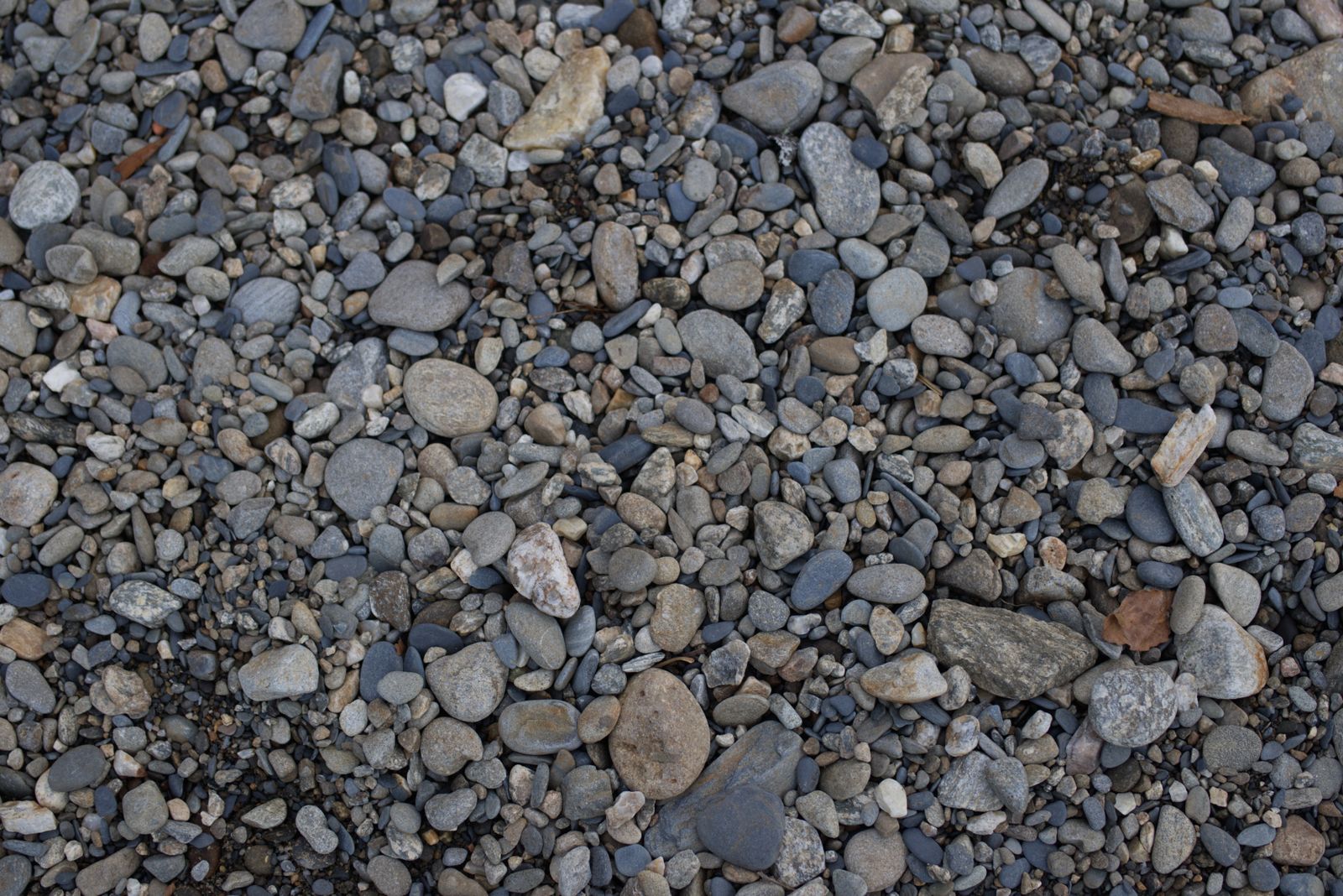
ESA’s science summary describes a landing site with rounded pebbles, probably made of water ice, and surface material affected by methane. The same overview lists Huygens’s close-up ground measurements among the mission’s major Titan discoveries.
A lamp on the probe lit the nearby ground so the instruments could read the chemistry in the dim Titan light. The first surface image showed a field of rounded blocks, like stream-worn stones on Earth, except the stones were almost certainly ice and the weathering agent was methane.
Why the data return nearly failed
The landing succeeded, but the data return was not perfect. One of Cassini’s two receiver channels was not configured correctly for Huygens’s Doppler Wind Experiment, so that channel’s radio-science data was lost.
The other channel worked. That redundancy preserved the descent images and much of the probe’s science return, including the surface photographs that made Huygens more than a brief carrier tone from a hidden moon.
Earth-based radio telescopes also listened for Huygens directly. They could not decode the full science stream the way Cassini could, but they could detect the faint carrier signal and use it to help reconstruct winds during descent.
The probe also spun differently than expected during part of its fall, complicating later image reconstruction. That did not erase the mission, but it made the mosaics harder to interpret and reminded the team how little room there was for error during a one-shot landing at Saturn.
Why Titan keeps pulling missions back
Titan is not just another icy moon. NASA describes it as the only place besides Earth known to have liquid on its surface, with clouds, rain, rivers, lakes and seas made of methane and ethane rather than water.
It is also the only moon in the solar system known to have a substantial atmosphere, a thick nitrogen envelope filled with organic haze. NASA’s Titan facts page still treats those two facts as central to why the moon matters.
Cassini spent more than a decade after Huygens mapping Titan from orbit with radar, infrared instruments and repeated flybys. The probe’s short surface visit gave those orbital maps a ground truth point, a real patch of terrain where images, chemistry and texture were measured in place.
The next mission will move. NASA’s Dragonfly rotorcraft, led by Johns Hopkins APL, is planned to fly between sites on Titan after launch in 2028 and arrival in 2034, sampling chemistry across dunes, impact material and organic-rich terrain.
Huygens is still where it landed. Its batteries are dead, its lamp is cold, and its lens is pointed at the same patch of ice pebbles it saw in January 2005. Titan’s methane weather has moved above it for more than two decades, through fog, wind and possible rain, while the only photograph from the surface remains the one the probe sent before Cassini carried its signal out of view.
