
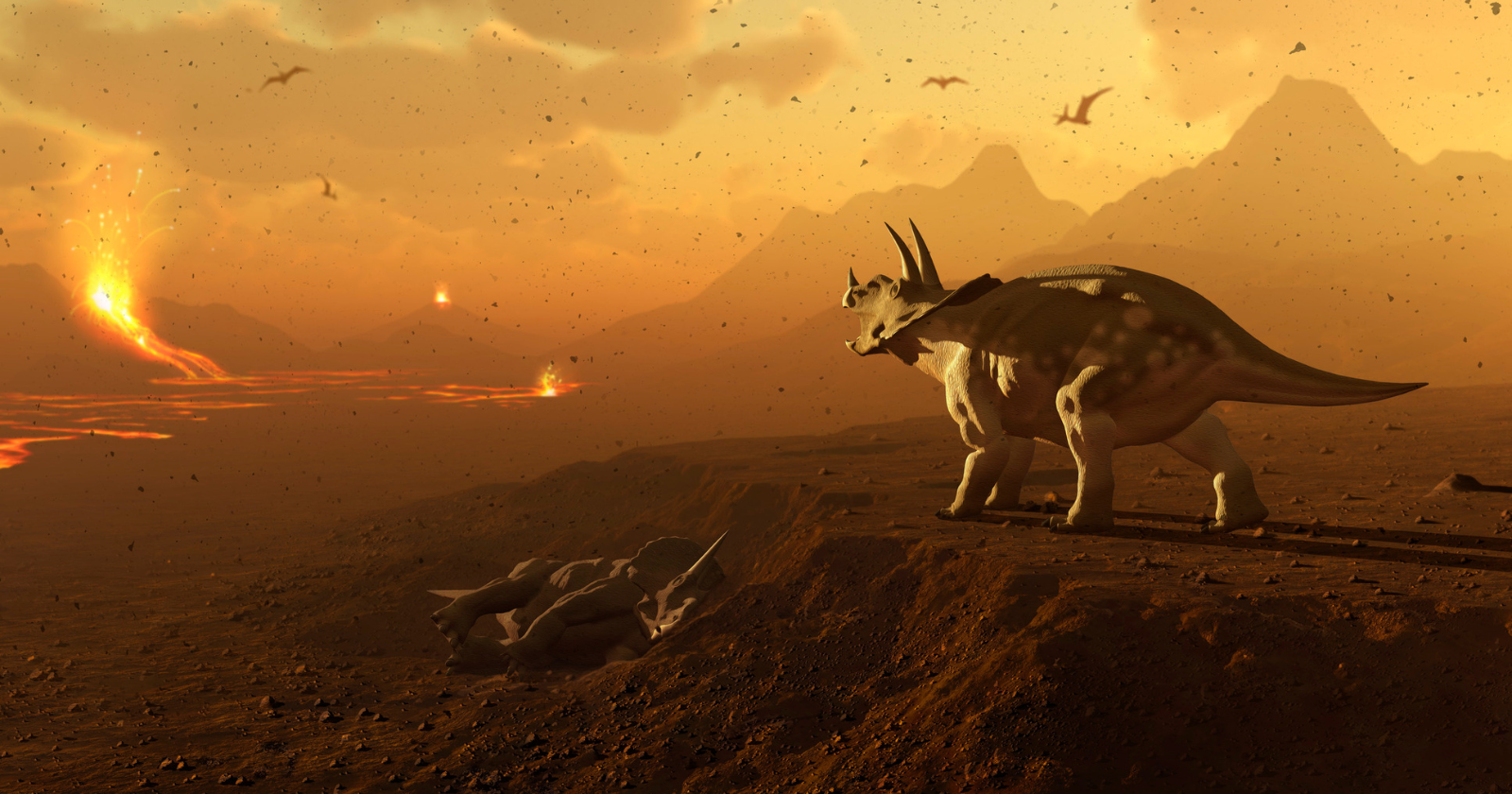
The most unsettling feature of a mass extinction may be that it does not feel like one from inside it. The five great extinctions in Earth’s history are events we can name only because they are finished, their signatures legible in rock laid down over long stretches of time. Lived day to day, an extinction is quieter than that. It arrives as scattered, local losses: a stretch of coast with fewer seabirds, a river with fewer fish, an insect that used to cover the windscreen on a summer drive and no longer does.
None of those losses announces itself as planetary. Each is small, local and easy to absorb. The pattern, if there is one, only resolves at a scale and over a span that no single person experiences directly.
That gap between what is happening and what can be felt is worth taking seriously, because it shapes how the current biodiversity decline is argued about, and how easily the numbers are misread in both directions.
What we actually notice
Part of the difficulty is a documented quirk of perception that the fisheries scientist Daniel Pauly named the shifting baseline syndrome in 1995. Each generation tends to take the depleted world it inherits as the normal one, and measures change against that lowered starting point rather than against what came before. A river that has lost most of its fish over a century looks, to someone arriving now, simply like a river. The loss is real, but the reference point that would reveal it has quietly moved.
This is also why the figure most people encounter is not an extinction count at all. The WWF’s 2024 Living Planet Report reported an average 73 per cent decline in the size of monitored wildlife populations between 1970 and 2020, drawn from nearly 35,000 populations of about 5,500 vertebrate species. It is a striking number, and it is routinely misunderstood.
It does not mean 73 per cent of animals are gone, nor that 73 per cent of species or populations have been lost. It is an average of relative declines across the populations being tracked, sensitive to steep drops in small or well-studied groups, and it covers only vertebrates, which are a small fraction of animal life. What it captures is closer to the lived experience the opening describes: thinning, not disappearance. Abundance falling, often sharply, well before anything is formally declared extinct.
Why “mass extinction” is still a contested word for the present
Extinction, the permanent kind, is a higher bar, and by the strict measure we are not in a mass extinction yet. The working definition, set out by Anthony Barnosky and colleagues in Nature in 2011, is the loss of about three-quarters of species within a short geological interval. The five previous events cleared that bar. The end-Permian extinction, the most severe, is often put at around 90 per cent of species overall, with marine losses sometimes estimated above 95 per cent.
Against that, the recorded modern toll is small. The documented toll based on the International Union for Conservation of Nature’s listings is on the order of 900 to 1,000 species since 1500, well under a tenth of one per cent of described species. That figure is almost certainly an undercount, because most species have never been described and invertebrates and plants are poorly assessed. In a 2022 review in Biological Reviews titled The Sixth Mass Extinction: fact, fiction or speculation?, Robert Cowie and colleagues extrapolated from studied invertebrate groups to estimate that 7.5 to 13 per cent of all species may already have been lost. They were explicit that the extrapolation rests on a bold assumption. On the available evidence, the documented count is clearly incomplete, the highest extrapolations are uncertain, and the present total still appears well below the completed signature of a Big Five extinction.
What is firmer is that modern extinction rates run far above background. Pimm and colleagues, in 2014, put current rates at about 1,000 times the likely background rate, and Ceballos and colleagues, in 2015, reached the same broad conclusion using deliberately conservative assumptions. A rate that high, sustained, is what would eventually produce a mass extinction. It is not the same as having produced one.
A genuine disagreement, not a settled story
This is where careful sources part company, and the split is real rather than rhetorical. Ceballos and Cowie argue that a sixth mass extinction is already under way once invertebrates and current trajectories are accounted for. Others push back. In a 2025 paper in Trends in Ecology and Evolution, John Wiens and a co-author questioned the framing, arguing that the criterion used to declare a sixth event should be exceptional enough to single out only the five that came before, and noting that recorded extinction rates for some groups appear to have peaked roughly a century ago and eased since.
Pimm, who produced some of the highest rate estimates, has also cautioned against treating every threatened species as already doomed, pointing to populations that have recovered under sustained protection. Holding those positions together is uncomfortable but accurate. The rates are alarming, the losses are real, and the label that would tie them into a single completed catastrophe is contested.
The pattern resolves only in hindsight
The deeper reason the present is hard to read is structural. A mass extinction is a category defined by its completed signature. We recognise the five because we can see, in the rock, the full arc of loss and what followed. An event still in progress offers no such vantage. Its eventual magnitude depends partly on losses already locked in and partly on choices not yet made, which is why the more careful projections, including Barnosky’s, are framed as conditional: if currently threatened species are lost and the rate holds, the three-quarters mark could be reached in a few centuries.
So the planetary pattern the opening reaches for is, for now, partly a forecast. That is not a reason to dismiss it. Forecasts built on elevated extinction rates and steep population declines are not idle. But it does mean the question is not settled by looking out the window, and cannot be.
What can be said without overstating it is modest and still serious. Wildlife is markedly less abundant than it was fifty years ago. Species are being lost faster than the long-run average, by a wide margin. Whether this hardens into the sixth mass extinction is not yet determined, and the slowness that makes the losses so hard to notice is the same slowness that leaves the final size of the event unwritten.
