
China produces about 99 per cent of the world’s primary low-purity gallium, according to the United States Geological Survey, and on 3 December 2024 its Ministry of Commerce ruled that exports of dual-use items related to gallium to the United States would, in principle, not be permitted. The same notice covered germanium, antimony and certain superhard materials, and it added a direct prohibition on supplying these items to US military users or military uses.
The timing was not subtle. The notice arrived a day after Washington tightened its own controls on advanced chips and chipmaking equipment bound for China and added more than a hundred Chinese firms to a restricted-trade list. Beijing’s reply, translated in full by Georgetown’s Center for Security and Emerging Technology, was the first of its critical-mineral measures to name the United States specifically rather than requiring licences across the board.
What the controls actually restricted
Gallium is not glamorous. It is a soft, silvery metal recovered almost entirely as a byproduct of refining aluminium from bauxite, and to a lesser degree zinc. There is no standalone gallium mine.
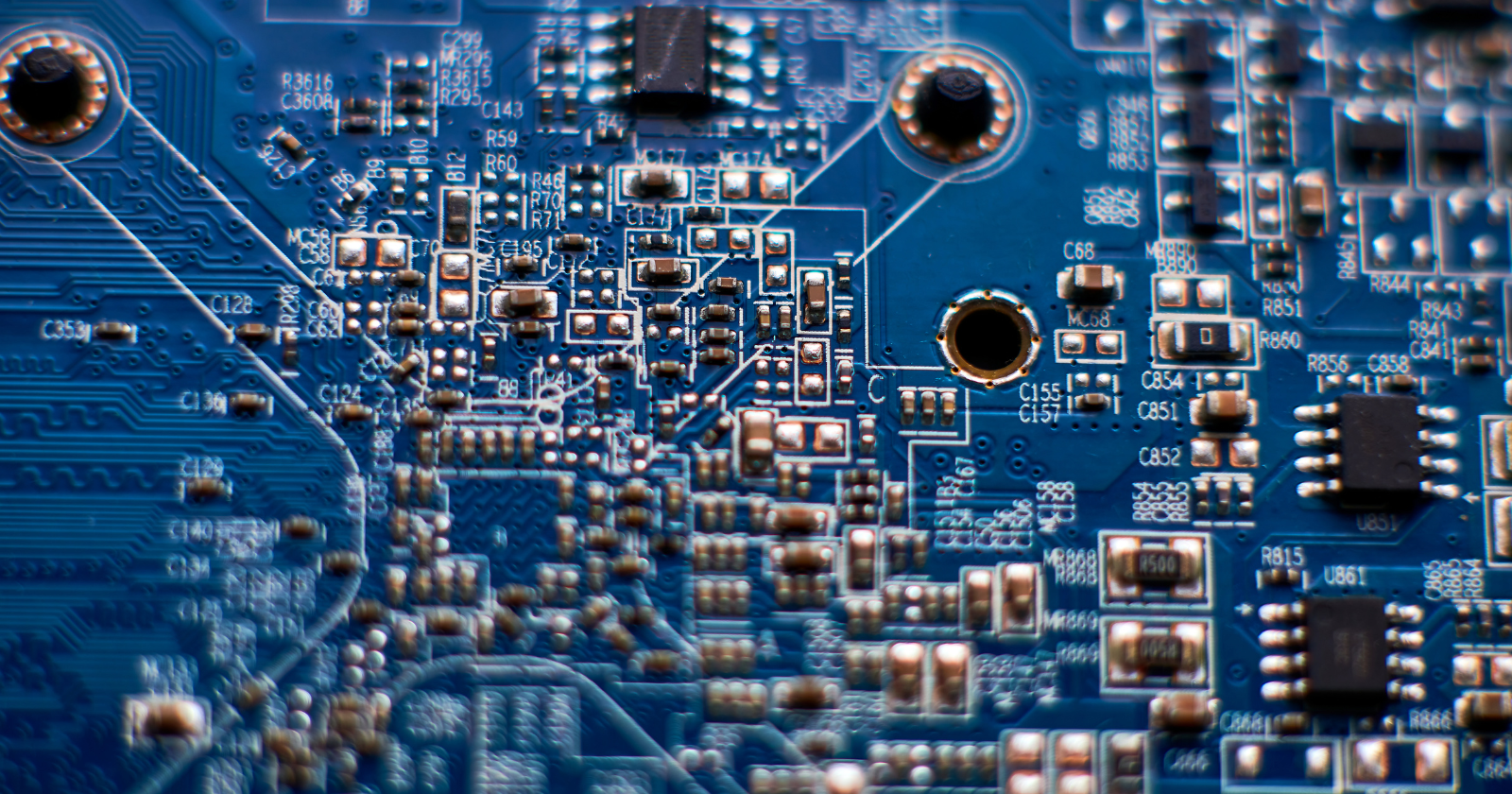
The United States stopped producing primary gallium decades ago, when cheaper Chinese output made domestic recovery uneconomical, and it has not restarted. So the metal matters less for its volume than for where it sits in the supply chain. Pure gallium is rarely used as is. It becomes gallium arsenide, which dominates parts of the radio-frequency front end in mobile handsets, in particular the power amplifiers that push the signal out to the network.
Not every chip in a phone is built on it.
Baseband and transceiver work is often handled by silicon, CMOS or silicon-germanium. But for the high-frequency, high-power stages, gallium arsenide runs at higher frequencies and temperatures than silicon and produces less electrical noise, which is also why it appears in radar, radio links and satellite payloads. The other compound, gallium nitride, is a wide-bandgap material that handles higher voltages and temperatures with lower losses. It is used in advanced radar arrays, electronic-warfare systems, missile seekers and satellite solar cells, as well as in 5G base stations and power electronics. This is the part of the gallium story that connects to the space and defence beat: the metal is small in tonnage and large in consequence.
Why gallium, and why now
China did not pick gallium at random. The USGS puts China’s share of primary low-purity gallium at 99 per cent in 2024. That is well above its dominance of germanium and antimony, which the Center for Strategic and International Studies, reading the same USGS data, puts at roughly 68 and 48 per cent in its analysis of China’s gallium leverage. Total world production in 2024 came to only about 760 tonnes, with China accounting for around 750. A near-total monopoly over a small market gives Beijing an unusual amount of leverage, because there is no large pool of alternative supply for buyers to fall back on quickly.
Beijing built that position deliberately. China took advantage of a global gallium surplus between 2012 and 2017 and used subsidies to undercut competitors, after which producers in Germany and Kazakhstan wound down. The dominance is the result of pricing other suppliers out, not of any geological accident.
How much the controls changed on the ground
Here the picture is more complicated than the headline. China’s licensing controls, in place since August 2023, had already cut direct gallium shipments to the United States close to zero before the December 2024 ban formalised it. By US trade data, material kept arriving anyway, routed through third countries. The Stimson Center, examining the gap between Chinese and American figures, found that some restricted material reaches the United States indirectly, which blunts the practical effect of a direct ban while leaving the strategic signal intact.
The cost is still real. The USGS estimated that a complete Chinese ban on gallium and germanium could reduce US economic output by about 3.4 billion dollars and push gallium prices up by more than 150 per cent. The separate clause on military end-users is the part most directly relevant to defence electronics.
What to watch next
The ban is no longer fully in force. After a meeting between Donald Trump and Xi Jinping in late 2025, China’s Ministry of Commerce suspended the US prohibition for a year, until 27 November 2026, according to Reuters. Gallium, germanium and antimony stay under export controls that require licences, and the prohibition on supplying US military users was not revoked.
So the position as of mid-2026 is a pause, not a resolution. Licences can be granted slowly or quickly. The suspension has an expiry date. And the underlying dependence has barely moved, because primary gallium is recovered as a byproduct of aluminium and zinc refining rather than mined on its own, and standing up that recovery outside China takes capital and time that the pre-2023 price never justified.
That is starting to change, slowly. Eurasian Resources Group has said it will invest more than 20 million dollars to recover gallium from its alumina operations in Kazakhstan, with production planned from the third quarter of 2026 and annual output rising to as much as 15 tonnes, under a long-term supply deal with Mitsubishi Corporation, as Reuters reported. If it reaches that level, Kazakhstan would become the second-largest producer after China. Against a market China still supplies almost in full, 15 tonnes is a start rather than a substitute.
What is worth watching is whether projects like the Kazakh one reach production and scale quickly enough to matter, especially after Beijing added several gallium extraction technologies to its own export-control list in January 2025. Until alternative supply is real, the licensing regime in Beijing decides how much of the metal reaches American factories, ban or no ban.
