

When Howard Carter’s team cracked open Tutankhamun’s tomb in 1922, the inventory included alabaster jars holding a thick, amber residue that chemists later identified as honey — and the same substance, recovered from sealed pots in tombs across the Nile Valley, has reportedly been tasted by archaeologists who reportedly pronounced it still sweet. The jars were closed sometime around 1323 BCE. The bees that made the honey foraged on flowers that bloomed when bronze was still a strategic metal. And the contents, by every available chemical measure, were still honey.
The claim sounds like a folk tale. The chemistry behind it is not.
Honey is one of the few foods on Earth that does not spoil if it is sealed and kept dry. A jar of it, undisturbed, can outlast the civilization that made it. The reason is a stack of three overlapping defenses bees engineer into every drop, and any one of them alone would be enough to give most bacteria a hard time. Together they create an environment where almost nothing biological can live.
What the bees actually do
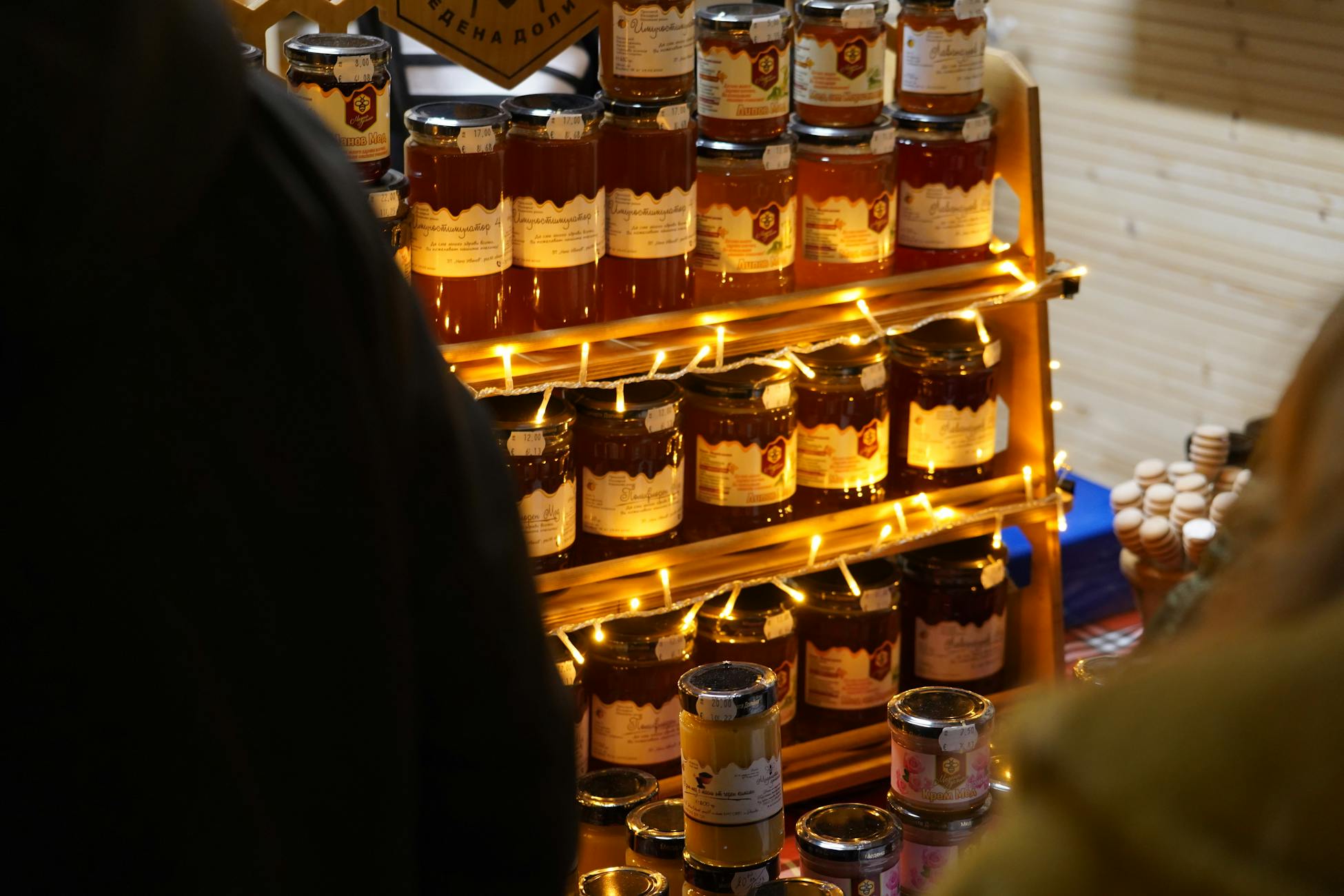
A honeybee gathers nectar that contains a high percentage of water. Back at the hive, workers pass it mouth-to-mouth, adding enzymes from glands in their heads, and then fan it with their wings until the water content drops to a very low level. That number matters more than almost anything else about honey.
At such low water content, honey is too dry to support microbial life. Bacteria and fungi need free water to grow. In honey, the sugar molecules — mostly fructose and glucose, packed at high concentrations — bind up water through osmotic pressure so completely that any microbe landing on the surface is essentially freeze-dried. The water gets pulled out of the cell through its membrane, and the cell collapses.
This is the same principle behind curing meat with salt or preserving fruit in heavy syrup. Honey just does it more efficiently than almost anything humans have engineered.
The acid layer
Honey is also acidic. Its pH typically falls in the acidic range, somewhere between orange juice and vinegar. That acidity comes mostly from gluconic acid, produced when a bee enzyme called glucose oxidase breaks down glucose in the nectar.
Most pathogens that worry humans — Salmonella, E. coli, Listeria, Clostridium — prefer a neutral pH near 7. Drop them into something with a pH of 4, and their metabolism stalls. Combine that with the osmotic stress, and the few microbes tough enough to survive one defense get hit by the other.
The pH alone is not unusual. Lemon juice is more acidic. What is unusual is acidity stacked on top of near-zero free water.
The hydrogen peroxide trick
The third defense is the strangest. That same glucose oxidase enzyme, the one producing gluconic acid, also generates hydrogen peroxide as a byproduct — the same compound sold in brown bottles at the pharmacy as a wound disinfectant. In raw honey, it is produced slowly and continuously whenever the honey is diluted with a little water, which is exactly what happens when honey is applied to a wound or contaminates a surface.
The concentrations are low, but the steady release is enough to kill bacteria that the osmotic and acid defenses miss. Researchers writing in The Conversation note that healers in ancient Egypt, Greece, and China were already packing wounds with honey thousands of years before anyone understood why it worked.
Edwin Smith bought a papyrus in Luxor in 1862 that turned out to be an Egyptian surgical manual from around 1600 BCE. Honey appears in many of its remedies, often smeared on bandages for burns and cuts. The Egyptians could not have known about glucose oxidase. They had simply noticed that wounds dressed in honey did not fester.
Why the tomb jars survived
A jar of honey will absorb water from humid air if you leave the lid off. Once the water content climbs high enough, wild yeasts that have been dormant in the honey can start fermenting the sugars, and the chemistry that made it bulletproof begins to unravel.
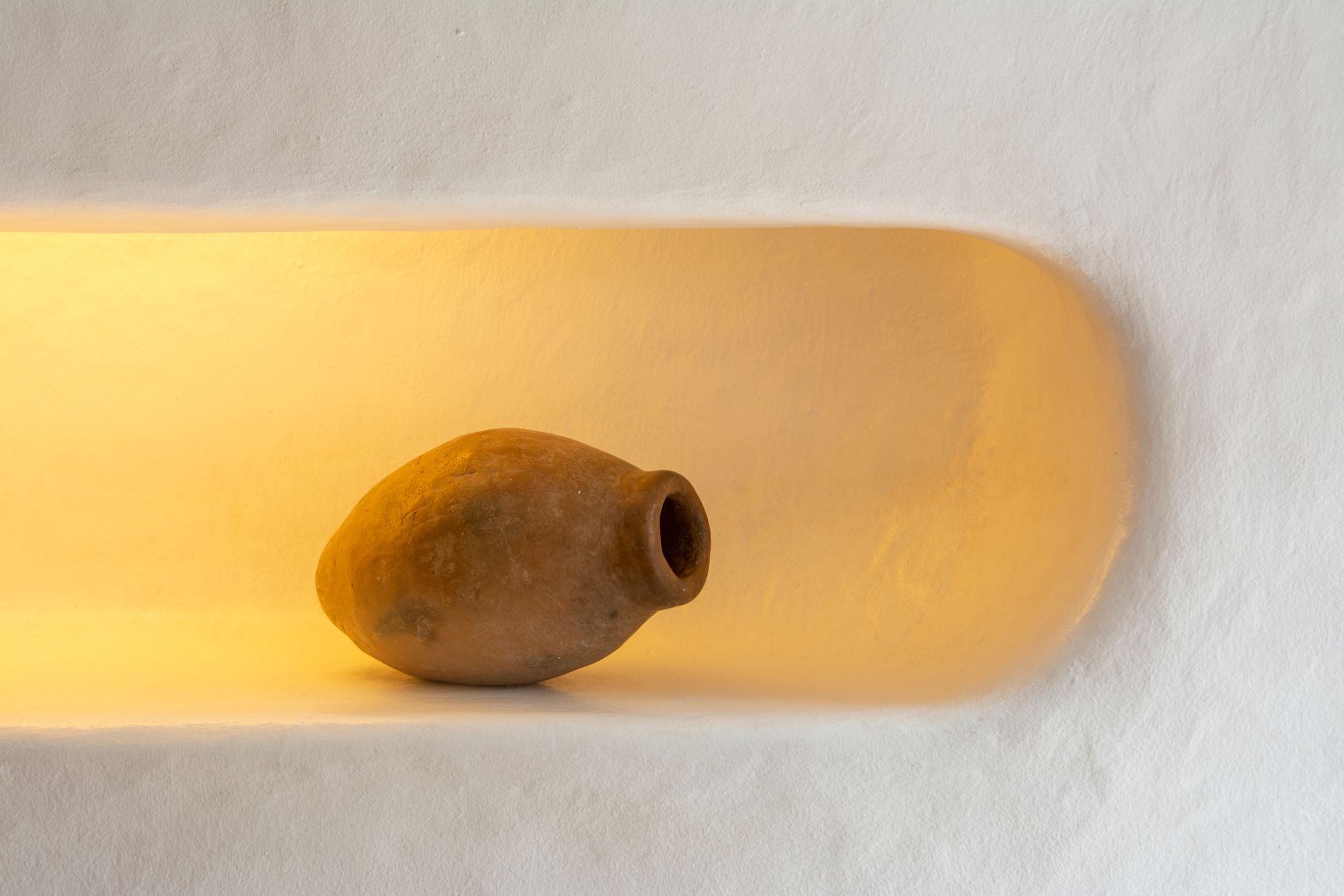
Egyptian tomb sealers were unintentionally excellent food preservationists. They used thick ceramic jars, often coated inside with beeswax or resin, stoppered with clay, and placed in burial chambers cut into limestone bedrock. The chambers were dark, cool by Egyptian standards, and sealed against the outside air for millennia. Humidity inside a closed tomb stays remarkably stable.
Under those conditions, the honey had nothing to absorb and nothing to react with. The sugars slowly darkened and crystallized. Some of the volatile aromatic compounds drifted off. But the fundamental structure — sugar bound to almost no water, acidic, mildly antiseptic — held.
Whether any particular jar from Tutankhamun’s tomb was actually tasted by a particular archaeologist is harder to verify than the popular telling suggests, and the specific anecdotes deserve some skepticism. What is not in doubt is that honey recovered from sealed Egyptian contexts has been chemically analyzed and found intact, and that modern honey kept in similar conditions would behave the same way.
The mummies were not far behind
The tombs preserved more than their honey. Recent chemical work on the mummies themselves has shown that the embalming resins, oils, and waxes still carry detectable aromatic signatures more than two thousand years later. A team analyzing nine mummies in storage at the Egyptian Museum in Cairo reported in 2026 that the scent compounds in the wrappings were still measurable using mass spectrometry, with notes of pine resin, juniper, and animal fats showing up at recognizable concentrations.
The same dry, sealed, dark conditions that kept honey edible kept those organic molecules from breaking down. A sealed Egyptian tomb is, by accident, one of the better archival environments humans have ever built.
Why this doesn’t work for other foods
Most foods, even dry ones, eventually go bad because they carry enough water, fat, or protein to feed something. Grain develops insect infestations and mold. Dried meat oxidizes and turns rancid as fats break down. Wine, sealed perfectly, can last for centuries but slowly converts through chemical reactions that change what it is.
Honey is almost pure sugar with trace enzymes and acids. There is nothing in it to oxidize meaningfully, almost no water for microbes to use, and no fat to spoil. The sugars themselves can slowly undergo a browning reaction over decades, darkening the color and shifting the flavor toward caramel and molasses. They do not, however, become unsafe.
Fresh versus ancient
Honey’s antimicrobial power is not constant over time. A 2024 study summarized by News-Medical found that fresher honey tends to have stronger antibacterial activity than older honey, because the glucose oxidase enzyme slowly degrades and the steady trickle of hydrogen peroxide weakens with age.
That does not mean old honey becomes dangerous. It means a 3,000-year-old jar would not be useful as a wound dressing the way a fresh jar would. The osmotic defense and the acidity, which do not depend on a living enzyme, hold up indefinitely. The active disinfectant fades.
Manuka honey from New Zealand, prized in modern wound care, gets much of its antimicrobial punch from a different compound called methylglyoxal, which is produced as the nectar of the manuka tree breaks down. That one is more stable. Most floral honeys depend on the peroxide route.
The taste of the Bronze Age
What does ancient honey taste like? Modern honey varies enormously depending on what bees were foraging on — orange blossom is light and floral, buckwheat is dark and almost meaty, eucalyptus has a mentholated edge. Ancient Egyptian bees fed on lotus, acacia, clover, and whatever wildflowers grew along the irrigated edges of the Nile.
A tomb jar opened today would have darkened from amber to deep brown. It would be heavily crystallized, the texture closer to wet sand than syrup. The bright top notes — the volatile aromatics that give fresh honey its perfume — would mostly be gone. What remained would be sugar, water, gluconic acid, traces of pollen, and the slow Maillard-browned residue of three millennia of quiet chemistry.
It would still be sweet. It would still, by any reasonable definition, be food. The bees that made it have been dust for longer than most written languages have existed, but the work of their wings and their enzymes is still there in the jar, holding the line against time.
