
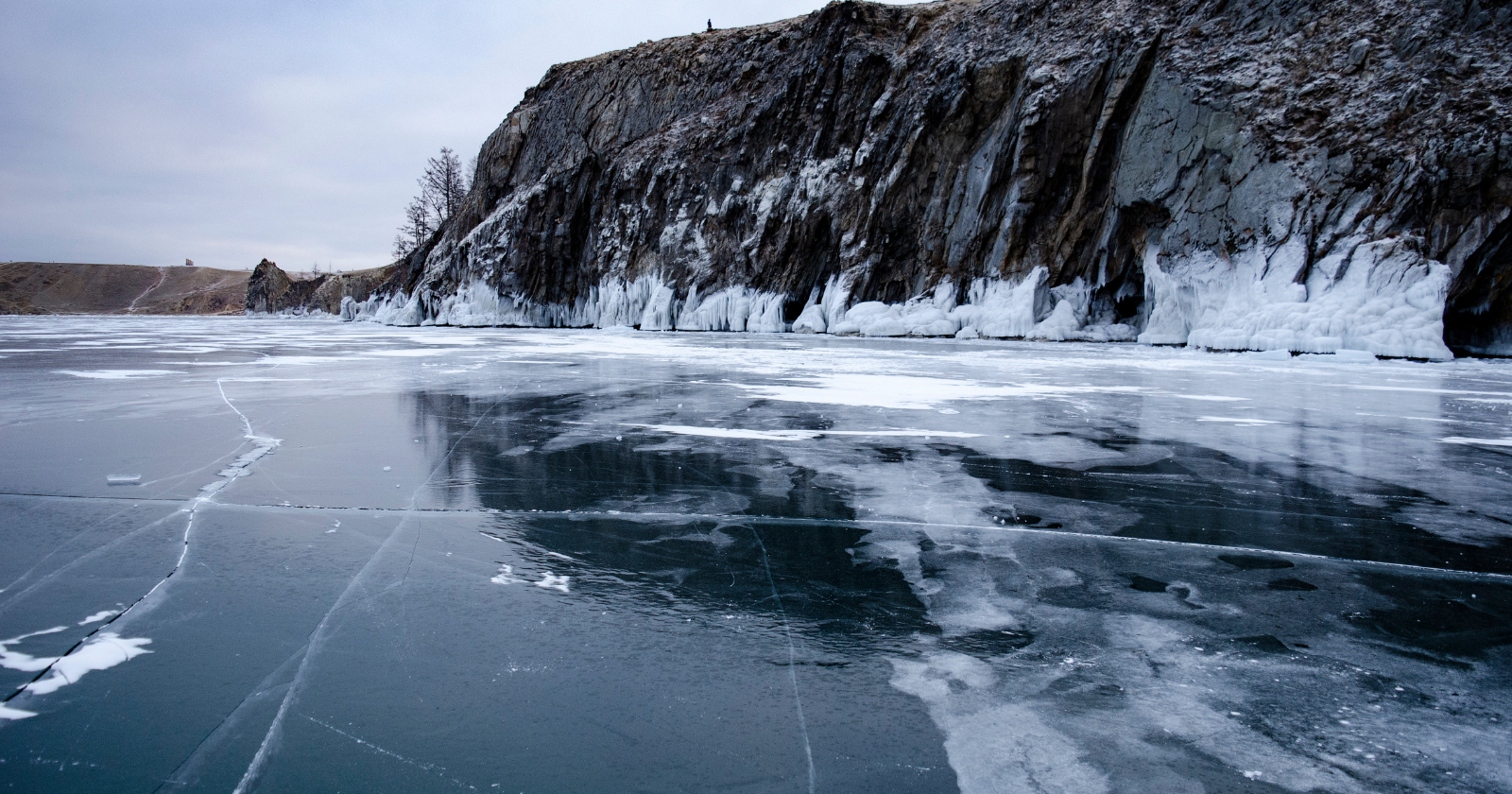
Jupiter’s moon Europa has long been one of the most compelling objects in the solar system — not for what can be seen on its surface, but for what scientists suspect lies beneath it. A vast liquid ocean, possibly twice the volume of all Earth’s oceans combined, may sit under an icy shell roughly 15 to 25 kilometres thick. Whether that ocean could support life remains one of the defining open questions in planetary science.
New research published in The Planetary Science Journal is adding a significant piece to that puzzle, and the James Webb Space Telescope put it there.
A surface that never stops moving
Europa’s icy shell is not static. New findings from a team led by Dr. Richard Cartwright of Johns Hopkins University’s Applied Physics Laboratory, supported by laboratory experiments from Dr. Ujjwal Raut at Southwest Research Institute, confirm that the moon’s surface ice is crystallising and reforming at different rates in different locations — a process of constant, ongoing surface modification that JWST has now captured with unprecedented spectral clarity.
The mechanism involves two competing states of water ice. On Earth, ice forms crystalline structures, with water molecules arranging into orderly hexagonal patterns. On Europa’s surface, that order is perpetually disrupted. Charged particles streaming from Jupiter’s powerful magnetic field bombard the moon continuously, breaking down crystalline ice into what is called amorphous ice — a disordered, glassy state with no regular molecular arrangement. The surface should, by that logic, be uniformly amorphous.
It isn’t. And that inconsistency is what the new research set out to explain.
Tara Regio: the anomaly that changes everything
The most striking findings come from a region known as Tara Regio, one of Europa’s so-called chaos terrains — areas where the surface has been fractured, refrozen, and rearranged into jumbled mixtures of ridges, plains, and cracks. JWST spectral data detected crystalline ice at the surface level in Tara Regio, not just at depth, which the standard model of amorphous surface coverage cannot easily account for.
The explanation, according to Cartwright’s team, is that the surface in this region is porous and warm enough for ice to recrystallise rapidly — fast enough to outpace the amorphising bombardment from above.
But the implications reach further than ice physics. Tara Regio also hosts an unusual chemical signature. Spectroscopic data from the region shows some of the strongest evidence on Europa for sodium chloride, carbon dioxide, and hydrogen peroxide. Sodium chloride is consistent with a salt-bearing interior ocean. The CO2 is especially significant.
The carbon isotope problem
Carbon dioxide on a planetary surface is not remarkable on its own. What makes Tara Regio’s CO2 remarkable is its isotopic composition. The region contains not only the most common carbon isotope — carbon-12 — but measurable quantities of carbon-13, its heavier, rarer counterpart. That ratio is difficult to explain through surface processes or external delivery.
“Where is this ¹³CO₂ coming from? It is hard to explain, but every road leads back to an internal origin,” said Cartwright, whose phrasing echoes the broader significance of the finding. Carbon delivered from below — from a chemically active, liquid ocean interacting with a rocky seafloor — is precisely what astrobiologists would expect from a potentially habitable environment.
Raut’s laboratory experiments provided the physical framework for interpreting what JWST was seeing. By mapping the timescales over which ice amorphises and recrystallises under Europa-like conditions, the team was able to constrain what surface age, thermal activity, and porosity in Tara Regio would need to look like to produce the spectral signature JWST detected. The match between experimental predictions and telescope observations is what makes the case credible.
What JWST is making possible
The James Webb Space Telescope was not designed specifically for planetary science, but its near- and mid-infrared sensitivity has proven transformative for studying icy bodies in the outer solar system. Earlier telescopes could distinguish broad compositional categories on Europa’s surface; JWST can resolve isotopic and molecular detail at a level that permits the kind of source-tracing the Tara Regio analysis depends on.
The detection of surface modification happening in real time — crystallisation rates varying across the moon’s surface as a function of local geology and thermal activity — is a capability that didn’t exist before JWST’s observations of Europa. It turns a static compositional map into something closer to a dynamic geological record.
For scientists attempting to understand the relationship between Europa’s surface chemistry and its interior, that distinction matters enormously. Chaos terrains like Tara Regio may not just be surface features. They may be the places where the boundary between ocean and shell is thinnest, most active, and most likely to be exchanging material.
The broader picture
NASA’s Europa Clipper spacecraft, launched in October 2024, is en route to Jupiter and scheduled to begin its flybys of Europa in the early 2030s. Its instruments will be able to sample the moon’s surface and near-surface environment at close range, testing the hypotheses that JWST’s observations are now generating.
The new findings arrive at a moment when the case for Europa’s habitability is now drawing on independent lines of evidence. Separate research published in early 2026 suggested that salty, nutrient-rich surface ice may sink through the shell and reach the ocean below, providing a potential delivery mechanism for surface-generated chemicals into a liquid environment that could, in principle, sustain microbial life.
What the JWST data adds is evidence that the surface is not a sealed barrier but an active interface — one being shaped from below by geology and from above by radiation, in ways that are still being measured. The internal origin hypothesis is no longer speculative — it is, on the current evidence, the most coherent explanation available.
