
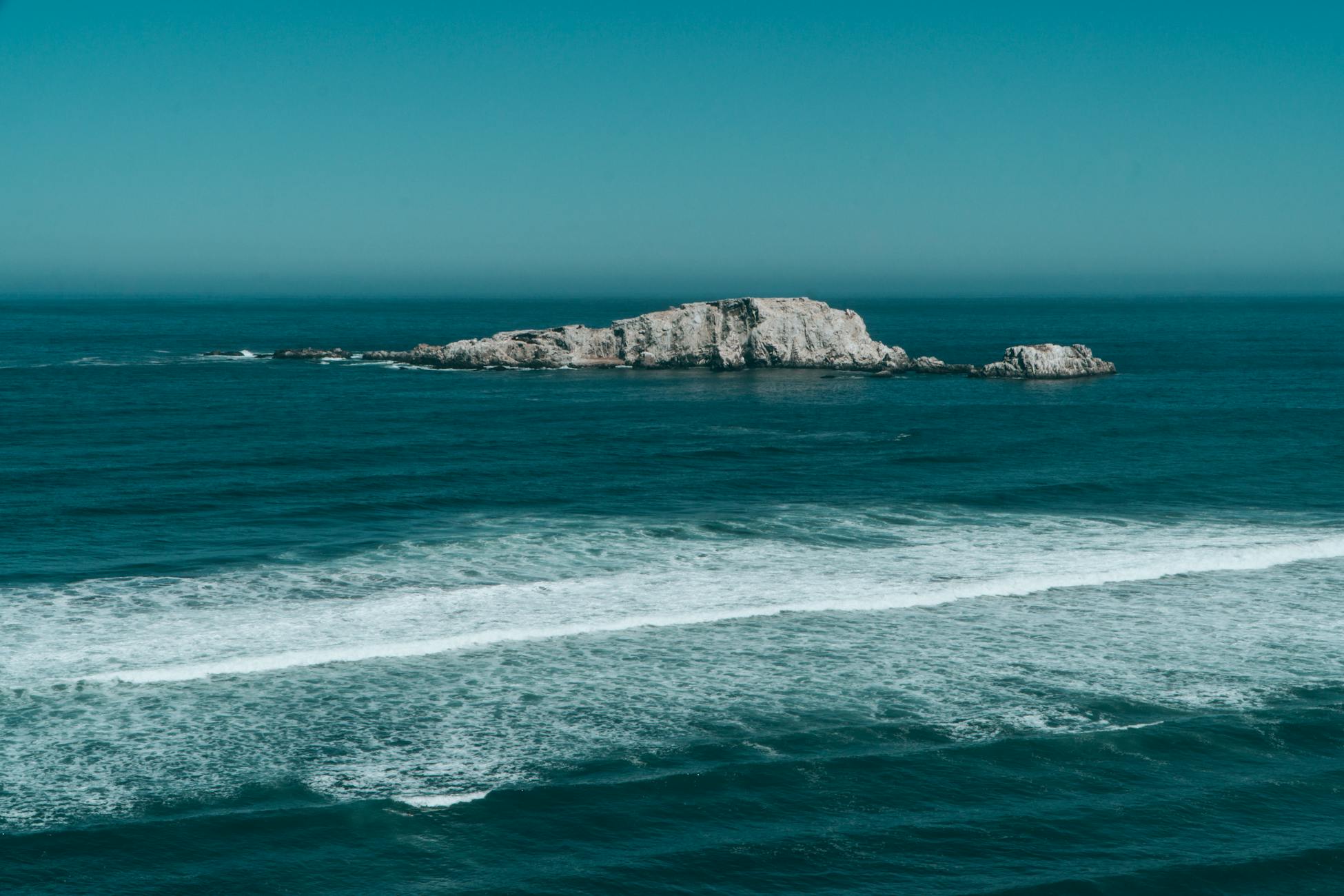
Earth is not a blue planet with some land on it. It is a planet of one ocean with some land floating on the edges, and the numbers are not close. The Pacific alone covers more than 60 million square miles, which is about 30 percent of the entire surface of the planet and larger than every continent on Earth combined. The word blue, applied to this place, is not a flourish. It is a measurement that has been understated by every map ever drawn in the Mercator projection.
The popular image of Earth, the one most people carry around in their heads, gives land and water roughly equal weight. Continents look chunky. Oceans look like the space between them. That impression is wrong by an order of magnitude that becomes uncomfortable once the figures are laid side by side. The total land area of the planet, including every continent, every island chain, every desert, every mountain range, and every ice sheet, is substantially less than the Pacific Ocean. Every piece of dry land humans have ever stood on could be picked up, dropped into the Pacific basin, and there would still be millions of square miles of open water left over.
The math of fitting a planet inside an ocean
Begin with the continents. Asia is the largest at over 17 million square miles. Africa follows at nearly 12 million. North America spans roughly 9.5 million. South America covers about 7 million. Antarctica stretches across 5.5 million. Europe accounts for approximately 4 million. Australia measures about 3 million. The sum approaches 58 million square miles, give or take depending on where exactly the cartographer decides Europe ends and Asia begins.
The Pacific exceeds 60 million.
That is the entire argument, expressed in two numbers. Every continent on the planet, end to end, with all their interior deserts and forests and mountains and cities, fits inside the Pacific basin with millions of square miles of remaining ocean. The leftover space alone is larger than the submerged continent of Zealandia, which sits beneath the southwestern Pacific and covers close to 5 million square kilometers in its own right.
What the projection hides
The Mercator projection, the one that hangs in most classrooms and pads out most news graphics, was designed in the 16th century to help sailors plot constant compass bearings. It does that job well. It does almost every other job badly. It inflates landmasses near the poles and shrinks the equatorial ocean that dominates the planet. Greenland looks the size of Africa. It is not. Africa is roughly fourteen times larger. The Pacific, which sprawls across the equator, gets squeezed into the visual margins of the map even as it dwarfs everything around it.
This is part of why the “blue planet” framing feels like rhetoric rather than fact. The maps people grew up reading were lying about scale. Globes do better, but most people do not consult a globe. The result is a population that lives on a water world and thinks of itself as living on a land world with some water around the edges. Look at the planet from the middle of the Pacific, rather than from the familiar center of a classroom map, and the usual mental picture starts to fail. The land becomes the interruption. The water becomes the main subject.
The hidden continent beneath it
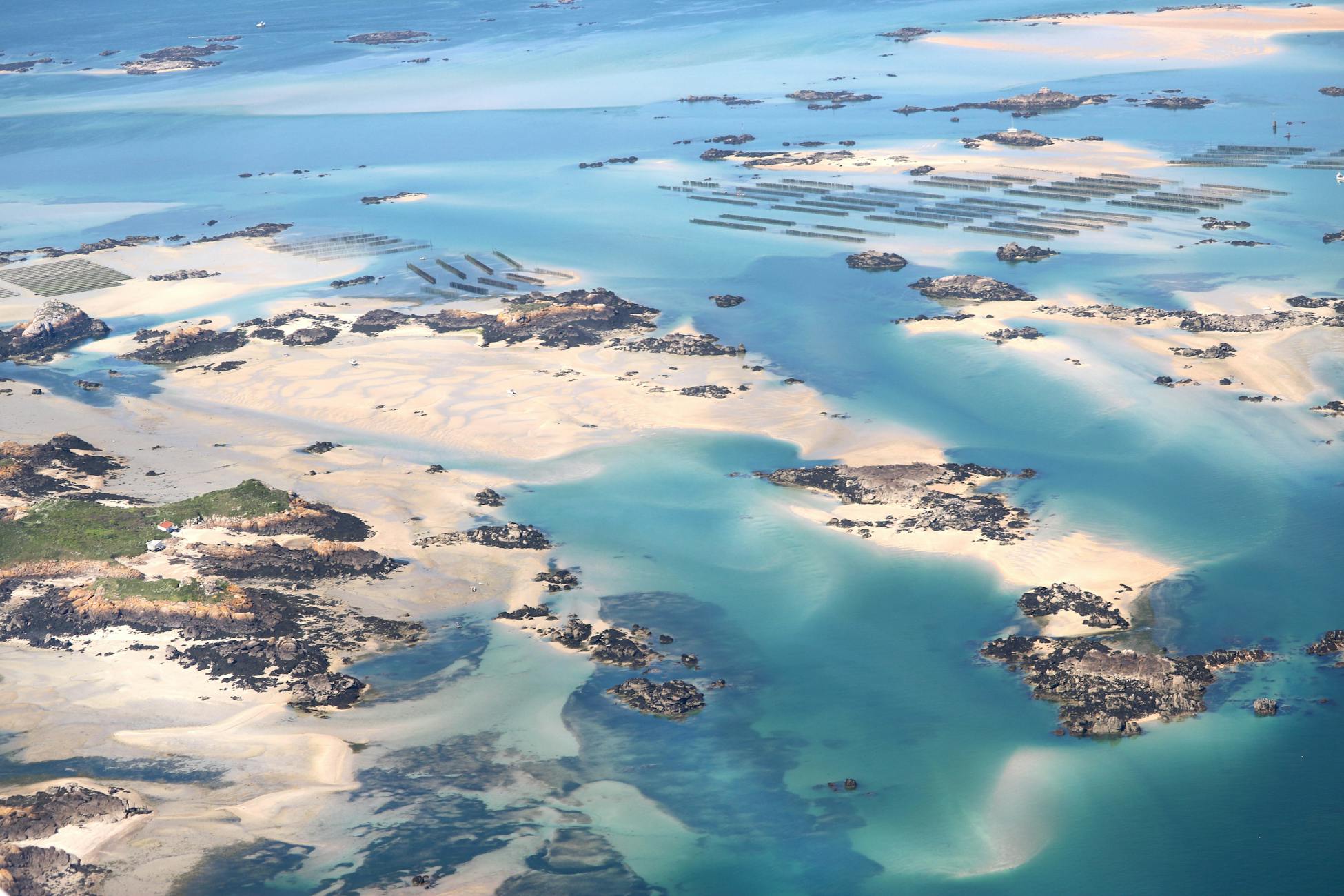
The Pacific is so large it can hide an entire continent inside itself and almost nobody notices. Zealandia, widely described by geologists as a submerged continent, is overwhelmingly underwater and stretches across millions of square miles beneath the South Pacific. New Zealand and New Caledonia are the largest fragments still poking above the surface. They are not islands in the conventional sense. They are the exposed mountain peaks of a continent many times their size.
The fact that this continent was not clearly framed this way until recent decades tells the reader almost everything they need to know about the Pacific. A landmass the size of the Indian subcontinent can sit under it, overlooked as a continent for most of modern science. The ocean is large enough to hide geological structures the size of nations.
Depth as a second axis of vastness
Surface area is only half the story. The Pacific is also deep. The average depth of the basin extends thousands of feet below the surface. The Mariana Trench, in the western Pacific, bottoms out at depths exceeding 36,000 feet, which is deeper than Mount Everest is tall by more than a mile. The volume of water in the Pacific accounts for more than half of all the seawater on Earth.
That volume contains its own internal geography. Underwater mountain ranges, abyssal plains, hydrothermal vent fields, and entire ecosystems that have never seen sunlight. The rougheye rockfish inhabits the deep waters of the North Pacific, living for many decades in a system where slow growth and longevity become possible. The water column is large enough, cold enough, and stable enough that an animal can take a century to reach old age and still be a small fact within the system.
Why the understatement matters
A planet this dominated by a single ocean is not a backdrop for human activity. It is the system human activity sits inside. The Pacific is the engine of the planet’s climate: it drives the El Niño–Southern Oscillation that redistributes heat across the entire tropics, it feeds hundreds of millions of people, and its temperature trends in any given decade can alter rainfall far beyond the shoreline. The scale that lets it hide a continent is the same scale that lets it regulate the atmosphere. When a body of water this large shifts a fraction of a degree, the consequences arrive on land as droughts, floods, and failed harvests.
That is why the naming problem is not merely poetic. The figures of speech humans use to describe natural systems shape perceptions, ideas, and subsequent choices. A planet described as “blue” sounds decorative, a backdrop for the real business of continents. A planet described accurately, as mostly one ocean with some land on the edges, sounds like something whose health determines everything else. Interaction with nature, including viewing images of natural scenery, improves psychological well-being and reorients attention outward. The scale of the Pacific, properly absorbed, is the kind of fact that does something similar to a worldview.
The basin in one sentence
Every continent. Every island chain. Every desert. Every mountain range above sea level. Drop them all into the Pacific basin, and the basin is not full. There is room for more.
Which returns the argument to where it started. We named this planet Earth, after the minority feature on its surface, and we call it blue as if that were a generous description. Both names get the priorities backwards. The land that humans live on, fight over, draw borders across, and write history about is the small print. The ocean is the headline, and the planet should have been named for it.
