
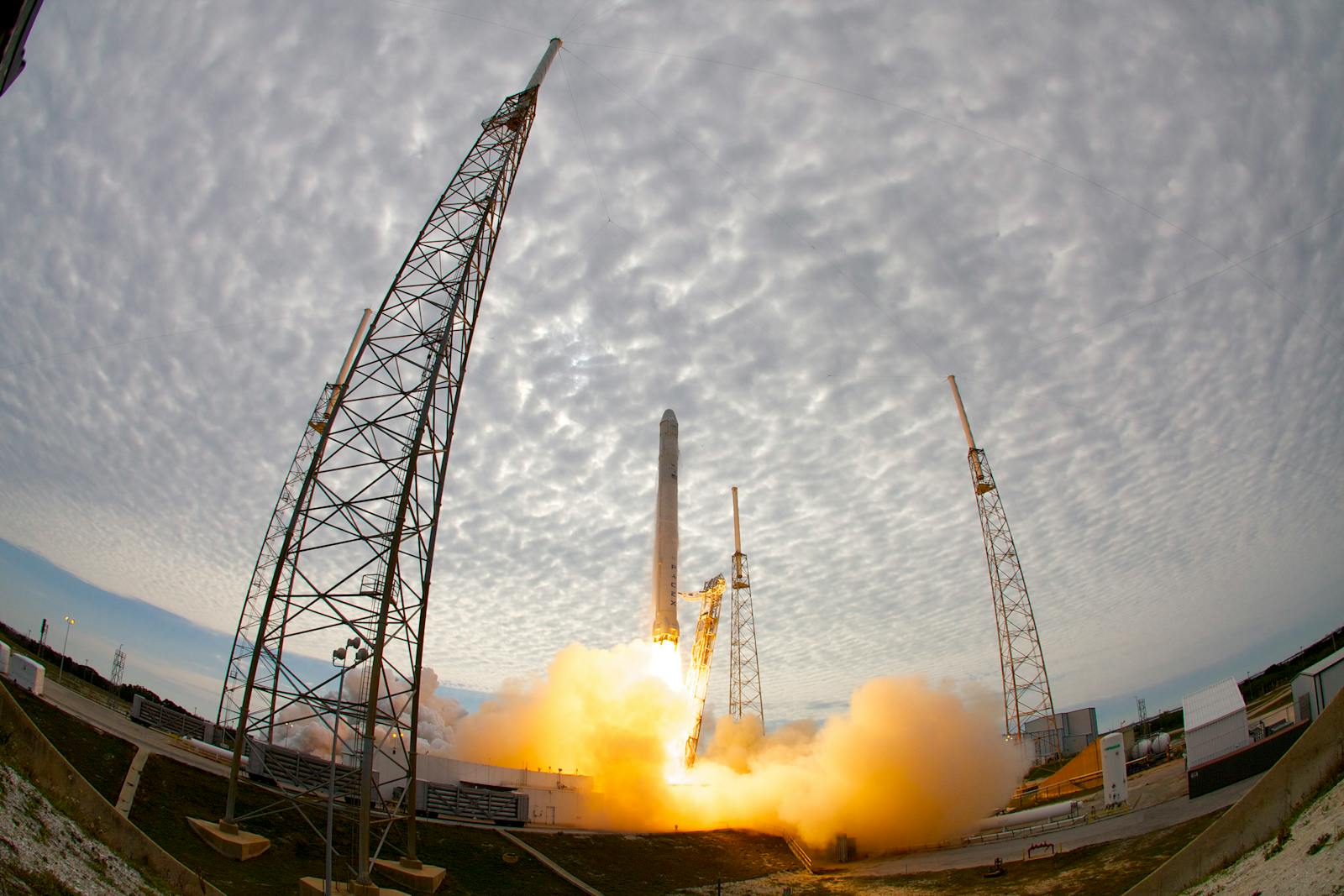
On July 3, 1969, at 23:18 Moscow time, the Soviet Union’s N1 moon rocket lifted off from Site 110 at Baikonur, climbed roughly 200 metres, tilted, and fell back onto the launch complex it had just left. At Baikonur, local time had already crossed into July 4. The explosion that followed destroyed the pad and is often described as one of the largest non-nuclear blasts ever produced by human engineering, with energy estimates around seven kilotons of TNT equivalent.
The Soviet government did not publicly acknowledge the N1 program for two decades. That silence left one of the most violent failures in spaceflight history hidden behind a crater, a rebuilt pad, and a state narrative in which the Soviet Union had never really raced Apollo to the Moon.
A Mars rocket forced into a Moon race
The N1 did not begin as a lunar landing machine. As Popular Science detailed in its history of the program, the vehicle grew out of earlier Soviet plans for a heavy interplanetary rocket that could send crews on flybys of Mars or Venus.
That assignment fell to Sergei Korolev and OKB-1, the design bureau that had already put Sputnik and Yuri Gagarin into history. The rocket needed more power than the R-7 family could provide, and that meant engines larger than anything Korolev’s team had flown.
The first major rupture came over propellants. Korolev approached Valentin Glushko, the Soviet Union’s most experienced large-engine designer, but Glushko wanted toxic hypergolic fuels for the first stage. Korolev rejected that approach for a crewed vehicle.
Glushko refused to yield. Korolev turned instead to Nikolay Kuznetsov at OKB-276, an aviation-engine designer with no record of building giant rocket engines. Kuznetsov’s workaround was simple and dangerous: use many smaller engines instead of a few enormous ones.
By the time Soviet leaders formally committed to a crewed lunar landing in 1964, roughly three years after John F. Kennedy’s Moon speech, the N1 had to be reshaped for a mission it had not originally been built to fly. The Saturn V could lift a larger Apollo stack toward the Moon. The Soviet answer would try to compensate with clustering, urgency, and a great deal of hope.
Thirty engines and one fragile control system
The finished N1 first stage, Block A, used thirty NK-15 engines burning kerosene and liquid oxygen at liftoff. Thirty engines meant thirty turbopumps, thirty combustion chambers, many kilometres of plumbing and wiring, and a control problem that had few precedents in rocketry.
The system built to manage that cluster was called KORD. It monitored engine parameters in real time and could shut down individual engines when it detected trouble. In theory, a rocket with thirty engines could survive the loss of one or two.
In practice, the system was brittle. A false signal, a severed line, or a fire in the engine bay could quickly become a cascade. The N1’s size made the problem worse, because the Soviet program never performed a full-duration static firing of the complete first stage before flight.
Unlike NASA’s Saturn V program, which tested the S-IC first stage on large ground stands, the N1 program did not have a facility capable of holding down the fully assembled Block A and firing all thirty engines together. Every complete first-stage firing would happen on a real launch attempt.
The first failure came in February 1969
The first N1 launch took place on February 21, 1969. The rocket left the pad, climbed for just over a minute, and then lost its first-stage engines. The vehicle continued upward under momentum before falling back downrange.
The launch escape system pulled the modified lunar payload clear. The rest of the rocket was lost.
Investigators traced the failure to a chain reaction inside the control and propulsion system. Electrical interference produced a false KORD signal to shut down engine 12, and the system then shut down engine 24 to keep thrust balanced.
Vibration and damage around engine 2 started a fire in the tail section. The fire damaged wiring insulation, and KORD interpreted the resulting signals as turbopump problems. It then issued a shutdown command for the first stage.
The diagnosis was devastating because it showed that the rocket’s protective brain could help kill the vehicle it was meant to save. The team was told to keep the investigation internal and prepare the second vehicle. Apollo 11 was already approaching its launch date.
The second N1 climbed about 200 metres
The second N1, vehicle 5L, was rolled to the pad with new insulation around KORD wiring and isolated signal lines meant to prevent the kind of cross-talk that had doomed the first launch. Engineers also added more sensors to each engine.
RussianSpaceWeb’s detailed launch chronology gives the liftoff time as 23:18:36 Moscow time on July 3, 1969, from Site 110. By local time at Baikonur, it was already the early morning of July 4. The rocket reached an altitude of about 200 metres and flew for roughly 23 seconds.
All thirty Block A engines ignited. The rocket cleared the tower. Then fragments began falling from the tail section.
Later reconstruction pointed to engine 8. A liquid-oxygen turbopump appears to have failed almost immediately, possibly because debris or a sensor fragment entered the pump. The failure damaged nearby feedlines and started a fire inside the engine bay.
KORD interpreted abnormal pressure and turbopump data as failures in engines 7, 19, 20, and 21, then shut them down. Within about 12 seconds, every first-stage engine except engine 18 had stopped.
That lone remaining engine pushed from one side of the rocket and pitched the stack over. The N1 came down nearly sideways onto the pad, still carrying enormous quantities of kerosene and liquid oxygen.
Seven kilotons in the Kazakh steppe
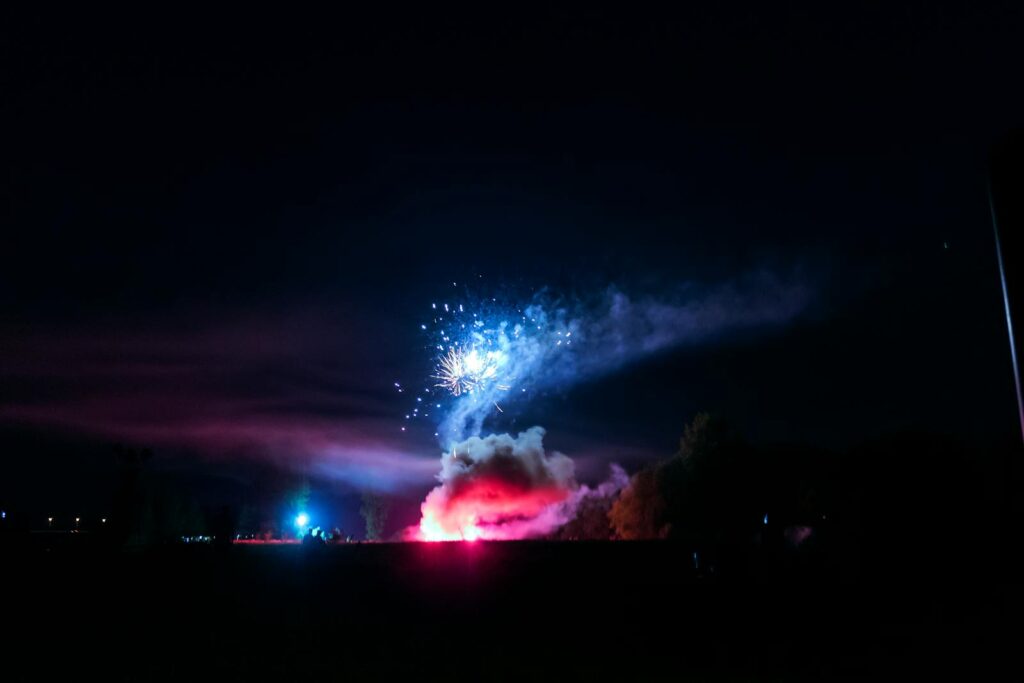
When the loaded vehicle struck the pad, its propellants produced a blast usually estimated at around seven kilotons of TNT equivalent. That figure is not a measured nuclear-style yield. It is an energy-equivalent estimate based on propellant mass and combustion assumptions.
Even with that caveat, the explosion was enormous. It destroyed the Site 110/38 pad, shattered windows kilometres away, and scattered debris across the steppe. Photographs and later declassified accounts show a launch complex reduced to wreckage, cratered concrete, and twisted steel.
The blast is often listed among the largest artificial non-nuclear explosions in history, and sometimes as the largest. The phrasing matters: the Halifax explosion of 1917 and the British demolition of Heligoland in 1947 are close enough in scale that overprecision can mislead. The safer claim is also the more accurate one: the N1 5L failure was one of the most powerful non-nuclear explosions humans have ever caused.
Astonishingly, no one was killed. The pad had been cleared for launch.
Apollo 11 launched from Florida on July 16, 1969. Neil Armstrong stepped onto the Moon on July 20 UTC. The Soviet lunar program, reading telemetry from a rocket that no longer existed, had no comparable answer.
The engines survived better than the rocket did
The N1 flew twice more. Both launches failed. The third N1 lifted off in June 1971 and was lost after a roll-control failure. The fourth flew in November 1972 and failed after an explosion in the first-stage tail section.
The program was formally cancelled in 1974. Publicly, the Soviet Union continued to deny that it had mounted a direct race to land cosmonauts on the Moon.
The engines had a stranger afterlife. The improved NK-33 engines built for later N1 versions were ordered destroyed, but Kuznetsov’s team stored many of them instead. Decades later, after the Soviet collapse, Western engineers examined and tested them and found high-performance oxygen-rich staged-combustion engines that had been far ahead of most Western kerosene engines of their era.
Some were refurbished and redesignated AJ26 for use on Orbital Sciences’ Antares rocket. The first Antares flights from Wallops used engines descended from a Soviet lunar program that had never reached orbit.
The launch pads also outlived the Moon race. The Site 110 complex was later adapted for Energia and Buran, and the uncrewed Buran shuttle launched from Site 110/37 in November 1988. The pad destroyed by the second N1 launch had taken more than eighteen months to rebuild.
The silence lasted longer than the shockwave
The Soviet silence around the N1 was remarkable even by Cold War standards. Reconnaissance satellites had photographed the rocket. American intelligence analysts had inferred much of its architecture. Moscow still refused to admit that the giant launcher existed.
The acknowledgement came only with glasnost. As Space.com later documented, Soviet-era records and technical histories began emerging as engineers and historians were finally allowed to speak more openly about the program.
The N1 keeps resurfacing because every new clustered-engine heavy rocket lives in its shadow. After Blue Origin’s New Glenn exploded during a static-fire test at Cape Canaveral in May 2026, Ars Technica framed the blast as the most spectacular rocket explosion since N1. The comparison came almost automatically.
The comparison is useful only up to a point. Modern vehicles use sensors, computers, test stands, and software Korolev’s team could not have imagined. SpaceX’s Starship and Blue Origin’s New Glenn belong to a different technical world.
But the old image still holds: a 105-metre rocket, nearly the height of the Statue of Liberty, trying to manage thirty first-stage engines with an analog control system, under a political deadline set by another country’s astronauts.
The crater at Site 110 has long since been filled and paved. The shockwave from that night crossed the steppe at the speed of sound, broke windows, thinned into the upper air, and vanished within minutes. The silence that followed lasted twenty years.
