
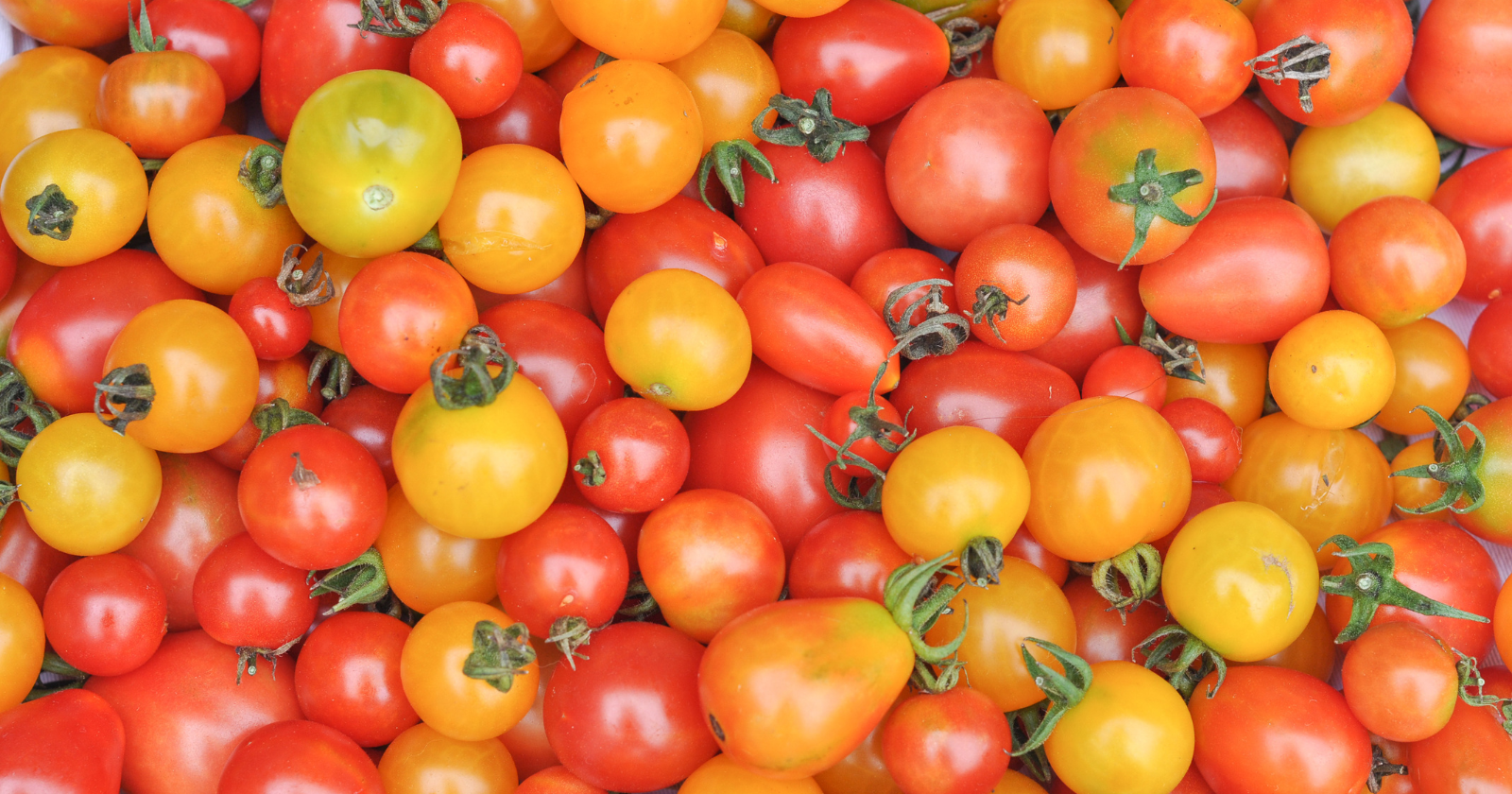
The tomato is generally believed to have arrived in Europe in the early 16th century, brought by Spanish explorers — most likely Hernán Cortés after the conquest of Tenochtitlán in 1521. For the next two and a half centuries, Europeans grew the plant in their gardens and refused to eat it. Tomatoes appeared in herbals, in botanical illustrations, in ornamental displays, and in private correspondence between curious naturalists. They did not appear on European dinner plates in any meaningful way until the late 1700s. The reason was not pewter plates, lead poisoning, or any specific incident. The reason was botanical resemblance. The tomato is a member of the nightshade family, Solanaceae, and Europeans correctly identified that the plant was related to species they already knew to be dangerous.
What Europeans actually saw
The earliest documented European reference to the tomato as food comes from the Italian herbalist Pietro Andrea Mattioli, who described the fruit in 1544 and classified it as a type of mandrake. According to a 2025 Smithsonian Magazine update on the cultural history of the tomato, originally published in 2013 by K. Annabelle Smith and updated by Kayla Randall, Mattioli’s classification of the tomato as a mandrake “had later ramifications.” The classification was not arbitrary. Mandrake (Mandragora officinarum) is a real plant, used in European folk medicine and witchcraft traditions for centuries, and it is genuinely poisonous. It is also a member of the same family, Solanaceae, as the tomato. So is deadly nightshade (Atropa belladonna), the bittersweet nightshade (Solanum dulcamara), the black nightshade (Solanum nigrum), henbane (Hyoscyamus niger), and a number of other plants well known in early modern Europe to be variously poisonous, narcotic, or hallucinogenic.
From a 16th-century botanist’s perspective, the tomato fitted neatly into a known family of dangerous plants. The leaves were similar in shape to those of black nightshade. The flowers were similar to those of belladonna. The fruit was small and round, in the early imported varieties yellow or pale red rather than the large red tomatoes of modern cultivation. Mattioli’s classification was reasonable. The tomato was related to plants that killed people. The natural assumption, in the absence of any direct experimental evidence to the contrary, was that the tomato also killed people.
The leaves and stems are actually toxic
The assumption was not entirely wrong. The leaves and stems of the tomato plant do contain alkaloids that would, in sufficient quantity, make a person sick. The principal compound is tomatine, a glycoalkaloid related to solanine, the better-known toxic compound in green potatoes. According to a peer-reviewed review on tomato glycoalkaloid toxicology published in Food Chemistry in 2024, tomatine concentrations are highest in the stems, roots and leaves of young tomato plants, and progressively diminish as the fruits ripen. The compound can cause vomiting, diarrhoea, abdominal pain and lethargy in mammals at sufficient dose, and acts as a natural fungicide and insecticide protecting the plant from microbial and herbivore attack.
An adult would have to consume a substantial quantity of tomato leaves to experience symptoms, but the toxic compounds are real. Livestock occasionally poisons itself by overgrazing on tomato plants. Children who chew on the leaves can become mildly unwell. The plant defends itself against insects and grazers with the same chemistry that makes the rest of the family a poor choice for casual experimentation. Europeans observing the tomato as a new species, examining its leaves, smelling its pungent foliage, and noting its membership in a recognised family of poisonous plants were not making a foolish judgement. They were making a botanically defensible one. The error was specifically in extending that judgement to the ripe fruit.
Two hundred years of hesitation
The tomato’s reputation in Europe was therefore a botanical reputation rather than an experiential one. The fruit was not actually killing anyone. No physician of the 1600s could point to a chain of confirmed tomato-related deaths. The plant was simply assumed dangerous on the grounds that its relatives were dangerous, and the assumption persisted in the absence of widespread tests of the contrary.
In the warmer climates of southern Europe, where tomatoes grew more readily, this reluctance eroded first. Italian cookbooks began including tomato recipes in the late 17th century. The earliest known recipe for tomato sauce was published in Naples in 1692, in Antonio Latini’s two-volume cookbook Lo Scalco alla Moderna (“The Modern Steward”). Latini, a former orphan who had risen to become steward to the first minister of the Spanish viceroy of Naples, included a recipe for “Salsa di Pomodoro alla Spagnuola” — tomato sauce in the Spanish style — calling for roasted and peeled tomatoes mixed with chopped onion, chilli, thyme, salt, oil and vinegar. The sauce was intended for meat and fish rather than pasta, but it marked the formal entry of the tomato into recorded European cooking. By the 18th century, tomatoes were a regular feature of Mediterranean cuisine, particularly in southern Italy and Spain. In the colder regions of northern Europe — England, the Netherlands, Germany, the Scandinavian countries — the suspicion lasted longer. English gardeners grew tomatoes ornamentally well into the 1800s, and the fruit only entered British and American kitchens widely in the second half of the 19th century.
The popular story that the tomato’s bad reputation was driven by lead leaching from pewter plates has been widely repeated in food-history journalism, but the explanation has been challenged by chemists. As cited in the Smithsonian Magazine update, Dr. Joe Schwarcz, director of the Office for Science and Society at McGill University in Montreal, has dismissed the lead-leaching story directly, noting in a 2023 video for the Montreal Gazette that “the amount that would be leached out would be trivial, and you’d never get sick from it.” Wine and vinegar — both more acidic than tomatoes — were extensively consumed from pewter vessels throughout the medieval period without producing any analogous panic. The pewter story, in the form that has circulated in recent decades, appears to be a colourful retrospective explanation rather than a documented historical cause.
How the fruit eventually won
The rehabilitation of the tomato in northern Europe and North America happened slowly through the 18th and 19th centuries, driven by gradually accumulating evidence that the fruit was, in fact, safe to eat. According to the Thomas Jefferson Foundation’s Monticello research, Jefferson was an early American adopter of the tomato. His butler Étienne Lemaire purchased tomatoes for Presidential dinners during Jefferson’s time in office, and Jefferson’s garden book records the planting of tomatoes at Monticello from 1809 until 1824. Jefferson had referred to tomatoes as a common Virginia garden plant in his 1781 Notes on the State of Virginia, suggesting they were already familiar in some American gardens before the wider rehabilitation got underway. In Salem, New Jersey, in 1820, a local gentleman named Robert Gibbon Johnson is said to have eaten a basket of tomatoes on the steps of the courthouse in front of a curious crowd, with no ill effects. The story is colourful and probably embellished, but it captures the social process accurately. The tomato was a fruit Europeans and Americans had to decide, collectively and gradually, to start eating.
By the end of the 19th century, the rehabilitation was complete. The development of Pizza Margherita in Naples in 1889, the spread of Italian immigration to the United States in the late 19th and early 20th centuries, and the rise of tin canning all helped the tomato establish itself as a staple ingredient in Western cuisine. The original botanical worry — that the tomato belonged to a family of poisonous plants — remained literally true. It was just that the fruit itself, of this one member of that family, turned out to be harmless. Two centuries of European caution had been based on a reasonable inference that happened to be wrong about which parts of the plant were dangerous.
