
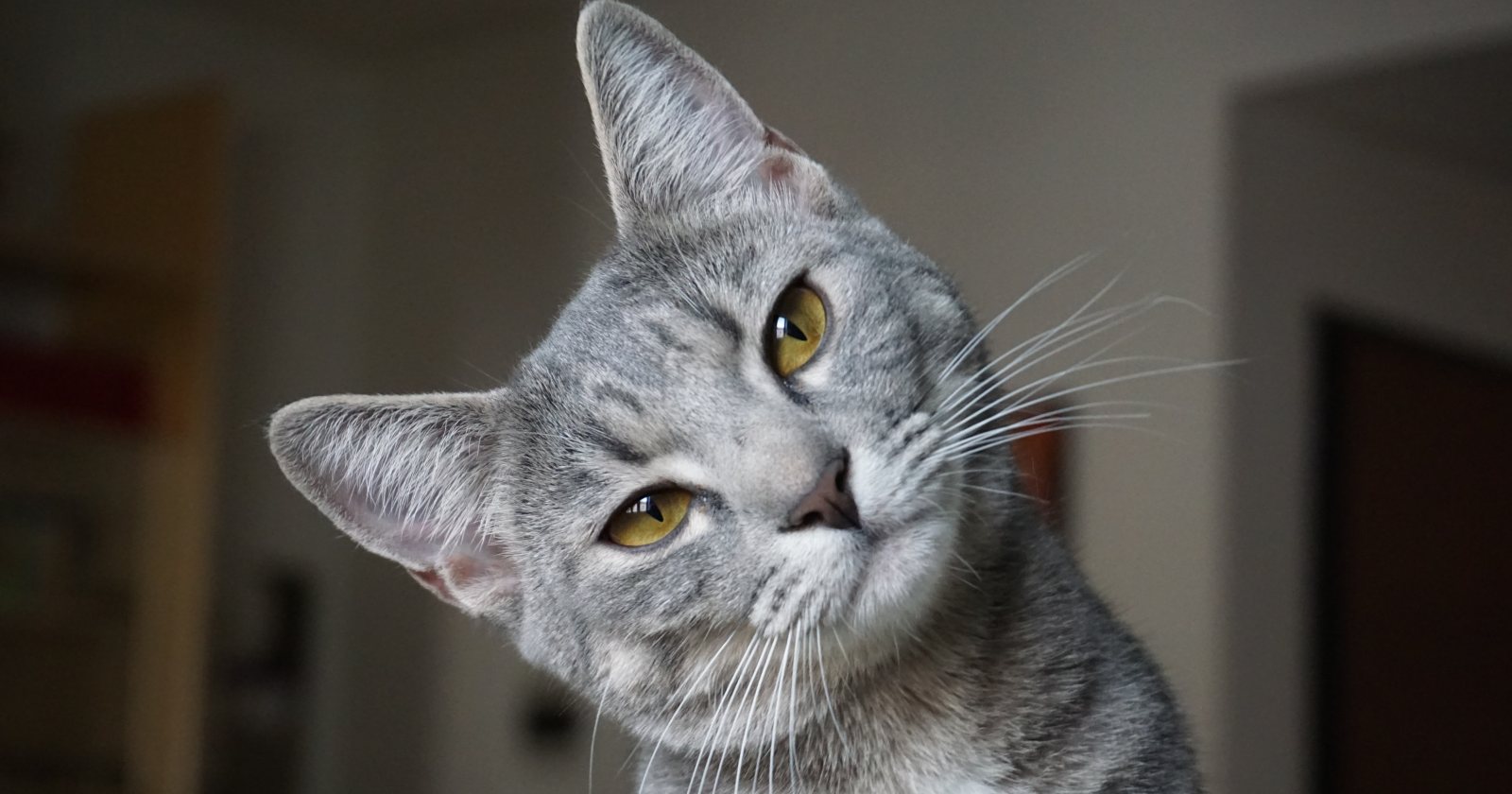
Cats are notoriously indifferent to sweet things. Pour syrup near a dog and the dog will investigate. Pour syrup near a cat and the cat will ignore it. Veterinarians and cat-food companies have long noted that cats show no preference for sugar in feeding tests, no matter how much sugar is presented. The reason is not a behavioural quirk or a learned aversion. It is genetic, and it traces back tens of millions of years to the point at which the ancestors of modern cats became obligate carnivores, eating only meat. The gene that produces a working sweet receptor on the tongue, called Tas1r2, has been broken in cats for so long that it no longer functions at all. A cat looking at a sugar cube is in the same sensory position as a human looking at an ultraviolet light source: the signal exists, but the receptor that would detect it does not.
What the genetic evidence shows
The molecular discovery came in 2005 from a team led by Xia Li and Joseph Brand at the Monell Chemical Senses Center in Philadelphia, in collaboration with colleagues at the Waltham Centre for Pet Nutrition in the United Kingdom. Their paper in PLOS Genetics, titled “Pseudogenization of a Sweet-Receptor Gene Accounts for Cats’ Indifference toward Sugar,” established that the cat sweet receptor is not just inefficient. It is, at the genetic level, non-functional.
The mammalian sweet receptor is formed by two protein subunits, called T1R2 and T1R3, encoded by the genes Tas1r2 and Tas1r3. Both have to be present and functional for the receptor to assemble correctly on the taste cell membrane. The Monell team sequenced both genes in domestic cats, tigers, and cheetahs, comparing them with the equivalent sequences in dogs, mice, rats, and humans. Tas1r3 was intact in cats. Tas1r2 was not. The cat version of the gene carried a 247-base-pair deletion in one of its critical exons, plus additional disabling mutations, all of which prevented the gene from being translated into a working protein. The researchers further found no detectable Tas1r2 messenger RNA in cat taste tissue, no Tas1r2 protein in cat taste buds, and no evidence that the gene was being expressed at all. In every cat species tested, the gene was the same kind of broken in roughly the same place. It had become a “pseudogene”: a relic of an ancestral working gene, accumulating mutations because it no longer faced selective pressure to remain intact.
Why this happened
The evolutionary logic is straightforward. Sweet receptors exist in most mammals because their ancestors ate sugar-rich plant material at some point in their evolutionary history. Detecting sweetness was useful because sweetness in nature is a reliable proxy for accessible carbohydrate, an important food source for animals that eat plants or mixed diets. For an obligate carnivore that consumes only animal tissue, sweetness is irrelevant. Meat contains very little carbohydrate. A receptor that detected sweetness in such an animal would be metabolically expensive to maintain without conferring any survival advantage. Mutations that disabled the receptor would not be selected against, and over enough generations, random mutations would accumulate until the gene was non-functional.
This is precisely what appears to have happened in the felid lineage. The pseudogenization of Tas1r2 in cats is estimated to have occurred some tens of millions of years ago, well before the divergence of the modern cat species. Every member of the cat family Felidae, from the smallest domestic tabby to the largest Siberian tiger, shares the same broken gene.
Not unique to cats
The cat finding turned out to be the first identified case of what is now understood to be a widespread phenomenon across obligate carnivores. In 2012, the Monell-led group, working with colleagues at the University of Zurich, published a follow-up paper in PNAS titled “Major taste loss in carnivorous mammals.” The team sequenced Tas1r2 in 12 species from the order Carnivora, looking for the same kind of pseudogenization. Seven of those species, all exclusive meat eaters, had also independently lost functional Tas1r2.
The animals affected included the California sea lion, the southern fur seal, the Pacific harbor seal, the Asian small-clawed otter, the spotted hyena, the fossa (Madagascar’s largest carnivore), and the banded linsang. Crucially, the disabling mutations in each of these species occurred in different places within the Tas1r2 gene, indicating that the losses happened independently in each lineage, not via inheritance from a common ancestor. The same evolutionary pressure that turned off the gene in cats turned it off, separately, in at least seven other carnivorous lineages over the same broad timeframe. Behavioural testing of two of the genotyped species — the Asian small-clawed otter (broken Tas1r2) and the spectacled bear (intact Tas1r2, and predominantly herbivorous despite its order) — confirmed the pattern. The otter showed no preference for sweet compounds. The bear preferred sugars and even some non-caloric sweeteners.
The pattern across these species, summarised in a 2015 review in the journal Flavour co-authored by some of the same researchers, suggests that the loss of sweet taste is a general feature of mammalian carnivory rather than a quirk of cats specifically. Wherever a lineage of mammals has committed strictly to meat eating for long enough, the sweet receptor has tended to disappear.
What cats can still taste
Cats are not generally taste-impaired. They retain functional receptors for bitter, sour, salty, and umami tastes, and a 2015 PLOS One study identified at least seven functional bitter-taste receptor genes in domestic cats, with response profiles that overlap considerably with those of humans. The umami receptor, which detects the amino acids characteristic of protein-rich foods, is particularly relevant to cat behaviour: it is the receptor that allows a cat to distinguish meat from non-meat, and it is presumed to be doing a lot of the heavy lifting in a cat’s sensory evaluation of food. What cats lack is specifically the modality that would allow them to perceive sugar.
The implications for cat feeding are practical. Sweet ingredients in cat food, such as the high-fructose corn syrup or sucrose sometimes added to commercial products, are not adding palatability from the cat’s perspective. Cats select food based on protein content, fat content, amino acid profile, and texture, not on sweetness. Owners who notice their cat licking ice cream or showing interest in a bowl of cereal are usually witnessing a response to the fat or protein content, not the sugar. The sugar is, to the cat, sensory noise. The signal it carries to a human tongue is, for a feline, simply absent.
