
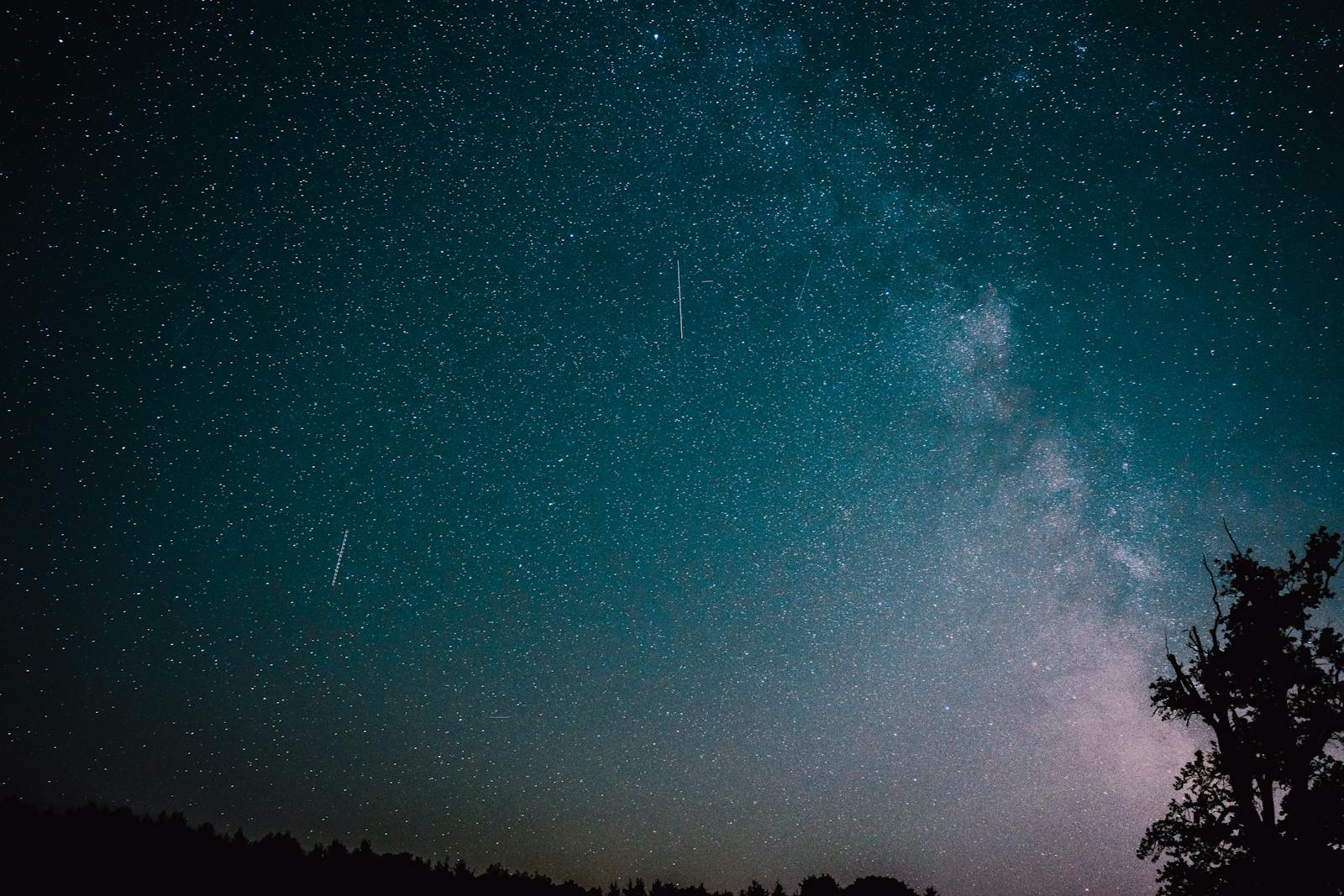
At 2:06 p.m. on Saturday, May 30, 2026, a rock about three feet across hit the air over New England at roughly 75,000 mph and tore itself apart some 40 miles up. NASA put the energy of that breakup at about 300 tons of TNT — enough to send a double boom rolling across the ground from Delaware to Montreal, rattling windows and sending dozens of people reaching for their phones, some to film, others to report what they were certain had been an earthquake.
NASA confirmed the object was natural material, describing it as “a natural object and not a re-entry of space debris or a satellite,” in the words of NASA spokesperson Allard Beutel. No satellite was lost. No asteroid was inbound. A single stray meteoroid had simply met the atmosphere at speed.
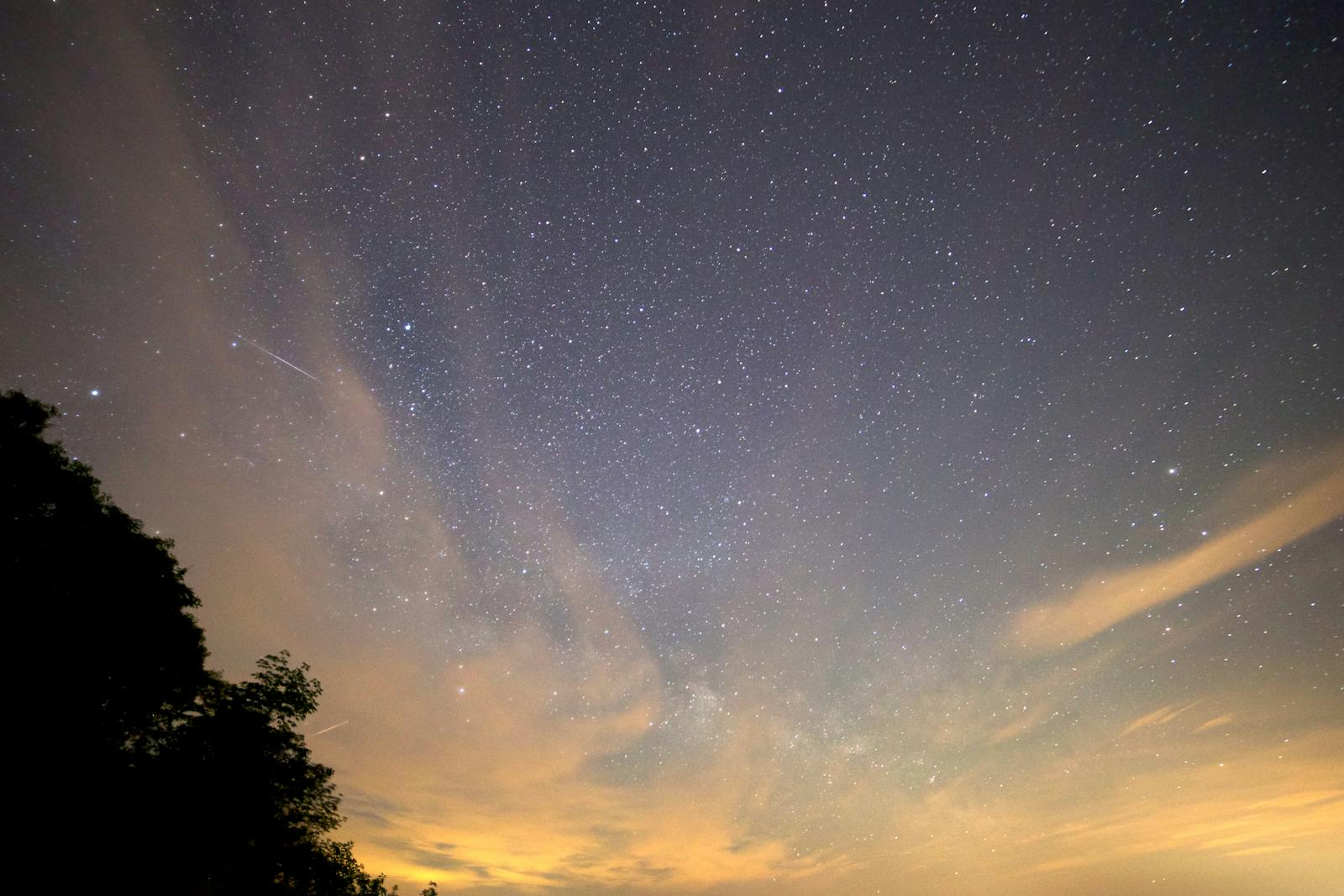
What happened over New England
The fireball entered as a daytime bolide, bright enough to register against an overcast afternoon sky. NOAA weather satellites recorded a flash over the region at the moment witnesses began calling local newsrooms, according to CBS Boston. The American Meteor Society logged more than 80 eyewitness accounts within hours.
NASA’s reconstruction placed the breakup at an altitude of about 40 miles over extreme northeastern Massachusetts and southeastern New Hampshire — near the state line, north of Boston — with the flash recorded off the coast over Cape Cod Bay. Most of the object likely vaporized at that altitude. Any surviving fragments would be effectively unrecoverable.
Robert Lunsford of the American Meteor Society, which collected the eyewitness data, said the meteor was unusually large for a fireball. “It was definitely bigger than a normal fireball, about a yard wide,” he said.
Why the boom traveled so far
The geographic spread of the reports — eyewitnesses in eleven states and Canadian provinces, per the society’s event page for the fireball — points to the physics of how shockwaves behave in the upper atmosphere. A meteor moving at tens of thousands of miles per hour compresses the air ahead of it, generating a pressure wave that propagates outward like the wake from a supersonic aircraft.
The U.S. Geological Survey, which opened an event page after the shaking, drew the distinction plainly: unlike an earthquake, which originates at a discrete point underground, a sonic boom of this kind travels along a linear path through the atmosphere, according to NBC News. That linear geometry is why a single object can produce ground shaking across a corridor hundreds of miles wide.
Part of the sound is the air itself compressing; part is the rock breaking apart under aerodynamic stress as it decelerates. The combination produces the characteristic double boom that witnesses described.
The earthquake confusion
Several residents filed reports with the USGS believing they had felt a tremor. The agency’s seismographs registered nothing. The shaking people felt was atmospheric, not geological — the USGS classified the event as a widely felt sonic boom from a suspected bolide, with no seismic signal.
The Massachusetts Emergency Management Agency said public safety officials received reports of an audible boom and tremors across the eastern part of the state, but logged no emergency police or fire requests connected to the event. No injuries were reported.
This kind of confusion is becoming routine. Similar events elsewhere have prompted residents to report mysterious blasts they initially blamed on earthquakes, which authorities later concluded were consistent with sonic booms.
A noisy year for fireballs
The Massachusetts bolide caps an unusually active stretch. In the first months of 2026, meteors have exploded over multiple states and produced sonic booms across wide areas. One Texas fireball scattered meteorites across the Houston area, including a fragment that reportedly punched through the roof of a home.
Whether the cluster reflects a genuine uptick in atmospheric entries or simply improved detection through doorbell cameras, dashcams, and satellite lightning mappers is an open question. The detection infrastructure has changed far faster than the population of small near-Earth objects.
What hasn’t changed is the basic statistics. Earth’s atmosphere intercepts a substantial amount of extraterrestrial material every year. Most arrives as dust. A handful of objects each year reach the size of the Massachusetts bolide. Even fewer produce ground-level effects loud enough to flood emergency lines.
What survives, and what doesn’t
Lunsford noted that meteors in this size class typically burn up before reaching the ground, and that any surviving fragments from this one most likely fell into the ocean.
The odds favored the ocean from the start. Roughly 71% of Earth’s surface is water, which is why the vast majority of meteorite falls go unrecovered. The 1954 case of Ann Hodges — struck on a couch in Sylacauga, Alabama, after a meteorite tore through her roof — remains the best-documented case of a person hit directly.
Even when fragments are lost, eyewitness accounts and video allow scientists to reconstruct trajectory, mass, and likely composition. Brightness, duration, angle of descent, and fragmentation pattern all carry information about the parent body.
That reconstruction work matters because meteorites are one of the few direct samples humanity gets of the early solar system. Apart from a handful of lunar sample-return missions and the material brought back from asteroids by Hayabusa2 and OSIRIS-REx, almost everything known about the chemistry of primitive bodies comes from rocks that fell on their own. Missions like NASA’s Psyche probe, now en route to a metal asteroid, will study such bodies up close, but for now the supply chain still runs through the atmosphere.
What the event does and doesn’t mean
NASA was emphatic that the bolide carried no impact threat and signaled no change in the population of hazardous near-Earth objects. A three-foot stone is far below the size at which planetary-defense systems track individual objects. The 2013 Chelyabinsk meteor, which injured roughly 1,500 people in Russia, was an order of magnitude larger and released energy vastly greater than Saturday’s event.
The more striking story is institutional. A natural event that would have passed largely unnoticed a generation ago now generates a satellite flash, a seismograph cross-check, an emergency-management bulletin, a NASA statement, and dozens of eyewitness reports compiled by a volunteer scientific society within hours.
Somewhere under Cape Cod Bay, if anything survived at all, a few dark stones are settling into the sediment, indistinguishable now from ordinary gravel. The boom that announced them died away long ago over the rooftops of Boston and the hills of Vermont. What remains is the record — the satellite flash, the seismograph that stayed flat, the reports filed within the hour — a fuller account of a falling rock than any earlier generation could have assembled, for an object that not long ago would have slipped into the sea unseen.
