
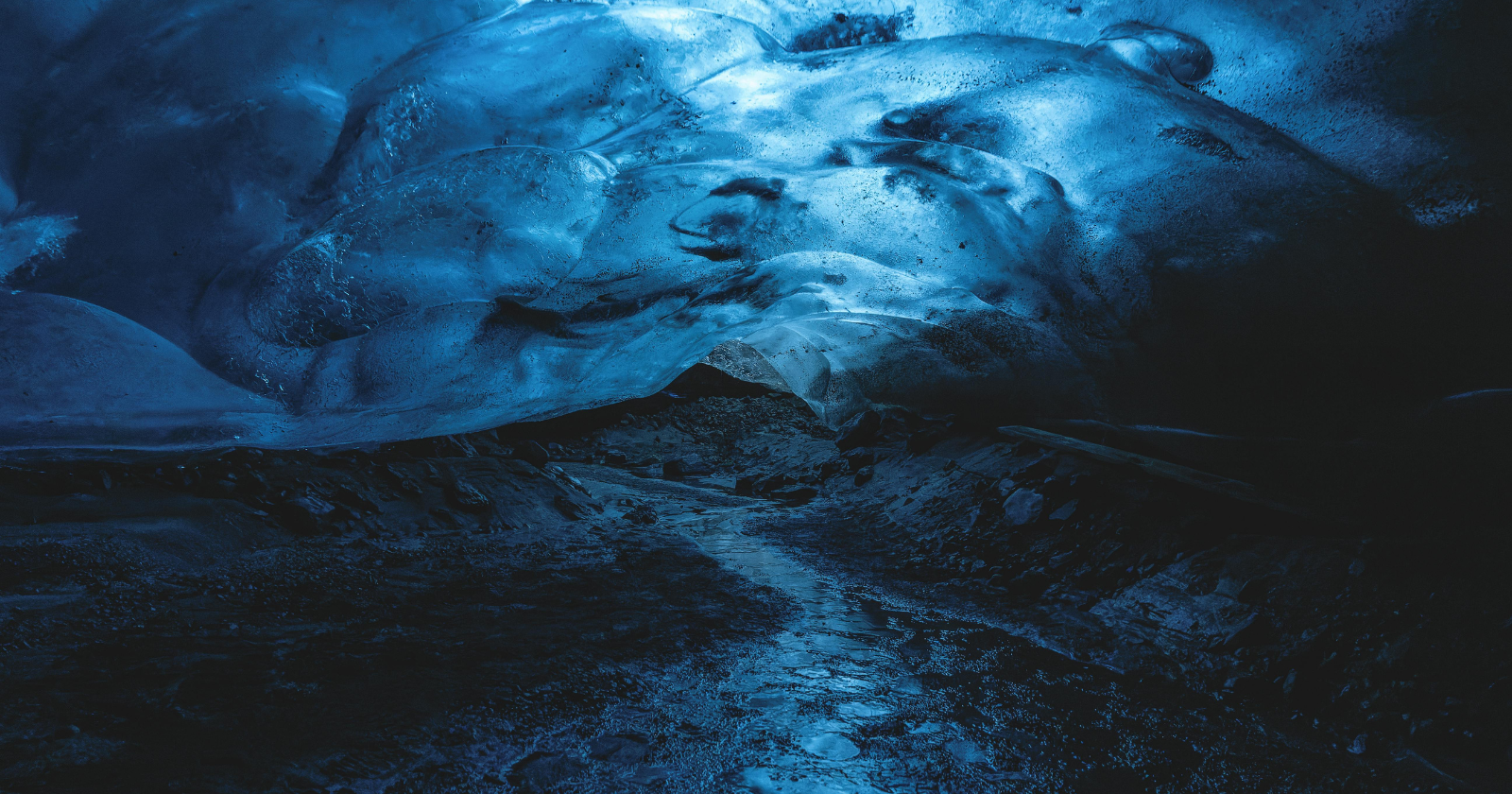
Nearly four kilometres beneath the East Antarctic ice sheet sits Lake Vostok, a body of freshwater roughly the size of Lake Ontario. It is the largest of the nearly 400 subglacial lakes mapped across the continent, about 250 kilometres long and 50 wide, and it has been sealed under the ice long enough to make it one of the better earthly stand-ins for the sub-ice oceans thought to lie beneath Jupiter’s moon Europa and Saturn’s moon Enceladus.
How long is “long enough” is itself an estimate rather than a measurement. The ice above the lake has covered it for something like 15 million years, and some analyses put the isolation of the water itself at 15 to 25 million years, though more cautious figures run lower. Either way, this is water cut off from sunlight, from the atmosphere, and from the rest of the biosphere for an interval with no easy parallel anywhere we can readily reach. Live Science has a good overview of how the lake was found and mapped.
What the analogue is, and where it stops
The reason Vostok keeps coming up in discussions of Europa and Enceladus is the shape of the problem, not the specifics. Here is liquid water held liquid by pressure and geothermal heat rather than the Sun, sitting in permanent darkness under a thick lid of ice. Anything living in it would have to run on chemistry rather than photosynthesis. That is the condition the icy moons are thought to share.
The match is loose past that point. Vostok is freshwater, fed by melting glacial ice; the moon oceans are believed to be salty and chemically richer. The cap over Vostok is about four kilometres of ice, while Europa’s shell is estimated at 15 to 25 kilometres and Enceladus’s is thinner again. The strongest case for the moons also rests on something Vostok shows less plainly: a rocky seafloor where hot water reacts with rock. Cassini’s passes through the plumes erupting from Enceladus turned up silica and molecular hydrogen consistent with that kind of activity. Vostok is most useful for the general question of whether life can persist in dark, sealed, sub-ice water, rather than as a literal model of either moon.
The drilling problem
This is where Vostok’s record turns frustrating, and where the most transferable lesson sits. A Russian team reached the lake surface on 5 February 2012, the end of a years-long effort and the deepest ice core ever taken. The borehole had been kept open with kerosene and Freon, and when the drill finally broke through, lake water surged up and mixed with that fluid. The fluid carried surface bacteria.
The consequence is that organisms later reported from Vostok ice cannot be cleanly separated from contamination introduced during the drilling. A 2013 analysis of accreted ice reported genetic sequences from thousands of taxa. Other work found almost nothing, and the Russian microbiologist Sergey Bulat cautioned that even a single candidate organism might be a contaminant. The disagreement says less about what lives in the lake than about whether anyone has yet sampled the lake at all.
How it should have gone
The counter-example arrived almost immediately. In January 2013, the United States WISSARD project reached Subglacial Lake Whillans in West Antarctica using a clean hot-water drill fitted with filtration and ultraviolet decontamination, described in the project’s operational account in the Annals of Glaciology. The samples held up to scrutiny. Writing in Nature in 2014, Brent Christner and colleagues reported a functioning microbial ecosystem, on the order of 4,000 single-celled taxa, living on chemical energy in permanent darkness.
Whillans is not a substitute for Vostok. It sits under only about 800 metres of ice and forms part of an active subglacial drainage network that fills and flushes, so it is younger and far less isolated. But it answered the question Vostok could not. Subglacial water can hold life, and clean access can demonstrate it without leaving the result open to doubt.
What it means for the moons
The line from these lakes to Europa and Enceladus runs through the contamination problem more than the biology. Both moons almost certainly hold liquid water. Europa’s induced magnetic field, detected by the Galileo spacecraft, points to a salty ocean that may contain twice the water of all Earth’s oceans, and Enceladus vents its ocean straight into space, where Cassini sampled it directly. NASA’s Europa Clipper, launched on 14 October 2024, is due to reach the Jupiter system in 2030 and will study the ice shell and ocean chemistry from orbit rather than by landing.
That choice is driven partly by Jupiter’s radiation. But the harder long-term obstacle, for any mission that eventually tries to sample one of these oceans rather than observe it from above, is the one that compromised Vostok: reaching the water without carrying your own microbes into it. The engineering of clean access, not the question of whether the water exists, is the part still waiting on a convincing answer.
For now, the nearest thing to a verdict comes from Whillans, not Vostok. What Clipper returns from 2030 onward will be read against that standard, and against the long, contaminated cautionary tale four kilometres down in East Antarctica.
