
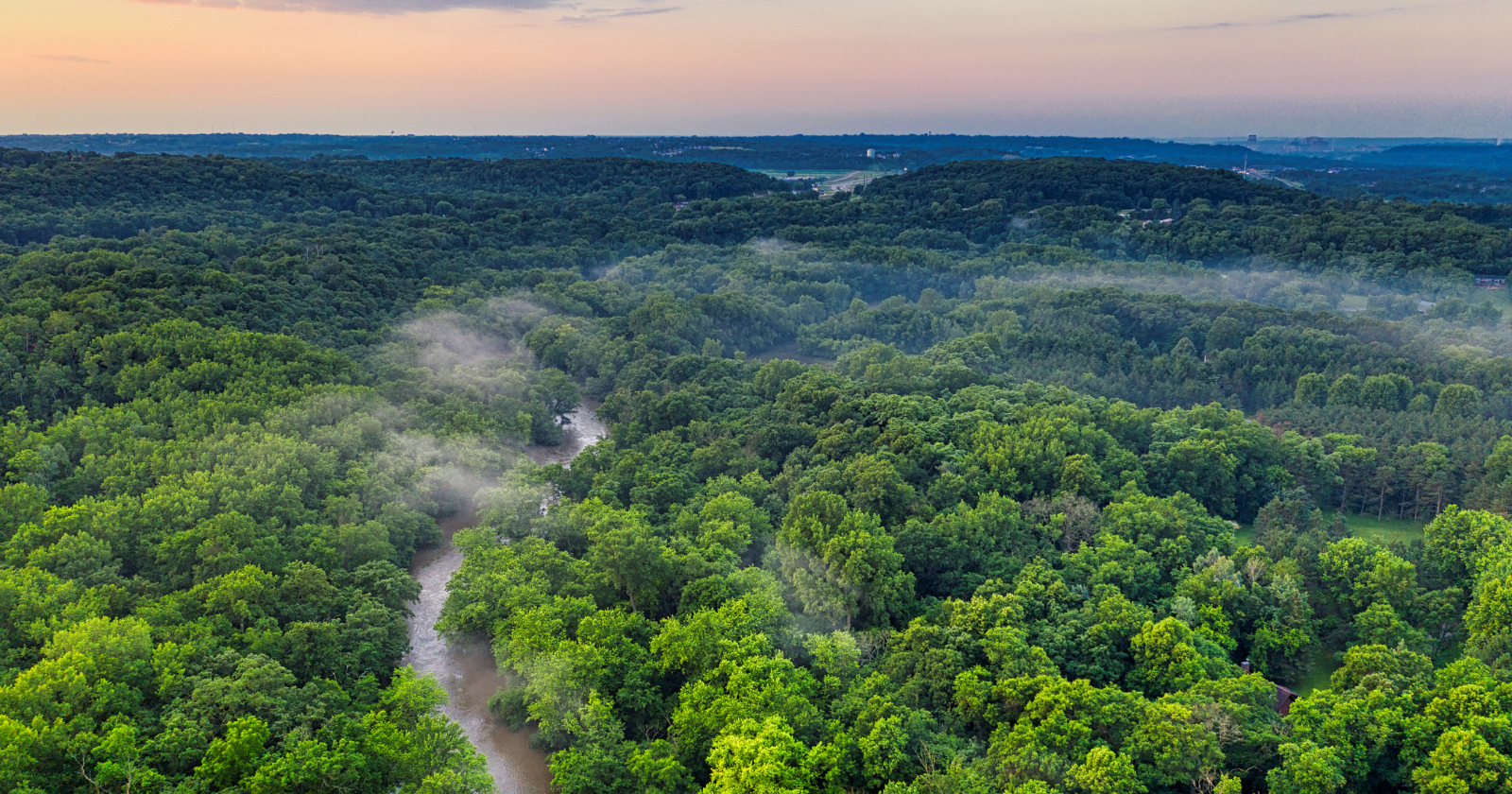
The comparison sounds hard to believe but the numbers back it up. Earth carries more individual trees than the Milky Way carries stars, and the gap is wide.
The Milky Way holds an estimated 100 to 400 billion stars. A 2015 study put the tree count at over trillion. Even at the galaxy’s most generous star estimate, the trees win by a factor of at least seven.
What makes the comparison worth pausing over is not the size of the gap. It is that almost nobody, including the people who study trees, expected the number to be that high.
Why the star comparison lands the way it does
Stars feel uncountable. Trees feel like something we should have a handle on, because we plant them, cut them, and walk past them every day. The intuition runs backwards. We treat the galaxy as the thing beyond reckoning and the forest as the thing within reach, when the harder number to pin down turned out to be the one growing in the ground.
The lead author of the 2015 study made roughly that point about how poorly we estimate the familiar. Thomas Crowther noted that “ask people to estimate, within an order of magnitude, how many trees there are and they don’t know where to begin.” An order of magnitude is a wide target. Most people miss it anyway.
What the 2015 count actually measured
On 2 September 2015, Nature published “Mapping tree density at a global scale,” led by Crowther. The team did not count trees one by one. They combined more than 400,000 ground-based forest plot measurements with satellite imagery and modelling, producing the first spatially continuous global map of tree density across the planet.
The estimate came out at about 3.04 trillion trees, or as noted by Yale, roughly 422 trees for every person alive. The figure that mattered most to the field, though, was the one it replaced. The previous global estimate sat near 400 billion, drawn from satellite imagery and forest-area calculations without ground data. The new figure was about an order of magnitude higher, which is why even the researchers were caught off guard. Crowther said, “I don’t know what I would have guessed, but I was certainly surprised to find that we were talking about trillions.”
It should be noted, of course, the this is a single study. Three trillion is an estimate built from samples and satellites, not a head count, and it carries the uncertainty that comes with extrapolating from plots to a whole planet. It is the best figure science has produced, not a final count.
The sting in the data
The same study that delivered the larger-than-expected number delivered a harder one alongside it. The model estimated that the global tree population has fallen by roughly 46 percent since the start of human civilisation. Close to half the world’s trees are gone, measured against the baseline before farming reshaped the land.
The losses have not stopped. The study put the annual toll at about 15 billion trees lost each year, with a net decline of roughly 10 billion once replanting and regrowth are counted. Crowther described the trend plainly: “There are currently fewer trees than at any point since the start of human civilization and this number is still falling at an alarming rate.” The “alarming rate” is his reading, and the halving is the model’s estimate rather than a direct census. Both point the same way.
What three trillion means, and what it doesn’t
A bigger total is easy to misread as good news. It is not, on its own, a verdict on the health of forests. The 422-trees-per-person figure says nothing about whether those trees are old growth or saplings, dense canopy or scattered stands, gaining ground or losing it. A larger denominator makes the annual loss look small in percentage terms while leaving the absolute loss exactly as large.
Robin Chazdon, a forest ecologist, told Science that “tree size, species identity, and tree qualities matter hugely in accounting for the importance of forests and trees outside of forests.” A count of stems is not a measure of what those stems do. The study counted; the health of forests is a separate question.
