
The story is everywhere: NASA, faced with the challenge of writing in space, spent millions of taxpayer dollars engineering a special pen, while the canny Soviets simply handed their cosmonauts a pencil. It is a satisfying parable about bureaucratic waste versus common sense. Scientific American calls it “just a myth.” The actual history is more interesting, and the pen at the centre of it is still being manufactured today.
A private bet, not a government programme
Paul C. Fisher, founder of the Fisher Pen Company, developed the AG7 “Anti-Gravity” pen on his own initiative and at his own expense. NASA’s role came later: testing the pen rigorously and eventually adopting it for spaceflight. According to Scientific American, one million dollars invested in development came entirely from the Fisher Pen Company, not from NASA or Congress.
The engineering problem Fisher set out to solve was genuine. Scientific American explains that the cartridge is pressurised with nitrogen at 35 pounds per square inch, pushing ink toward a tungsten carbide ball at the pen’s tip. The ink itself behaves as a gel at rest and turns to liquid only when the ballpoint moves across a surface, a property known as thixotropy. The pressurised nitrogen also prevents air from mixing with the ink, so it cannot evaporate or oxidise. Gravity plays no role in any of this, which is the point.
Fisher patented the AG7 in 1965. After extensive testing, NASA approved it for use on Apollo missions. Sources suggest that in 1967, NASA purchased approximately 400 pens for less than $3 apiece. Both agencies had negotiated a bulk discount; the Associated Press reported that both NASA and the Soviet space agency received the same 40 per cent discount for buying in bulk.
Why pencils were never the simple answer
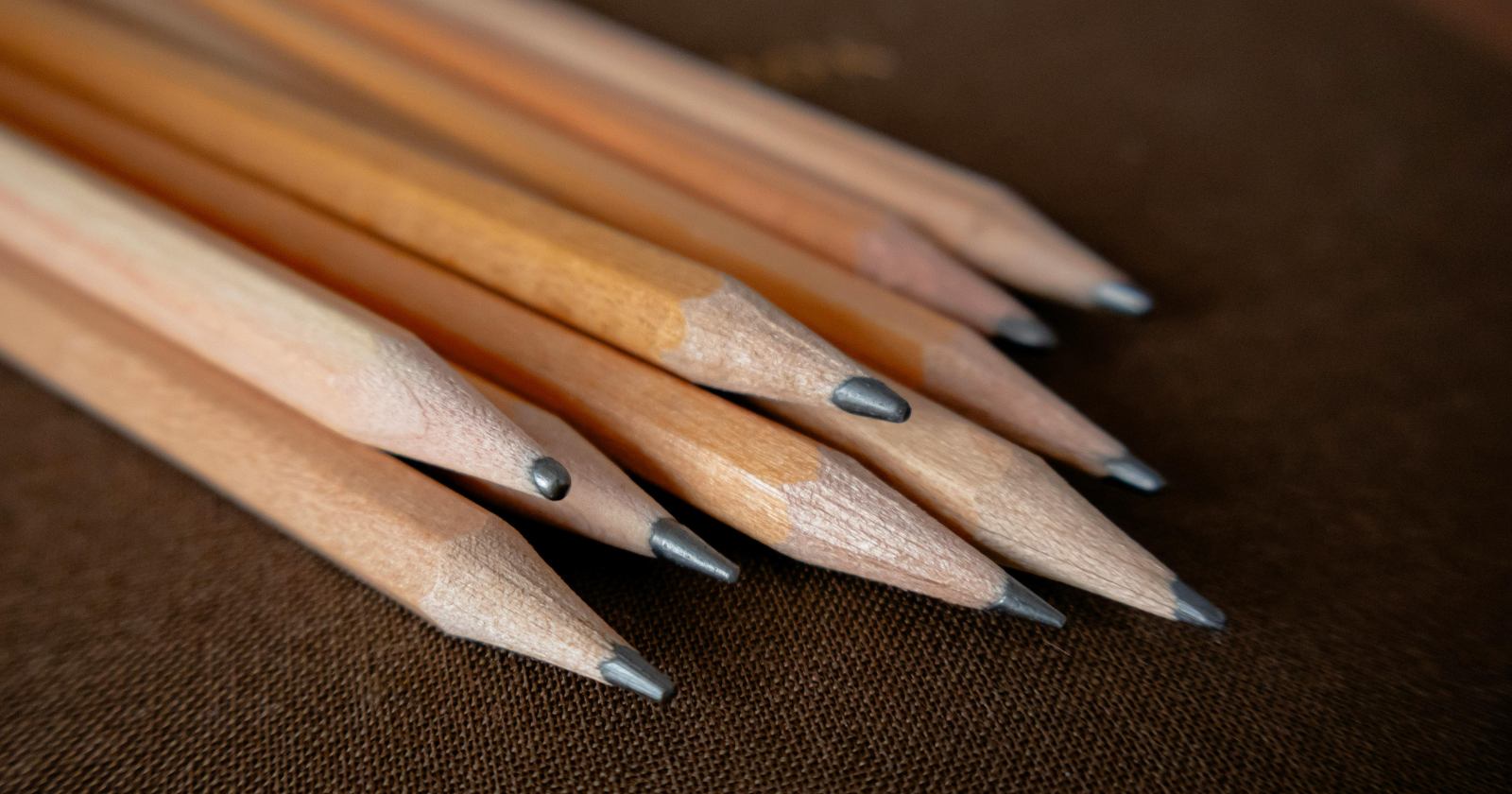
The myth assumes pencils were a sensible, cheap alternative that the Soviets wisely chose. The reality is that both programmes started with pencils, and both had good reasons to move away from them. Pencil tips flaked and broke off, drifting in microgravity where they could potentially harm an astronaut or equipment. Graphite and wood are also flammable, a concern that became acute after the Apollo 1 fire killed three astronauts in January 1967. After that tragedy, Mental Floss reports, NASA sought to minimise the use of flammable materials in space capsules.
The Soviet programme was not immune to these problems either. Soviet cosmonauts used grease pencils, which avoided some breakage issues but were imprecise, smudgy, and generated paper waste that floated around the capsule.
A story about NASA’s expensive pencils does have a kernel of truth, but it runs in the opposite direction to the myth. PolitiFact reports that NASA ordered 34 mechanical pencils from Houston’s Tycam Engineering Manufacturing for Project Gemini. The total cost came to $4,382.50, or $128.89 per pencil. Public outcry followed. The Fisher Space Pen, purchased at under three dollars each, was the cheaper solution.
What the pen actually did, and what it didn’t
A persistent embellishment claims the Fisher Space Pen saved the Apollo 11 mission by fixing a broken circuit breaker on the lunar module.However, Space.com notes that the pen that actually fixed the switch came from the Duro Pen Company, not Fisher. Buzz Aldrin, in his memoir Magnificent Desolation, noted: “Since it was electrical, I decided not to put my finger in, or use anything that had metal on the end.” He reached for a felt-tip pen from his shoulder pocket. The Fisher AG7 was aboard Apollo 11 and was NASA-approved, but the circuit-breaker story belongs to a different pen.
What the Fisher pen did do, without dispute, is fly. Space.com reports that nearly 30 Fisher Space Pens flew to the moon over the course of the Apollo missions, with 12 reaching the lunar surface. NASA notes that Fisher Space Pens have continued in use on the International Space Station. The AG7 remains on sale today through the Fisher Space Pen Company’s own website.
The myth endures partly because it feels true, a parable about government waste that fits a familiar template. The actual story inverts the lesson. As Scientific American put it, “the problem of weightless writing was not solved by either Soviet central planning or good old American sub-contracting, but by a private investor and a good idea.” NASA’s role was to test the pen rigorously, pay a fair price for it, and use it. That is a story about procurement working as it should.
