
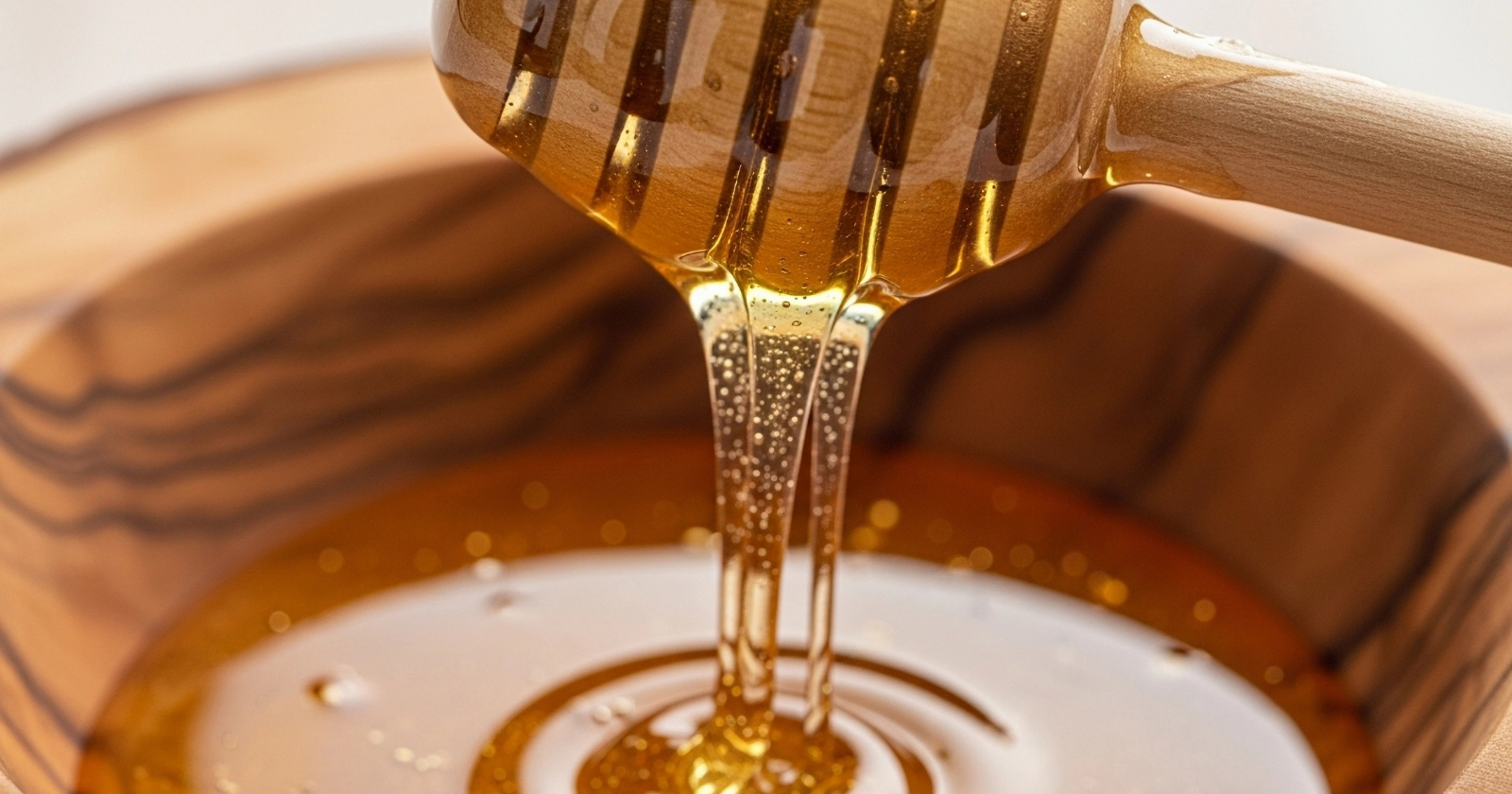
Type “3,000-year-old honey” into any search engine and the same story appears hundreds of times. Archaeologists working in an Egyptian tomb opened a sealed jar, found it full of preserved honey, and tasted it. The honey was perfect. Some versions involve King Tutankhamun, some involve unnamed pharaohs, and the dates range from 2,000 to 5,000 years. The story is told as established archaeological fact. When the trail is followed back to primary sources, the supporting evidence becomes considerably thinner than the popular telling suggests.
Howard Carter’s excavation records, which are publicly available through the Griffith Institute archive at the University of Oxford, document several thousand objects recovered from Tutankhamun’s tomb in 1922 and over the subsequent decade. The records describe alabaster vessels, food offerings, and assorted preserved organic material. They do not describe a laboratory analysis confirming that honey from any sealed jar was tested and found edible. The “still edible” claim appears to circulate almost entirely through secondary sources, each citing each other rather than a published study. The Canadian beekeeper Ron Miksha, writing on his Bad Beekeeping Blog in 2017, traced the story through several decades of repetition and concluded that when laboratory analysis of tomb-recovered honey has actually been performed, the substance has typically degraded to a “tar-like and inedible” residue, with high sugar content and pollen grains identifiable as honey origin but no longer resembling food.
The genuinely oldest documented preserved honey is several thousand years older than the Egyptian claim, and far less famous. In 2003, archaeologists excavating a burial mound in Georgia, in the Caucasus, found ceramic vessels dating to roughly 5,500 years ago with residue identified by chemical analysis as honey. The honey was preserved as residue, not as edible food. Nobody tasted it.
Why the chemistry of the popular story is right even where the archaeology is shaky
The reason the Egyptian tomb story has been so durable is that the underlying claim about honey’s preservation properties is genuinely true. Honey is one of the very few foods on Earth that does not spoil under ordinary storage conditions, and the mechanism is so well-understood that food scientists use honey as a textbook example of what they call “hurdle technology”: multiple preservation barriers operating in parallel so that no single line of microbial attack can succeed. The most-cited peer-reviewed overview of the chemistry is Stefan Bogdanov and colleagues’ 2008 review “Honey for Nutrition and Health” in the Journal of the American College of Nutrition, which sets out the four main mechanisms below.
The first hurdle is water. Bacteria and fungi need available water to grow, and the relevant measure is not the total moisture content of a substance but its water activity, conventionally written as aw. Pure water has a water activity of 1.0; most foods sit somewhere between 0.85 and 0.99. The threshold below which most spoilage organisms cannot grow is around 0.7. Raw honey typically sits at a water activity of about 0.56, far below the mold threshold. Even though honey contains roughly 17 to 18 percent water by weight, that water is locked into hydrogen bonds with the surrounding sugar molecules and is essentially unavailable to any microbe that lands in it.
The second hurdle is osmotic pressure. Honey is a supersaturated sugar solution, with roughly 80 percent of its mass made up of glucose and fructose. When a microbe contacts honey, the difference in solute concentration between the inside of the microbial cell and the surrounding honey is enormous. Water flows out of the cell through the cell membrane, the cell dehydrates, and the microbe dies. The same process is what makes salt curing and sugar curing work as ancient food-preservation techniques. Honey does it without any added preservative because it arrives already supersaturated.
The third hurdle is acidity. Honey typically has a pH between 3.2 and 4.5, comparable to a glass of orange juice or vinegar diluted in water, and most spoilage bacteria require pH values closer to 6 or 7 to grow. The acidity comes primarily from gluconic acid, which is itself a byproduct of the fourth and most surprising hurdle.
The fourth hurdle is hydrogen peroxide. Bees secrete an enzyme called glucose oxidase into the nectar they collect, and this enzyme catalyses a slow conversion of glucose into gluconic acid and hydrogen peroxide. According to a 2012 review in Frontiers in Microbiology, hydrogen peroxide “has been described as the main compound responsible by the antibacterial activity of honeys.” When researchers neutralise honey’s hydrogen peroxide with the enzyme catalase, the honey loses most of its antibacterial activity, which is the strongest experimental evidence for the peroxide being the dominant mechanism. The peroxide concentration in honey is small, but it is produced continuously as long as the enzyme has glucose and water to work with, which provides a slow-release antimicrobial effect that can continue for years.
There are smaller mechanisms layered on top of these four. Bees also secrete an antimicrobial peptide called defensin-1 into honey. Plants contribute phenolic acids and flavonoids that vary by floral source. Manuka honey, made from nectar of the New Zealand and Australian Leptospermum shrub, contains substantial amounts of methylglyoxal and exhibits non-peroxide antibacterial activity, which is the basis of medical-grade manuka honey used in wound care. The cumulative effect across honey varieties is a substance that creates such an inhospitable environment for life that, sealed properly, it can sit on a shelf indefinitely without going bad.
What does go wrong, and when
Honey is not absolutely immortal. There are two specific conditions under which it can spoil, both well-documented. The first is dilution. If honey absorbs enough water from the surrounding atmosphere to push its water activity above roughly 0.6, the wild yeasts that are naturally present in raw honey can begin to ferment the sugars. This is why honey jars need to stay sealed. The second is contamination by foreign material that introduces its own microbial load, particularly if the contaminant raises the local water activity.
What honey does not require is refrigeration. The conditions inside the jar are already so hostile to microbial life that cooling adds nothing. Crystallisation, which can happen over months or years as glucose molecules come out of solution and form sugar crystals, is a textural change rather than spoilage. Crystallised honey can be returned to liquid form by gentle warming and is chemically identical to fresh honey.
The Egyptian tomb story, with the laboratory edibility claim, is mostly folklore. The chemistry it gestures at is real, and explains why such stories were plausible enough to repeat in the first place. A properly sealed jar of honey, kept dry, can survive on a shelf for a human lifetime without measurable deterioration. Whether it could survive 3,000 years in a tomb in a way that left the contents recognisable as food is a question the laboratory record does not appear to have settled in the affirmative. The shelf-stability of honey is one of the genuine wonders of food chemistry. The pharaoh’s preserved breakfast is more likely a story about how good honey is at not quite dying than about what archaeologists have actually found inside a sealed jar.
