
On May 10, 2026, a Long March rocket lifted off from the Wenchang Space Launch Site on China’s southern coast, carrying the Tianzhou-10 cargo spacecraft toward the Tiangong space station. The vehicle was hauling roughly seven metric tons of supplies: food, fuel, spacesuits, and 41 separate scientific experiments. Most of the cargo was routine resupply. One of the experiments was not.
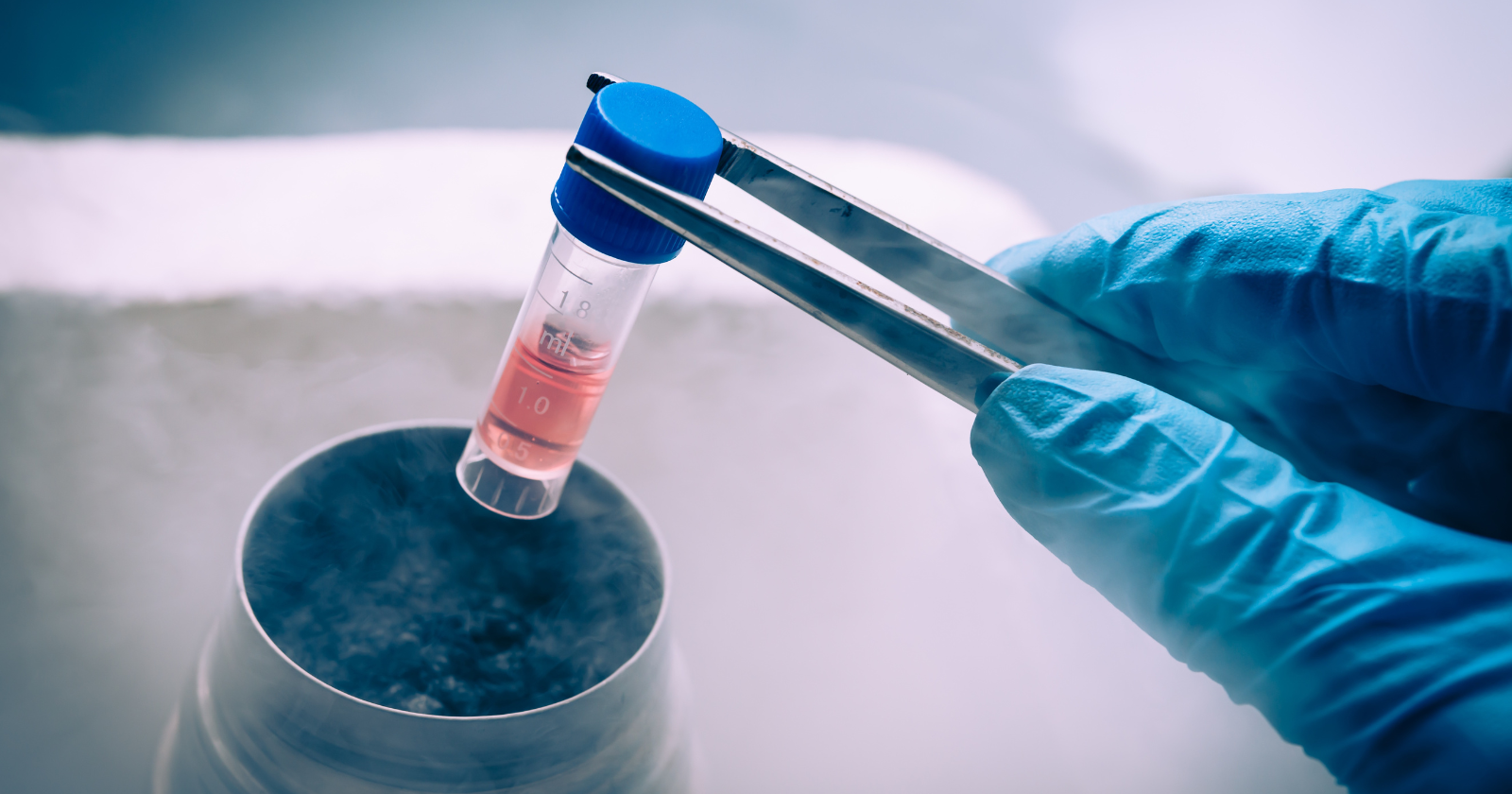
Sealed inside the cargo bay was a small batch of what Chinese researchers have been calling “human artificial embryos.” They are not, in any developmental sense, real embryos. They are stem-cell-grown structures called blastoids, engineered to mimic the architecture and molecular signaling of a real human embryo at the blastocyst stage, but biologically incapable of growing into a fetus. The structures arrived at Tiangong on May 11. They are the first stem-cell embryo models ever sent into space, and the first attempt by any space program to study the earliest stages of human development in microgravity.
What the experiment is testing
The question driving the work is one space agencies and private companies have mostly been content to leave for later. Can humans actually reproduce off-planet? The Moon and Mars colonies that NASA, SpaceX, and China’s own space program have been discussing for the past two decades all assume that, at some point, the answer will be yes. The available evidence has been thinner than the long-term plans suggest.
Yu Leqian, the project leader and a professor at the Chinese Academy of Sciences’ Institute of Zoology, has been direct about what the experiment is actually for. China Daily’s reporting on the mission quotes him on the specific developmental window the models are designed to capture: days 14 to 21 after fertilization. “This stage is a critical window in early human development, during which the building blocks for future organs begin to form, and the entire body axis — which determines the head and the tail — is established,” Yu said. Any disturbance in this window, he noted, can have profound downstream effects on an adult individual.
The choice to use stem-cell models rather than real embryos was not just a matter of practicality. International research conventions restrict work on actual human embryos beyond two weeks after fertilization, which makes the period after that point genuinely difficult to study under any conditions. Blastoids sidestep that limit. They are similar enough to real embryos for the molecular processes to translate, and different enough that the ethical framework does not apply in the same way.
How the experiment is set up
Once the cargo arrived at Tiangong, the astronauts installed the samples in one of the station’s experimental modules. Two types of stem-cell models were included. The first is a peri-implantation model, which mimics the moment when an embryo attaches to the wall of the uterus and is cultured on a layer of human uterine cells. The second is a peri-gastrulation model, housed inside a microfluidic chip, which replicates gastrulation, the event in early development where a single layer of cells reorganizes itself into the distinct layers that will eventually form different tissues and organs.
An automated system handles the daily care, replacing the nutrient solution surrounding the cells every 24 hours. The embryos are scheduled to develop for five days before being frozen in orbit and returned to Earth for analysis. Live Science’s reporting on the experiment notes that an identical control batch is being grown in a ground-based laboratory at the same time. The comparison between the two sets is where the actual scientific value lies. Anything that develops differently in the orbital samples is a candidate for being a microgravity or radiation effect.
Why reproduction in space is harder than it sounds
The biology of conception and early development depends, in ways researchers are still mapping, on gravity. Cells settle, fluids stratify, and chemical gradients form along axes that the constant pull of one g establishes. In orbit, those conditions are absent. The early human embryo, in particular, has to orient itself relative to the uterine wall, attach, and then begin a precisely choreographed sequence of cellular divisions and migrations. Whether any of that works without gravity is genuinely unknown.
The track record from earlier animal studies is uneven. Japanese rice fish successfully mated and reproduced aboard a space shuttle in 1994. Other experiments have gone less well. Attempts to raise mouse embryos in space have failed. Rat mating efforts have not produced pregnancies. Gizmodo’s report on the Chinese experiment notes that a 2014 Russian gecko-mating mission lost contact with ground control mid-flight, and by the time the satellite was recovered the geckos were dead.
The picture for humans, where ethical and practical limits keep direct research from happening, is even thinner. What is known is that stem cells age faster in microgravity than they do on Earth. Cosmic radiation, which is significantly higher above the protective layers of Earth’s atmosphere, damages DNA. An Australian study published earlier in 2026 put human sperm into a microgravity simulation chamber and tracked their movement through an artificial female reproductive tract. The sperm, by the researchers’ description, got lost. They had trouble navigating without the orientation cues that gravity normally provides.
None of this proves reproduction in space is impossible. It does suggest that the assumptions baked into long-term colonization plans deserve more empirical support than they currently have.
What the Tiangong experiment can and cannot answer
The honest framing of the experiment is that it will not, on its own, resolve whether humans can reproduce in space. Blastoids are useful models, but they are not full embryos. Five days is a small slice of the developmental window. A single batch on a single mission, however well-designed, cannot rule out the kinds of cumulative effects that might only show up across multiple generations of cell division.
What the experiment can do is generate concrete data on a question that has, until now, been entirely speculative. If the orbital blastoids develop normally during their five days at Tiangong, that is a piece of evidence in favor of the proposition that the earliest stages of human development can tolerate microgravity. If they develop abnormally, or fail to develop at all, the colonization plans of the next several decades just got more complicated. Either way, the experiment converts an open question into a slightly more closed one.
Yu has been candid about the limits. In comments to CCTV reported by the South China Morning Post, he framed the project as a first attempt at answering the broader question of whether humans can survive and reproduce in space, with the goal of identifying impacts that future engineering and medical interventions might be able to address. The samples will be analyzed once they return to Earth, the comparison with the ground-based control will be conducted, and the results will be published in due course. What follows depends on what the data show.
Final words
For all the talk about colonizing Mars and building permanent bases on the Moon, the basic biology of whether humans can actually have children somewhere other than this planet has remained, until now, almost entirely unexamined. The Chinese experiment on Tiangong is the first serious attempt to look at the question with the tools modern stem-cell research has made available. It will not settle the question. It will move it from speculation toward something closer to evidence.
That, on its own, is worth paying attention to. The species has been operating, for the past several decades of space-program rhetoric, on the implicit assumption that reproduction off-Earth is a solvable problem to be addressed later. The work that has begun on Tiangong is the first real test of whether that assumption holds. The answer, when it eventually arrives, will be one of the more consequential pieces of biology of the century.
