
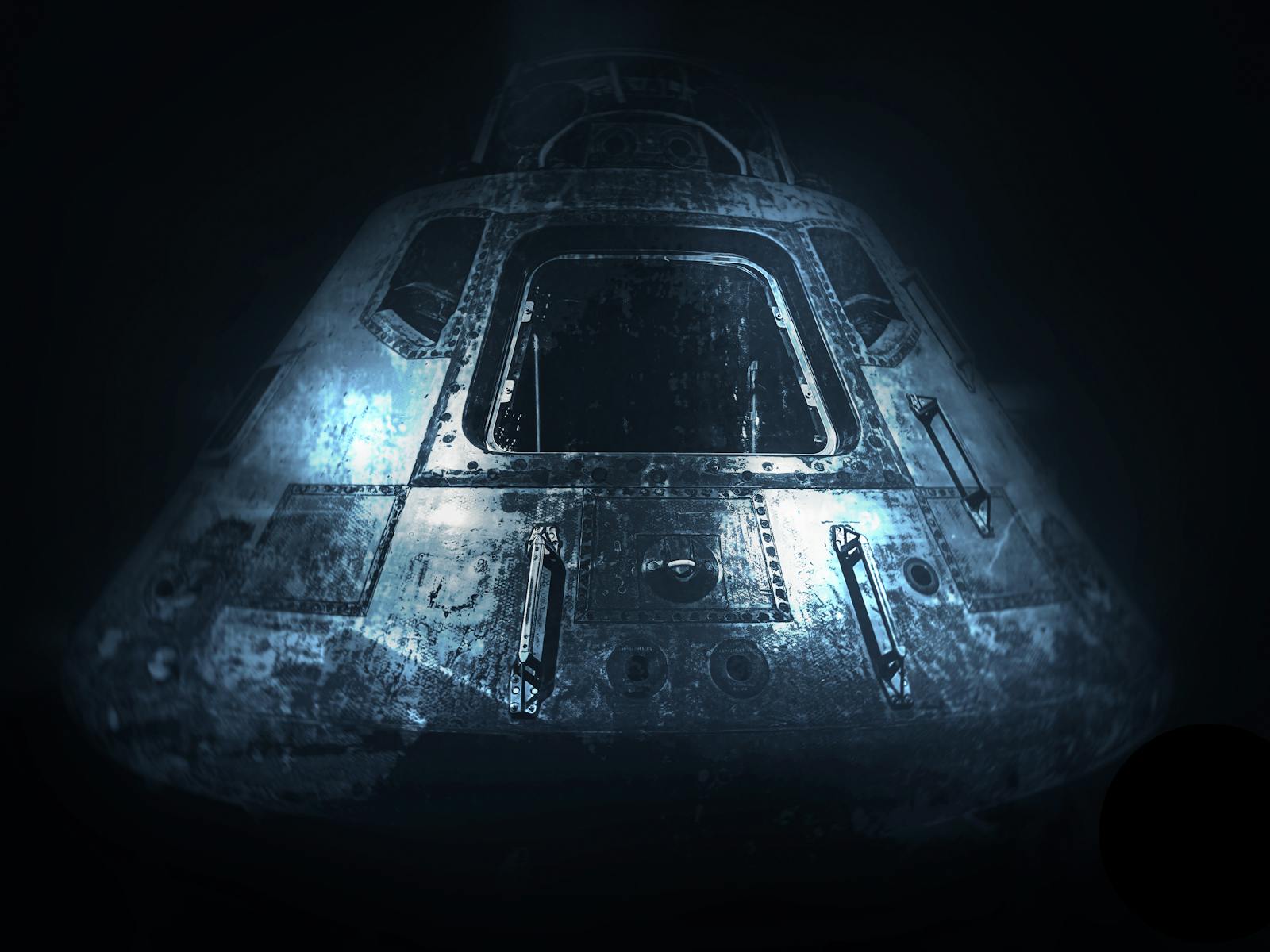
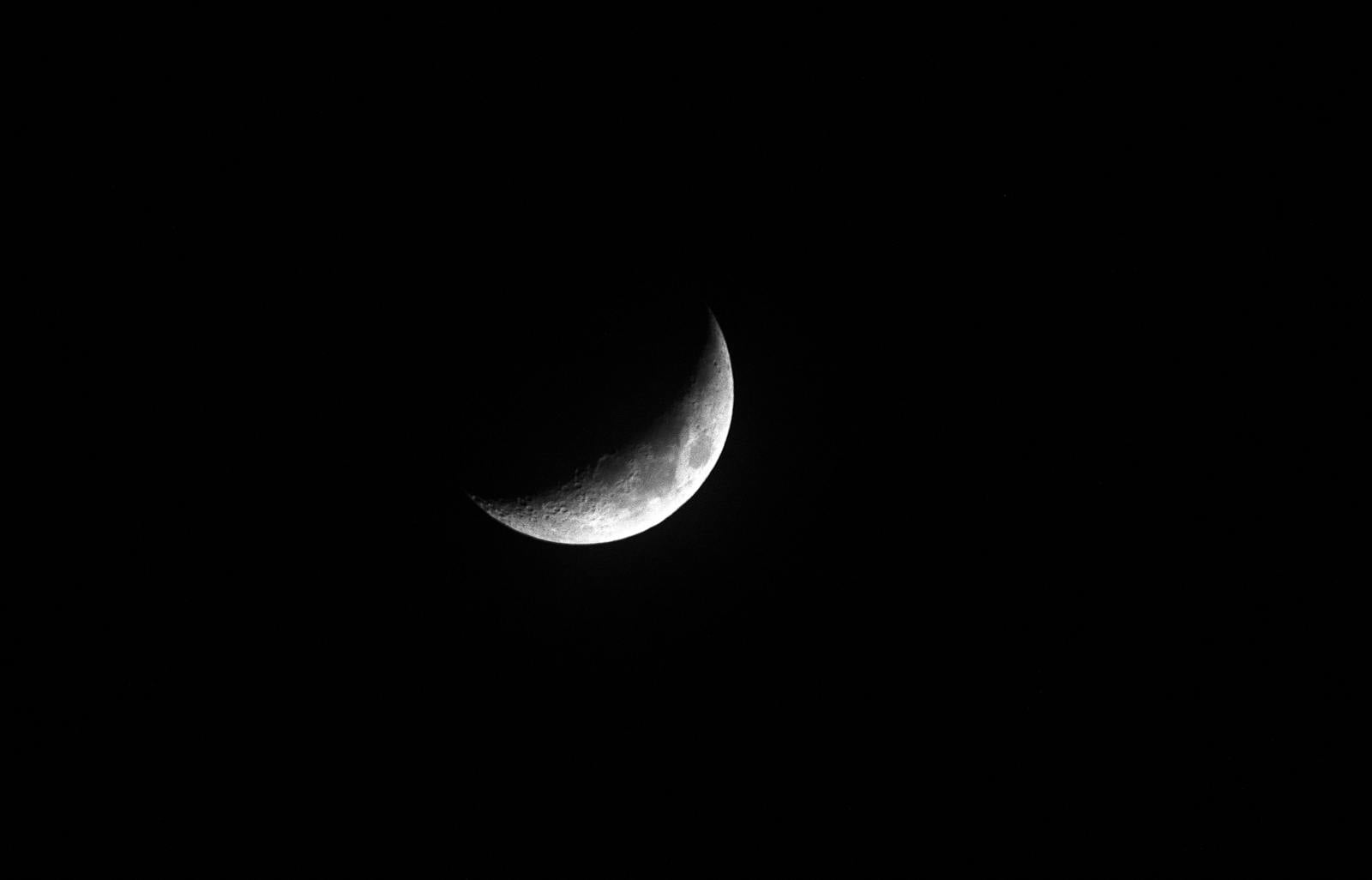
On the afternoon of April 15, 1970, somewhere between the Moon and the Earth, three men were sitting inside a spacecraft they were not supposed to be living in, watching their breath fog in front of them, and looking through a small triangular window at a tiny crescent of blue and white. The cabin temperature had dropped to near freezing. The guidance computer was off. The navigation platform that normally told the spacecraft which way it was pointing in three-dimensional space was cold and dark. And in a matter of hours they would have to fire an engine for fourteen seconds to refine a trajectory that, if wrong by even a fraction of a degree, would either skip them off the Earth’s atmosphere like a stone off a pond or burn them up on reentry.
So they used a wristwatch. They used the reticle etched in the lunar module window. And they aimed at the line on the Earth where shadow met sunlight.
The fact, stated plainly
The Apollo 13 crew, commander Jim Lovell, lunar module pilot Fred Haise, and command module pilot Jack Swigert, performed an unguided mid-course correction burn on April 15, 1970, with their primary guidance computer shut down to conserve battery power for reentry. To keep the spacecraft pointed correctly during the burn, they aligned it manually by holding the terminator of the Earth, the line between its lit and unlit halves, in the crosshairs of the lunar module’s Crewman Optical Alignment Sight, and timed the engine burn with a wristwatch. According to Space.com’s detailed account of the mission, every nonessential system on the lunar module Aquarius had been switched off after the oxygen tank explosion. The computer was a nonessential system. Survival depended on keeping it that way.
The reason was arithmetic. The command module Odyssey had reentry batteries that had to power the heat shield’s pyrotechnics, the parachutes, the communications, and the displays during the final hours of the flight. They could not be recharged. Every amp-hour spent before reentry was an amp-hour gone.
What broke, and why the lights went out
Apollo 13 launched from Kennedy Space Center on April 11, 1970, at 13:13 Central Standard Time. About 56 hours into the flight, with the spacecraft about 200,000 miles from Earth, mission controllers in Houston asked Swigert to perform a routine cryogenic stir of the oxygen tanks. Swigert flipped the switch. A spark from damaged Teflon insulation, scorched weeks earlier during a botched pre-flight tank emptying procedure at Kennedy, ignited the pure oxygen inside the No. 2 tank. The Smithsonian’s reconstruction of the accident traces the wiring damage back to an eight-hour electrical boil-off that melted the insulation protecting the inner wiring.
The tank ruptured. The blast tore through the side of the service module, knocking the second oxygen tank offline within hours. Without oxygen, the fuel cells that supplied the command module with electricity died. Within ninety minutes, Odyssey was running on its reentry batteries alone, and Lovell was watching gas vent into space through the cabin window.
Flight director Gene Kranz made the call almost immediately. Power down Odyssey. Move the crew into Aquarius, the lunar module, which still had its own batteries, oxygen, and engine. Use the lander as a lifeboat. Save the command module’s batteries for reentry.
Why the computer had to die
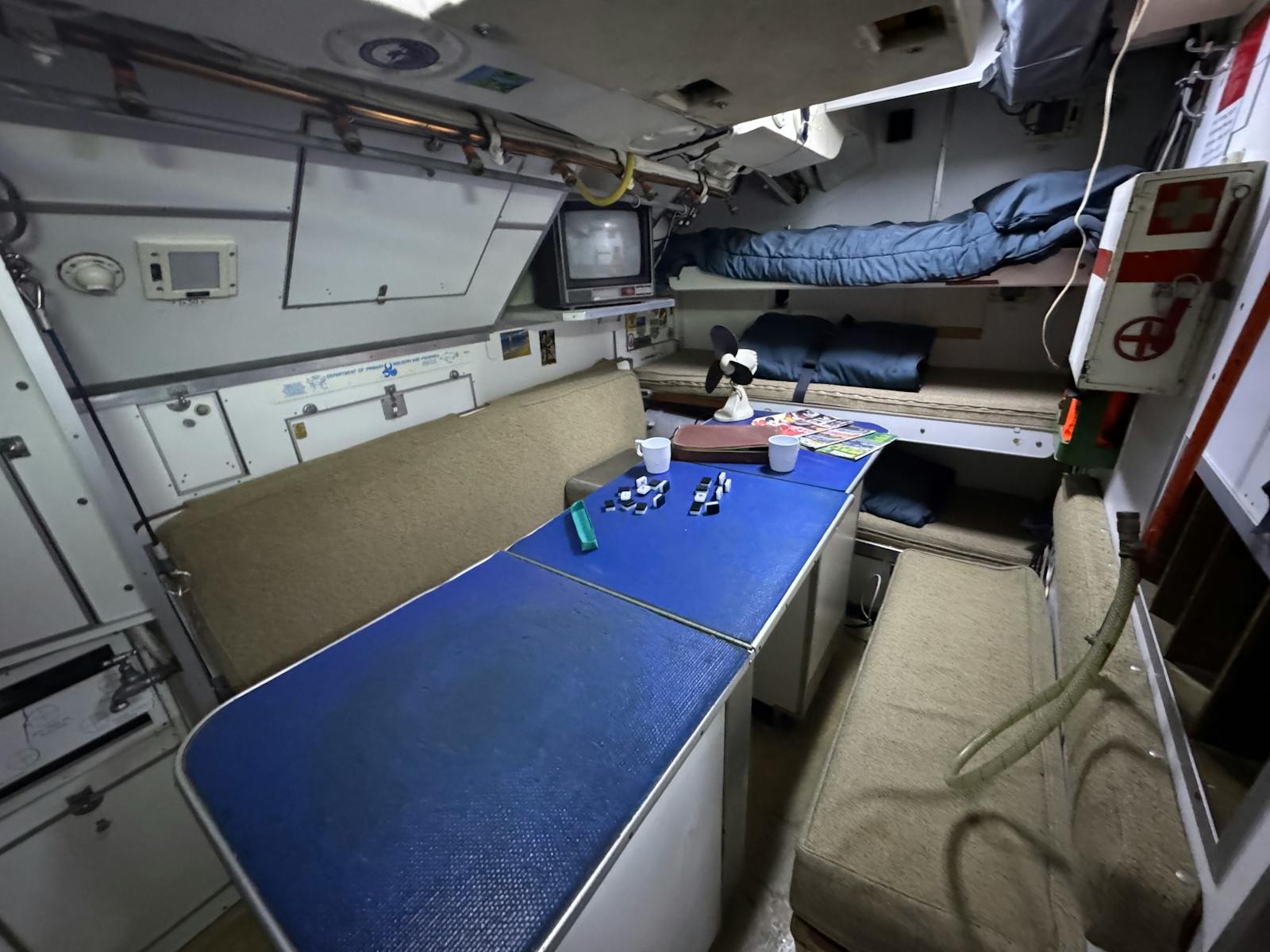
The lunar module was designed to support two astronauts for a limited time on the lunar surface. It now had to support three astronauts for the multi-day journey back to Earth. Mission Control did the math in real time and concluded that to make it home, the crew needed to drastically cut Aquarius’s power draw.
That meant turning off almost everything. Heaters. Most lights. The radar. And the Abort Guidance System and primary guidance computer, except during burns. The computer in the lunar module, the Apollo Guidance Computer built at MIT’s Instrumentation Laboratory, drew power continuously when running. Running it for the entire trip home would have consumed amp-hours they could not afford to spare while protecting the command module’s reentry sequence.
So they shut it down. And without the computer, the inertial measurement unit that kept track of the spacecraft’s orientation drifted. By the time of the second course correction burn, the platform had no useful alignment at all. The cloud of debris from the explosion, lit up by the Sun, made it impossible to sight on stars in the usual way.
Two burns, and the one that mattered most
The first big burn was called PC+2, meaning two hours after pericynthion, the closest point to the Moon. Aquarius’s descent engine, the same engine that was supposed to lower a lander to the lunar surface, fired for about four and a half minutes on the night of April 14 to speed the spacecraft up and shorten the trip home. For that burn, the crew used the Sun, sighted through the Alignment Optical Telescope, to get a usable platform alignment. The procedure worked. Apollo 13 was committed to a splashdown in the Pacific Ocean on April 17.
The second burn was the one that has passed into legend. About a day later, on April 15, the trajectory was drifting again, partly because a water vent on Aquarius was acting like a tiny rocket. The spacecraft needed another nudge, but the inertial platform had been powered down to save batteries, and there was no time and no power to align it again. The correction would have to be done by hand.
For that fourteen-second burn, Lovell and Haise needed to know the spacecraft was pointed in the right direction. Without the platform, they had to use the universe itself as a reference. The procedure, developed on the ground and read up to the crew, came from a technique Lovell had quietly experimented with on Apollo 8. Keep the Earth centered in the lunar module’s overhead docking window. Hold the cusps of the Earth’s terminator, the sharp line of day and night across the home planet, on the crosshairs of the Crewman Optical Alignment Sight on the forward window. Lovell would handle yaw with the hand controller. Haise would handle pitch. Swigert, back in the dark and freezing cabin, would call out time on his Omega Speedmaster wristwatch.
Fourteen seconds. Then shut down. Then drift again.
The Omega Speedmaster, and why a wristwatch
The mission timers in the command module had been powered down with everything else. The lunar module had its own clocks, but cross-checking against an independent reference was essential when the burn duration mattered to a fraction of a second. Each Apollo astronaut had been issued a manually wound Omega Speedmaster Professional chronograph, certified by NASA for spaceflight use after rigorous testing. The watch did not need power. It did not need warmth. It needed a thumb on the pusher.
Swigert’s Speedmaster timed the fourteen-second burn. The watch became, briefly, one of the most important navigation instruments in the history of spaceflight. Later that year, NASA presented Omega with the Silver Snoopy Award in recognition of the role the Speedmaster played in the mission.
The arithmetic of survival
The decision tree behind every switch thrown that week was about budgets. Power budgets. Water budgets. Carbon dioxide budgets. The crew rationed water to a few ounces per day to keep enough coolant flowing through Aquarius’s electronics. Cabin temperature dropped near freezing. Haise developed a serious urinary tract infection from dehydration that required treatment after splashdown.
And the deepest constraint, the one driving the computer shutdown, was the command module’s reentry power. Mission controller John Aaron, working through the night in Houston, wrote a power-up sequence for Odyssey that brought systems online in an order no one had ever flown before, with the absolute minimum draw at each step. That margin was the difference between reentering with parachutes that worked and reentering as a meteor.
Lovell, who commanded the mission, understood arithmetic under pressure. He had already flown on Gemini 7, Gemini 12 and Apollo 8 by the time he climbed into Apollo 13, more flight time in space than any other astronaut alive at that moment.
The reticle on the window
There is one more detail in the procedure that has passed into legend, partly because the 1995 Ron Howard film dramatized it, but the underlying technique was real. To hold the Earth steady in the overhead window during the burn, the crew needed a fixed reference point on the glass itself. The Apollo lunar module windows already had grid markings etched into them for docking maneuvers, and the forward window had the Crewman Optical Alignment Sight, a small reflex sight with a reticle. For the unplanned procedure of holding the Earth’s terminator on the crosshairs during an unguided burn, the crew used what was already there. A reticle. A reference for the eye. Keep the cusps of the terminator on the line. Don’t let them drift.
The burn worked. The trajectory tightened. The reentry corridor, a narrow band that the spacecraft had to thread to avoid skipping off the atmosphere or burning up, came into alignment. On April 17, 1970, six days after launch, Odyssey’s parachutes opened over the South Pacific and the capsule splashed down about four miles from the recovery ship USS Iwo Jima.
The afterlife of the technique
The improvised navigation procedure of Apollo 13 entered the formal training syllabus for every subsequent Apollo crew. Apollo 14, 15, 16, and 17 all rehearsed unaided burns and attitude holds in simulators, on the off chance that another oxygen tank ever decided to come apart 200,000 miles from home. None did. But the doctrine, that human eyes and a wristwatch could substitute for a guidance computer in a true emergency, became part of the institutional memory NASA carried forward.
Some of that memory is being tested again. Artemis II, which sent four astronauts on a lunar flyby in April 2026, carried a guidance and navigation suite many orders of magnitude more capable than what Lovell and Haise had, and the Orion capsule splashed down off the coast of San Diego on April 10. The Apollo 13 contingency procedures still sit in the Artemis flight rule documents, dusted off and rewritten for the new hardware.
The Apollo Guidance Computer that Aquarius’s crew turned off had a clock speed of about 2 MHz and 64 kilobytes of fixed memory, less than a thousandth of what runs in a current smartphone. The wristwatch they used in its place had a movement designed in 1957. Between those two instruments and a line of shadow on the Earth, three men found their way home.
Lovell, who died in Lake Forest, Illinois on August 7, 2025 at the age of 97, spoke about that moment for the rest of his life with a flatness that often surprised interviewers. The terminator burn was not the most frightening part of the flight, he tended to say. The reentry was. Because by then, sitting in the cold command module with its newly powered-up displays glowing faintly, there was nothing left to do but wait and see whether the heat shield, soaked in condensation for four days, would hold.
The reticle on the lunar module window is, of course, gone. Aquarius was jettisoned before reentry and burned up over the South Pacific, its nuclear-fueled lunar surface experiment package sinking into the Tonga Trench, where it remains today, roughly six kilometers below the surface, still slightly warm.
