
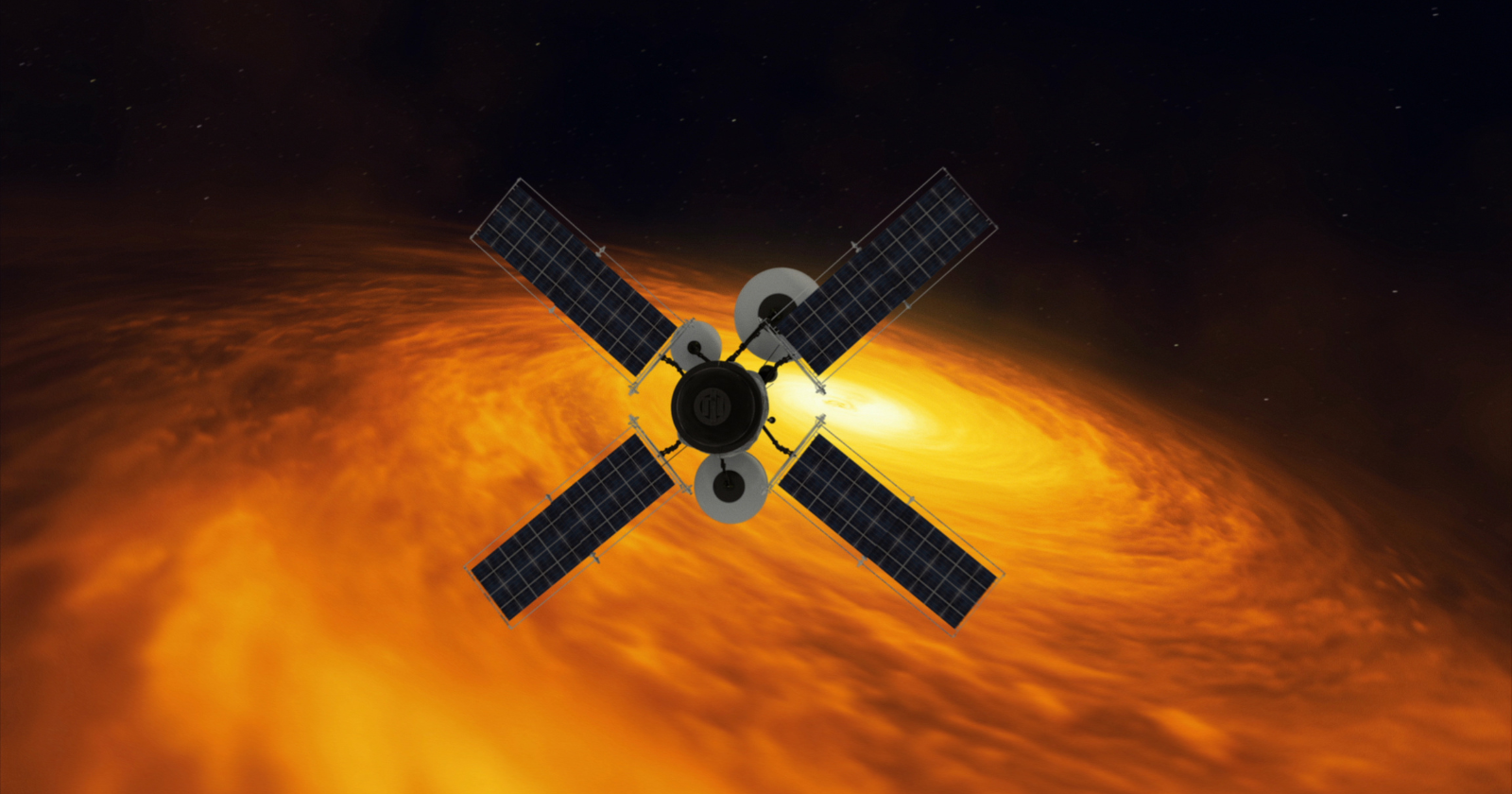
At 01:16 Paris time on 25 June 1998, during routine maintenance operations, controllers lost contact with the Solar and Heliospheric Observatory, known as SOHO, a joint spacecraft of the European Space Agency and NASA built to study the Sun. For weeks the craft was silent and its condition unknown. It was located again when a radar signal from the Arecibo radio telescope in Puerto Rico was bounced off it, confirming it was still there, intact and slowly spinning. Recovering it then took months. As NASA put it in a later retrospective, the spacecraft was effectively lost for four months because of a software error.
How a working spacecraft went silent
SOHO was not failing before this happened. It had finished its planned two-year mission successfully and was in good health. The loss of contact came during a series of manoeuvres and gyroscope calibrations being carried out on the spacecraft.
The investigation afterward, conducted by a joint ESA and NASA board, traced the loss to operational errors rather than a hardware failure that struck out of nowhere. In the board’s own description, quoted by ESA, a calamitous sequence of operational errors and decisions ended with both of the gyroscopes vital to SOHO’s safety switched off. The craft lost its lock on the Sun, which meant its solar panels were no longer pointed to generate power, and it began to spin. With the panels turned away from the Sun, the batteries drained, and the spacecraft went cold and quiet. It was not destroyed. It was unpowered, uncontrolled, and not answering.
This is the part of the story most worth holding onto. SOHO was not crippled by the hazards of space. It was a healthy spacecraft put into an unsafe state from the ground.
What Arecibo actually did
For weeks after the loss, controllers sent commands and listened for a reply, and heard nothing. A silent spacecraft tells you almost nothing about itself. It could be tumbling, broken, or holding together. It could be catching enough sunlight to have a chance, or none.
The breakthrough was a change of method. Rather than wait for SOHO to speak, the recovery team used radar to look for it. The large radio telescope at the Arecibo Observatory in Puerto Rico transmitted a powerful radar signal toward the spacecraft’s predicted position, and the reflection was received by NASA’s Deep Space Network antenna at Goldstone in California. The radar return confirmed SOHO was where the orbital calculations said it should be, and showed how it was tumbling.
It is worth being precise about the division of labour, because the popular version tends to credit Arecibo with the whole rescue. Arecibo transmitted the radar signal, Goldstone received the echo, and together they located and characterised the silent craft. The longer work of actually reviving it was done over the following months mainly through the Deep Space Network, the array of large antennas used to command distant spacecraft.
The slow thaw
Knowing where SOHO was did not bring it back. The recovery was a patient, marginal process. With the spacecraft located, the team detected faint signals from it at Goldstone on 3 August 1998, and the first telemetry confirmed what they had feared: the service module was very cold, and the hydrazine fuel for the thrusters was partially frozen.
From there the recovery depended on the Sun. As SOHO moved along its orbit, the angle of sunlight on its panels slowly improved, and the power available to the spacecraft gradually rose. The ESA recovery updates from the time record the sequence plainly: thawing the frozen hydrazine took nearly three weeks, the fuel pipes then had to be warmed, and the batteries were not fully recharged until 8 September. Each step was constrained by the small and growing power budget the improving sun angle allowed.
On 16 September 1998, SOHO obeyed commands that turned its face fully back toward the Sun, the manoeuvre the team called attitude recovery. ESA’s announcement of that success was openly cautious. The spacecraft was pointing the right way again, but as the team noted at the time, the scientific instruments had been through temperatures approaching plus or minus 100 degrees Celsius, and whether they had survived was a separate question, to be checked step by step.
Most of them had. One lasting exception was the C1 coronagraph, part of the LASCO instrument, which did not return to normal science operations after the interruption. Most of the spacecraft came back. One part of LASCO did not.
What the episode left behind
SOHO was not quite out of danger even then. In November and December 1998 its stabilising gyroscopes failed, forcing another scramble, which ended in early 1999 with new software that let the spacecraft hold its pointing without gyroscopes at all.
The mission’s later record is the strongest comment on how much was at stake during those months. SOHO did not merely survive to finish its two-year mission. It has continued operating for decades, becoming one of the most productive solar observatories ever flown and, as a by-product, the most prolific discoverer of comets in history, with thousands found in its images. The 1998 recovery also did its job as a lesson, feeding the joint board’s findings about ground procedures and command errors back into how operations teams write and check the sequences they send to spacecraft. A craft thought lost was brought back, and the more durable result was a clearer understanding of how a healthy one had been put at risk in the first place.
