
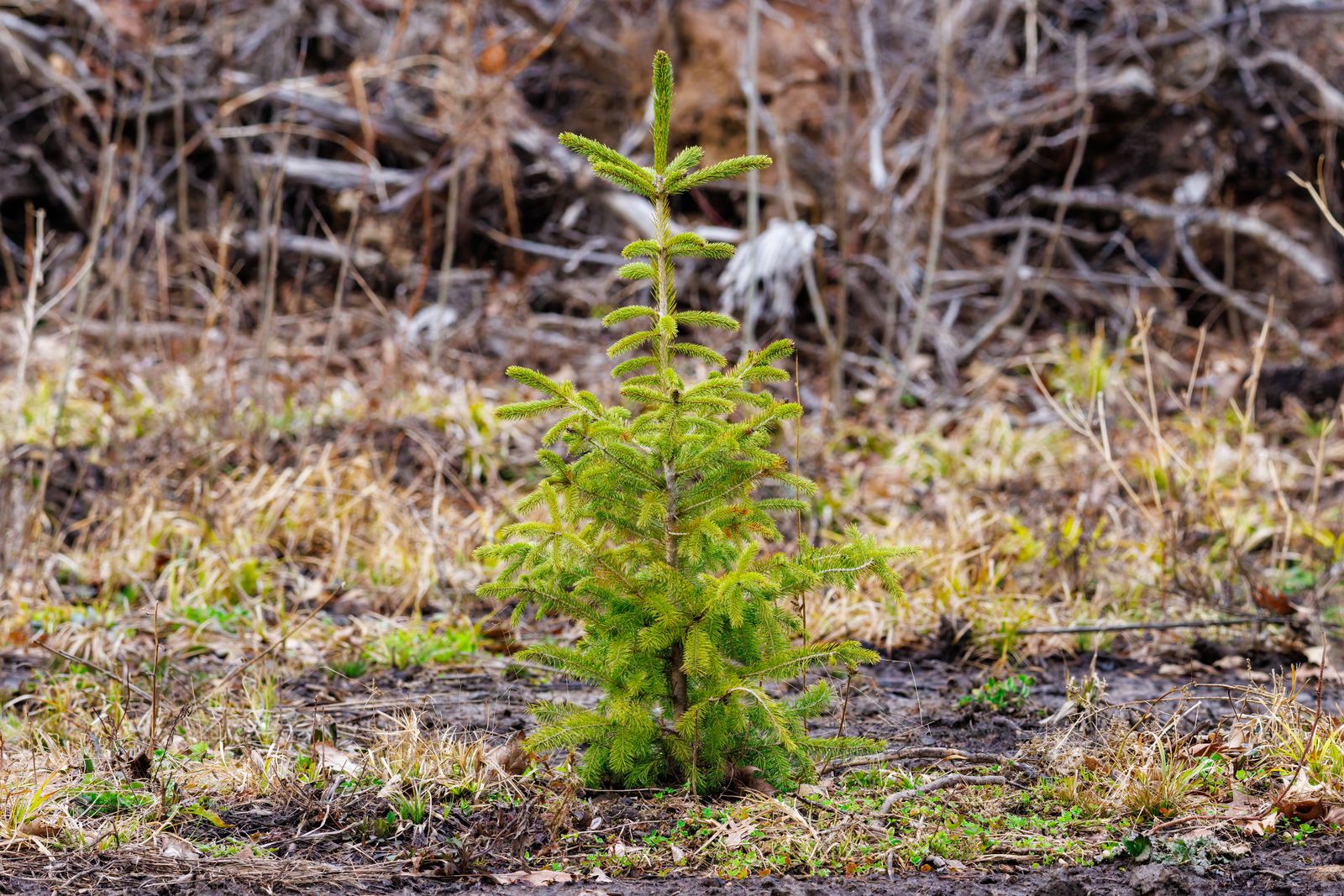
The story sounds like it should end with a twist. An astronaut carries tree seeds around the Moon, the seeds are planted back on Earth, and the trees that grow are, in every way anyone has measured, just trees.
That is more or less what happened. In 1971, Apollo 14 command module pilot Stuart Roosa took a canister of seeds with him into lunar orbit. The seeds came home, the United States Forest Service coaxed many of them into seedlings, and those seedlings were planted around the country as “Moon Trees”. Decades on, by NASA’s own account, they look no different from trees grown from seeds that never left the ground.
The plainness of that result is the interesting part.
What Roosa actually carried
Roosa had been a Forest Service smokejumper before he became a test pilot and then an astronaut. According to NASA’s account of the project, that history is how the experiment came about. Ed Cliff, then Chief of the Forest Service, knew Roosa from his firefighting days and asked whether he would take seeds into space. Stan Krugman of the Forest Service was put in charge and chose what would fly.
Five species went into the kit: loblolly pine, sycamore, sweetgum, redwood and Douglas fir. The seeds were sorted, sealed in small plastic bags and packed into a metal canister that travelled in Roosa’s personal preference kit, the small pouch of personal items each astronaut is allowed to bring. A matching set of control seeds stayed on the ground for later comparison.
Estimates of how many seeds he carried vary, from several hundred to, by NASA’s reckoning, possibly 2,000 or more. While Alan Shepard and Edgar Mitchell were on the surface, the seeds orbited the Moon aboard the command module Kitty Hawk in February 1971.
The accident on the way home
The seeds nearly did not survive as an experiment at all. During decontamination after splashdown, the seed bags burst open. The seeds scattered through the chamber and were exposed to vacuum, and there was real doubt about whether any would still grow.
An early attempt to germinate some of them in Houston worked, but the seedlings did not last long in inadequate facilities. A year later the remaining seeds went to Forest Service stations at Gulfport, Mississippi, and Placerville, California, where many germinated and grew into healthy seedlings.
Most were given away in 1975 and 1976 to state forestry organisations and planted for the United States bicentennial. A loblolly pine went to the White House. Others were sent to Brazil and Switzerland and presented to the Emperor of Japan. NASA notes that no central list was ever kept, so the trees ended up scattered across something like 40 states with no systematic record of where they all went.
What the comparison can and cannot show
The headline finding, that the Moon Trees grew up indistinguishable from ordinary trees, is real but easy to over-read.
This was never a controlled biology experiment with a published result. NASA describes the absence of any difference in passing, as something to be expected rather than a measured outcome, and the agency’s own wording is a casual aside rather than a finding. The seeds also spent only a few days in space, sealed inside a container, and were then exposed to vacuum by accident on the ground, which muddies any clean comparison between flown and unflown seeds.
Read carefully, the Moon Trees do not tell us much about how spaceflight affects plants. What they show is narrower, and still worth stating: a short trip beyond Earth, under these particular conditions, left no obvious mark on how the seeds later grew. The project was always closer to a commemoration than an investigation, and it is more honest to treat it as one.
A second generation is already growing
The idea has had a sequel. On Artemis I, the uncrewed test flight that sent the Orion spacecraft around the Moon in late 2022, NASA flew roughly 1,200 seeds in partnership with the Forest Service.
This time the species were loblolly pine, American sycamore, sweetgum, Douglas fir and giant sequoia. The seeds launched on 16 November 2022, travelled well beyond the Moon and splashed down on 11 December. The Forest Service has been germinating them since, and from 2024 the resulting seedlings, a new set of Moon Trees, have been distributed to schools, museums, universities and other institutions across the United States.
Whether this generation is tracked and compared more carefully than the first, or simply planted and admired, is the thing to watch. On the evidence of 1971, the trees themselves are unlikely to surprise anyone.
