
Cosmic rays were first discovered in 1912 by the Austrian physicist Victor Hess, who conducted a series of balloon flights into the upper atmosphere and demonstrated that the level of ionizing radiation in the air increased with altitude rather than decreasing, as the prevailing terrestrial-radioactivity hypothesis would have predicted. The radiation, Hess concluded, was coming from somewhere outside the Earth. The wider scientific community, after considerable initial skepticism, eventually accepted the finding. The phenomenon was named “cosmic rays,” and the century that followed was, in some real way, the slow ongoing attempt to figure out what the rays actually were, where they came from, and how they had managed to acquire the extraordinary energies that the original measurements had been registering.
The progress across the intervening century has been considerable. The wider scientific community has, by every available measure, made enormous strides in characterizing the particle composition of cosmic rays, in identifying the various candidate astrophysical sources that might be producing them, and in developing the theoretical frameworks that describe how the rays propagate through interstellar space. What the wider community has not, on the available evidence, been able to do until very recently is identify the specific fingerprint that would distinguish between the competing theoretical frameworks. The fingerprint has been theoretically predicted for decades. The fingerprint has not, until recently, been directly observed.
A new study, published on April 29, 2026 in the journal Nature, has changed this. The DAMPE space telescope, operated by an international collaboration led by China’s Purple Mountain Observatory, has directly detected the predicted fingerprint across multiple species of cosmic ray nuclei simultaneously. The detection is, by every available measure of how cosmic ray physics has been progressing, a substantial moment for the field.
What DAMPE actually is
It is worth being precise about what DAMPE actually is, because the wider register has tended to absorb space-based instruments in vaguer terms than the underlying technical descriptions warrant.
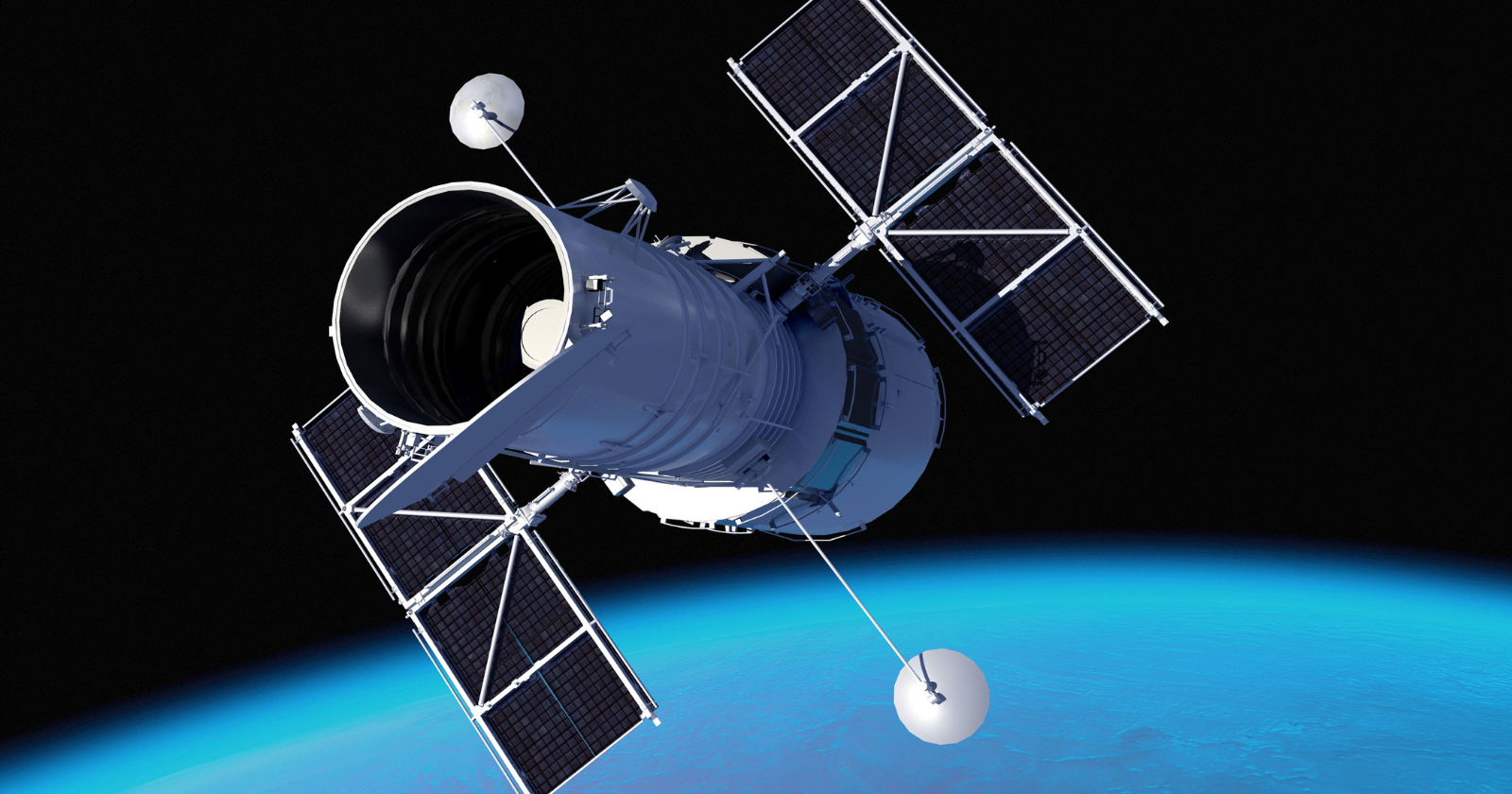
DAMPE stands for Dark Matter Particle Explorer. The satellite was launched in December 2015. The satellite has been operating continuously in low Earth orbit ever since, accumulating measurements of the various high-energy particles arriving from the wider cosmos. According to the published Nature paper, the satellite’s relatively large geometric factor and nuclear interaction depth make it particularly well-suited to detecting cosmic ray nuclei across the energy range from approximately 20 gigavolts to hundreds of teravolts. The combination is, by every available measure of space-based particle detection, well-calibrated to the specific question the DAMPE collaboration has been investigating.
The satellite is, in some real way, the latest in a long lineage of cosmic-ray detection instruments. The wider field has been operating, across decades, with various ground-based and space-based detectors that have each contributed pieces to the broader picture. The Alpha Magnetic Spectrometer on the International Space Station, the Calorimetric Electron Telescope, and various other instruments have all been producing measurements that the wider field has been working to integrate into a coherent framework. DAMPE’s particular contribution, on the available evidence, has been the precision and energy range of its measurements of the heavier cosmic ray nuclei, including carbon, oxygen, and iron.
What the spectral softening actually is
The feature DAMPE has detected, on close examination, requires a small amount of background explanation that the wider register has not, on the available evidence, been particularly calibrated to provide.
Cosmic rays arrive at Earth at a wide range of energies, from relatively low values to extraordinarily high ones. The distribution of arrivals across the energy spectrum is, by every available measurement, not flat. The distribution follows what physicists call a power law, in which the number of particles arriving at any given energy decreases as the energy increases. The distribution also contains, at various specific energies, features called spectral breaks, where the rate of decrease itself changes. A spectral softening is a particular kind of break in which the rate of decrease becomes sharper, meaning the number of particles drops off more rapidly above the break than below it.
The question worth attending to is whether the spectral breaks occur at the same energy for all cosmic ray species, or at different energies for different species. The answer matters because the two possibilities correspond to two distinct theoretical frameworks for how cosmic rays are accelerated and propagated through the galaxy. The framework that predicts identical breaks for all species is called rigidity-dependent, where rigidity is defined as momentum per unit charge. The framework that predicts different breaks for different species is called mass-dependent, calibrated to energy per nucleon rather than to rigidity.
The two frameworks have been competing for several decades. The wider scientific community has been unable to definitively distinguish between them, because the precision and energy range of the available measurements have not been sufficient to identify the relevant breaks in the heavier cosmic ray species. The DAMPE measurements have changed this.
What DAMPE actually found
The DAMPE collaboration, working with nine years of on-orbit data, has directly detected spectral softenings in the energy distributions of carbon, oxygen, and iron nuclei for the first time. According to the Chinese Academy of Sciences documentation, the softenings occur at a common rigidity of approximately 15 teravolts, which is consistent with the previously measured softenings in protons and helium. The consistency across all five species rules out the mass-dependent framework at a confidence level of greater than 99.999 percent.
The implication is considerable. The cosmic rays arriving at Earth are, on the available evidence, being accelerated and propagated by processes that depend on the rigidity of the particles rather than on their mass or energy per nucleon. The rigidity-dependent framework is, in some real way, the accurate framework. The mass-dependent framework is, on the available evidence, not.
This is the fingerprint that physicists have been waiting on since 1912. The waiting has not, on close examination, been waiting in any literal sense. The specific theoretical framework that the fingerprint confirms was first proposed in 1961 by the physicist Bruno Peters, in what has since been called the Peters cycle hypothesis. The Peters cycle predicted that the spectral breaks should occur at a common rigidity, calibrated to the charge-dependent energy limit of the underlying acceleration mechanism. The prediction has been one of the standing predictions of cosmic ray physics for sixty-five years. The prediction has now, on the DAMPE evidence, been directly verified.
What this implies about where cosmic rays actually come from
The implication of the finding extends beyond the confirmation of the rigidity-dependent framework. According to the EurekAlert documentation, the DAMPE findings, combined with large-scale anisotropy measurements that have been accumulated by other experiments, indicate the existence of a nearby cosmic-ray accelerator. The universal spectral softening at 15 teravolts marks, on the available analysis, the charge-dependent energy limit of this accelerator.
The feature worth attending to is that the wider scientific community has long suspected that a significant fraction of the cosmic rays arriving at Earth come from sources within the Milky Way, rather than from the broader cosmos beyond the galaxy. The various candidate sources within the galaxy have included supernova remnants, pulsar wind nebulae, and the various other extreme astrophysical environments that the wider field has been studying for decades. The DAMPE finding does not, by itself, identify which specific source is producing the cosmic rays that the rigidity break is calibrated to. The finding does, more specifically, establish that the source is, in some real way, singular in producing the rigidity break, and that the break is therefore a direct experimental signature of the source’s particular acceleration mechanism.
The next phase of the work, on the available trajectory of the DAMPE collaboration’s published statements, will involve using the rigidity break as a tool for narrowing down the identification of the actual source. The break is, in some real way, a fingerprint that any candidate source must match. The candidates that can produce the observed break will, on close examination, become considerably more strongly favored than the candidates that cannot. The wider field will, accordingly, be able to use the DAMPE finding to make progress on the source-identification question that has been outstanding for more than a century.
Why the finding actually matters
The significance of the finding, on close examination, extends beyond the specific question of cosmic ray origins. The finding has implications for a wider range of astrophysical and fundamental physics questions that the wider register has not adequately connected.
The first implication involves the wider question of how matter is accelerated to extreme energies in the universe. The acceleration mechanisms that produce cosmic rays are, by every available measure, the most extreme particle accelerators in the cosmos. The energies achieved are vastly greater than anything that can be produced by human-built accelerators on Earth. Understanding these mechanisms accordingly contributes to the wider question of what physical processes can occur in the universe under conditions that human laboratories cannot replicate.
The second implication involves the propagation of charged particles through interstellar magnetic fields. The feature that produces the rigidity-dependent framework is, on close examination, the fact that charged particles in magnetic fields experience forces calibrated to their rigidity rather than to their mass or energy. The confirmation of the rigidity-dependent framework accordingly confirms a particular understanding of how interstellar magnetic fields actually shape the propagation of cosmic rays. The understanding has implications for a wider range of astrophysical phenomena that depend on the same magnetic-field-driven dynamics.
The third implication, which the DAMPE collaboration has been particularly explicit about, is the relevance of the finding to the question of dark matter. The DAMPE satellite was originally calibrated in significant part to investigate whether dark matter might play a role in the production of cosmic rays. The current finding does not, by itself, resolve the dark matter question. The finding does, more specifically, establish the framework within which the dark matter question can be more precisely investigated. The wider implications for dark matter research are, on the available evidence, considerable, even if the specific implications have not yet been fully worked out.
Final words
The finding is, on close examination, considerably more substantial than the wider register has so far absorbed. The finding establishes, in some real way, that the wider scientific community now has a fingerprint that can be used to identify the specific source or sources responsible for the cosmic rays arriving at Earth. The identification will not, by itself, occur immediately. The identification will involve the patient work of comparing the DAMPE fingerprint against the various candidate sources that the wider field has been considering. The work is the next phase. The work will, on the available trajectory of how cosmic ray physics has been advancing, eventually produce the identification that has been outstanding since Victor Hess first registered the existence of cosmic rays in 1912.
The wider register would benefit, on the available evidence, from absorbing what this implies about how scientific progress actually occurs across long timescales. The 1912 discovery was the beginning. The 1961 Peters cycle hypothesis was the theoretical framework. The 2026 DAMPE finding is the direct experimental confirmation. The three events are, in some real way, connected across more than a century of patient ongoing work by thousands of scientists across multiple generations. The work is what most of the visible scientific progress the wider register has been admiring is, on close examination, the structural product of. The DAMPE finding is one more piece of that ongoing work, and the wider implications will, in some real way, be the subject of considerable further investigation across the coming decades.
