

The Parker Solar Probe is still the fastest object ever built by human hands, flying through the Sun’s outer atmosphere at roughly 430,000 miles per hour. At that speed, it would cross the continental United States, San Diego to Jacksonville, in about 20 seconds. The spacecraft survives because of a carbon-foam heat shield only 4.5 inches thick, designed to keep the spacecraft and its instruments in the shade while the Sun-facing side absorbs conditions no ordinary spacecraft could endure.
Those numbers sound like exaggeration. They are not. They describe the operating life of a real spacecraft, launched in August 2018 and now continuing observations from the tightest solar orbit ever flown.

The speed is almost incomprehensible
430,000 miles per hour works out to about 120 miles every second. Light takes a little over eight minutes to reach Earth from the Sun. Parker, moving at its record speed in a straight line, would take a little more than eight days to cover the same distance. It does not actually travel that way, because that speed only comes near perihelion, at the bottom of the Sun’s gravity well.
A bullet from a high-powered rifle moves at about 2,000 miles per hour. Parker is roughly 200 times faster than that. The International Space Station orbits Earth at about 17,500 miles per hour. Parker is moving about 25 times faster than the ISS when it makes its closest solar passes.
NASA says Parker completed its 27th close approach to the Sun on March 11, 2026, again matching its record distance of 3.8 million miles from the solar surface and its record speed of 430,000 miles per hour. That matters. Parker is no longer breaking a brand-new speed record on every pass; it is now repeatedly returning to a record-setting orbit that no previous spacecraft had ever survived.
What it means to fly through the corona
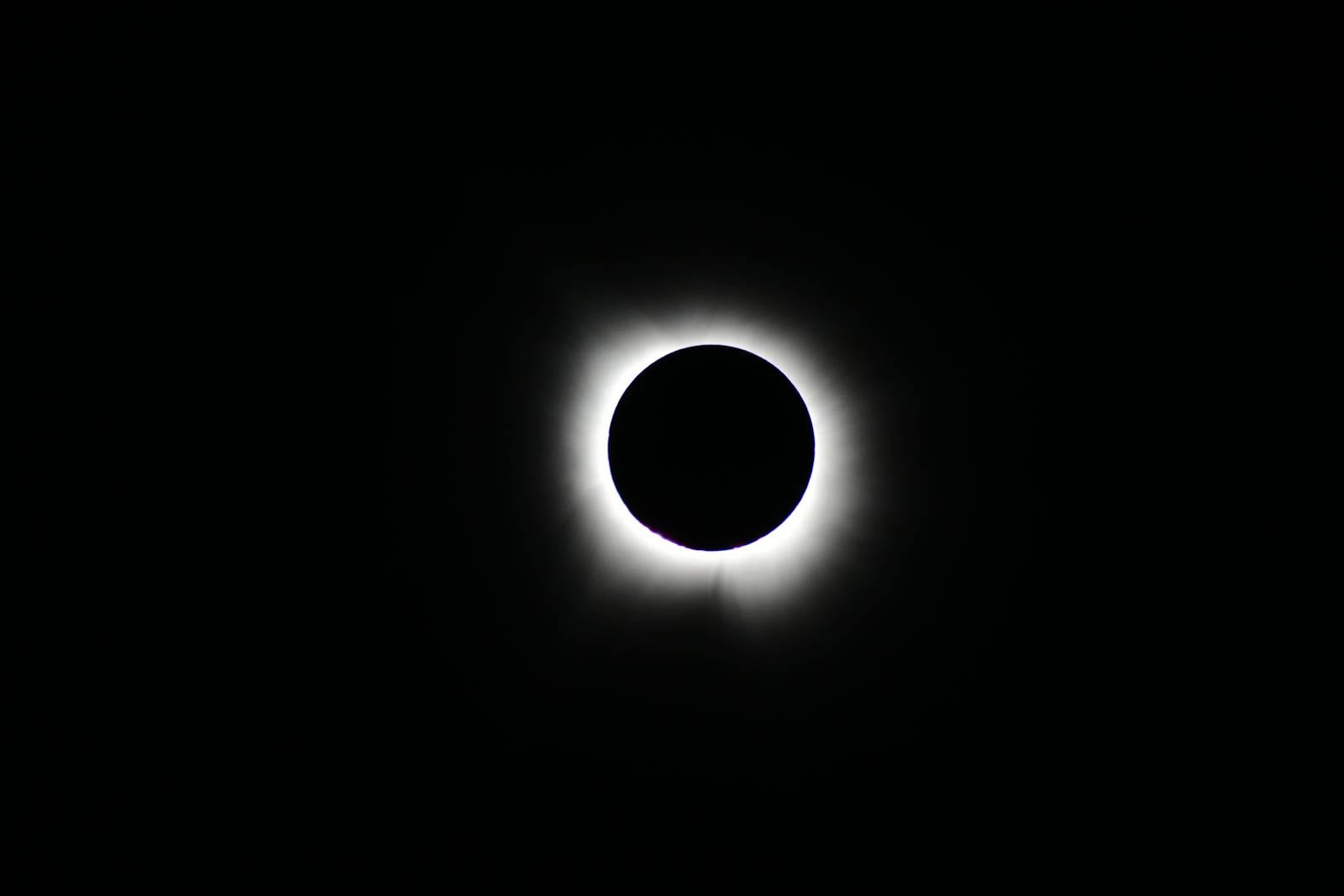
The Sun does not have a hard edge. The visible surface, the photosphere, is just the layer where the plasma becomes opaque enough for photons to stream into space. Above it sits the chromosphere. Above that is the corona, the ghostly halo of plasma that becomes visible during a total solar eclipse.
NASA describes the corona as the Sun’s outer atmosphere, with the solar wind flowing outward beyond it as coronal gas escapes into space. Parker is the first spacecraft to repeatedly sample that region up close.
On December 24, 2024, Parker passed just 3.8 million miles above the solar surface, closer than any human-made object had ever come to a star. It has since returned to that same record distance on later close approaches.
At these distances, the spacecraft cannot be treated like a normal satellite with constant hand-holding from Earth. During close approaches, it operates autonomously and checks back in after the encounter with a beacon tone, a simple signal confirming that its systems are still operating normally.
The heat shield is the entire trick
Parker’s Thermal Protection System, or TPS, is what makes the mission physically possible. The shield is 8 feet across and built from two carbon-carbon composite panels around a lightweight 4.5-inch carbon-foam core. NASA says the Sun-facing side is sprayed with a specially formulated white coating to reflect as much solar energy away from the spacecraft as possible.
Before launch, NASA described the shield as capable of facing temperatures near 2,500 degrees Fahrenheit at closest approach while keeping the spacecraft and instruments at about 85 degrees Fahrenheit. Later mission updates have described expected shield temperatures during specific recent passes closer to the 1,600 to 1,800 degree Fahrenheit range. The important point is not a single temperature number. It is the gradient: one side of the spacecraft faces brutal solar heating while the instruments stay hidden in the shield’s shadow.
The carbon foam conducts heat poorly because it is mostly empty space. The carbon-carbon face sheets help spread heat across the surface. The white coating reflects sunlight. The spacecraft body sits behind the shield, inside the umbra it casts.
That geometry is unforgiving. The shield must stay pointed at the Sun during the most intense parts of the orbit. If the spacecraft were to expose sensitive hardware outside the shield’s shadow, the mission would be in immediate danger.
Why “hot” does not mean what it sounds like
The corona reaches temperatures of roughly one to three million degrees Fahrenheit. The photosphere below it is much cooler, about 10,000 degrees Fahrenheit. That inversion, where the Sun’s atmosphere is far hotter than the surface beneath it, remains one of the central problems Parker was built to investigate.
But temperature is not the same thing as heat. Temperature describes the average energy of particles. Heat describes how much energy is actually transferred into an object.
The corona is extremely hot but extremely thin. Individual particles are energetic, but there are not many of them compared with the density of ordinary air or liquid. A spacecraft moving through the corona is not swimming through a dense, million-degree fluid. It is traveling through a near-vacuum containing sparse, energetic plasma while sunlight pours onto the heat shield.
That distinction is why the shield can work. Parker is not surviving by defeating a million-degree bath. It is surviving by reflecting sunlight, insulating against what is absorbed, and keeping the spacecraft tucked into a carefully controlled shadow.
The gravity assists that got it there
Parker did not launch directly into a close solar orbit. That would have required more energy than any practical launch profile could provide. Instead, the spacecraft used Venus.
Seven Venus gravity assists lowered Parker’s perihelion over the mission’s primary phase. Each pass changed the orbit, bleeding off enough orbital energy to let the Sun pull the spacecraft closer on the next loop. The final Venus flyby in November 2024 set up the record-setting close approaches at about 3.8 million miles from the solar surface.
The speed is partly the consequence of that geometry. Drop a spacecraft close enough to the Sun and gravity does the acceleration. The hardest engineering problem was not making Parker go fast. It was making sure the spacecraft could survive when it arrived.
What the data is actually showing
The science return from inside the corona is no longer theoretical. Parker has now sampled the solar atmosphere across quiet and active phases of the Sun’s 11-year cycle, giving researchers a moving view of how the corona and solar wind behave as the star changes.
Researchers using Parker data have helped build the first continuous, two-dimensional maps of the Sun’s Alfvén surface, the boundary where solar material stops being magnetically tied back to the Sun and becomes part of the outward solar wind. NASA reported that this boundary grows larger, rougher, and spikier as the Sun becomes more active.
Parker’s instruments have also tracked features in the solar wind, observed coronal mass ejections close to the Sun, and documented sharp magnetic switchbacks, moments when the magnetic field briefly bends back on itself. Those details matter because the solar wind is not a smooth breeze. It is a turbulent stream of charged particles that can carry solar storms across the solar system.
Coronal mass ejections that reach Earth in the wrong magnetic orientation can disrupt satellites, affect GPS, stress power grids, and increase radiation concerns for aviation and astronauts. Better measurements near the source mean better models of how these storms form and travel.
The mission is now beyond its original baseline
Parker has moved past its original seven-year baseline plan and continues to operate in its record-setting solar orbit. NASA’s March 2026 update said the spacecraft was still collecting measurements from inside the corona and would continue observations as the Sun moves into the declining phase of its activity cycle.
That is a rare position for a spacecraft: not merely still alive, but still doing the thing it was designed to do at the edge of its original mission envelope. Each close approach sends instruments back into a region no spacecraft could directly sample before Parker.
The probe’s achievement is not only speed. Speed is the easy headline. The deeper achievement is control: keeping a small spacecraft alive, pointed, powered, and scientifically useful while it repeatedly skims the atmosphere of a star.
What 4.5 inches of foam actually buys you
The heat shield weighs about 160 pounds. The entire spacecraft, fully fueled at launch, weighed roughly 1,500 pounds. That makes the shield only a fraction of the total spacecraft mass, but in practical terms it is the reason the rest of the spacecraft exists.
Make the shield too thin and the instruments cannot survive. Make it too heavy and the mission’s carefully designed orbit becomes harder to achieve. Deep-space engineering lives inside margins like that. Every gram of protection competes with every gram of instrument, fuel, structure, and power system.
Parker is a reminder that extreme spacecraft are rarely extreme in only one direction. It is not just fast. It is light enough to fly the required orbit, tough enough to survive solar heating, autonomous enough to operate when Earth cannot talk to it, and precise enough to keep its body hidden behind a disc of carbon foam.
The probe will keep doing this as long as it can
Parker is expected to remain in its close solar orbit and continue observations while NASA reviews the mission’s next steps for late 2026 and beyond. Its long-term survival depends on the condition of its instruments, propulsion, pointing systems, power systems, and heat shield.
Eventually, like every spacecraft, it will fail. What makes Parker different is where that failure will happen: not in a quiet graveyard orbit or in the cold beyond the planets, but deep inside the Sun’s outer atmosphere, on a path no human-made object had ever taken before.
Until then, somewhere inside Mercury’s orbit, a small spacecraft is moving at roughly 120 miles a second, one face turned toward the Sun, the rest kept in shadow by four and a half inches of carbon foam.
