
A joint European-Chinese satellite designed to image Earth’s magnetic shield in X-rays for the first time reached orbit early Tuesday, opening a new front in space weather science at a moment when solar activity remains elevated and geopolitical cooperation in space has grown thinner.
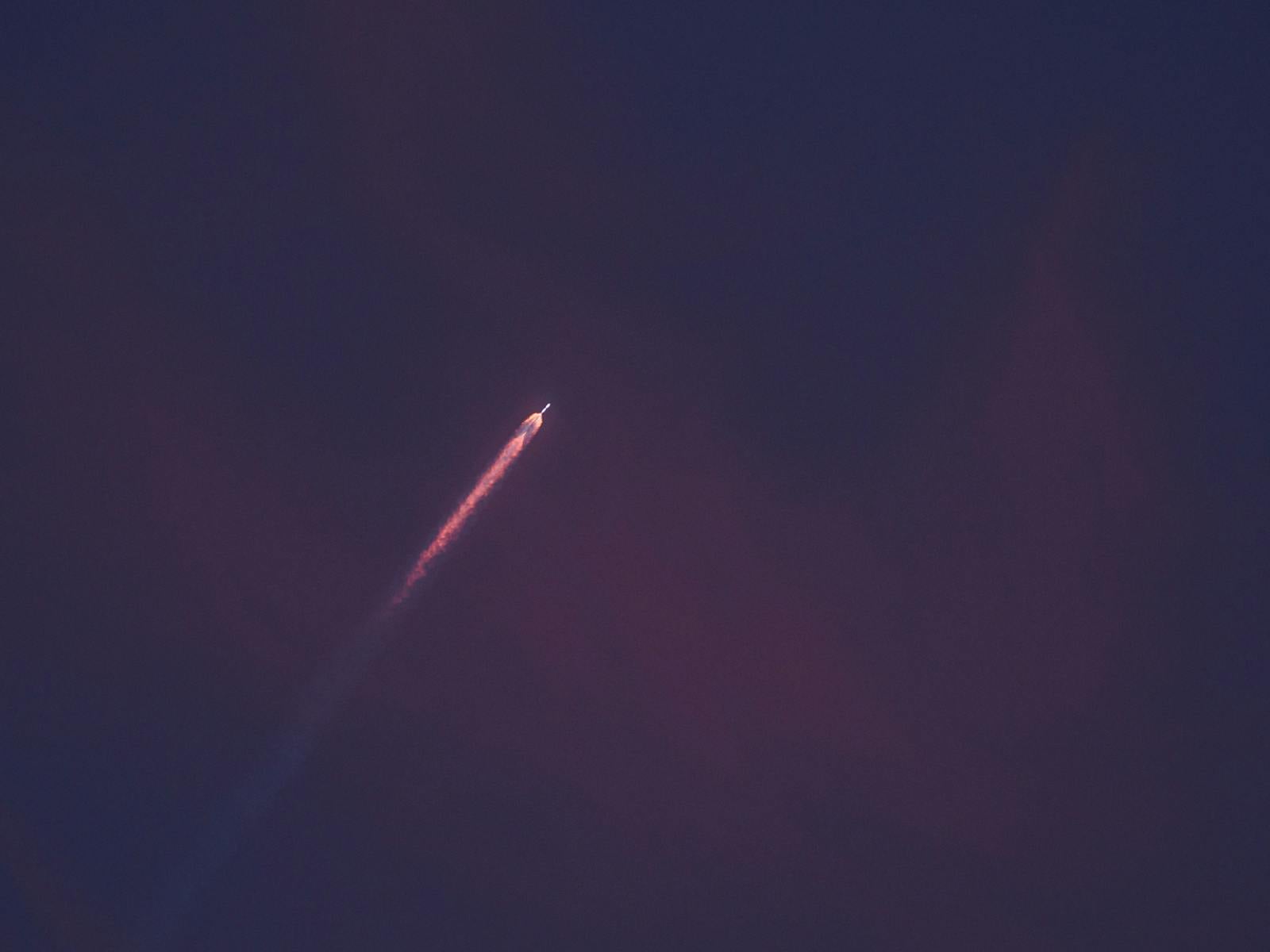
The Solar wind Magnetosphere Ionosphere Link Explorer, known as Smile, lifted off aboard a Vega-C rocket from Europe’s Spaceport in French Guiana at 05:52 CEST on 19 May 2026, according to the European Space Agency. The flight was designated VV29.
Smile is a rare equal partnership between ESA and the Chinese Academy of Sciences. Both agencies share scientific leadership, hardware contributions and operational responsibility, an arrangement with few precedents in current Western-Chinese space relations.
What Smile is built to see
The spacecraft carries four science instruments designed to track how the solar wind interacts with Earth’s magnetosphere, the magnetic bubble that deflects charged particles from the Sun. The Chinese Academy of Sciences built the satellite platform and three instruments: the Ultraviolet Imager, the Light Ion Analyser and the Magnetometer. ESA contributed the payload module and the Soft X-ray Imager, as reported by Space.com.
The X-ray imager is the scientifically novel piece. Smile will exploit solar wind charge exchange, a process in which charged particles from the Sun interact with neutral atoms near Earth and produce faint X-rays. Capturing those X-rays from a distant orbit should give researchers their first wide-angle view of where the solar wind meets the magnetosphere.
That is a different kind of measurement than previous missions have produced. Spacecraft such as NASA’s MMS fleet have sampled magnetospheric physics from inside the system. Smile is designed to show the structure from outside, turning a largely invisible boundary into something researchers can watch changing over time.
A long climb before science begins
Smile cannot start collecting science data immediately. Over the next 25 days, the spacecraft is expected to perform 11 engine burns to reach a highly elliptical orbit that swings out to roughly 121,000 kilometres above the North Pole and dips to about 5,000 kilometres above the South Pole. That geometry keeps the polar magnetosphere in view for long, uninterrupted stretches.
First X-ray and ultraviolet images are expected about three months after launch, with a planned mission lifetime of three years.
The rocket and the company behind it
Vega-C stands 35 metres tall and weighs 210 tonnes on the pad. It uses three solid-propellant stages topped by a liquid-propellant fourth stage. Tuesday’s flight was the seventh Vega-C mission overall and the first operated by the Italian firm Avio rather than France-based Arianespace.
That transition matters. Europe spent much of 2023 and 2024 without reliable sovereign access to space after Ariane 5 retired and Vega-C was grounded following a December 2022 failure. Getting Avio into the commercial seat with a successful science mission is one step toward putting that crisis behind the continent.
Why this matters now
Smile arrives during the declining phase of an unusually energetic solar cycle. NASA and NOAA announced in October 2024 that the Sun had reached the solar maximum period of Solar Cycle 25, and later analyses put the cycle’s smoothed peak around that month. Even after maximum, large flares can still erupt.
That risk is not theoretical. In November 2025, the British Geological Survey reported a major geomagnetic storm in the UK linked to X-class solar flares and a later X5-class flare, with local UK activity reaching G5 levels at magnetic observatories.
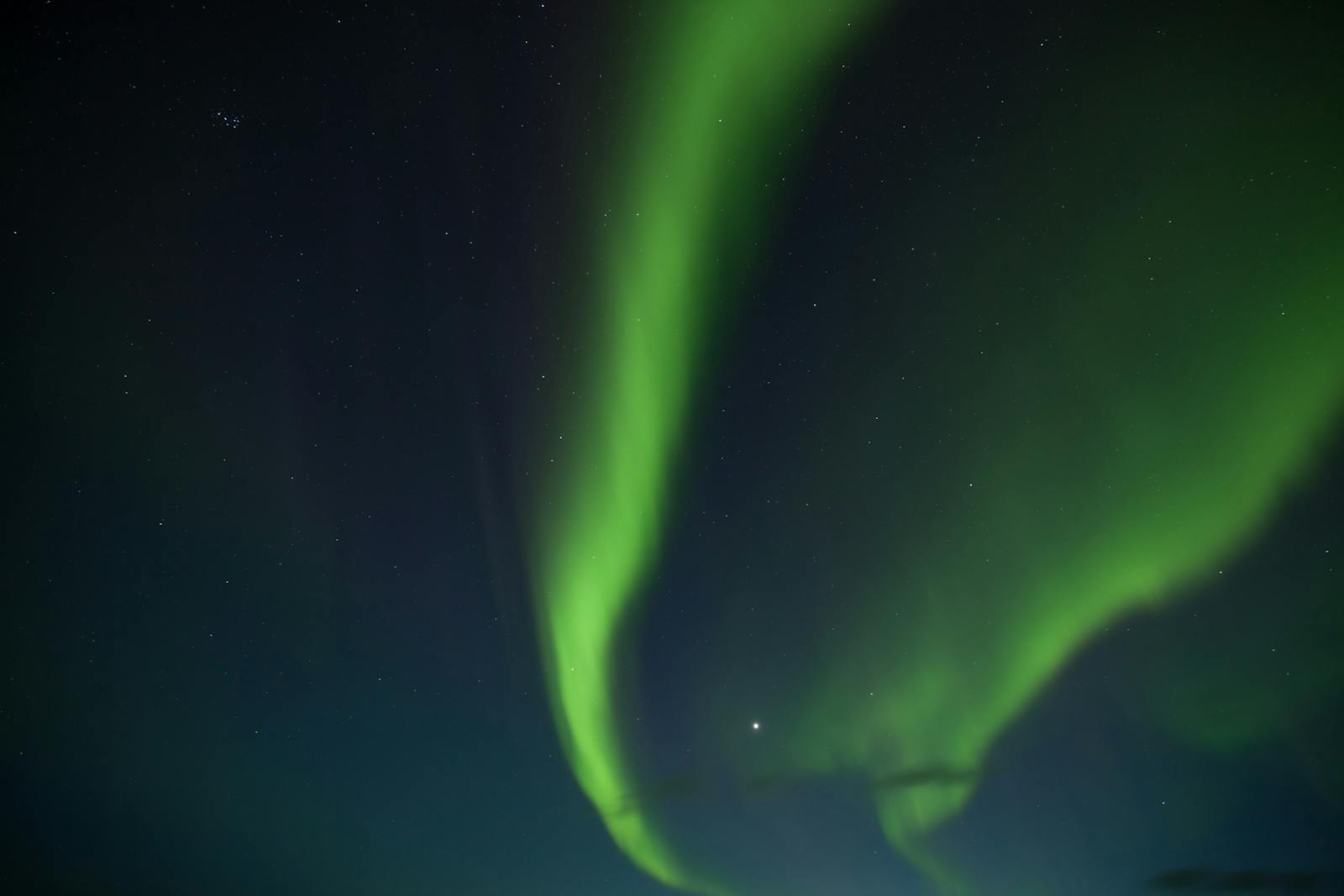
Those displays are beautiful. They are also warnings. The same coronal mass ejections that paint the sky can disrupt high-frequency radio, degrade GPS accuracy, induce currents in power grids and accelerate satellite drag in low Earth orbit. As more economic activity migrates into space, from broadband megaconstellations to lunar logistics and on-orbit servicing, the cost of being surprised by a geomagnetic storm rises.
Operational forecasters today rely heavily on point measurements from spacecraft and ground-based monitoring. Smile’s contribution is structural. By imaging the global response of the magnetosphere to incoming solar wind, it should let researchers test which physical models best match what the system does under stress.
The diplomatic subtext
The partnership itself is worth noticing. China and the United States are largely walled off from direct NASA-funded bilateral space cooperation by the Wolf Amendment, which requires specific authorization from Congress and the FBI for such work. ESA has charted a different course, maintaining selective scientific collaborations with the Chinese Academy of Sciences even as European policy on China has hardened in other domains.
Smile is the most visible product of that line. The mission was approved in 2015, survived years of design reviews on two continents, and integrated Chinese-built hardware with European-built hardware on a European rocket. Whether such arrangements remain politically viable through the 2030s is an open question, but the satellite now in orbit is evidence that they remain possible.
For more on Smile’s launch, orbit and scientific goals, see ESA’s mission page.
What success would look like
If Smile performs to specification, the science community should receive something it has never had: a global X-ray and ultraviolet view of how the dayside magnetosphere flexes, compresses and reconnects under solar wind pressure. Models that have competed for decades on the basis of indirect data will finally face a new kind of observational test.
That alone justifies the mission. The harder payoff is operational. Better physics feeds better forecasts. Better forecasts let grid operators, airlines and satellite fleet managers act on hours of warning rather than minutes.
The Sun is not done with this cycle. A single well-aimed coronal mass ejection during the descending phase can still rival storms seen near maximum. Smile is now in position to watch the next one arrive and to record, for the first time in X-rays, what happens when it hits.
