

Europe and China’s joint Smile spacecraft reached orbit early Tuesday, opening a three-year campaign to capture the first global X-ray images of the invisible magnetic shield that has deflected solar wind from Earth for nearly four billion years.
The Solar wind Magnetosphere Ionosphere Link Explorer lifted off atop a Vega-C rocket from Kourou, French Guiana, at 05:52 CEST on 19 May 2026. The European Space Agency confirmed that its New Norcia ground station in Australia received first signal at 06:48 CEST, with solar panel deployment following a minute later.
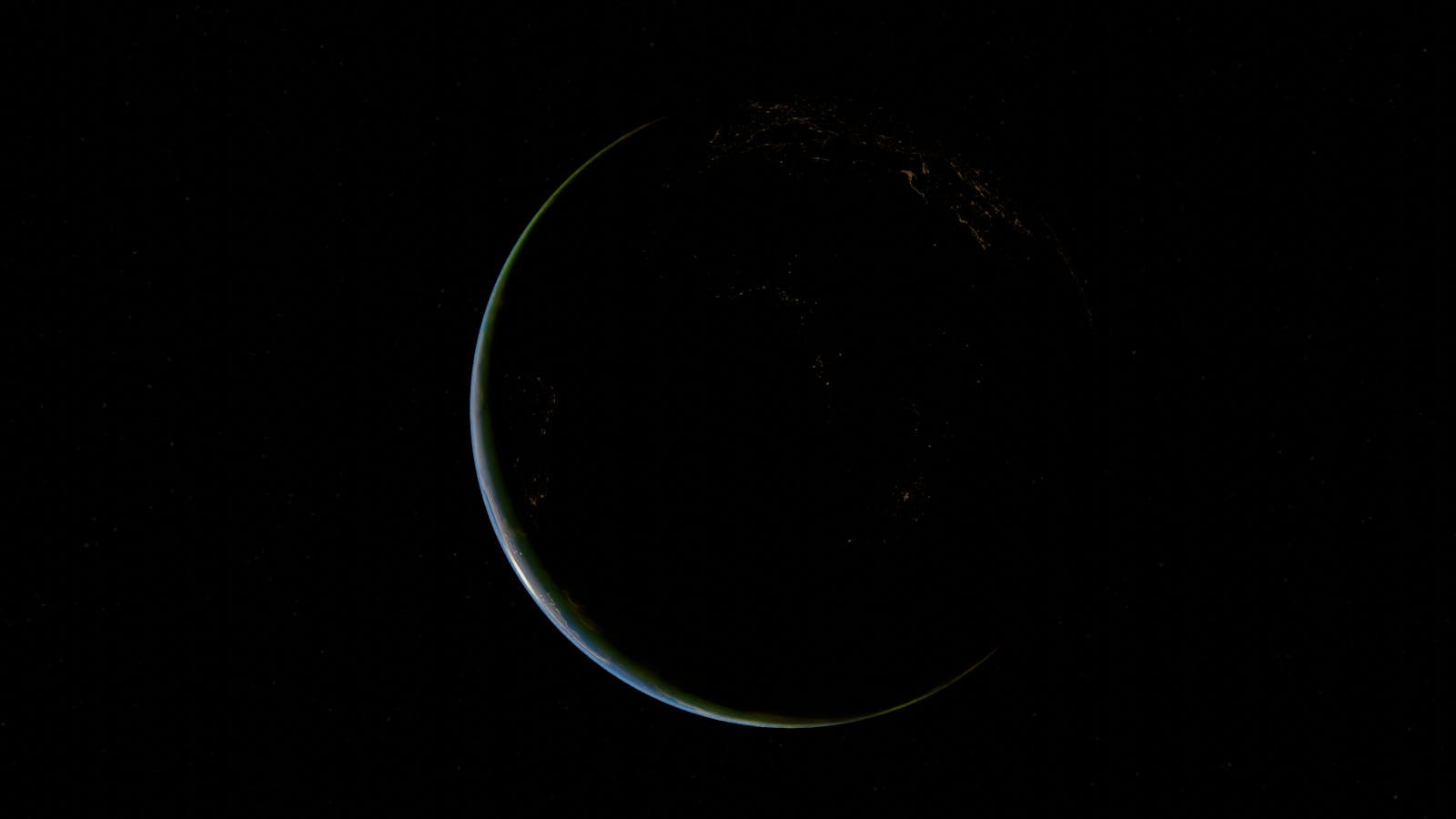
The mission carries weight beyond its science return. Smile is the first spacecraft that ESA and the Chinese Academy of Sciences have jointly selected, designed, built, launched and will operate together — a level of integration well beyond their earlier Double Star collaboration.
What Smile is built to see
Earth’s magnetosphere has been studied for decades through localized, in-situ measurements taken by spacecraft passing through it. What has never existed is a picture of the whole structure at once.
Smile changes that. Its Soft X-ray Imager, built by the UK’s University of Leicester, uses lobster-eye optics and large CCDs flown in space, cooled to minus 120 degrees Celsius. The instrument is designed to capture soft X-rays produced when highly charged solar wind ions collide with neutral atoms at the edge of Earth’s magnetic field — a phenomenon known as solar wind charge exchange emission.
Paired with it is an Ultraviolet Imager that can track auroras around the North Pole continuously for up to 45 hours. According to SpaceNews, it will be the first mission to observe the full ring of auroras in ultraviolet light since 2008. Two in-situ instruments — a light ion analyzer and a magnetometer — round out the payload.
The orbit is the key. Smile will burn roughly 90 percent of its 1,500 kilograms of propellant over the next month, climbing to an apogee of 121,000 kilometers above the North Pole before sweeping down to just 5,000 kilometers above the South Pole. From that vantage point, the spacecraft can stare at the Sun-facing edge of the magnetosphere for about 40 hours of each two-day orbit.
A shield that occasionally fails
The scientific case is straightforward and uncomfortable. The magnetic field that wraps around the planet does most of its work invisibly, deflecting charged particles before they reach the atmosphere. When it falters, the consequences are not subtle.
The 1989 geomagnetic storm collapsed Quebec’s power grid in 90 seconds. The 1859 Carrington Event, the most intense solar storm in recorded history, set telegraph offices on fire and produced auroras visible in the Caribbean. A Carrington-class event today would threaten satellites, navigation systems, astronauts and continental electricity grids.
At a pre-launch briefing, Smile’s European co-principal investigator Colin Forsyth outlined the mission’s goals, including understanding how Earth’s magnetic field protects us and identifying when that protection fails.
Smile is not a real-time space weather warning system. Its value is structural — building the physics that future operational forecasters will rely on.
The collaboration, and what it cost
ESA’s financial contribution to Smile is €130 million, drawn from contributions across 14 European countries with the UK and Spain providing the largest shares. More than 40 companies and institutes participated through 25-plus procurement contracts. ESA puts the average European resident’s contribution at roughly 28 cents.
The division of labor matters. CAS is responsible for the spacecraft platform, mission operations and three of the four science instruments. ESA provided the payload module — with Airbus as prime contractor — one instrument, the Vega-C launch, and integration and testing. Data will flow to the German Aerospace Center’s O’Higgins station in Antarctica and to China’s Sanya ground station.
ESA Director General Josef Aschbacher highlighted the significance of the mission, noting that ESA and China have a record of cooperation stretching back 25 years to data-sharing arrangements in the 1990s.
Cooperation against the political grain
Smile arrives at an awkward political moment. As Space Daily has reported, the launch year coincides with Brussels closing most of its €93.5 billion Horizon Europe programme to Chinese institutions. ESA has shelved plans to send European astronauts to the Tiangong space station. China’s deepening partnership with Russia has largely closed the door on joint lunar work.
Against that backdrop, the fact that Smile flew at all is the political story. ESA science director Carole Mundell said at the pre-launch press conference that the collaboration showed science can unite teams across political divides.
There are no concrete follow-on missions planned. Smile may turn out to be the high-water mark of ESA-CAS cooperation rather than the start of a new phase.
A long road to the pad
The mission was selected competitively in 2015 from 13 joint ESA-CAS proposals. It was originally targeted for a 2021 launch. Export-control reviews in 2020 forced component changes. The pandemic added more delay. A subsystem problem on the Vega-C VV29 launcher pushed the date from April 9 to May 19.
One casualty of the slip: Smile missed the once-per-11-year solar maximum it was originally meant to coincide with, though solar activity remains elevated enough to meet the mission’s science objectives.
Space.com reported that the launch was the seventh flight of the Vega-C rocket and the first operated by Italian manufacturer Avio rather than France-based Arianespace — a structural shift in how Europe runs its small-launcher business.
What happens next
Smile will spend roughly 25 days conducting 11 engine burns to reach its working orbit. After that come instrument checkouts, boom deployments and camera cover openings. ESA expects routine science data collection to begin in July, with the first X-ray and ultraviolet images of the magnetosphere arriving about three months after launch.
The planned mission lifetime is three years. Hundreds of scientists across Europe and China will work the data for far longer than that.
If Smile delivers what it promises, textbook diagrams of the magnetosphere — the comet-shaped bubble usually drawn in cartoon form — will be replaced by photographs. That is a small revolution in a field that has spent six decades inferring a structure no one had ever seen whole.
