
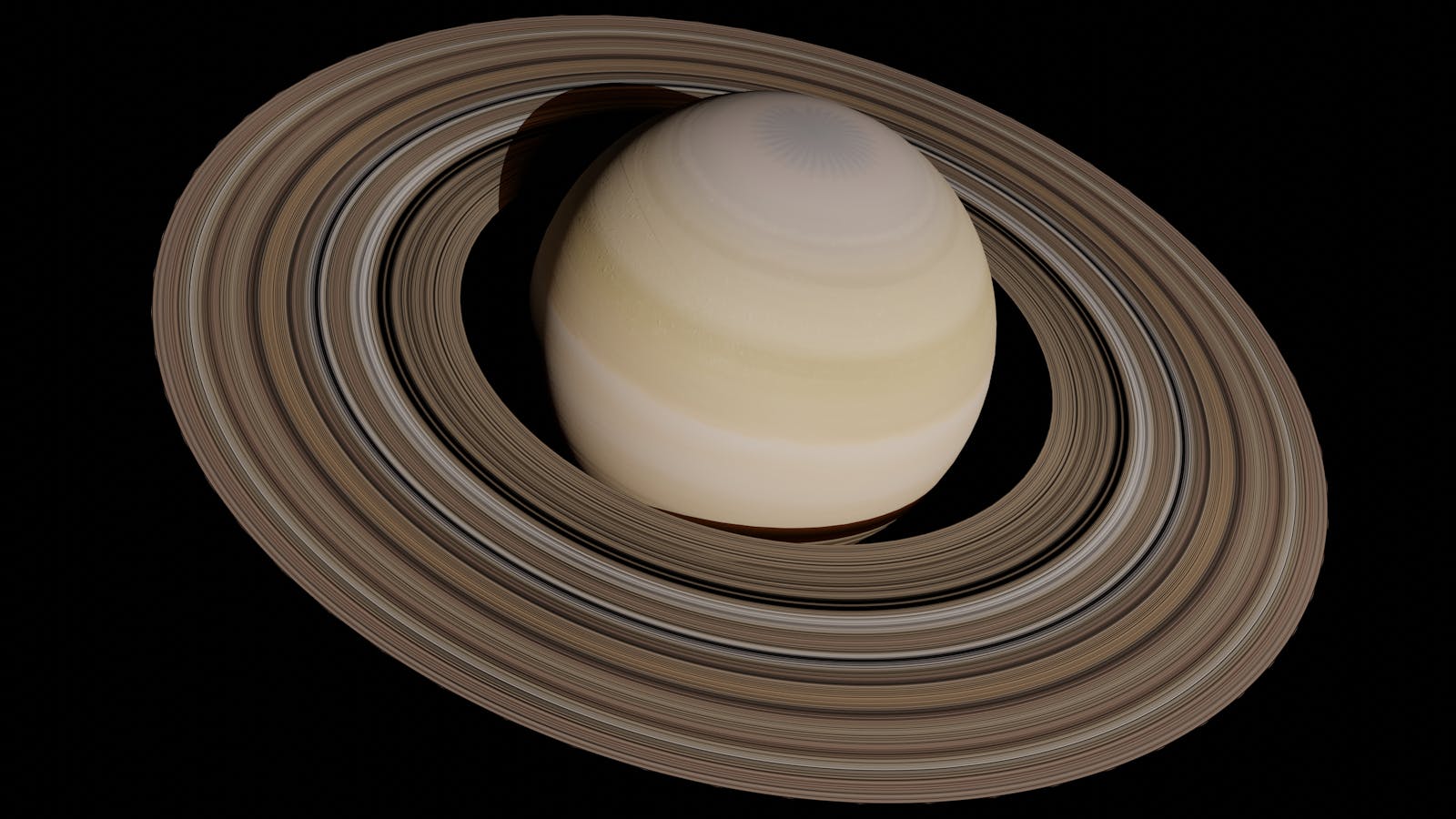
On September 15, 2017, a spacecraft burned up in the cloud tops of Saturn, ending a 20-year mission with a controlled suicide that engineers had planned years in advance. The Cassini orbiter was destroyed on purpose. Its fuel tank was nearly empty, and mission planners at NASA’s Jet Propulsion Laboratory refused to risk the possibility that a drifting, dead spacecraft might one day crash into Enceladus, a tiny moon whose subsurface ocean Cassini itself had discovered. The final act of the mission, called the Grand Finale, sent the orbiter on 22 looping dives through a 1,500-mile gap between Saturn’s atmosphere and the inner edge of its rings, a corridor no spacecraft had ever crossed.
The decision to end the mission this way is one of the cleanest examples in spaceflight of an institution choosing to destroy its own instrument rather than risk what that instrument had taught it to value.
Why the spacecraft had to die
Cassini launched in 1997 and took seven years to reach Saturn, arriving in 2004. By the time of its final months, it had traveled 4.9 billion miles since launch, and collected more than 453,000 images along with 635 gigabytes of scientific data over its lifespan. The U.S.-European mission had outlived almost every prediction made for it.
What it had not outlived was its fuel.
Cassini used hydrazine thrusters to point its antenna, adjust its orbit, and stabilize itself against the gentle tugs of Saturn’s gravity and its moons. Once those tanks ran dry, the spacecraft would become uncontrollable. A dead orbiter on a chaotic path around a planet with numerous known moons is a contamination risk, and two of those moons are the most promising places in the outer solar system to look for life.
The moon that changed the mission
Just months after Cassini arrived at Saturn, its cameras caught a fuzzy plume rising from the south pole of Enceladus, a bright moon only a few hundred miles across. The vapor turned out to be water ice. Later flybys, including direct passes through the plume itself, found evidence of a salty global ocean beneath the moon’s icy crust, with hydrothermal activity and organic molecules, the chemical building blocks of life.
NASA scientists have expressed astonishment at Enceladus’s characteristics, which defied expectations about what moons in the outer solar system should be like. The discoveries at Enceladus challenged many assumptions scientists had held about conditions necessary for potentially habitable environments in the solar system.
That discovery rewrote the priority list for the outer solar system. A moon with liquid water, heat, and organic chemistry is exactly the kind of place astrobiologists want to send sterile instruments to look for microbial life. It is not the kind of place anyone wants a dead, plutonium-powered orbiter to drift into uncontrolled. Cassini’s plume data continues to yield findings about hydrogen and organic molecules at Enceladus years after the spacecraft was destroyed.
Titan, Saturn’s largest moon, presented a similar problem. It has methane rivers, ethane lakes, hydrocarbon dunes, and evidence of a subsurface ocean of water and ammonia. The Huygens probe, which Cassini carried to Saturn and dropped onto Titan, remains the only spacecraft to have landed in the outer solar system.
The 1,500-mile gap
Engineers needed a way to end the mission that guaranteed the spacecraft would be destroyed and that wrung as much science out of the last drops of fuel as possible. The answer was the Grand Finale: 22 orbits threaded through the unexplored space between Saturn’s cloud tops and the inner edge of its D ring, a gap roughly 1,500 miles wide.
No spacecraft had ever flown there. Earlier Pioneer and Voyager missions had stayed well clear of the rings. Cassini’s planners did not know with certainty whether the corridor was clean or whether stray ring particles, even at millimeter scale, would punch holes in the spacecraft at orbital velocity.
The first dive, in 2017, was made with the high-gain antenna pointed forward as a shield. It came through intact. Each subsequent pass returned data on Saturn’s gravity field, its magnetic field, the mass of its rings, and the composition of its upper atmosphere, measurements that had been impossible to take from any other vantage point. The science that emerged from those ultra-close orbits included the finding that Saturn’s rings are far younger than the planet itself.
The last week
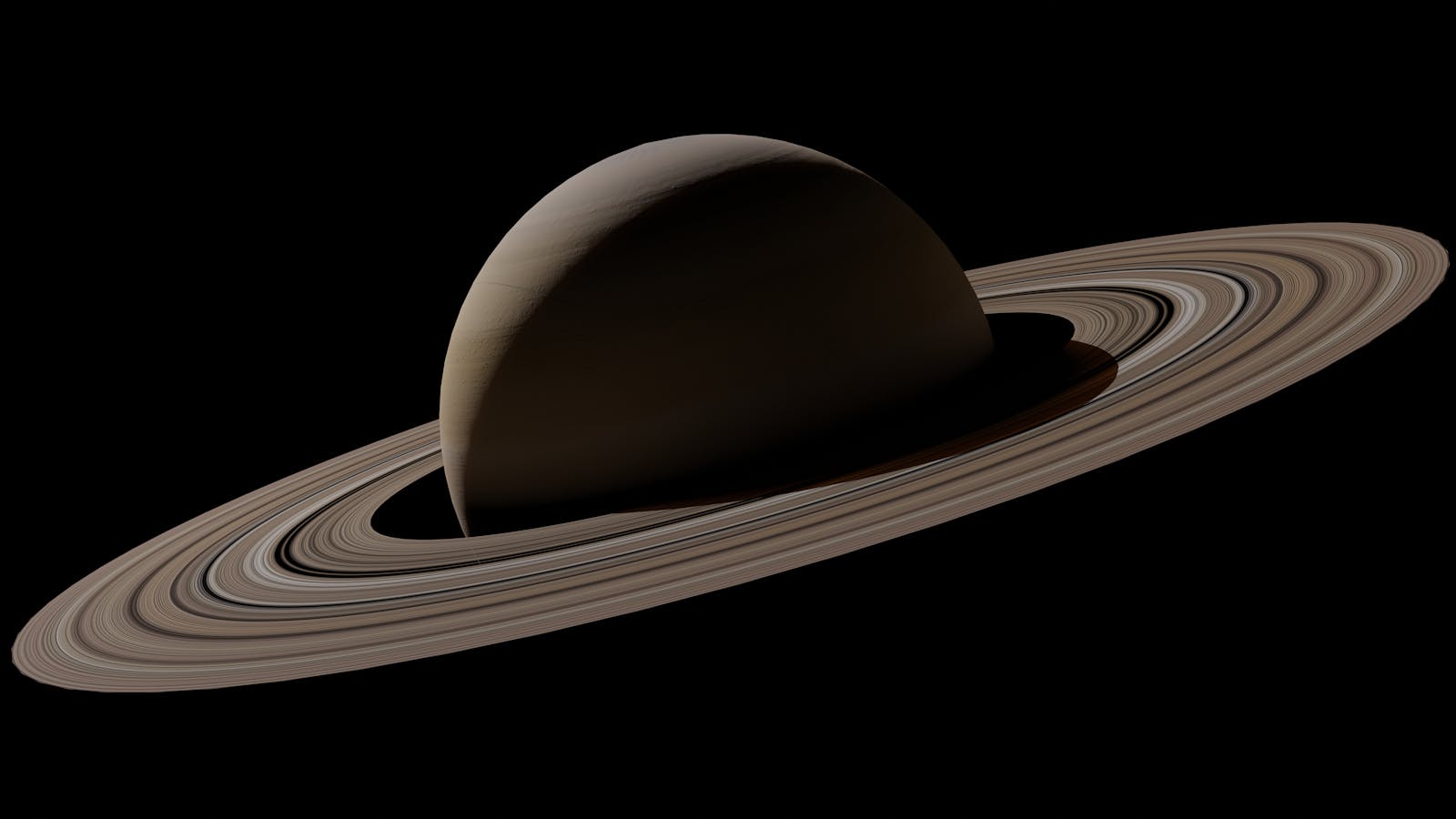
In September 2017, Cassini made its final flyby of Titan. NASA described Cassini’s final flyby of Titan as a farewell encounter that would alter the spacecraft’s trajectory for its final plunge. The moon’s gravity bent the spacecraft’s trajectory just enough to drop the next orbit’s low point inside Saturn’s atmosphere, locking in the impact. There was no longer enough fuel to escape, leaving the spacecraft firmly on course for its planned destruction.
The final descent began on Friday, September 15. Cassini entered Saturn’s atmosphere falling at high speed. Its thrusters fired at full power to keep the antenna pointed at Earth and the instruments sampling the atmosphere directly, a measurement no probe had ever taken at Saturn. Within roughly a minute the thrusters could no longer compensate for atmospheric drag, the antenna swung away from Earth, and the signal cut.
Earl Maize, the Cassini project manager at JPL, explained before the impact that the spacecraft’s final signal would continue traveling through space even after Cassini was destroyed. The signal would take more than an hour to travel from Saturn to Earth, meaning it would still be traveling through space long after the spacecraft had been destroyed. Saturn is roughly a billion miles from Earth, and radio waves take more than an hour to cover that distance. The spacecraft was already vapor by the time engineers in Pasadena saw the line go flat.
The plutonium problem
Cassini carried plutonium-238 in radioisotope thermoelectric generators, the heat-producing batteries that powered its instruments in a part of the solar system where sunlight is too weak for solar panels. The plutonium was encased in iridium, a metal with one of the highest melting points known, as a safeguard against accidents during the 1997 launch and the Earth flybys Cassini used for gravity assists.
Inside Saturn’s atmosphere, even iridium gives up. Project officials confirmed that once the casings melted, the plutonium would disperse into the gas giant’s deep, crushing atmosphere, where nothing escapes. The spacecraft did not just burn. It was absorbed.
The logic of the destruction echoes an earlier choice, the deliberate crash of the Galileo spacecraft into Jupiter in 2003. Galileo’s mission planners feared its plutonium-powered hull might one day contaminate Europa, the Jovian moon whose hidden ocean Galileo had helped reveal. The pattern is the same. The instrument that finds the precious thing is the instrument that has to be destroyed to protect it.
What the pictures did
Cassini was an explorer mission, which meant its controllers could nudge it onto new paths to chase whatever the cameras saw. Scientists described its tangled orbital track in colorful terms due to the mission’s flexibility in pursuing new discoveries. The pictures it produced changed the texture of how the public thinks about Saturn. A blue hexagonal storm at the north pole, many times the size of an Earth hurricane eye. Methane rain on Titan. Moonlets being born inside the rings. The New York Times published 100 of those images in the days before the impact.
Linda Spilker, Cassini project scientist at JPL, described the discovery of water vapor plumes erupting from Enceladus’s south pole as astonishing given the moon’s small size.
Carolyn Porco, who led Cassini’s imaging team, reflected that despite the sadness of the mission’s end, there was also satisfaction in the mission’s profound scientific success.
The mission also produced a strange institutional artifact. Cassini discovered new moons and swarms of moonlets still embedded in the rings, according to BBC Science Focus. Some of those moonlets are so small and so recently catalogued that they were essentially named by the spacecraft that found them.
The gap it left behind
When Cassini burned up, Earth lost its only active orbiter in the outer solar system. The Juno probe was still circling Jupiter, but it was slated for its own atmospheric plunge to protect Europa. The Europa Clipper and the European JUICE mission were still years from launch. Cassini’s destruction left a real, measurable absence in humanity’s reach.
The pattern appears in other long-duration instruments. The James Webb Space Telescope sits at L2 a million miles from Earth with no servicing plan and a finite supply of station-keeping propellant. Voyager 1 transmits from interstellar space on power so faint each status check now takes more than 23 hours to reach Earth. The machines that do the most patient science are also the ones whose ends are scheduled, predicted, accepted.
What the last minute looked like
In the final 60 seconds, Cassini was sampling the chemistry of Saturn’s upper atmosphere in real time, the first and so far only direct measurement of a gas giant’s atmosphere by a spacecraft that was simultaneously orbiting it. The mass spectrometer was inhaling Saturn. The data stream stayed clean until the thrusters lost the fight against the planet’s gravity and atmospheric drag, the antenna slipped off Earth, and the carrier signal vanished.
More than an hour later, the line at JPL went flat. The spacecraft had been gone for a long time by the time anyone on Earth knew it.
The plutonium dispersed somewhere below the cloud tops. The cameras that had photographed the geysers of Enceladus were vapor. The orbit the spacecraft had been bending into knots for 13 years collapsed into a single straight line down.
Enceladus, 238,000 miles away, kept spraying its ocean into space. The mission that found it had ended specifically so that no one would have to wonder, decades from now, whether the next spacecraft to taste those plumes was tasting something Earth had brought with it.
