
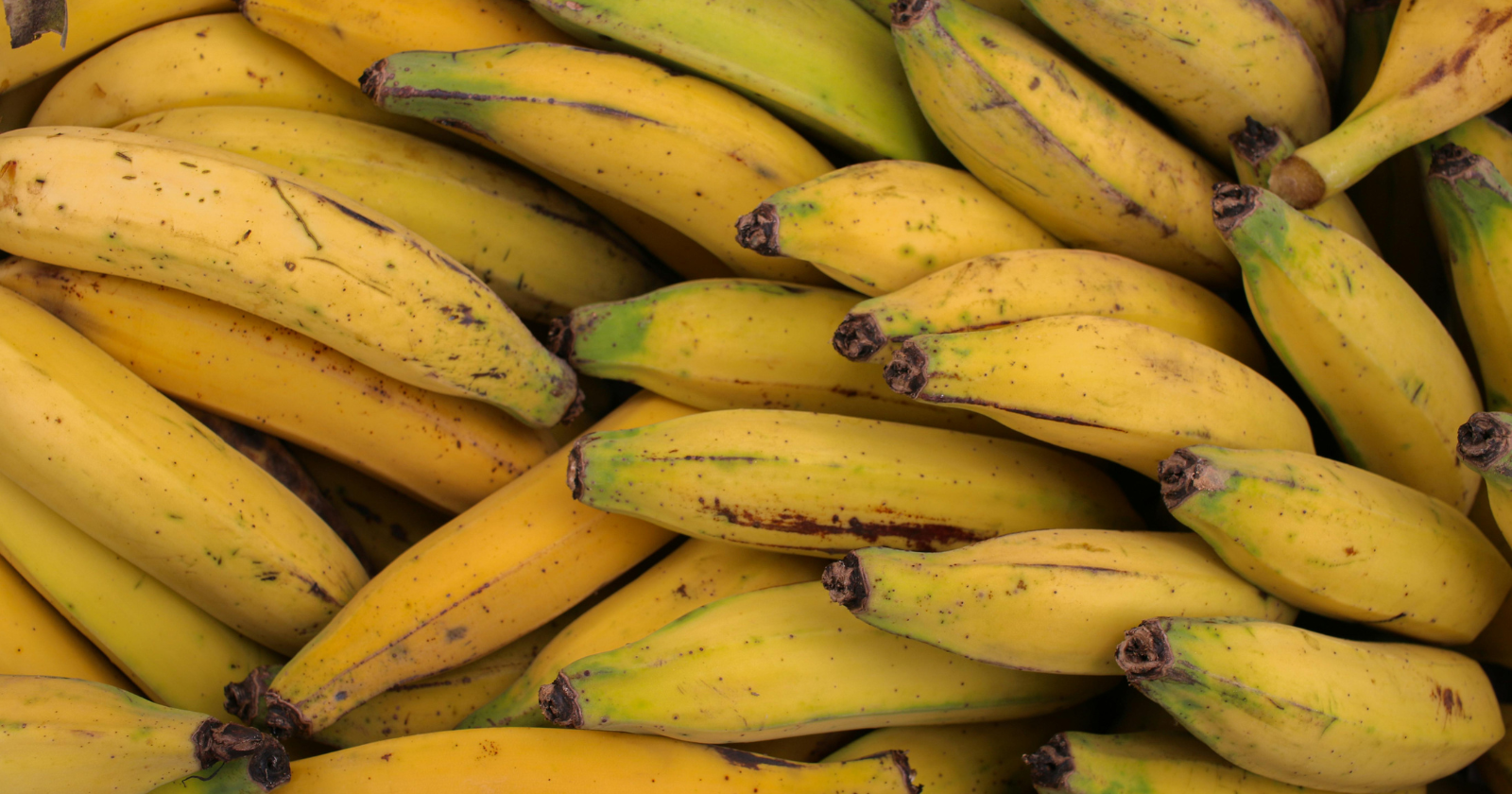
The standard version of this fact, the one that appears on t-shirts and in dinner-party trivia, is that humans share roughly 60 percent of our DNA with a banana. The fact is, on close examination, not quite stated correctly in the standard form. The accurate statement is more interesting, more specific, and considerably more revealing about what the underlying biology has actually been doing for the last billion and a half years.
The accurate version, derived from a 2013 analysis run by the National Human Genome Research Institute, is that approximately 60 percent of human genes have a recognizable counterpart in the banana genome. The original analysis identified roughly 7,000 such matches between human and banana genes. The proteins encoded by these matching genes are, on average, about 40 percent identical when compared at the amino acid level. The popular “60 percent DNA” framing collapses several of these distinctions, but the underlying biology, when one examines it properly, is more interesting than the simplified version manages to convey.
What the underlying biology is telling us, on close examination, is that nearly all the basic machinery for being a living thing was settled long before our lineage and the banana’s parted ways, and that almost everything that makes any of us recognizable as ourselves is contained in the small remaining percentage of the genome that we do not share.
What “shared” actually means here
It is worth being precise about what “sharing” a gene with a banana actually involves, because the cultural register has tended to absorb the fact in a way that misses its meaning.
The genes in question are not, in any deep sense, identical between humans and bananas. The genes are, more accurately, recognizable as having descended from the same ancestral gene that existed in the common ancestor of humans and bananas, approximately 1.5 billion years ago. The descended versions have, across the intervening billion and a half years, drifted in various ways. The drifting has produced, in the human version and the banana version, different sequences that nonetheless retain enough similarity that contemporary genetic analysis can identify them as evolutionary relatives.
What this means, on close examination, is that the genes in question are doing roughly the same job in both organisms. The jobs are the fundamental jobs of being a living cell. The making of energy from chemical sources. The repair of damaged DNA. The construction and maintenance of cellular membranes. The basic mechanisms by which cells reproduce themselves. The signaling systems by which cells coordinate with each other. The various small features of cellular life that, on the available evidence, were figured out by single-celled organisms approximately two billion years ago and have been preserved, more or less intact, across every lineage that has descended from those single-celled ancestors since.
The preservation is what the 60 percent figure is, in some real way, measuring. The figure is not, primarily, telling us that humans and bananas are similar. The figure is telling us, more specifically, that both humans and bananas are running on operating systems that were largely settled by their last common ancestor, and that the operating systems have been preserved, with modifications, in both lineages because the operating systems were, on the available evidence, too well-engineered to be worth replacing.
What the small remaining percentage is doing
The other side of the figure is, on close examination, the more interesting half. The roughly 40 percent of human genes that do not have a recognizable counterpart in the banana genome are, in some real way, where most of what makes a human a human, rather than a generic eukaryotic organism, is encoded.
These genes are the ones that emerged or substantially diverged after the lineages parted ways. They encode, among other things, the various features that distinguish vertebrate animals from plants. The nervous system. The immune system as it operates in animals. The musculoskeletal system. The specialized cellular machinery that allows animal bodies to move, sense, and process information in the particular ways that animal bodies do. None of these systems existed in the common ancestor of humans and bananas. All of them are evolutionary inventions that occurred, in various pieces, across the intervening billion and a half years on the animal side of the family tree.
And within the animal lineage, additional smaller percentages distinguish vertebrates from invertebrates, mammals from other vertebrates, primates from other mammals, and humans from other primates. The detailed comparison shows that humans share about 96 percent of their genes with chimpanzees, around 90 percent with mice, and progressively less with more distantly related organisms. The differences between humans and chimpanzees, which are by all available measures the source of most of what we consider distinctively human, are contained in a tiny fraction of the genome that diverged in the approximately six million years since the lineages separated.
The structure of the comparison, accordingly, is something like this. The vast majority of what makes any of us a living organism is shared with every other living organism on Earth. The substantial majority of what makes any of us a complex multicellular organism is shared with every other complex multicellular organism. The substantial majority of what makes any of us an animal is shared with every other animal. The smaller percentage that distinguishes humans from our nearest relatives is, in some real way, the part the cultural register thinks of as the “human” part. The smaller percentage is, in some real way, the part that has changed most recently and that, accordingly, has had the least time to be tested by evolutionary processes.
What this implies about life on Earth
The implication of all this, on close examination, is that the basic problem of how to be a living thing was solved very early in Earth’s history and has not, in any substantial sense, been re-solved since. The various branches of the tree of life have, more accurately, been variations on a theme that the early single-celled organisms established. The variations are, by every available measure, considerable. Humans and bananas are, in many obvious senses, very different organisms. The underlying machinery is, however, in significant respects, the same machinery.
This is the part the cultural register has not, on the available evidence, fully absorbed. The wider culture tends to treat the various forms of life as fundamentally distinct from each other, with the genetic similarity statistics serving as a kind of surprising trivia about the unexpected closeness of distant relatives. The accurate framing, on close examination, is closer to the reverse. The various forms of life are fundamentally the same, in their basic biochemistry and cellular operation, with the differences between them representing the specific evolutionary variations each lineage has produced on top of the shared substrate.
The banana is not, in this framing, a distant relative of the human that happens to share some genes. The banana and the human are, more accurately, two surviving lineages of an originally unified family of organisms, each of which has been running the same basic operating system for the last billion and a half years, each of which has added various lineage-specific modifications to that operating system in the intervening time. The modifications are what makes the banana a banana and the human a human. The operating system is what makes either of them alive.
Final words
The banana statistic is good party trivia. The party-trivia version, however, has been doing the figure a disservice by collapsing its meaning into a piece of mild biological surprise. The meaning, on close examination, is considerably more interesting.
The meaning is that the basic machinery of being a living thing on this planet was settled long before our lineage and the banana’s parted ways. The settling produced an operating system that has, on the available evidence, been preserved across every descendant lineage from that point forward, because the operating system was, in some real way, well-engineered enough that replacing it has not been worth the evolutionary cost. The differences between any two living things on Earth are, accordingly, mostly modifications to that shared operating system rather than fundamental redesigns of it.
This applies to the difference between a human and a banana. The application also extends to every other comparison one might want to draw. The difference between any two humans, at the genetic level, is contained in a vanishingly small percentage of the genome. The difference between humans and chimpanzees is contained in a small percentage. The differences scale up as the lineages diverge further, but they remain, in every case, modifications to the same underlying operating system rather than separate operating systems.
What is “human” about a human, in this framing, is the relatively recent set of modifications. The rest of what we are is, on the available evidence, the deep ancestral substrate that the banana also inherited, and that every other living thing on the planet is also running. The 40 percent of genes that do not match between us and the banana are where the human story is encoded. The 60 percent that do match are where the story of being alive on this planet is encoded. The wider culture has, in some real way, been finding the first set more interesting. The second set, on close examination, is the more remarkable.
