
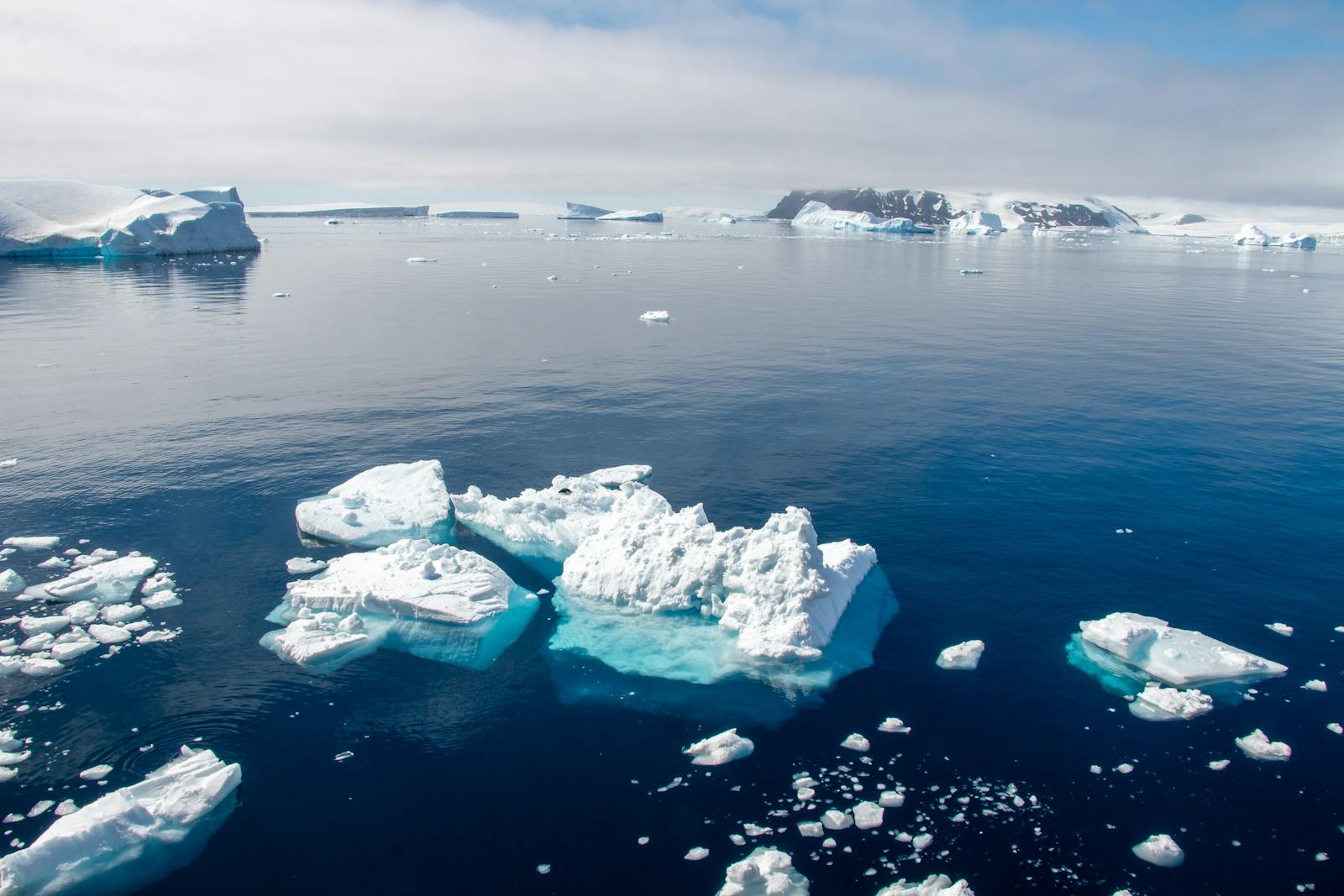
Earth appears to be collecting radioactive stardust from a stellar explosion that happened millions of years ago, and part of the evidence has been frozen in Antarctic ice for tens of thousands of years. Researchers reported that the solar system’s current passage through the Local Interstellar Cloud is likely depositing iron-60, a rare radioactive isotope produced in supernova explosions, onto our planet.
The finding addresses a question that has lingered since iron-60 first turned up in fresh Antarctic snow. Where was this material coming from, given that no nearby star has exploded recently?
The answer, researchers argue, is that the cloud itself is the carrier. It appears to have held debris from an ancient stellar death for a very long time, and the solar system is now moving through it.
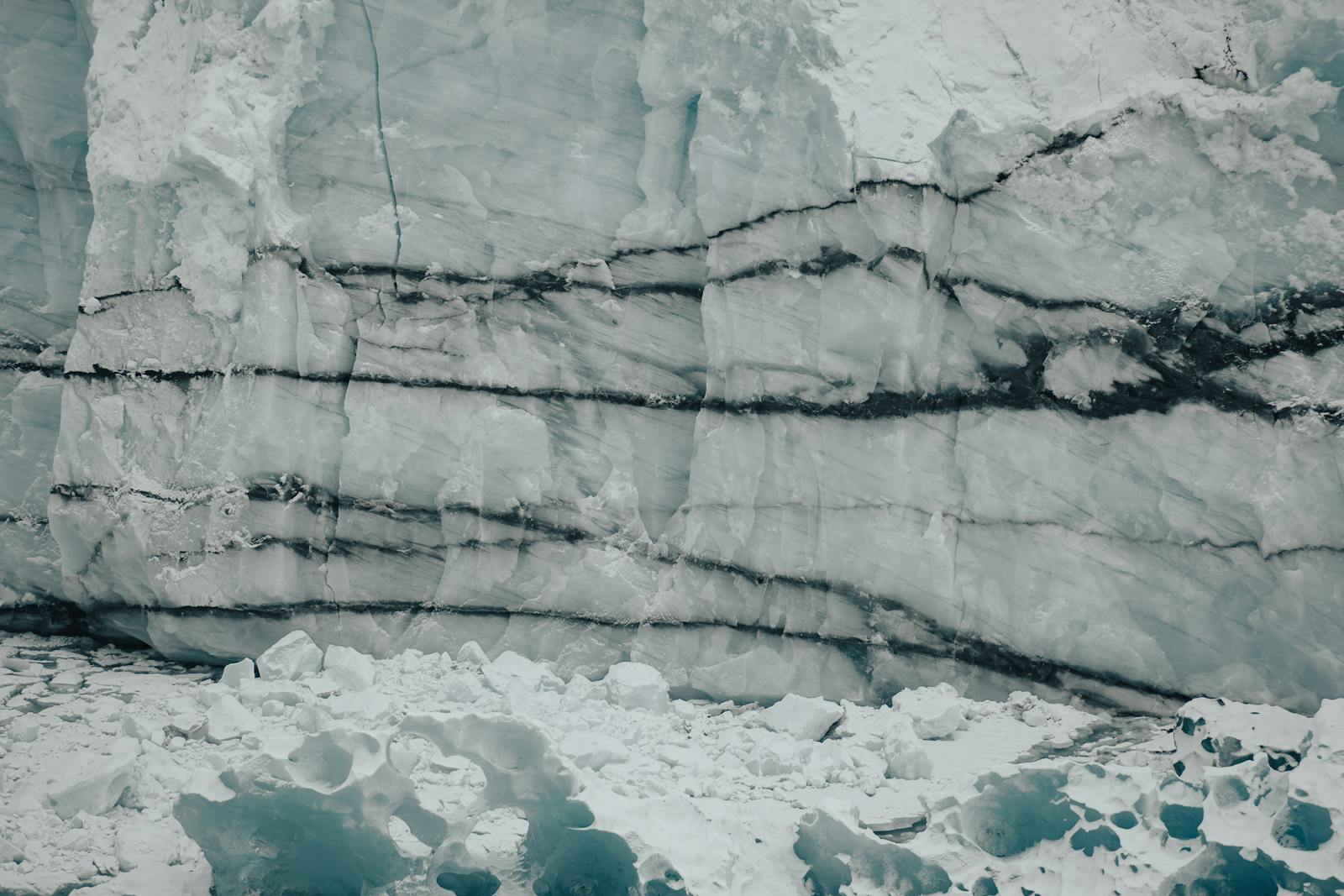
Reading an interstellar fingerprint in ice
The Local Interstellar Cloud is a thin parcel of gas and dust that the solar system entered several tens of thousands of years ago. It is expected to leave the cloud in a few thousand more. Right now, the solar system is near the cloud’s edge.
To test whether the cloud was the source of the iron-60 reaching Earth, researchers analyzed ice from roughly 40,000 to 80,000 years ago, around the suspected period when the solar system entered the cloud. The iron-60 content in those older layers was lower than in modern snow and more recent deep-sea sediment samples.
That gradient matters. If the iron-60 came only from the slow fade of a million-year-old supernova signal, the influx would not be expected to shift so clearly over a few tens of thousands of years. A signal that changes that fast points instead to structure within the cloud: denser pockets, thinner regions, and changing material as the solar system moves through it.
Researchers had hypothesized that the Local Interstellar Cloud contains iron-60 and can store it over long periods. The new ice-core analysis makes that explanation more likely, though it still leaves open questions about the cloud’s detailed structure.
A needle in 50,000 stadiums of hay
The measurement itself is the kind of feat that defines a generation of accelerator mass spectrometry. The team shipped roughly 300 kilograms of ice to Dresden, then chemically reduced it to a few hundred milligrams of dust. From that, they had to isolate single atoms of iron-60 from a sea of about 10 trillion other atoms.
To check that they were not losing iron-60 during chemical processing, the researchers tracked two reference radioisotopes, beryllium-10 and aluminum-26, whose expected ice concentrations are well established. The amounts checked out. The final detection required specialized accelerator mass spectrometry equipment sensitive enough for the job.
The detection challenge was immense, comparable to searching for a needle in 50,000 football stadiums filled with hay. According to the research team, the specialized machine can complete that extraordinarily difficult detection in about an hour.
Why iron-60 is the right tracer
Iron-60 has a half-life of about 2.6 million years. That makes it useful in two ways. It is long-lived enough to survive a journey from a supernova to the solar neighborhood, but short-lived enough that any iron-60 found today must come from a relatively recent cosmic event, not from the formation of the solar system 4.6 billion years ago.
Earlier work has shown that Earth was exposed to supernova iron-60 millions of years ago, with traces recorded in deep-sea geological archives. The new ice-core data extends that story into geologically recent time and links the influx to the interstellar material the solar system is currently passing through. Iron-60 is not just another element in the cosmic background. It is a tracer for one of the most violent ways stars seed space with heavy material.
Clouds as archives of dead stars
The deeper implication is that interstellar clouds are not just diffuse weather between the stars. They can act as archives. The Local Interstellar Cloud appears to carry chemical memory of at least one nearby supernova, giving astrophysicists a way to study the origin of such clouds by reading their isotopic fingerprints in terrestrial records.
The findings suggest that the clouds surrounding the solar system are linked to a stellar explosion. That gives scientists a new opportunity to investigate where these clouds came from and how supernova debris moves through the interstellar medium.
That is a meaningful shift. Astronomers have long mapped the Local Interstellar Cloud through observations of starlight passing through it, measuring absorption lines and inferring composition. The new approach inverts the geometry: instead of looking outward through the cloud at distant stars, researchers can sample material from the cloud by studying ice and seafloor sediment. The cloud comes to us.
The solar system as a moving probe
What emerges is a picture of the solar system as a slow probe drifting through galactic terrain that has its own history. The Local Interstellar Cloud is roughly 30 light-years across. The Sun moves through the surrounding interstellar material fast enough that, over tens of thousands of years, the heliosphere can cross measurable changes in density and composition.
The iron-60 record now suggests those changes exist. Between 40,000 and 80,000 years ago, less of the isotope reached Earth than today. Whether that reflects a lower-iron region of the cloud, sharper internal density variations, or a more complicated path through interstellar material remains open. What is clear is that the solar system is not passing through a perfectly uniform environment.
What comes next
Researchers are planning to push the technique further back in time. Projects to recover ice cores predating the solar system’s entry into the Local Interstellar Cloud could reveal the boundary itself. If those older samples contain little or no iron-60, the edge of the cloud may become visible in the ice record.
That would be a strange achievement: a boundary in space, drawn in frozen water at the bottom of the world. The instruments needed to read it did not exist a generation ago. The supernova that wrote it died long before any human walked the Earth. And the cloud carrying its ashes is, for the moment, the interstellar environment our solar system is moving through.
