
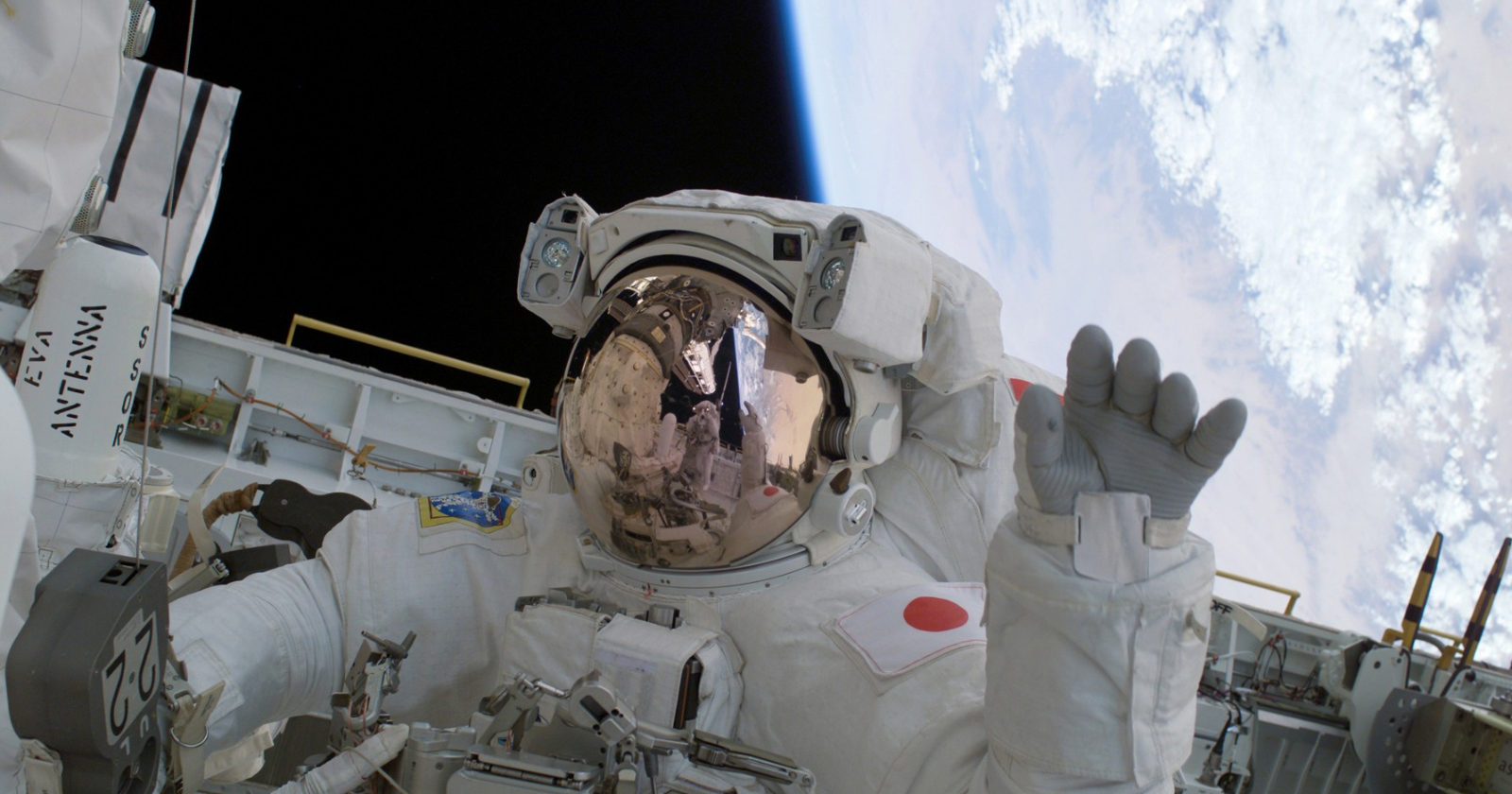
The standard cultural image of astronaut food has not, on the available evidence, updated meaningfully since the 1980s. The image is of the silver pouch, the freeze-dried ice cream from the museum gift shop, the tube of paste. The image is, in 2026, almost entirely inaccurate. The actual food astronauts eat on the International Space Station, and on the recent Artemis II lunar mission, is considerably more interesting than the museum-gift-shop version suggests. It is also, on close examination, almost none of it the kind of thing that would survive a single ordinary meal in your kitchen without the support of weight calculations, packaging engineering, and, surprisingly often, a tortilla.
What the menu actually looks like
The pantry on the International Space Station is, on the available evidence, sourced from somewhere around 200 food and beverage options designed to remain palatable, safe, and nutritious for one to three years. The Canadian Space Agency’s documentation describes a standard menu allowing each astronaut three meals and one snack per day, drawn from a pantry that allows the astronaut to select what to eat. The caloric intake ranges from 1900 to 3200 per day, calibrated to weight, gender, and the specific demands of the mission.
The Artemis II mission, which splashed down on April 10 of this year after a ten-day flyby of the moon, gives a particularly well-documented recent example of what the menu actually contained. The four-person crew had access to a menu of 189 items. The menu included, among other things, wheat flat bread, vegetable quiche, breakfast sausage, couscous with nuts, mango salad, granola with blueberries, beef brisket, and nuts. The beverage options ran to green tea, strawberry and chocolate and vanilla “breakfast drinks,” lemonade, apple cider, cocoa, a pineapple drink, and a mango-peach smoothie. The mission also packed, for the four astronauts, 58 tortillas and supplies for 43 cups of coffee.
The tortilla number is, on close examination, the most interesting datum in the list, and it is worth explaining why.
Why the tortilla is the workhorse
The tortilla, on the available evidence, is one of the more important pieces of food technology the wider space program has ever adopted. The reason is structural. Bread, on Earth, is a perfectly reasonable carrier for almost any kind of food. In microgravity, bread is, on close examination, a disaster. Bread produces crumbs. Crumbs, in zero gravity, do not fall. Crumbs float. Floating crumbs can be inhaled, can lodge in eyes, and most importantly can drift into ventilation systems, electrical equipment, and any of the various sensitive instruments that constitute the operational infrastructure of a spacecraft. A single mishandled sandwich, on the available physics, could damage a piece of equipment worth more than the lifetime salaries of everyone on board.
The tortilla solves this. The tortilla is flexible, holds together when handled, can be folded around almost any filling, and produces almost no crumbs. The tortilla can also, with appropriate packaging, last for the duration of a six-month mission without molding or going stale in the way bread would. Documentation from NASA food scientists describes the tortilla as functioning, in practical terms, as a universal sandwich-maker that solves the crumb problem in a single piece of engineering. The 58 tortillas packed for Artemis II are, accordingly, not a culinary preference. They are, more accurately, a piece of operational infrastructure.
This is the structural pattern that runs through almost every item on the astronaut menu. The items that are on the menu are on the menu because they have, at some point, solved a specific engineering problem that the more obvious terrestrial version of the same food would have created.
The categories of space food, and what each one is solving for
The food on a typical mission falls into a few structural categories, each of which is calibrated to a particular engineering problem.
The first category is rehydratable food. These are foods, including most beverages, that have had their water removed before launch. The removing of water is the key piece of weight engineering. Water is heavy. Water is, in fact, the heaviest single component of most foods by mass. Sending food into orbit with the water still in it would, on the available physics, be enormously expensive. The water is, accordingly, removed on Earth and added back, from the spacecraft’s water supply, when the food is consumed. The NASA Space Food Systems documentation describes the process in detail. The water added on the spacecraft is, in the case of the ISS, recycled from the astronauts’ urine, sweat, water vapor from their breath, and wash water, which is a fact that is, in its own way, considerably more notable than the cultural register tends to credit.
The second category is thermostabilized food. These are foods that have been processed and packaged in flexible retort pouches, similar in principle to military Meals-Ready-to-Eat. The food has been heated to a temperature that destroys the microorganisms that would otherwise cause spoilage, and is then sealed in pouches that can be stored without refrigeration for the entire duration of the mission. The pouches can be reheated on the spacecraft using a briefcase-style food warmer. The food is, on consumption, cut out of the pouch and eaten directly with utensils, often with the pouch strapped to a leg or wall to keep it from floating away.
The third category is irradiated food. These are foods, primarily meats, that have been preserved through exposure to ionizing radiation. The radiation kills microorganisms in the food without significantly altering its texture or flavor. The result is a meat that can be stored for months without refrigeration and that, on consumption, is structurally similar to its terrestrial equivalent.
The fourth category is natural-form food. These are foods that require no preparation and that are stable enough at room temperature to be eaten directly from their packaging. Nuts, granola bars, dried fruit, certain crackers. These are the closest thing the astronaut menu has to the foods one might eat directly on Earth, and they are, accordingly, among the most reliably popular items on the menu.
The things you cannot bring
What is missing from the menu is, on examination, almost as interesting as what is on it.
Bread, as already established, is essentially impossible. Salt and pepper, in their solid forms, are similarly impossible, because grains in microgravity become potential projectiles for the eyes, the nose, and the spacecraft’s air filtration systems. Salt and pepper are, accordingly, available only in liquid form, premixed with water or oil into a paste-like consistency that can be applied to food without producing free-floating grains. Carbonated beverages are also off the menu, because the carbonation behaves unpredictably in microgravity and can produce, in the astronaut’s stomach, a particular kind of discomfort that the wider environment of the spacecraft has not been calibrated to absorb.
Fresh fruit and vegetables are, on most current missions, possible only in small quantities and only as occasional treats, because they spoil too quickly for any meaningful long-term inclusion in the menu. The arrival of fresh produce on a resupply mission is, accordingly, one of the more anticipated events of any long-duration stay on the ISS. NASA’s Artemis II documentation notes specifically that fresh foods were not flying on Artemis II, because the Orion spacecraft does not have refrigeration or the late-load capability that fresh foods would have required.
What this is really telling us
The astronaut menu is, on close examination, not really a story about food. The menu is, more accurately, a story about engineering constraints. Every item on the menu has been selected, processed, packaged, and weight-optimized to solve a specific operational problem that ordinary terrestrial cooking does not even register as a problem. The crumbs. The water mass. The shelf life. The behavior of liquids in microgravity. The crew’s reduced sense of taste, which is itself a consequence of fluid shifts in the body that clog nasal passages and reduce the olfactory contribution to flavor.
The crew’s reduced sense of taste is, in fact, the reason astronaut food tends to include more aggressive flavors than terrestrial food. Hot sauce, in particular, has been a standard item on the menu for decades. The reduced taste sensitivity in microgravity means that food that would, on Earth, be considered well-seasoned tends to register, in orbit, as bland. The compensation is more salt, more spice, more aggressive sauces. The tabasco that astronauts request in surprising quantities is not, on close examination, an indulgence. The tabasco is a piece of compensatory engineering for the structural changes the crew’s bodies undergo in zero gravity.
The Christina Koch quote about Artemis II, when she described the experience of eating in the Orion spacecraft, made the point indirectly. The food was, by every external measure, considerably more sophisticated than what the Apollo astronauts ate. The eating of the food, however, was still structurally constrained by every one of the same engineering problems that the Apollo crews faced. The microgravity. The weight. The crumbs. The reduced taste. The packaging. The shared cabin. The fact that one is, by structural necessity, eating in a small enclosed environment where every mistake has consequences that the wider terrestrial environment does not impose.
The food works, on the available evidence. The food keeps the astronauts alive, nourished, and, in most cases, in reasonably good morale across missions that can last six months or longer. The food is also, on close examination, almost none of it the kind of thing that could be reproduced in an ordinary kitchen, because almost none of it was designed to be reproduced in an ordinary kitchen. It was designed, more specifically, for the most demanding eating environment any human population has ever consistently operated in. The fact that the food works at all, in those conditions, is one of the more underappreciated pieces of contemporary engineering. The tortilla, in particular, deserves more credit than the wider culture has so far given it.
