

What if the gold band on your finger predates not just your marriage, not just your country, not just human civilization, but the planet you are standing on — and what if there is no chemistry experiment, no nuclear reactor, no fusion process inside any normal star that could ever produce it? That sentence sounds like exaggeration. It is, in fact, the working consensus of modern astrophysics. Every gold atom in every wedding ring on Earth was assembled in the collision of two neutron stars somewhere in the galaxy, sometime before the solar system condensed out of gas and dust 4.6 billion years ago, and that is the only process in the known universe capable of making it in the quantities found here.
The popular framing goes like this: gold is rare because it is buried deep, hard to mine, beautiful, incorruptible. That framing is approximately right in its emotional effect and badly incomplete in its physics. Gold is rare on Earth because gold is rare in the universe, and gold is rare in the universe because the process that makes it almost never happens.
Why ordinary stars cannot make gold
To understand why a wedding ring is a piece of cosmic debris, it helps to know what stars actually do. A star is a slow-burning thermonuclear furnace. Hydrogen fuses into helium, helium fuses into carbon, carbon into oxygen, and so on up the periodic table. Each step releases energy. The chain runs cleanly until it reaches iron.
Iron is the wall. Fusing elements heavier than iron consumes energy rather than releasing it, which is why no ordinary star — not the Sun, not a red giant, not even most supernovae — can build elements heavier than iron through normal stellar burning. The star runs out of fuel and either fades or detonates. Either way, the production line stops.
Gold sits at atomic number 79. It is 53 places past iron on the chart. Producing it requires forcing a nucleus to swallow extra neutrons faster than those neutrons can decay back into protons — a process astrophysicists call rapid neutron capture, or the r-process. The r-process needs a flood of free neutrons so dense and so brief that no familiar environment in the cosmos can supply it. Not the core of a star. Not a standard supernova. Nothing in the chemistry set of normal stellar evolution.
The question of where the r-process actually happens has been open in astrophysics for more than fifty years. The answer that finally arrived, in 2017, is almost absurdly violent.
What two neutron stars do when they meet
A neutron star is what remains when a massive star collapses but is not quite heavy enough to become a black hole. The core is crushed into a sphere about 12 miles across with the mass of the Sun packed inside it. A sugar-cube-sized chunk of the material weighs roughly a billion tons. The surface gravity is about 200 billion times Earth’s.
Now picture two of them, in a binary orbit, spiraling toward each other for hundreds of millions of years, shedding orbital energy through gravitational waves until the final inspiral takes seconds. When they touch, they do not bounce. They merge. For a fraction of a second, the merger ejects a cloud of neutron-rich material at roughly a tenth the speed of light. In that cloud — hot, dense, soaked in free neutrons — the r-process finally has the conditions it needs. Heavy nuclei form in milliseconds. Gold. Platinum. Uranium. Lanthanides. The whole tail end of the periodic table.

The signal was first directly observed on August 17, 2017, when the LIGO and Virgo gravitational-wave detectors registered the inspiral of two neutron stars roughly 130 million light years away, and telescopes across the world swung to catch the optical and infrared afterglow. The light curve matched the predicted signature of an event astrophysicists had named, years earlier, a kilonova. The kilonova’s spectrum showed the chemical fingerprints of freshly synthesized heavy elements. The estimate from that single event points to several Earth-masses of gold and platinum produced in one collision, dispersed into the interstellar medium at relativistic speed.
The numbers line up. Run the arithmetic on the rate of neutron star mergers per galaxy per million years, and the gold abundance in the Milky Way comes out close to what astronomers measure. The mechanism is real, the mechanism is rare, and the mechanism is the only one that fits.
Where the gold in your ring actually came from
So follow the timeline backward. The gold atom currently sitting in a band on a hand somewhere on this planet was, before that, in a vein of ore in the Earth’s crust. Before that, it was in the molten interior of the young Earth, drifting toward the surface during late tectonic mixing. Before that, it was suspended in the protoplanetary disk of gas and dust that condensed around the infant Sun roughly 4.6 billion years ago. Before that, it was diffuse vapor in a cold molecular cloud somewhere in this region of the galaxy.
And before that, it was inside the expanding ejecta of two neutron stars that had just merged.
The merger happened before the solar system existed. The atom is older than the Sun. It is older than the Earth by a margin that cannot be precisely dated, because it remains unknown exactly which merger produced it — there were likely many contributions from many events, spread across the history of the Milky Way. What is certain is that every gold atom on Earth was forged in such an event, somewhere, sometime before the dust settled into planets.
That is not a metaphor. There is no other source. Gold cannot be manufactured in any meaningful quantity. Particle accelerators have produced trace amounts of gold atoms by bombarding lead or mercury with neutrons, at energy costs that make the result spectacularly more expensive than mined gold. The economic and physical bottom line is the same: if you want gold, you need a kilonova, and kilonovae happen on cosmic timescales in places very far from here.
What the 2024 Hubble observations added
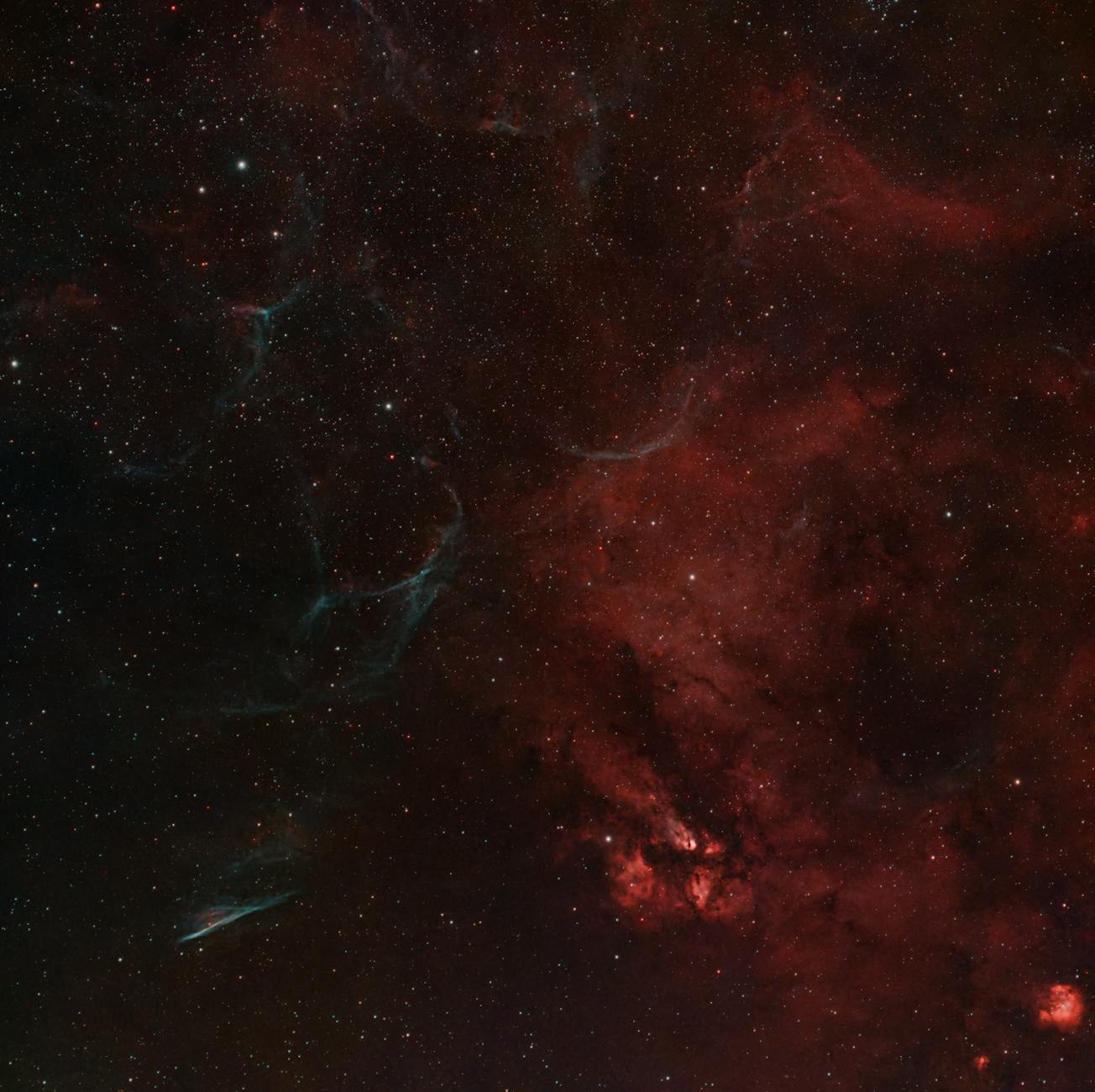
The story has continued to refine. In 2024, astronomers using Hubble and other space telescopes traced a gamma-ray burst back to a neutron star collision occurring in an unexpected region of space — a region where standard models did not predict such mergers should happen. The galaxy in question had undergone an earlier collision that triggered a wave of star formation, and the neutron stars that eventually merged were the long-delayed descendants of stars born in that wave.
The implication is that the cosmic gold supply is the residue of cascades of catastrophe: galaxies colliding, triggering star formation, producing massive stars, which die as supernovae, leaving neutron stars, which orbit for hundreds of millions of years, which finally merge, which finally produce the heavy elements that eventually end up in jewelry. Each wedding ring is the downstream product of at least four sequential cosmic disasters, separated by intervals longer than the age of complex life on Earth.
The strange weight of knowing this
There is a quiet question buried in all of this, and it is not really a physics question. Does knowing the provenance of the metal change how it feels to wear it? The honest answer is that most people exchanging rings will never think about kilonovae, and the rings will work fine as symbols regardless. Symbols do not require correct cosmology to function.
But the deep history is there whether anyone consults it. The framing of permanence — of choosing an object that meaningfully outlasts the people exchanging it — is one of the oldest reasons humans selected gold for the ritual in the first place. The metal does not tarnish. It does not corrode. It cannot be destroyed by any process available to a household, a country, or a continent. A gold ring buried for ten thousand years is recovered intact.
The reason for that durability is the same reason the metal is rare: the nucleus is unusually stable, the electron configuration is unusually inert, and both properties emerge from the specific way the atom was assembled in the first place. The very features that made human ancestors choose gold as a symbol of permanence are the features that betray its violent origin.
Writers on this site have covered the long procedural chains that make extraordinary engineering possible, and the chain that delivers gold to a jeweler is arguably longer than any of them. It runs through stellar nurseries, supernova remnants, hundred-million-year orbital decays, and a final merger that briefly outshines an entire galaxy in gravitational waves.
What sits on a finger at the end of that chain weighs a few grams. It is also, by any reasonable accounting, one of the oldest things its wearer will ever touch. Older than the rock the planet is made of. Older than the Sun whose light reflects off it. Forged in an event that happened somewhere out there, long before any of this — the Earth, the ceremony, the promise — existed at all.
The part worth slowing down on is that there is no alternative explanation. No backup mechanism. No second source. If the gold is here, a kilonova put it here. The math leaves no other door open.
